
A garage door that jumps the track usually does not fail quietly. You hear a bang, the door looks crooked, one side hangs lower than the other, and suddenly your home or business is stuck open or sealed shut. If you are searching for how to fix garage door off track issues, the first thing to know is simple: this can be dangerous fast, especially if springs or cables are involved.
When an off-track garage door is safe to handle
Not every off-track door calls for a full DIY repair. In some cases, the rollers have only slipped slightly out of the track near the lower section, the door is not under obvious strain, and there is no snapped cable, bent track, or broken roller. That is the narrow window where a careful reset may be possible.
If the door is hanging at an angle, the cable is loose or wrapped around the drum, the track is twisted, or the opener keeps pulling against a jammed door, stop there. The weight of a garage door is no small thing. One wrong move can damage panels, bend hardware, or cause serious injury.
A good rule is this: if the problem looks minor and localized, you may be able to stabilise it. If it looks uneven, tense, or damaged, treat it as a service call.
Before you try to fix a garage door off track
Start by disconnecting power to the opener. If your opener is plugged into a ceiling outlet, unplug it. Then pull the emergency release cord only if the door is in a stable position. If the door is crooked or partly suspended, do not release it casually. That can make the drop worse.
Next, secure the area. Keep children, pets, vehicles, and storage items clear of the opening. Wear gloves and eye protection. You will also want a sturdy ladder, locking pliers, and a flashlight so you can see where the rollers left the track.
This is also the moment to inspect what caused the problem. Off-track doors do not usually happen for no reason. A roller may have worn down, a track bracket may have loosened, or someone may have hit the lower panel with a vehicle. If you only force the roller back in without addressing the cause, the same issue can return quickly.
How to fix garage door off track problems step by step
If the door is only slightly off track and all major parts appear intact, a careful reset can work.
1. Clamp the door in place
Use locking pliers or C-clamps below the bottom roller on the track that is still engaged. This helps prevent the door from sliding unexpectedly while you work. If both sides are unstable, the repair is no longer a simple one.
2. Inspect the rollers and track opening
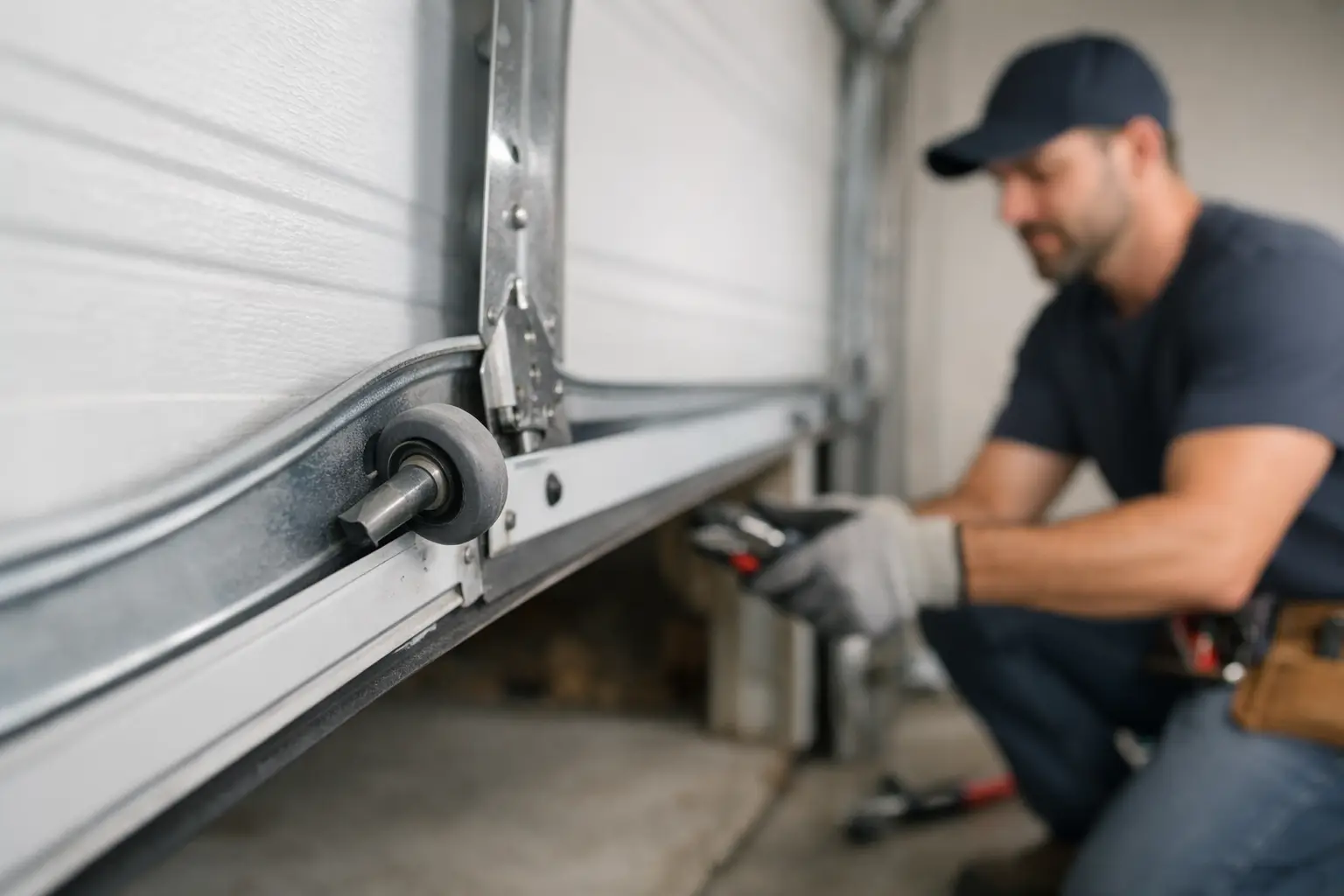
Look for the exact point where the roller came out. Often this happens near a gap in the track or a bent section. Check whether the roller itself is cracked, chipped, or worn flat. A damaged roller should be replaced, not forced back into service.
Also inspect the track for dents. A small bend can sometimes be eased back gently with pliers, but a badly deformed track section usually needs replacement. Forcing a roller into a damaged track often creates a larger repair.
3. Loosen the track slightly if needed
On some doors, the easiest way to reinsert a roller is to loosen the mounting bolts on the affected track section just enough to create a little play. You are not removing the track. You are only giving yourself enough movement to guide the roller back in.
Work slowly. If the track springs outward or the door shifts, stop and reassess.
4. Guide the roller back into the track
With the door supported and the track slightly loosened, carefully manoeuvre the roller back into the channel. Sometimes this means lifting the panel a fraction by hand. Sometimes it means easing the track outward just enough to let the roller seat properly.
You should not need to pry aggressively or use excessive force. If the roller will not go back in smoothly, something else is wrong.
5. Tighten hardware and test alignment
Once the roller is back in place, tighten the track bolts securely. Then inspect both vertical tracks to confirm they are parallel and properly fastened to the wall. If one side sits farther out than the other, the door may bind again.
Remove the clamps and test the door manually a few inches at a time. It should move evenly without jerking, scraping, or leaning. Do not reconnect the opener until you are confident the door is travelling correctly.
Signs the repair is not a DIY job
A lot of homeowners start looking up how to fix garage door off track issues when the real problem is deeper than a slipped roller. That is where caution matters.
If you see a broken torsion spring above the door, do not touch it. If a lift cable has come off the drum or snapped, do not try to rewind it. If the top section is twisted, one track is pulling away from the wall, or the opener rail is straining, the safest move is professional repair.
There is also the issue of door weight. Heavier insulated doors and many commercial doors put much more stress on tracks, brackets, and rollers. What seems like a simple alignment problem can actually involve load imbalance that is not visible at first glance.
Why garage doors come off track in the first place
Understanding the cause helps prevent the next failure.
A common reason is impact damage. Even a light bump from a car can bend the lower track just enough to let a roller jump out later. Worn rollers are another frequent cause. As rollers age, they stop moving cleanly and begin dragging or wobbling.
Loose hardware also plays a role. Garage doors open and close thousands of times over the years, and vibration gradually loosens brackets and fasteners. In other cases, a door comes off track because the opener keeps pulling against an obstruction, such as ice at the threshold or an object in the path of the door.
Cable and spring problems can also trigger track issues. When one side loses tension, the door lifts unevenly, and that uneven movement can push rollers out of alignment very quickly.
What a professional repair usually includes
When a technician repairs an off-track garage door, the work often goes beyond simply popping the roller back in. A proper repair includes checking track alignment, roller condition, cable tension, hinge wear, bracket stability, and opener force settings.
That matters because the visible failure is often just the symptom. A door may come off track because a cable was fraying for weeks, a bracket was loose, or a roller stem was bent. Correcting only the obvious issue saves little if the door fails again days later.
For home and business owners who need the door working again without the risk, fast service is usually the better value. Companies like Summit Garage Doors handle off-track repairs, track alignment, part replacement, and emergency calls when the door cannot safely be used.
How to prevent another off-track problem
Most off-track situations give some warning before they become urgent. The door may shake more than usual, make grinding sounds, or look slightly uneven during travel. If you catch those signs early, the repair is usually smaller and less expensive.
Check rollers and hinges a few times a year for visible wear. Watch the door open and close from a safe distance. It should move smoothly and stay level. If you notice rubbing, jerking, or track gaps, book service before the door forces itself out of alignment.
Regular maintenance also helps. A trained technician can tighten hardware, inspect spring balance, adjust the track, and replace worn rollers before they create a larger breakdown. That is especially useful in busy households and commercial settings where the door cycles often.
The safest next step when the door looks unstable
If your garage door is only slightly off track and the hardware is intact, a careful reset may solve it. But if the door is crooked, heavy, noisy, or tied up with spring or cable issues, forcing it can turn a manageable repair into a major one.
When a garage door stops moving the way it should, the smartest move is not always the fastest DIY fix. It is choosing the option that protects your property, your time, and everyone standing nearby.

