
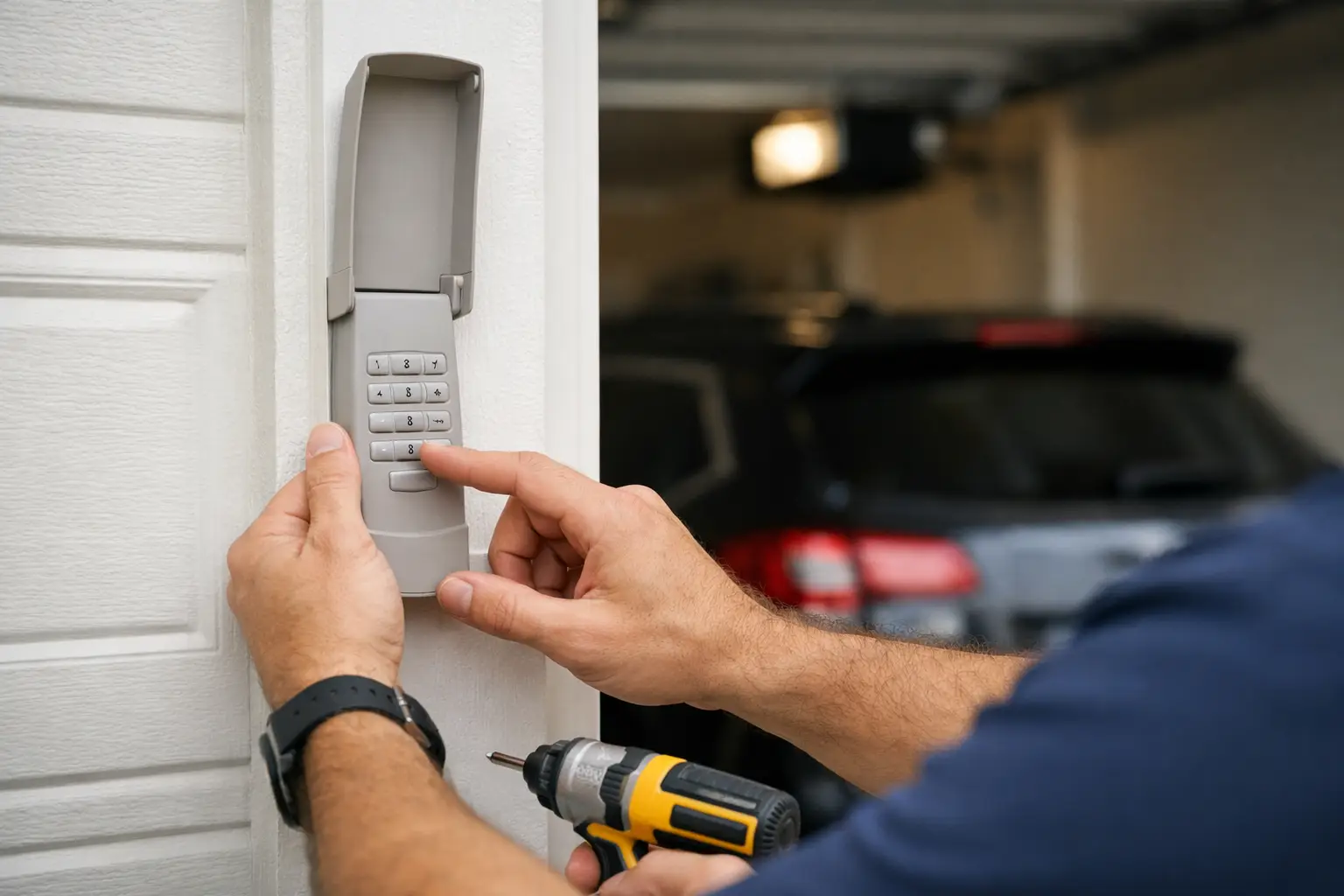
A keypad should make garage access easier, not create a new headache. If your current remote is unreliable, your family keeps getting locked out, or you want a cleaner way to manage entry without handing out extra remotes, garage door keypad installation is often a smart upgrade.
The right keypad gives you quick access, better control, and one less thing to carry. But the details matter. Not every keypad works with every opener, placement affects performance, and a rushed install can leave you with weak mounting, poor weather protection, or programming issues that show up at the worst time.
Why homeowners choose garage door keypad installation
For most households, the appeal is simple. A keypad lets you open the door without a remote or key, which is useful when kids get home before you do, a dog walker needs temporary access, or you head out for a walk and do not want to carry anything extra.
There is also a security benefit when the keypad is chosen and set up properly. Many newer models use rolling code technology or secure wireless communication that works with modern openers. Some let you create temporary PINs for deliveries, guests, or service visits. That is a practical improvement over hiding a spare key or leaving a remote in an unlocked vehicle.
For busy properties, especially homes with multiple drivers, a keypad can reduce the wear and frustration that comes from relying on a single clicker. It is a small accessory, but it often solves a daily inconvenience.
What to check before installing a keypad
The biggest issue in garage door keypad installation is compatibility. A keypad may look universal on the box, but that does not always mean it will pair properly with your specific opener. Brand, frequency, learn-button colour, and opener age can all affect whether the unit will work.
If your opener is older, the keypad may still be compatible, but the process is not always straightforward. In some cases, the better option is replacing both the opener accessory and the receiver setup, especially if the existing system has intermittent response or outdated security features.
Placement matters too. A keypad should be easy to reach but not awkwardly close to moving sections of the door. It also needs enough protection from direct rain and harsh weather. In the Seattle area, moisture exposure is not a minor detail. A poorly placed keypad can age faster, lose responsiveness, or become frustrating to use during colder, wetter months.
Power is another factor. Most keypads are battery-operated, which keeps installation simpler, but battery access should be easy and the cover should close tightly. If the battery compartment is loose or exposed, you may end up with inconsistent performance long before the keypad itself wears out.
How garage door keypad installation usually works
A standard installation is fairly quick when the opener and keypad are compatible. First, the mounting location is selected. That usually means choosing a spot near the garage opening that is convenient but not in the path of door movement or likely to collect runoff from the roofline.
Next, the keypad is secured to the mounting surface. Depending on the siding or trim material, that may require different anchors or screws. This is where quality workmanship matters more than many people expect. A keypad that feels loose after a few weeks is not just annoying – it can let moisture in and shorten the life of the unit.
After mounting, the keypad is programmed to the opener. That often involves using the opener’s learn button, entering a PIN, and testing the communication range. The technician should then verify that the door opens and closes consistently, that the keypad cover seals properly, and that the code entry works without lag or multiple attempts.
The final step is usually the most overlooked: user setup. Homeowners should know how to change the PIN, replace the battery, and recognize when the issue is with the keypad versus the opener itself. A good install does not end when the keypad lights up. It ends when the system works reliably and the customer knows how to use it confidently.
DIY or professional installation?
It depends on the opener, the wall surface, and your comfort level with programming and basic mounting work. If you have a newer opener, a matching keypad, and a simple mounting surface, a DIY install may be manageable.
That said, many keypad problems are not caused by the keypad at all. They come from opener compatibility issues, weak wireless signal, old receiver systems, incorrect programming steps, or mounting in a poor location. Homeowners often spend more time troubleshooting than installing.
Professional installation is usually the better choice if your opener is older, the existing accessories already act up, or you want the keypad integrated properly with the rest of the system. It also helps if your goal is not just basic access, but a cleaner, more dependable setup with fewer callbacks and less guesswork.
Common problems after installation
A keypad that works one day and fails the next usually points to one of a few common issues. The battery may be weak, the code may not have been saved correctly, or the opener may have signal or memory limitations. Sometimes the keypad itself is fine, but the opener’s logic board or receiver is starting to fail.
Weather can also play a role. Moisture intrusion, temperature swings, and aging seals can affect responsiveness over time. If the buttons feel sticky, the backlight is dim, or the signal only works from certain angles, those are signs the system needs attention.
Another common problem is using a generic keypad with a setup that technically pairs, but does not perform well consistently. That is one reason brand-matched accessories are often worth considering. They are not always the cheapest option upfront, but they can save time and frustration later.
When it makes sense to upgrade more than the keypad
Sometimes a keypad request reveals a bigger issue. If your opener struggles to respond, reverses unexpectedly, or works with one remote but not another, the keypad may not be the real fix.
In those cases, upgrading the opener or adding smart access features may be the better investment. A newer opener can improve reliability, security, and day-to-day convenience all at once. You may get quieter performance, better range, app-based control, and accessory compatibility that is much easier to manage.
For homeowners already considering a broader garage upgrade, this is a good time to think about the full system. A keypad is a useful accessory, but it performs best when the opener, safety sensors, and door hardware are all in good working order.
What to expect from a quality service visit
A proper service call should include more than mounting a keypad and leaving. The technician should confirm compatibility, inspect the opener response, program the unit correctly, and test the full system.
If there is an issue beyond the keypad, you should hear that clearly and honestly. That might mean a recommendation for a different accessory, a note that the opener is nearing the end of its service life, or advice to address a separate problem such as sensor alignment or intermittent power loss. Clear recommendations matter because keypad performance depends on the rest of the system.
For local homeowners who want fewer surprises, working with a company that handles repairs, opener troubleshooting, and accessory upgrades under one roof is often the simplest path. Summit Garage Doors helps customers with practical upgrades like keypad installs, but also with the underlying issues that can keep those upgrades from working the way they should.
Is garage door keypad installation worth it?
For most homes, yes – if the keypad is compatible, installed properly, and matched to a reliable opener. It is a small upgrade with a noticeable effect on convenience and access control.
The key is treating it like part of your garage door system, not just a gadget on the wall. The right model, proper placement, and correct programming all make a difference. If you are already dealing with opener issues, it is worth addressing those at the same time instead of hoping a new keypad will solve everything.
A well-installed keypad should feel boring in the best possible way. You enter the code, the door responds, and your day keeps moving.

