
Seattle business owners have new hurdles to clear when it comes to commercial garage doors. City codes now demand stricter safety, accessibility, and energy measures than ever, all backed by the latest update to the International Building Code. Think staying up to date is simple? Not quite. Failing even one detail can mean hefty penalties or even shut-downs, especially since the 2021 Seattle Construction Codes now require advanced safety systems and fire-rated materials for many commercial doors. Turns out, picking the right garage door is not just about style or function anymore, it is about surviving in a maze of evolving local rules and technology.
Table of Contents
- Understanding Local Commercial Garage Door Codes
- Key Safety Standards And UL 325 Compliance
- Accessibility And Energy Efficiency Rules
- Choosing The Right Garage Door Service In Seattle
Quick Summary
| Takeaway | Explanation |
|---|---|
| Compliance with Local Codes | Seattle’s 2021 International Building Code outlines strict guidelines for commercial garage door installations, including safety, structural integrity, and fire safety measures. Businesses must carefully follow these codes to avoid penalties and ensure safety. |
| UL 325 Certification Importance | Adherence to UL 325 standards is crucial for electric garage door systems, requiring features like automatic reversal mechanisms and multiple safety sensors to minimize risks associated with mechanical doors. |
| Accessibility and Energy Efficiency | Commercial garage doors must meet ADA requirements for accessibility and the 2021 Seattle Energy Code for energy efficiency, promoting inclusivity and sustainability in building design. |
| Selecting a Qualified Service Provider | Businesses should choose garage door services that demonstrate knowledge of Seattle’s complex permitting process and technical compliance to ensure successful installations and ongoing operational efficiency. |
| Focus on Long-term Compliance | Engaging with knowledgeable experts not only aids in meeting immediate regulatory requirements but also prepares businesses for adapting to future building standards and technologies. |
Understanding Local Commercial Garage Door Codes
Commercial garage door installations in Seattle are governed by a complex set of local building codes and regulations that ensure safety, functionality, and compliance. The Seattle Building Code provides a comprehensive framework for commercial garage door requirements, with specific guidelines that businesses must follow when installing or replacing garage doors.
Navigating Seattle’s Building Code Requirements
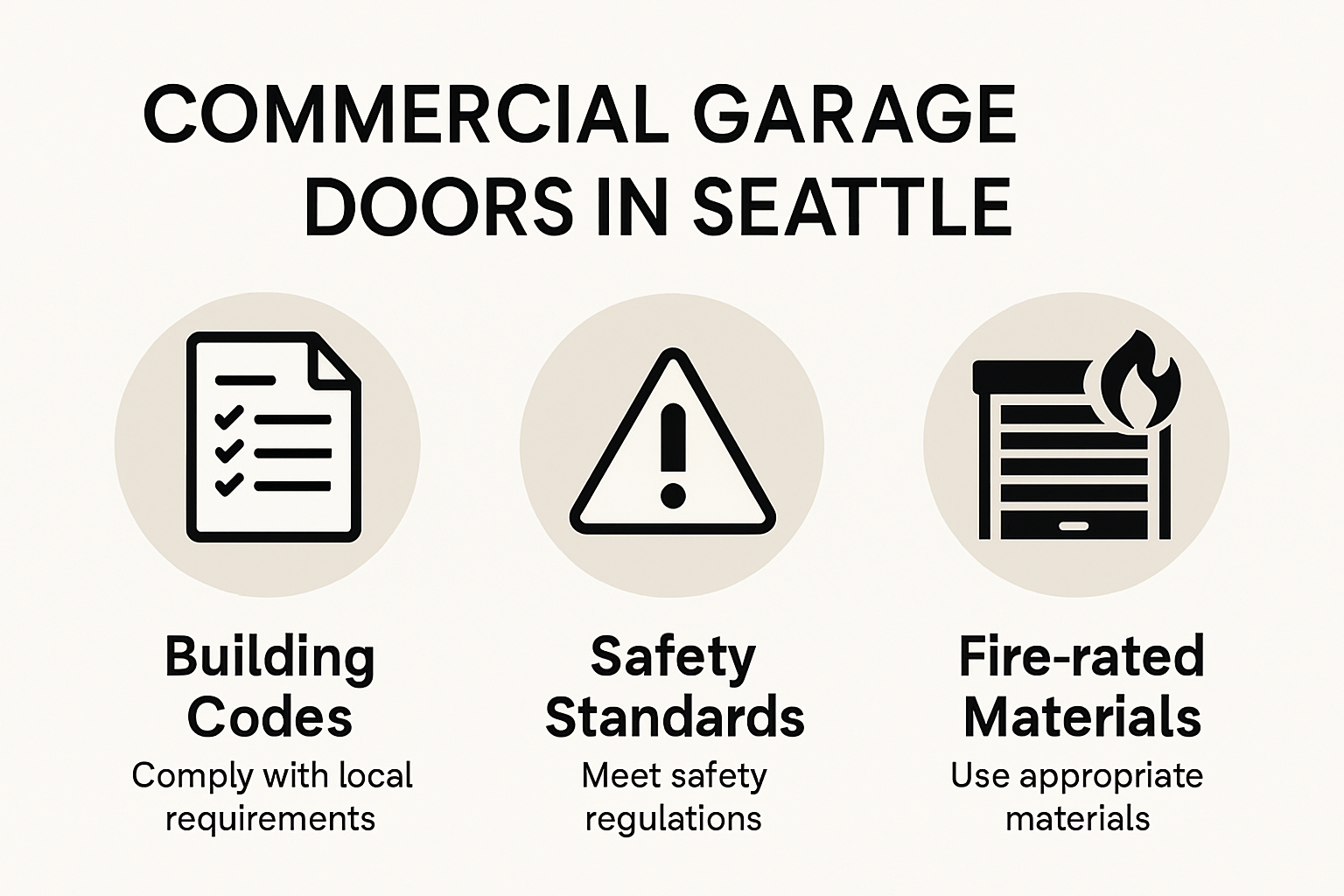
The city’s commitment to safety and construction standards is evident in its adoption of the 2021 International Building Code, which includes critical specifications for commercial garage door installations. Businesses must carefully understand these requirements to ensure full compliance. The code addresses multiple aspects of garage door installation, including structural integrity, material specifications, operational safety, and emergency access provisions.
Key components of the commercial garage door code include precise measurements for door width, height, and clearance, ensuring that doors meet specific safety and functional standards. Fire safety regulations are particularly critical, with requirements for fire-rated materials and automatic closing mechanisms in certain commercial settings. Businesses must also consider wind load resistance, especially in areas prone to severe weather conditions.
Technical Compliance and Safety Standards
According to the Seattle Mechanical Code, commercial garage doors must meet stringent technical specifications. This includes detailed requirements for mechanical systems, electrical components, and operational mechanisms. Businesses must ensure that their garage doors comply with these regulations, which cover everything from motor specifications to safety sensor installations.
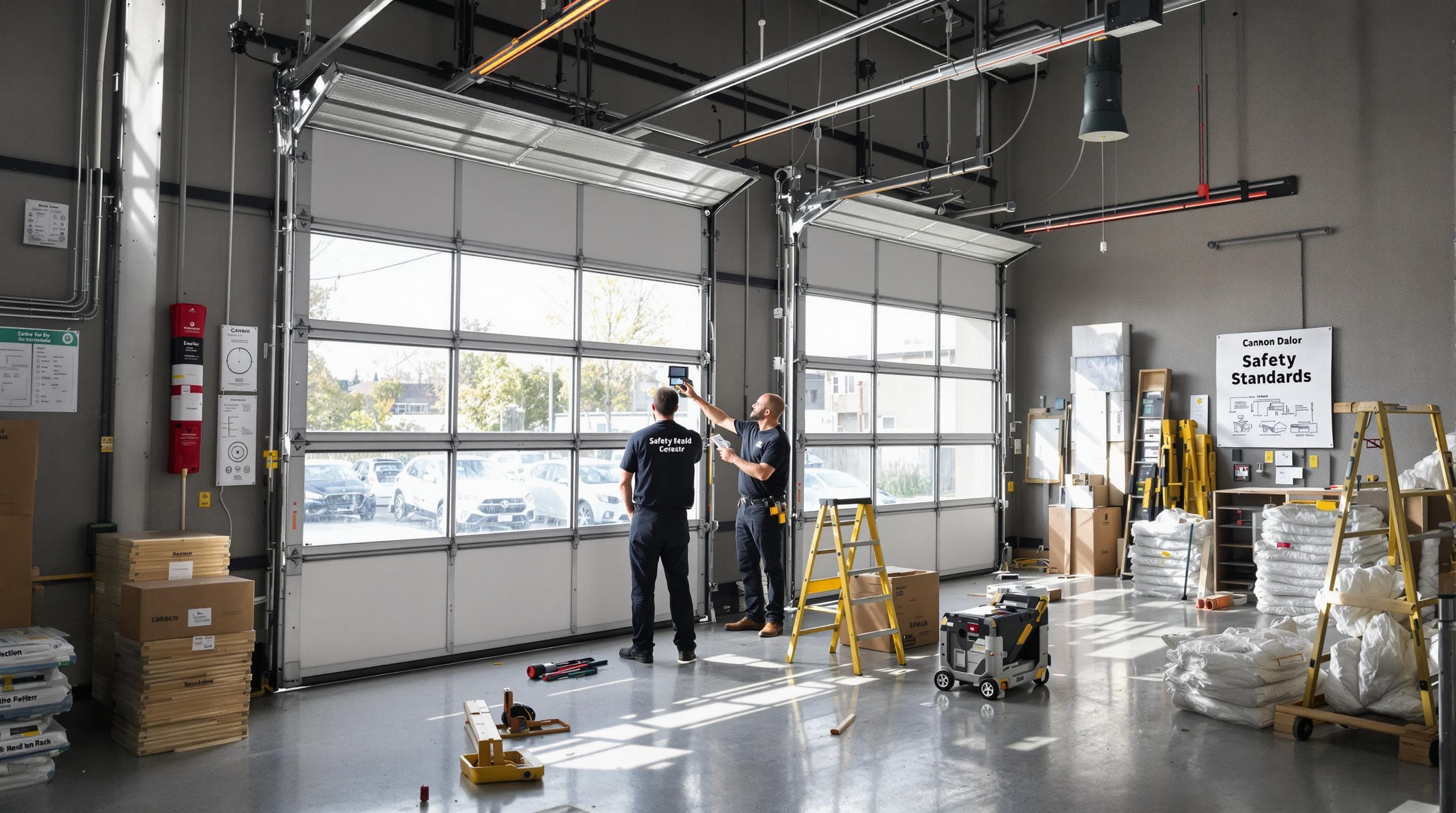
The 2021 Seattle Construction Codes, which went into effect on November 15, 2024, introduce more comprehensive guidelines for commercial garage door installations. These updated regulations reflect the latest safety technologies and construction practices. Businesses must pay close attention to these changes, as non-compliance can result in significant penalties and potential safety risks.
Professional commercial garage door installation experts understand the intricate details of these local codes. They can help businesses navigate the complex requirements, ensuring that every aspect of the garage door installation meets or exceeds local regulatory standards. From initial design to final installation, professional guidance is crucial in meeting Seattle’s strict commercial garage door requirements.
Key considerations for businesses include:
- Structural Integrity: Ensuring doors meet load-bearing and structural requirements
- Safety Mechanisms: Installing approved safety sensors and emergency release systems
- Material Compliance: Using approved materials that meet fire and durability standards
- Operational Standards: Meeting electrical and mechanical code requirements
Businesses must recognize that commercial garage door codes are not simply bureaucratic requirements but essential safety measures designed to protect people, property, and infrastructure. The complexity of these regulations underscores the importance of working with experienced professionals who understand the nuanced local building codes specific to Seattle’s commercial construction standards.
To help compare the main areas of code compliance for commercial garage doors in Seattle, the following table summarizes the core regulatory focuses from this section:
| Compliance Area | What It Covers | Why It’s Required |
|---|---|---|
| Structural Integrity | Load-bearing, wind resistance, clearances | Ensures durability and public safety |
| Safety Mechanisms | Sensors, emergency releases, auto-reverse | Prevents injury and property damage |
| Material Compliance | Fire-rated, durable, code-approved materials | Reduces fire risks and prolongs lifespan |
| Operational Standards | Electrical/mechanical systems, controls | Meets code and supports safe usage |
Key Safety Standards and UL 325 Compliance
Safety standards play a critical role in commercial garage door installations, with UL 325 emerging as a pivotal regulation that sets comprehensive guidelines for electric door operators and safety mechanisms. This industry standard represents a crucial benchmark for protecting personnel, equipment, and property in commercial environments.
Understanding UL 325 Certification Requirements
UL 325 is a binational safety standard established in 1973 that provides rigorous certification protocols for electric operators used in doors, gates, and other mechanical openings. The standard mandates specific safety features and testing procedures to minimize potential risks associated with mechanical door systems. Commercial garage door operators must demonstrate compliance through extensive performance and safety evaluations.
The certification process involves multiple safety classifications, each addressing different operational scenarios. These classifications ensure that garage door systems can effectively detect and respond to potential obstruction risks. Entrapment protection becomes a primary focus, with requirements for multiple safety sensing edge technologies, presence detection mechanisms, and automatic reversal systems.
Compliance and Regulatory Implications
Washington state building regulations incorporate UL 325 standards through specific administrative codes. According to the Washington Administrative Code, commercial garage doors must adhere to strict safety guidelines that extend beyond basic mechanical requirements. These regulations mandate comprehensive safety features, including advanced sensing technologies and emergency stop mechanisms.
Commercial property owners and facility managers must prioritize UL 325 compliance to ensure workplace safety and regulatory adherence. The standard covers critical aspects such as:
- Automatic Reversal Mechanisms: Requiring doors to immediately stop and reverse when encountering obstacles
- Multiple Safety Sensors: Implementing presence detection systems
- Emergency Release Features: Ensuring quick manual intervention capabilities
Professional commercial garage door installation experts understand the nuanced requirements of UL 325 compliance. Their expertise ensures that every installation meets or exceeds the prescribed safety standards, protecting businesses from potential liability and ensuring optimal operational safety.
The comprehensive nature of UL 325 reflects an evolving approach to mechanical safety. By establishing clear guidelines for design, testing, and performance, the standard provides a robust framework that addresses the complex safety challenges inherent in commercial garage door systems. Businesses must view these requirements not as bureaucratic obstacles but as essential protections for personnel and property.
Accessibility and Energy Efficiency Rules
Commercial garage door installations in Seattle must navigate a complex landscape of accessibility and energy efficiency regulations that go far beyond simple operational requirements. These rules represent a comprehensive approach to ensuring buildings are not only functional but also environmentally responsible and inclusive for all users.
Accessibility Standards for Commercial Garage Doors
Accessibility remains a critical consideration in commercial garage door design. The Americans with Disabilities Act (ADA) provides comprehensive guidelines that directly impact garage door installations, requiring businesses to implement designs that accommodate individuals with varying physical abilities. This means considering factors such as door opening width, operational mechanisms, and clear passage requirements that ensure seamless access for everyone.
Operational Accessibility involves more than just physical dimensions. Commercial garage doors must incorporate user-friendly mechanisms that can be easily operated by individuals with limited strength or mobility. This includes low-force activation systems, strategic sensor placement, and controls positioned at accessible heights. The goal is to create an environment where independent navigation is possible for all users, regardless of physical capabilities.
Energy Efficiency and Sustainability Requirements
The 2021 Seattle Energy Code introduces stringent guidelines for commercial building components, with specific implications for garage door installations. According to Seattle’s building code updates, businesses must now prioritize energy-efficient solutions that minimize heat loss and improve overall building performance.
Key energy efficiency considerations for commercial garage doors include:
- Thermal Insulation: Advanced insulation materials that reduce heat transfer
- Weatherstripping: Comprehensive sealing mechanisms to prevent air leakage
- Smart Operation Systems: Automated controls that minimize energy consumption
Professional commercial garage door installation experts understand these nuanced requirements. They can help businesses select garage door systems that not only meet regulatory standards but also provide long-term energy savings and improved operational efficiency.
The intersection of accessibility and energy efficiency represents a sophisticated approach to commercial construction. Businesses must view these requirements as opportunities for innovation rather than mere regulatory compliance. Modern garage door technologies now offer solutions that seamlessly blend user-friendly design with advanced energy conservation techniques.
Seattle’s commitment to progressive building standards means that commercial garage door installations must continually evolve. The 2021 code updates reflect a holistic approach that considers environmental impact, user experience, and long-term sustainability. Companies investing in compliant garage door systems are not just meeting regulations but positioning themselves as forward-thinking organizations committed to inclusive and responsible infrastructure.
The following table organizes the main accessibility and energy efficiency requirements for commercial garage doors discussed above, providing a quick-reference checklist for Seattle businesses:
| Requirement | Key Features/Description |
|---|---|
| ADA Accessibility | Appropriate width, clear passage, accessible controls, low-force operation |
| Operational Accessibility | User-friendly mechanisms, strategic sensors, accessible heights |
| Thermal Insulation | Advanced insulation materials to minimize heat transfer |
| Weatherstripping | High-quality perimeter sealing to prevent air leakage |
| Smart Operation Systems | Automated controls to reduce unnecessary energy consumption |
Choosing the Right Garage Door Service in Seattle
Selecting the appropriate garage door service in Seattle requires careful consideration of multiple factors, given the complex regulatory landscape and specialized requirements for commercial installations. Businesses must approach this decision strategically, understanding that the right service provider can significantly impact compliance, safety, and long-term operational efficiency.
Permit and Regulatory Compliance
Navigation of Seattle’s intricate permitting process is crucial when selecting a garage door service. The Seattle Department of Construction and Inspections (SDCI) mandates specific requirements for mechanical permits related to commercial garage door installations. Professional services must demonstrate comprehensive understanding of these regulations, including the ability to complete online permit applications through the Seattle Services Portal and upload necessary technical documentation.
For commercial projects, the permit process involves multiple critical steps. Businesses should seek service providers who offer:
- Comprehensive Permit Preparation: Detailed documentation and plan submissions
- Technical Expertise: Understanding of local building and energy codes
- Inspection Readiness: Ability to support field inspections and compliance verification
Evaluating Technical Competence and Service Quality
Technical competence goes beyond basic installation skills. Businesses seeking top-tier garage door services must evaluate providers based on their demonstrated expertise in meeting Seattle’s stringent commercial garage door requirements. This includes proficiency in:
- Code Compliance: Thorough knowledge of 2021 Seattle Building and Energy Codes
- Safety Standards: Expertise in UL 325 and accessibility regulations
- Technical Installation: Advanced understanding of thermal efficiency and operational mechanisms
Verification Strategies become essential in this selection process. Businesses should request comprehensive documentation of previous commercial installations, professional certifications, and references from similar projects in the Seattle metropolitan area.
According to SDCI guidelines, projects requiring mechanical permits demand exceptional technical precision. A garage door service must demonstrate the capability to handle complex installations, particularly for commercial spaces over 750 square feet or with unique structural requirements.
Professional garage door repair experts understand that selection is not merely about immediate installation but long-term performance and compliance. The ideal service provider acts as a strategic partner, guiding businesses through regulatory complexities and ensuring ongoing operational excellence.
Key considerations include the provider’s commitment to continued education, awareness of emerging technologies, and ability to adapt to evolving municipal regulations. Seattle’s progressive building standards require garage door services that are not just technically proficient but also forward-thinking and innovative.
Businesses must recognize that their garage door service selection is a critical infrastructure decision. The right partner ensures not just mechanical installation but comprehensive regulatory compliance, safety optimization, and long-term operational reliability. By prioritizing technical expertise, regulatory knowledge, and demonstrated performance, companies can secure garage door services that meet Seattle’s rigorous commercial standards.
Frequently Asked Questions
What are the commercial garage door requirements in Seattle for 2025?
Businesses in Seattle must comply with the 2021 International Building Code, which includes regulations on safety, structural integrity, fire safety, and energy efficiency for commercial garage doors.
Why is UL 325 compliance important for commercial garage doors?
UL 325 compliance is critical for electric garage door systems as it mandates safety features such as automatic reverse mechanisms and multiple safety sensors to minimize hazards associated with mechanical doors.
How do accessibility standards affect commercial garage doors in Seattle?
Commercial garage doors must meet ADA accessibility guidelines, which require user-friendly designs and operational mechanisms that accommodate individuals with disabilities, ensuring ease of access.
What factors should I consider when choosing a garage door service in Seattle?
When selecting a garage door service, consider their understanding of Seattle’s complex permitting process, their technical expertise in code compliance, and their ability to provide quality installation that meets safety and regulatory standards.
Stay Ahead of Seattle’s Commercial Garage Door Code—Trust the Local Experts
New regulations for 2025 are making it tougher for Seattle businesses to stay compliant when it comes to commercial garage doors. If you are worried about fire-rated materials, UL 325 safety standards, complex energy codes, or the risk of lost time and costly penalties, you are not alone. Many companies struggle with strict Seattle Building Code requirements and want a seamless solution that covers inspections, permitting, and technical details.
Let Summit Garage Doors take care of the headaches so you can focus on your business. Our team has been helping Seattle area companies since 2013, and we understand every detail from state and city codes to advanced energy and accessibility mandates. Visit Summit Garage Doors for expert guidance, code-compliant installation, and ongoing support. Want to see how we can deliver guaranteed compliance and peace of mind? Learn more or request your free consultation today at Summit Garage Doors.

