
Most Seattle homeowners think of a garage door as a simple piece of hardware, but the real story sits quietly in the details. Here is a surprise for you. Springs in a typical garage door last about 10,000 operations, and rollers only hold up for 5-7 years, all while battling Seattle’s relentless moisture and temperature swings. That sounds short-lived, right? Yet with the right choices and consistent upkeep, you can stretch these lifecycles far beyond the averages and protect your home from costly breakdowns that most people never see coming.
Table of Contents
- Key Garage Door System Components Explained
- Common Issues With Garage Door Components
- Maintenance Tips For Seattle Homeowners
- Choosing Quality Components In King County
Quick Summary
| Takeaway | Explanation |
|---|---|
| Regular Maintenance is Essential | Conduct inspections and lubrication at least twice a year to prevent wear and tear, especially considering Seattle’s climate challenges. |
| Understanding Component Lifecycles | Be aware that springs typically last about 10,000 operations, while rollers last between 5-7 years, and address any warning signs of failure immediately. |
| Focus on Quality Components | Choose materials like steel or aluminum that can withstand moisture and temperature fluctuations, ensuring long-term durability and performance. |
| Leverage Professional Assessment | Engage experienced technicians for component selection and installation to customize your garage door system to meet specific needs and challenges. |
Key Garage Door System Components Explained
Understanding the intricate components of a garage door system is crucial for homeowners seeking reliable performance and long-term functionality. A garage door is more than just a simple barrier – it’s a complex mechanical system with multiple interconnected parts working together to provide security, convenience, and protection for your property.
Structural Framework and Primary Components
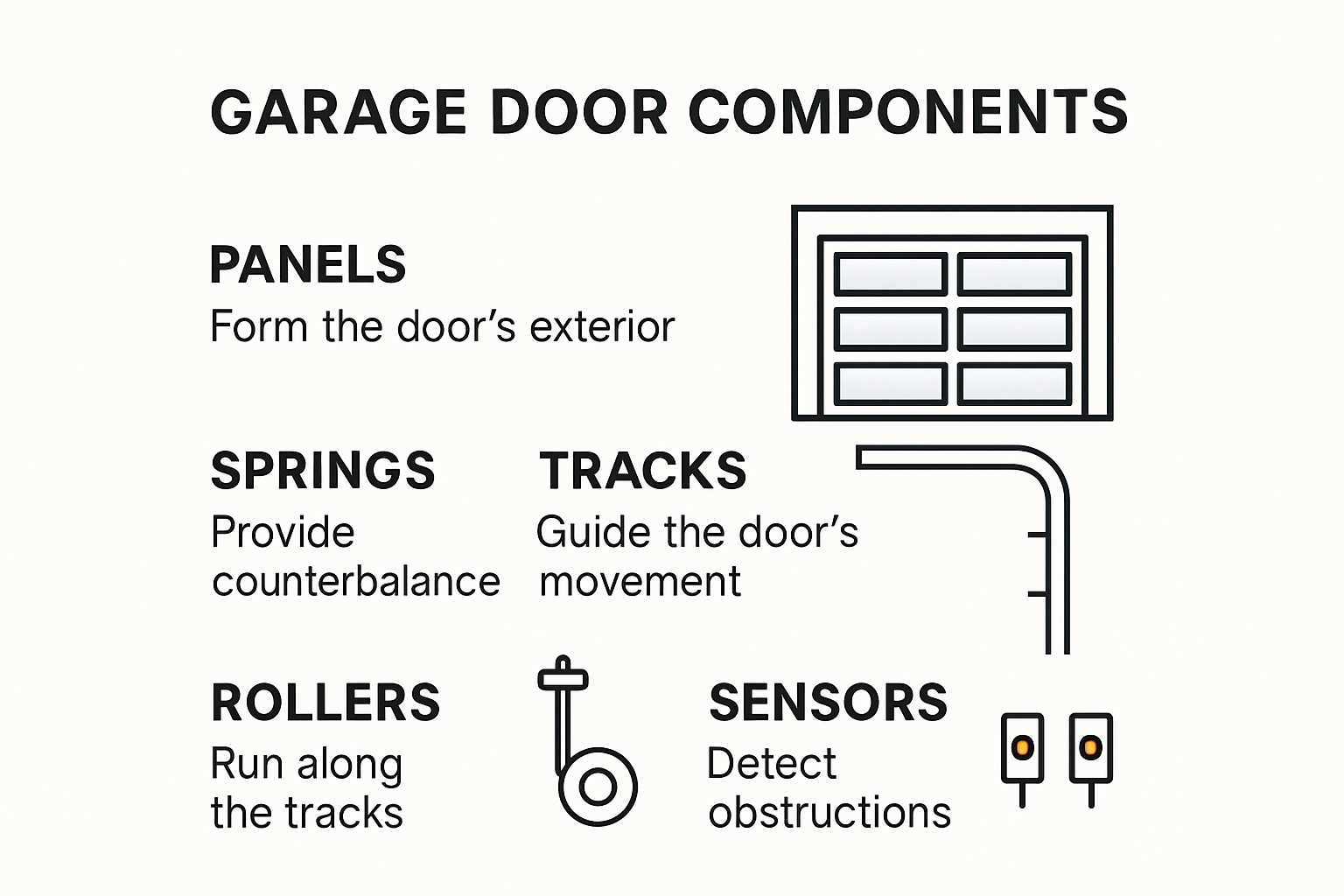
At the core of any garage door system are several essential components that enable smooth operation. The door panels serve as the primary structural element, typically constructed from materials like steel, aluminum, wood, or fiberglass. These panels are designed to withstand daily use and environmental challenges. According to the International Association of Certified Home Inspectors, each panel is carefully engineered to distribute weight and maintain structural integrity.
Weather seals play a critical role in protecting your garage interior. These rubber or vinyl strips create a tight seal around the door’s edges, preventing moisture, dust, and pests from entering. Quality Door Company research highlights that proper weather sealing can significantly improve energy efficiency and protect stored items from external elements.
Mechanical Movement and Support Systems
The mechanical components responsible for a garage door’s movement are equally important. Springs are the powerhouse of the system, counterbalancing the door’s weight to make opening and closing effortless. Torsion springs, mounted horizontally above the door, and extension springs, positioned vertically along the tracks, provide the necessary tension and support. These springs undergo significant stress during each operation, making regular inspection and maintenance critical.
Tracks and rollers form the guidance system for your garage door. High-quality rollers, typically made from steel or nylon with ball bearings, allow smooth horizontal and vertical movement along precision-engineered tracks. Garage Door Professionals Association recommends periodic lubrication and alignment checks to ensure optimal performance and reduce wear.
Advanced Control and Safety Mechanisms
Modern garage door systems incorporate sophisticated control mechanisms beyond basic mechanical components. The garage door opener, a motorized device mounted on the ceiling, provides automated opening and closing functionality. These systems often include safety features like automatic reversal sensors that detect obstructions, preventing potential accidents. Check out our expert guide on commercial garage door installations for more insights into advanced garage door technologies.
Understanding these key garage door system components empowers homeowners to make informed maintenance decisions, recognize potential issues early, and ensure the longevity of their garage door system. Regular professional inspections and proactive maintenance can help prevent unexpected breakdowns and costly repairs.
Here’s a summary table of the key garage door system components, their functions, and recommended maintenance practices to help homeowners quickly understand each part’s importance.
| Component | Primary Function | Example Material | Maintenance Tip |
|---|---|---|---|
| Door Panels | Main structural barrier | Steel, Aluminum, Wood, Fiberglass | Inspect for damage; clean regularly |
| Weather Seals | Block moisture, dust, pests | Rubber, Vinyl | Check for cracks; replace if worn |
| Springs (Torsion/Extension) | Counterbalance door weight | Steel | Inspect for stretching/weakness; lubricate |
| Rollers | Allow smooth movement along tracks | Steel, Nylon | Lubricate twice a year; check for wear |
| Tracks | Guide door’s vertical/horizontal travel | Steel | Keep aligned; remove debris |
| Garage Door Opener | Automates opening/closing | Electronic/Metal | Test operation; ensure safety reversal works |
| Safety Sensors | Detect obstacles and prevent accidents | Electronic | Test monthly; keep lenses clean |
Common Issues With Garage Door Components
Garage door systems are complex mechanical structures that can experience various problems over time. Understanding these potential issues helps homeowners proactively maintain their garage doors and prevent costly repairs or unexpected failures.
Spring and Tension Mechanism Failures
Springs are the most critical and vulnerable components in a garage door system. These high-tension mechanisms bear the entire weight of the door during each opening and closing cycle. According to Garage Door Repair Professionals, torsion and extension springs typically have a limited lifecycle of approximately 10,000 operations. When springs break, they can create dangerous situations and completely immobilize your garage door.
There are several warning signs of impending spring failure. Homeowners might notice uneven lifting, hearing loud popping sounds during operation, or observing visible gaps or stretching in the spring mechanism. Consumer Product Safety Commission recommends immediate professional inspection if any of these symptoms appear, as attempting DIY repairs on high-tension springs can lead to serious personal injury.
Track Alignment and Roller Degradation
Garage door tracks and rollers form the critical movement infrastructure of the system. Misalignment or wear can cause significant operational problems. Professional assessments indicate that rollers typically last between 5-7 years, depending on usage and maintenance. Signs of roller degradation include grinding noises, jerky door movement, and visible wear on the roller wheels.
Track misalignment can occur due to several factors: building settlement, repeated impact, temperature fluctuations, or improper initial installation. National Association of Home Builders suggests annual professional inspections to catch potential track alignment issues before they become major problems. Misaligned tracks can cause uneven wear, increase operational stress on other components, and potentially lead to complete system failure.
Electronic Control and Safety Sensor Malfunctions
Modern garage door systems rely heavily on electronic components and safety mechanisms. Opener motors, control boards, and safety sensors can experience various failures that compromise both functionality and security. Sensor misalignment or electrical issues can prevent the door from closing properly or create unpredictable operational patterns.
Electrical surges, moisture exposure, and general wear can degrade these sensitive components. Check out our comprehensive guide on garage door repairs to understand the nuanced challenges of electronic garage door systems. Professional technicians recommend periodic testing of safety reversal mechanisms and electrical connections to ensure optimal performance.
Proactive maintenance and regular professional inspections are the most effective strategies for preventing these common garage door component issues. By understanding potential failure points and addressing them early, homeowners can extend their garage door system’s lifespan, ensure safe operation, and avoid unexpected and expensive repairs.
Below is a summary table highlighting common garage door issues, symptoms, and recommended actions to help homeowners recognize and address problems promptly.
| Issue Type | Common Symptoms | Recommended Action |
|---|---|---|
| Spring Failure | Loud pop, uneven lifting, visible spring gaps | Stop use; call professional technician |
| Roller Degradation | Grinding noises, jerky movement, visible wear | Lubricate/replace rollers as needed |
| Track Misalignment | Uneven door travel, scraping/squeaking noises | Professional realignment and maintenance |
| Safety Sensor/Electrical Malfunction | Door won’t close, sensor light blinking, erratic behavior | Check alignment; test/reconnect; replace if necessary |
| Weather Seal Deterioration | Water/moisture inside, drafts | Replace seals/stripping |
Maintenance Tips for Seattle Homeowners
Seattle homeowners face unique environmental challenges that can impact garage door performance, making regular maintenance crucial for preserving the functionality and longevity of their garage door systems. The region’s moisture-rich climate, temperature variations, and occasional extreme weather conditions demand a proactive approach to garage door care.
Seasonal Inspection and Lubrication Strategies
Regular maintenance is the cornerstone of preventing unexpected garage door failures. Home Warranty of America recommends a comprehensive inspection at least twice a year, with particular attention to the Pacific Northwest’s challenging environmental conditions. Seattle’s high humidity and frequent rainfall can accelerate metal component corrosion and cause wood components to warp or deteriorate.
Lubrication is critical in maintaining smooth garage door operation. Use a silicone-based or lithium grease lubricant on springs, rollers, hinges, and tracks. Pay special attention to metal components that are susceptible to rust in Seattle’s damp climate. National Association of Home Builders suggests applying lubricant every six months, focusing on reducing friction and preventing premature wear.
Safety Feature and Operational Checks
Safety mechanisms are paramount in garage door systems. The Consumer Product Safety Commission emphasizes the importance of regular safety feature testing. Conduct monthly checks on the auto-reverse function by placing a small object in the door’s path during closing. The door should immediately reverse upon contact. Additionally, test photoelectric sensors by interrupting the beam to ensure they prevent the door from closing when an obstruction is detected.
Electrical components require special attention in Seattle’s variable climate. Moisture and temperature fluctuations can cause electrical connections to degrade. Look for signs of wear such as frayed wires, loose connections, or visible corrosion. Check out our expert guide on comprehensive garage door maintenance for detailed insights into protecting your system from environmental challenges.
Advanced Maintenance Considerations
Balancing and alignment are critical aspects of garage door maintenance often overlooked by homeowners. Perform a balance test by disconnecting the automatic opener and manually lifting the door halfway. A properly balanced door should remain in place without falling or rising. Unbalanced doors can strain the opener mechanism and lead to premature component failure.
Weather sealing is particularly crucial in Seattle’s wet environment. Inspect weather stripping and seals for cracks, gaps, or signs of deterioration. Replace damaged sealing to prevent moisture intrusion, which can cause wood rot, metal corrosion, and potential internal damage to your garage and stored items.
Ultimately, while DIY maintenance is valuable, professional inspections provide comprehensive assessment and can identify potential issues before they become costly repairs. Seattle homeowners should consider annual professional maintenance to ensure their garage door system remains reliable, safe, and efficient throughout the year’s challenging weather conditions.
Choosing Quality Components in King County
Selecting high-quality garage door components is a critical decision for homeowners in King County, where environmental conditions and local building standards demand exceptional performance and durability. The right components not only ensure smooth operation but also provide long-term value and protection for your property.
Material Selection and Durability Considerations
King County’s diverse climate requires garage door components that can withstand significant environmental variations. International Building Codes specify rigorous standards for material selection and performance. Steel components remain the most popular choice, offering superior strength and resistance to warping, cracking, and temperature-induced stress.
Aluminum components provide an excellent alternative for homeowners seeking lightweight and corrosion-resistant options. Door & Access Systems Manufacturers Association recommends evaluating material performance based on local climate conditions. In King County, materials with enhanced moisture and temperature resistance are particularly crucial, given the region’s frequent rainfall and temperature fluctuations.
Performance and Safety Standards
Quality garage door components must meet stringent performance criteria beyond basic functionality. The Door & Access Systems Manufacturers Association recommends components designed to withstand a minimum of 10,000 operational cycles. This standard ensures long-term reliability and reduces the likelihood of premature system failure.
Safety features are paramount when selecting garage door components. Look for systems with robust sensor mechanisms, automatic reversal functions, and high-quality electrical controls. Photoelectric sensors and mechanical obstruction detection systems should comply with current safety regulations. Check out our comprehensive guide to garage door installations for detailed insights into selecting top-tier safety components.
Professional Assessment and Installation
Professional evaluation plays a crucial role in component selection. Experienced technicians can assess your specific requirements, considering factors like garage dimensions, usage patterns, and local environmental challenges. Custom recommendations ensure that each component is perfectly matched to your unique needs.
When selecting garage door components in King County, consider additional factors such as insulation properties, noise reduction capabilities, and compatibility with smart home technologies. Energy-efficient components can provide significant long-term cost savings, particularly in regions with variable temperature ranges.
Ultimately, investing in high-quality garage door components is more than a maintenance decision – it’s a commitment to your property’s security, efficiency, and aesthetic appeal. By prioritizing performance, safety, and professional guidance, King County homeowners can create a garage door system that delivers exceptional value and reliability for years to come.
Frequently Asked Questions
What are the main components of a garage door system?
A garage door system primarily consists of door panels, springs (torsion and extension), tracks, rollers, a garage door opener, weather seals, and safety sensors. Each component plays a crucial role in the door’s operation and performance.
How often should I perform maintenance on my garage door?
It is recommended to conduct maintenance on your garage door at least twice a year. This includes inspections, lubrication of moving parts, and testing safety features to ensure smooth operation and extend the lifespan of the components.
What are the signs that my garage door springs need to be replaced?
Common signs of spring failure include uneven lifting of the door, loud popping sounds during operation, and visible gaps or stretching in the springs. If you notice these symptoms, it is crucial to seek professional inspection immediately.
How can I choose durable materials for my garage door in Seattle?
When selecting materials, consider options like steel or aluminum, which are resistant to moisture and temperature fluctuations. Ensure the components meet local building codes and performance standards for long-term durability and reliability.
Ready to Protect Your Garage Door from Seattle’s Unpredictable Weather?
If the facts in this article made you worry about moisture, worn-out springs, or track misalignments in your own garage door, you are not alone. Many homeowners in Seattle are surprised by how quickly harsh weather and constant use can wear down their garage door system. The need for dependable, durable components is more urgent than ever, and routine maintenance can save you from costly emergencies.
Let Summit Garage Doors help you avoid unexpected breakdowns and keep your garage secure. Our team will assess your system, recommend the best upgrades, and provide professional repairs, replacements, or installations tailored to your specific needs. Take the next step and trust the experts at Summit Garage Doors for Seattle’s most reliable service. Visit our main site now and schedule your personalized inspection or upgrade before small issues become expensive problems.
Recommended
- Seattle’s Premier Garage Door Installation & Repair
- Top-Rated Garage Door Spring Replacement in Seattle
- Award-Winning Commercial Garage Door Installers in Seattle
- Elevate Your Home with the Best Garage Door Services in Seattle
- Expert Seattle Garage Door Installation & Repair
- Garage Door Repairs & Spring Repair | Fast Garage Door Service Near You

