


Garage doors in Seattle face a lot more than just rain and cold. They put up with constant moisture, temperature swings, and unexpected wear year after year. Here’s the surprise. Most garage doors only last between 15 and 30 years even with regular care. But the real shock is how much a modern replacement can actually cut energy bills and seriously boost safety features you never knew you needed. Here’s what smart Seattle homeowners are looking for next.
Table of Contents
- Signs You Need A Garage Door Replacement
- Step-By-Step Garage Door Replacement Process
- Choosing The Right Garage Door For Seattle Homes
- Expert Tips For A Safe And Smooth Installation
Quick Summary
| Takeaway | Explanation |
|---|---|
| Identifying Replacement Signs | Homeowners should look for visible damage, performance issues, and safety concerns to determine if a garage door needs replacement. Notable signs include structural damage, operational inconsistencies, and outdated safety features. |
| Step-by-Step Replacement Process | The replacement should start with a thorough assessment, followed by professional installation techniques, and conclude with testing and calibration for proper functionality and safety. |
| Material and Design Considerations | Selecting the right material and design for a garage door is crucial in Seattle’s climate, focusing on durability, insulation, and aesthetic integration with the home. |
| Importance of Professional Installation | Engaging qualified technicians ensures safety, proper alignment, and ongoing maintenance, which are critical for the effective operation of the garage door. |
| Ongoing Maintenance Needs | Regular inspections and maintenance tasks such as lubrication and system assessments are essential to prolong the garage door’s lifespan and ensure its safety features function correctly. |
Signs You Need a Garage Door Replacement
Garage doors are more than just an entry point to your home they are a critical component of your property’s security and functionality. Recognizing when your garage door needs replacement can save you from costly repairs and potential safety risks. Seattle homeowners should pay close attention to several key indicators that signal it might be time for a new garage door.
Structural Damage and Physical Wear
Visible structural damage is one of the most obvious signs that your garage door requires replacement. Extensive dents, cracks, or warping can compromise the door’s integrity and overall performance. According to the International Door Association, metal and wooden garage doors typically last between 15 to 30 years, depending on maintenance and environmental conditions. In the Pacific Northwest’s variable climate, garage doors are particularly susceptible to moisture damage and wood rot.
Signs of structural deterioration include:
- Visible Panel Damage: Large dents or cracks that cannot be easily repaired
- Rust and Corrosion: Extensive rust spots that weaken the door’s structure
- Wood Rot: Soft spots or discoloration in wooden doors indicating moisture damage
Performance and Operational Issues
Beyond physical appearance, the performance of your garage door provides critical insights into its condition. Unusual noises during operation often indicate underlying mechanical problems. Grinding, squeaking, or constant rattling suggest that critical components like rollers, springs, or tracks are wearing out. Research from the National Association of Home Builders highlights that consistent operational problems can signal the need for complete replacement rather than repeated repairs.
Key performance indicators include:
- Inconsistent Movement: Jerky or uneven opening and closing
- Increased Repair Frequency: Requiring multiple repairs within a short timeframe
- Energy Inefficiency: Noticeable drafts or temperature differences near the garage door

Safety and Security Concerns
Modern garage doors offer significantly improved safety features compared to older models. If your current door lacks current safety standards, replacement becomes crucial. The Consumer Product Safety Commission recommends upgrading garage doors that do not have automatic reversal mechanisms or photo-eye sensors. These features prevent accidents and protect children and pets from potential injury.
Read our comprehensive guide on garage door safety for more detailed insights into identifying potential risks with your current garage door.
While replacing a garage door represents a significant investment, it offers substantial long-term benefits in terms of home value, energy efficiency, and overall safety. Seattle homeowners should view this not as an expense but as a strategic home improvement that protects their property and enhances its aesthetic appeal.
To help homeowners recognize when replacement is necessary, the following table summarizes the key warning signs discussed above.
| Warning Sign | Description |
|---|---|
| Visible Panel Damage | Large dents, cracks, or warping of door panels |
| Rust and Corrosion | Extensive rust that weakens metal door structure |
| Wood Rot | Soft spots or discoloration in wooden doors |
| Jerky/Inconsistent Movement | Uneven opening and closing motion |
| Increased Repair Frequency | Multiple repairs required in a short time frame |
| Energy Inefficiency | Drafts or temperature differences near the door |
| Lack of Modern Safety Features | Missing auto-reverse or photo-eye sensors |
Step-by-Step Garage Door Replacement Process
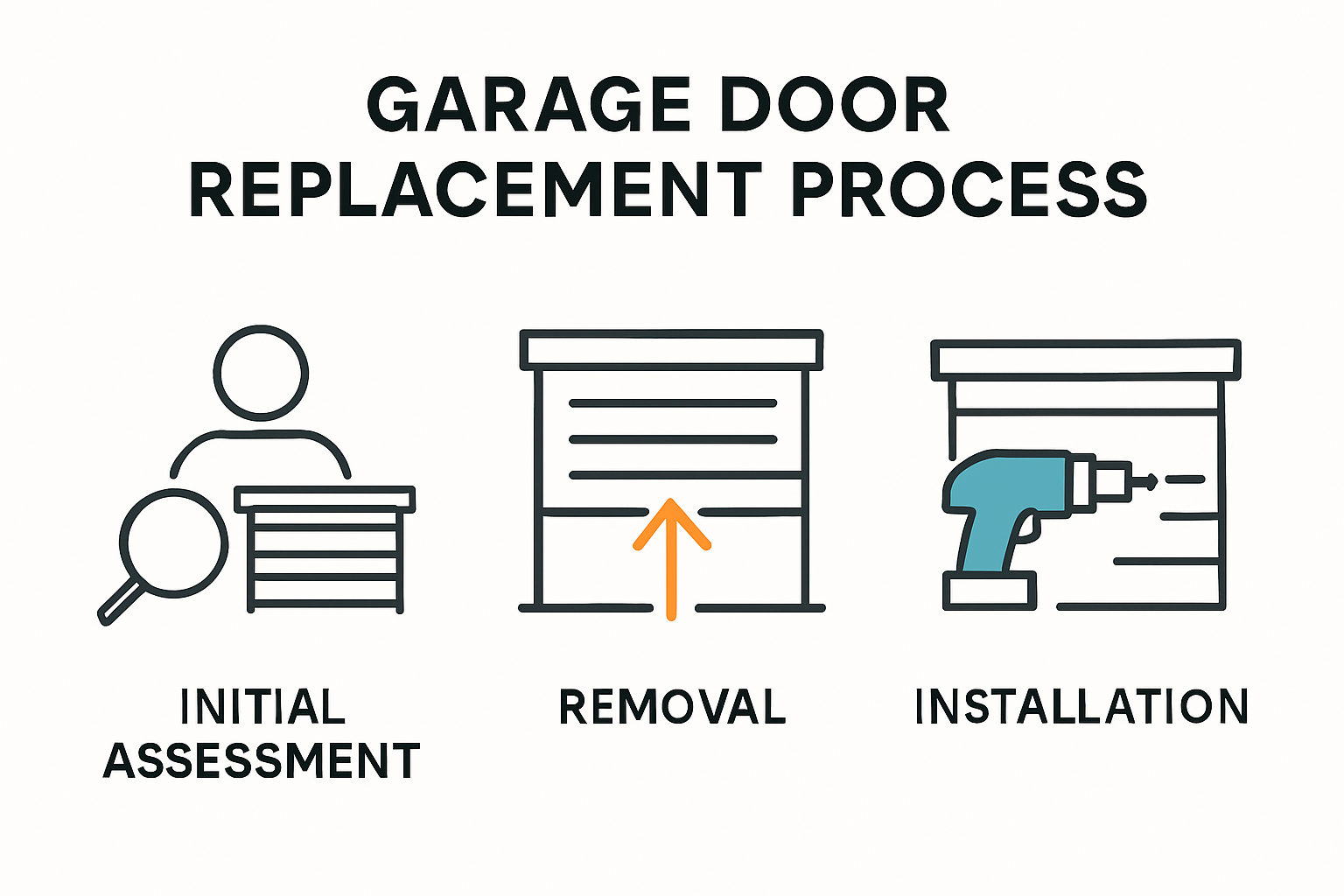
Replacing a garage door is a complex process that requires careful planning, precise measurements, and professional expertise. Seattle homeowners embarking on this home improvement project need to understand the comprehensive steps involved to ensure a successful installation that enhances both functionality and aesthetic appeal.
Initial Assessment and Preparation
The garage door replacement process begins with a thorough assessment of your existing setup. According to the National Association of Home Builders, professional evaluation is crucial before any installation. This initial stage involves measuring the existing door opening with extreme precision, checking the structural integrity of the surrounding frame, and assessing any potential electrical or mechanical modifications needed.
Key preparation steps include:
- Precise Measurements: Accurate width, height, and depth measurements of the garage door opening
- Structural Evaluation: Checking the frame, wall supports, and mounting points
- Electrical System Inspection: Verifying compatibility with existing opener systems
Read our complete guide on professional garage door installation to understand the intricate details of preparation.
Professional Installation Techniques
The actual installation process requires specialized skills and professional equipment. The International Door Association outlines a comprehensive approach that involves multiple critical steps. Professionals begin by removing the existing door carefully, including all hardware and track systems. The process involves installing new tracking, mounting brackets, and preparing the frame for the new door panels.
Critical installation components include:
- Track and Hardware Removal: Systematic dismantling of existing door components
- New Track Installation: Precise alignment and secure mounting of new tracking systems
- Panel Placement: Careful positioning and securing of individual door panels
- Spring System Setup: Precise installation of tension springs crucial for door operation
The complexity of this process underscores the importance of professional installation. Improper installation can lead to significant safety risks and potential damage to your property.
Final Testing and Calibration
After physical installation, the final stage involves comprehensive testing and calibration. The Consumer Product Safety Commission emphasizes the critical nature of safety checks during garage door installation. Technicians perform multiple tests to ensure smooth operation, verify safety sensor functionality, and calibrate the automatic opening and closing mechanisms.
Essential final testing procedures include:
- Operational Testing: Multiple open and close cycles to verify smooth movement
- Safety Sensor Verification: Checking automatic reversal mechanisms
- Balance and Alignment Checks: Ensuring perfect door balance and minimal friction
Seattle homeowners should recognize that garage door replacement is not a simple DIY project. The intricate process requires professional expertise to ensure safety, functionality, and long-term performance. By understanding these detailed steps, you can approach your garage door replacement with confidence and informed expectations.
Below is a table summarizing the main phases and key tasks in the professional garage door replacement process outlined above.
| Phase | Key Tasks & Actions |
|---|---|
| Initial Assessment & Preparation | Measure opening, evaluate structure, inspect electrical systems |
| Professional Installation | Remove old door, install tracks, place panels, set up springs |
| Final Testing & Calibration | Test operation, verify safety sensors, check balance & alignment |
Choosing the Right Garage Door for Seattle Homes
Selecting the perfect garage door for a Seattle home involves more than aesthetic considerations. The unique Pacific Northwest climate demands a strategic approach to materials, design, and functionality that can withstand frequent rainfall, temperature variations, and moisture challenges.
Material Considerations for Seattle’s Climate
The choice of garage door material plays a crucial role in long-term performance and durability. According to the National Fenestration Rating Council, different materials offer unique advantages for the Seattle environment. Steel doors provide exceptional durability and resistance to moisture, while composite materials offer excellent insulation and weather protection.
Key material characteristics include:
- Steel Doors: Rust-resistant and low-maintenance
- Composite Materials: Superior insulation and moisture resistance
- Aluminum: Lightweight and corrosion-resistant
- Wooden Doors: Traditional aesthetic with proper weather treatment
Explore our comprehensive guide to garage door materials to understand the nuanced selections for Seattle homes.
Insulation and Energy Efficiency
Seattle homeowners must prioritize energy efficiency when selecting a garage door. Research from the U.S. Department of Energy indicates that properly insulated garage doors can significantly reduce energy costs and improve home temperature regulation. Insulated doors create a thermal barrier, preventing heat loss during cold winters and maintaining cooler temperatures during mild summers.
Important insulation considerations:
- R-Value Ratings: Higher ratings indicate better thermal performance
- Polyurethane Foam Insulation: Provides superior temperature control
- Weatherstripping: Critical for preventing drafts and moisture infiltration
- Thermal Break Technology: Reduces heat transfer between door sections
Design and Aesthetic Integration
Beyond functional requirements, the garage door must complement Seattle’s diverse architectural styles. The American Architectural Foundation emphasizes the importance of visual harmony with existing home design. Modern Seattle homes range from craftsman-style residences to contemporary minimalist structures, requiring careful door selection.
Design elements to consider:
- Color Coordination: Matching or complementing home exterior
- Window Configurations: Adding natural light and architectural interest
- Hardware Finishes: Coordinating with home’s existing metalwork
- Panel Designs: Reflecting architectural character of the home
Seattle homeowners should view garage door selection as an investment in both functionality and property value. The right door not only protects your vehicle and home but also enhances curb appeal and energy efficiency. Professional consultation can help navigate the complex landscape of material, design, and performance requirements unique to the Pacific Northwest environment.
Expert Tips for a Safe and Smooth Installation
Garage door installation is a complex process that demands precision, technical expertise, and a comprehensive understanding of safety protocols. Seattle homeowners must recognize that professional installation goes far beyond simply hanging a door the right way it involves intricate technical considerations and safety mechanisms that protect both property and people.
Safety Mechanisms and Regulatory Compliance
The National Association of Home Builders emphasizes the critical importance of adhering to modern safety standards during garage door installation. Contemporary garage doors require multiple built-in safety features that prevent potential accidents and ensure reliable performance.
Key safety mechanisms include:
- Automatic Reversal Systems: Detecting obstructions and preventing door closure
- Photoelectric Sensors: Creating an invisible safety barrier that stops door movement
- Force Limitation Controls: Reducing potential impact force during door operation
- Manual Release Mechanisms: Allowing emergency door disengagement
Learn more about our professional installation safety protocols to understand our comprehensive approach.
Professional Installation Best Practices
According to the International Door Association, professional installation involves a systematic approach that goes beyond basic mounting. Technicians must carefully calibrate multiple components to ensure seamless and safe operation.
Critical installation best practices encompass:
- Precise Track Alignment: Ensuring perfect vertical and horizontal tracking
- Balanced Spring Tension: Calculating and setting exact spring load requirements
- Electrical System Integration: Properly connecting and testing opener mechanisms
- Comprehensive System Calibration: Fine-tuning door movement and safety features
Ongoing Maintenance and Performance Monitoring
The Consumer Product Safety Commission recommends establishing a regular maintenance routine immediately following installation. Professional technicians not only install the door but also provide critical guidance on preserving its functionality and safety.
Essential post-installation maintenance recommendations include:
- Quarterly Visual Inspections: Checking for wear, alignment, and potential issues
- Annual Professional Assessments: Comprehensive system evaluations
- Lubrication of Moving Parts: Preventing friction and reducing mechanical stress
- Software and Sensor Updates: Maintaining modern safety technology
Seattle homeowners should understand that garage door installation is not a one-time event but an ongoing process of ensuring safety, performance, and reliability. By partnering with professional technicians who understand the nuanced requirements of modern garage door systems, you protect your investment and ensure the long-term functionality of this critical home component.
Frequently Asked Questions
What are the signs that I need a garage door replacement?
Common signs include visible structural damage like dents and cracks, performance issues such as jerky movement, increased frequency of repairs, and outdated safety features that lack modern standards.
What is the garage door replacement process?
The process involves an initial assessment and preparation stage, followed by professional installation techniques, and concludes with final testing and calibration to ensure proper functionality and safety.
How do I choose the right garage door for my Seattle home?
Consider factors like material durability against moisture, insulation for energy efficiency, and design aesthetics that complement your home’s architecture. Options include steel, composite materials, and wooden doors.
Why is professional installation important for garage doors?
Professional installation ensures safety, proper alignment, and functionality. It involves complex techniques and safety mechanisms that protect both property and individuals, making it critical to engage qualified technicians.
Upgrade Your Seattle Home With a Safer, Smarter Garage Door
Are you noticing signs like structural damage, outdated safety features, or uneven operation with your garage door? These common problems in Seattle often mean your garage door is no longer providing the security, efficiency, or aesthetic value your home deserves. Homeowners throughout the area are discovering that a modern replacement does more than fix immediate issues—it can also enhance energy efficiency and curb appeal. If you want to avoid repeated repairs and ensure your family is protected, now is the perfect time to make a change with Summit Garage Doors.

Leave behind the hassle of unreliable doors and maintenance worries. Let our experts help you choose and install a customized solution that fits perfectly with your home’s design and withstands Seattle’s unique climate. Start your transformation today by visiting Summit Garage Doors or explore our professional garage door installation guide for more insight on what to expect. Choosing the right team means you get safer, longer-lasting performance. Reach out now and take the first step toward a secure, beautiful entryway.
Recommended
- Top-Rated Garage Door Spring Replacement in Seattle
- Elevate Your Home with the Best Garage Door Services in Seattle
- Seattle’s Premier Garage Door Installation & Repair
- Garage Door Repairs & Spring Repair | Fast Garage Door Service Near You
- Garage Door Installation Near You | Professional & Affordable Service
- Expert Seattle Garage Door Installation & Repair

