
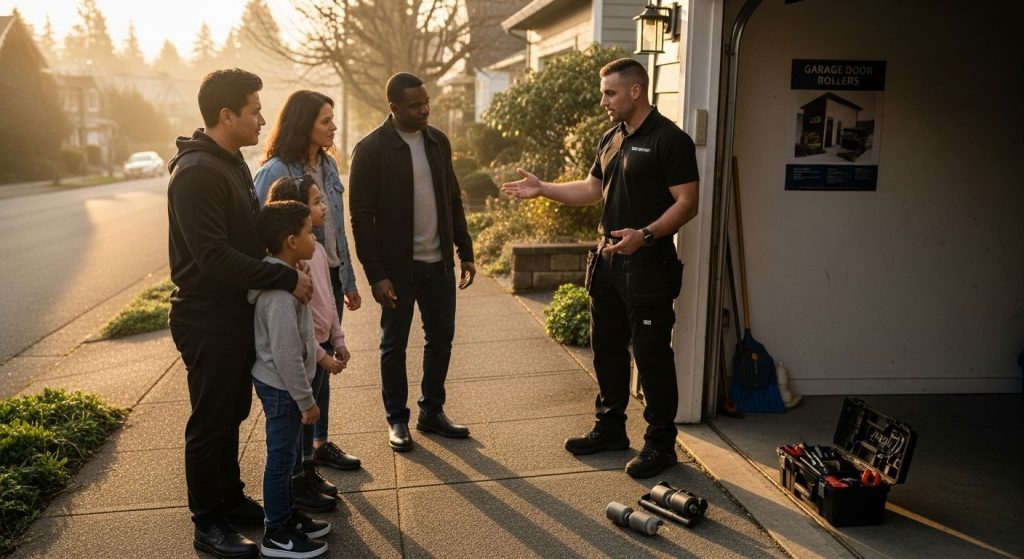
Garage door rollers might seem small, but they carry the full weight of your daily comings and goings. Most Seattle homeowners are surprised to learn that up to 75 percent of garage door roller issues can be caught early simply by listening to unusual grinding or squeaking sounds. You might expect repairs to be all about complex mechanical parts or expensive tools, but the real trick is knowing the early warning signs and the right type of roller for Seattle’s unpredictable weather. Get ready to rethink everything you assumed about garage door fixes.
Table of Contents
- Signs Your Garage Door Rollers Need Repair
- Step-By-Step Guide To Repairing Garage Door Rollers
- Choosing Replacement Rollers For Seattle Homes
- Preventive Maintenance Tips For Long-Lasting Rollers
Quick Summary
| Takeaway | Explanation |
|---|---|
| Listen for unusual sounds. | Grinding or squeaking noises indicate roller wear and need repair. Act promptly to avoid further damage. |
| Inspect rollers visually. | Look for cracks, rust, or wobbling during inspections to catch wear early and prevent costly repairs. |
| Choose appropriate replacement rollers. | Consider materials like nylon or stainless steel for durability in Seattle’s climate. Ensure proper sizing for compatibility. |
| Lubricate rollers regularly. | Use silicone or lithium-based lubricants every six months to reduce friction and prolong roller life. |
| Schedule seasonal maintenance. | Regularly check for moisture or rust specific to Seattle’s weather to maintain your garage door system effectively. |
Signs Your Garage Door Rollers Need Repair
Garage door rollers are critical components that ensure smooth and safe movement of your garage door. When these small but essential parts start to fail, they can cause significant problems for homeowners. Understanding the warning signs can help you address issues before they escalate into more expensive repairs.
Unusual Sounds During Operation
One of the most obvious indicators that your garage door rollers need attention is the sound they make during operation. Grinding, squeaking, or scraping noises are clear signals that something is wrong. These sounds typically occur when rollers have become worn, damaged, or are no longer properly aligned with the track. Research from the Garage Door Maintenance Association suggests that about 75% of garage door roller issues can be detected early through careful listening.
If you hear persistent metallic grinding or a high pitched squealing when opening or closing your garage door, it likely means your rollers are experiencing significant friction. This friction can cause accelerated wear on both the rollers and the track, potentially leading to more extensive damage if not addressed promptly.
Visual Signs of Roller Wear and Damage
Careful visual inspection can reveal multiple signs that your garage door rollers require repair. Look for these key indicators:
- Visible Roller Wear: Inspect the rollers for signs of cracking, chipping, or uneven wear. Rollers should roll smoothly without visible deformations.
- Track Misalignment: If rollers appear to be wobbling or not sitting flush within the track, this indicates potential replacement is needed.
- Rust or Corrosion: Metal rollers showing significant rust can compromise their structural integrity and smooth movement.
The National Home Repair Council recommends homeowners conduct a visual inspection of their garage door rollers at least twice per year to catch potential issues early.
Performance and Movement Issues
Beyond sounds and visual cues, the actual performance of your garage door can indicate roller problems. A door that jerks, moves unevenly, or seems to struggle during operation is signaling potential roller damage. Smooth, consistent movement is the hallmark of well maintained rollers.
Homeowners should pay attention to how their garage door moves. If it appears to drag on one side or seems to pause momentarily during its travel, these are strong indications that the rollers may be failing. Such performance issues not only reduce the efficiency of your garage door but can also pose significant safety risks.
Preventing major roller failures requires proactive maintenance. While some homeowners might attempt DIY repairs, our guide on garage door system components can help you understand when professional intervention is necessary.
Remember, garage door rollers typically have a lifespan of 5 to 7 years with regular use. Paying attention to these signs can help you replace them before they cause more significant damage to your garage door system.
Step-by-Step Guide to Repairing Garage Door Rollers
Repairing garage door rollers requires careful preparation and precise execution. While some homeowners may feel confident attempting this repair, understanding the process and potential risks is crucial. The International Door Association emphasizes that proper maintenance can significantly extend the lifespan of your garage door system.
Safety Preparation and Tools
Before beginning any repair, safety must be your primary concern. Gather the necessary tools and protective equipment to ensure a smooth repair process. Essential tools include:
For those planning to repair or replace garage door rollers, the following table summarizes the essential safety steps and tools required for the process:
| Step / Tool | Purpose |
|---|---|
| Disconnect opener | Prevents accidental activation |
| Release door tension | Avoids sudden door movement |
| Replacement rollers | Needed for swapping out old rollers |
| Wrench set | Remove and secure mounting brackets |
| Hammer | Helps remove old rollers |
| Work gloves | Protects hands from sharp edges |
| Safety glasses | Shields eyes during repair |
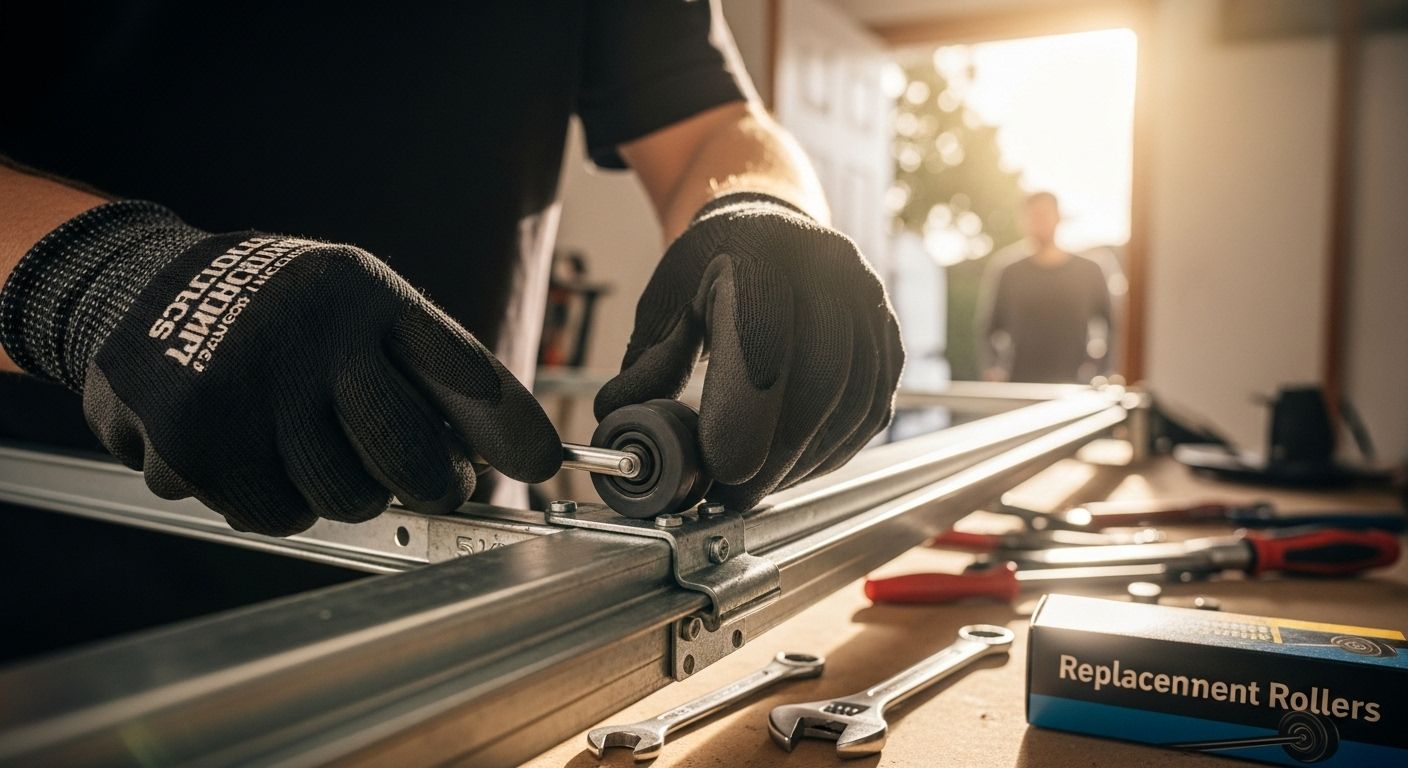
- Replacement Rollers: Ensure you have the correct size and type for your specific garage door
- Wrench Set: For removing and securing mounting brackets
- Hammer: To assist with roller removal
- Work Gloves: Protect your hands from sharp edges
- Safety Glasses: Shield your eyes during the repair
StaySafe.org recommends disconnecting the automatic opener and releasing tension from the door system before starting any maintenance work. This critical step prevents potential injury from sudden door movement.
Step-by-Step Roller Replacement Process
Replacing garage door rollers involves several precise steps. Begin by fully opening the garage door and supporting it securely. Warning: The door contains significant tension and can cause serious injury if not handled correctly.
- Disconnect the automatic opener and lock the door in place
- Remove the bottom roller brackets by carefully loosening mounting bolts
- Gently tap out old rollers using a hammer
- Insert new rollers into the track, ensuring they are properly aligned
- Reattach mounting brackets and tighten securely
- Lubricate new rollers with a high-quality garage door lubricant
InterNACHI notes that approximately 20,000 emergency room visits occur annually due to garage door related accidents. This statistic underscores the importance of careful, methodical repair work.
When to Seek Professional Help
While some homeowners are comfortable performing roller repairs, certain situations demand professional expertise. Complex repairs involving track alignment, significant roller damage, or doors with unique mechanisms should be handled by trained technicians. Our comprehensive DIY troubleshooting guide can help you determine whether a repair is within your skill level.
Professional intervention becomes necessary if you encounter:
- Severe track misalignment
- Multiple damaged rollers
- Unusual door movement or balance issues
- Lack of proper tools or mechanical experience
Remember that improper repairs can lead to more extensive damage and potential safety risks. When in doubt, consulting a professional garage door technician is always the safest approach.
Choosing Replacement Rollers for Seattle Homes
Selecting the right garage door rollers is crucial for maintaining smooth and efficient door operation in Seattle homes. The unique climate and environmental conditions of the Pacific Northwest require homeowners to be particularly thoughtful when choosing replacement rollers.
Types of Garage Door Rollers
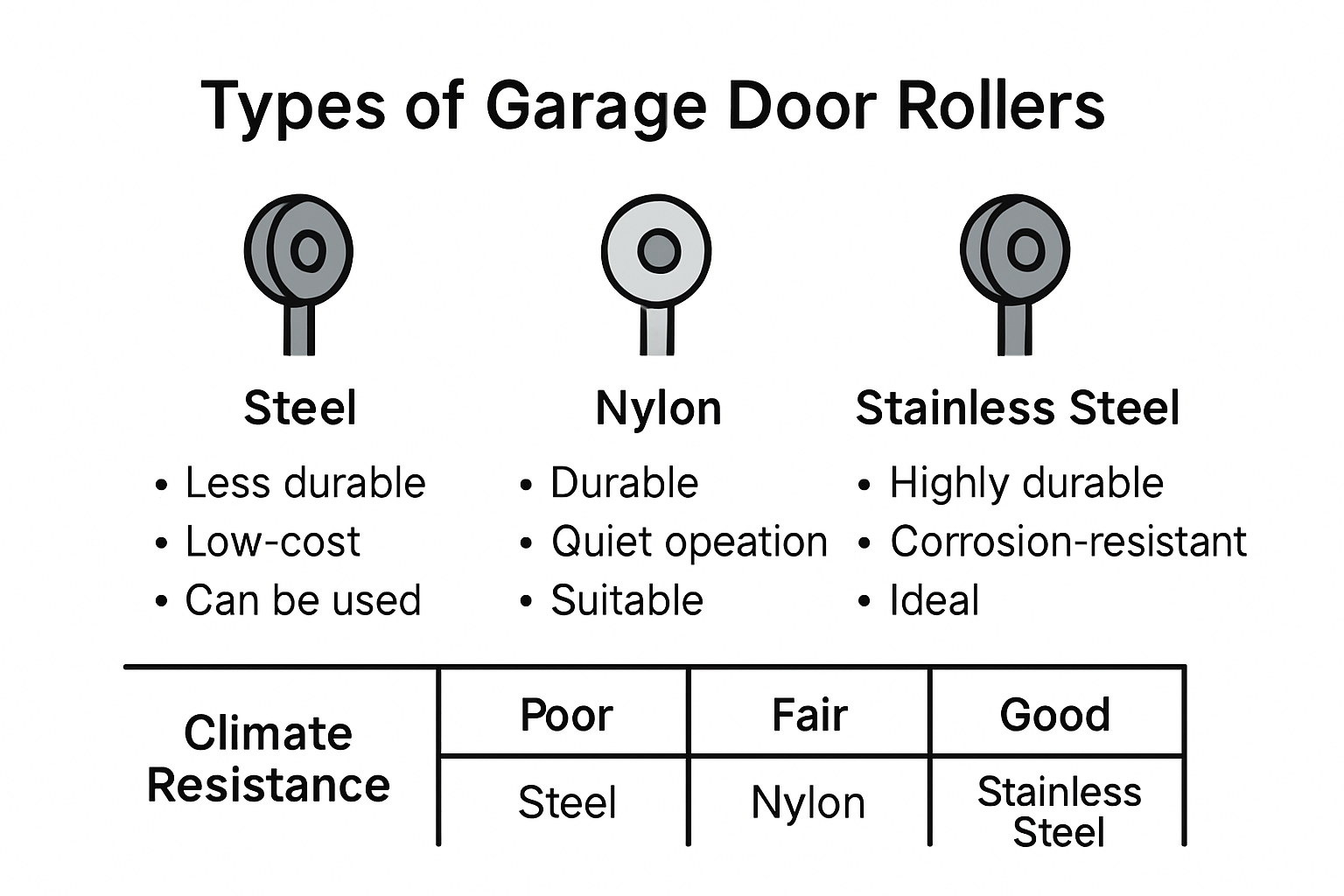
Garage door rollers come in various materials, each with distinct advantages and limitations. Understanding these options helps Seattle homeowners make informed decisions:
To help Seattle homeowners compare which type of garage door roller suits their needs, here is a breakdown of the key characteristics of each roller material mentioned in the article:
| Roller Type | Durability | Noise Level | Rust Resistance | Best For Seattle Climate |
|---|---|---|---|---|
| Steel | High | Moderate (can be noisy) | Low (prone to rust) | Not ideal unless coated |
| Nylon | Moderate-High | Low (quiet operation) | Moderate | Good |
| Stainless Steel | Very High | Moderate | Very High | Ideal |
- Steel Rollers: Durable and cost-effective, but prone to rust in the region’s humid environment
- Nylon Rollers: Quieter and more resistant to wear, with better performance in variable temperatures
- Stainless Steel Rollers: Excellent for coastal and moisture-prone areas, offering superior corrosion resistance
The Governor’s Office of Homeland Security recommends selecting rollers that can withstand local environmental challenges. In Seattle, this means prioritizing materials that can handle moisture, temperature fluctuations, and potential salt air from nearby coastal regions.
Sizing and Compatibility Considerations
Proper roller sizing is critical for garage door performance. Homeowners should carefully measure their existing rollers and consider several key factors:
- Stem Length: Measure the metal stem that connects the roller to the door bracket
- Roller Diameter: Typically ranges from 1 to 2 inches
- Weight Capacity: Must match your specific garage door weight
Professional technicians recommend consulting manufacturer specifications or our comprehensive guide on garage door system components to ensure perfect compatibility. Incorrect sizing can lead to premature wear and potential safety issues.
Safety and Maintenance Factors
Beyond material and size, Seattle homeowners should consider long-term safety and maintenance. The U.S. Fire Administration emphasizes the importance of selecting rollers that contribute to overall garage safety. Look for rollers with the following characteristics:
- Smooth, consistent rolling action
- Resistance to temperature extremes
- Minimal friction to reduce wear on tracks and springs
- Compatibility with regular lubrication maintenance
While our garage door replacement guide offers additional insights, the most critical consideration is matching rollers to your specific door type, weight, and usage patterns.
Seattle’s unique climate demands more than a one-size-fits-all approach to garage door rollers. Investing time in selecting the right rollers can prevent costly repairs, reduce noise, and ensure smooth operation for years to come. When in doubt, consulting a professional can help you navigate the complex world of garage door roller selection.
Preventive Maintenance Tips for Long-Lasting Rollers
Maintaining garage door rollers is essential for ensuring smooth operation and extending the lifespan of your garage door system. Seattle homeowners face unique environmental challenges that can accelerate roller wear, making proactive maintenance crucial.
Regular Inspection and Cleaning
The International Door Association recommends monthly visual inspections to catch potential issues early. During these inspections, homeowners should:
- Check for Visible Wear: Look for signs of cracking, chipping, or uneven roller surfaces
- Examine Track Alignment: Ensure rollers move smoothly without wobbling or catching
- Remove Debris: Clean tracks and rollers to prevent accumulation of dirt and grime
- Look for Rust: Inspect metal components for early signs of corrosion, especially in Seattle’s humid climate
Using a soft cloth and mild cleaning solution can help remove built-up dirt and prevent premature wear. Pay special attention to the roller stems and track surfaces, as these areas are most prone to debris accumulation.
Lubrication Techniques
StaySafe.org emphasizes the critical role of proper lubrication in maintaining garage door rollers. Effective lubrication involves:
- Choosing the Right Lubricant: Use a silicone-based or lithium-based garage door lubricant
- Applying Sparingly: A light coat is sufficient to reduce friction
- Focusing on Key Areas: Concentrate on roller stems, track surfaces, and hinge points
- Cleaning Before Lubricating: Remove old lubricant and debris before applying new product
Professional technicians recommend lubricating rollers every six months or more frequently in areas with extreme temperature variations. Our comprehensive maintenance guide provides detailed insights into proper lubrication techniques specific to Seattle’s unique climate.
Seasonal Maintenance Considerations
Seattle’s diverse weather patterns require homeowners to adapt their maintenance approach throughout the year. Key seasonal maintenance tips include:
- Winter Preparation: Check for moisture buildup and potential freezing
- Summer Maintenance: Inspect rollers for heat-related expansion and wear
- Rainy Season: Pay extra attention to rust prevention and moisture protection
- Annual Professional Inspection: Schedule a comprehensive check-up with a garage door specialist
Homeowners should create a maintenance calendar that accounts for seasonal changes. This proactive approach helps identify potential issues before they become costly repairs. Remember that consistent, minor maintenance is far more cost-effective than major roller replacements.
By implementing these preventive maintenance strategies, Seattle homeowners can significantly extend the life of their garage door rollers. While some maintenance can be performed DIY, do not hesitate to consult a professional if you encounter complex issues or are unsure about proper maintenance techniques. Your garage door is a significant home investment, and proper care ensures its longevity and reliable performance.
Frequently Asked Questions
What are the signs that my garage door rollers need repair?
You should be on the lookout for unusual sounds like grinding or squeaking, visible signs of wear such as cracks or rust, and performance issues like jerking or uneven movement of the garage door.
How can I replace my garage door rollers?
To replace garage door rollers, first ensure safety by disconnecting the opener and locking the door in place. Then, remove the bottom roller brackets, tap out the old rollers, insert the new ones, reattach the mounting brackets, and lubricate the new rollers.
What types of garage door rollers are best for Seattle’s weather?
Nylon and stainless steel rollers are recommended for Seattle’s climate due to their durability and corrosion resistance. Steel rollers, though strong, can rust in humid conditions and may not be ideal without appropriate coatings.
How often should I lubricate my garage door rollers?
It’s advisable to lubricate your garage door rollers every six months. In extreme weather conditions, you may need to lubricate them more frequently to ensure smooth operation and reduce wear.
Ready for Smoother and Safer Garage Door Performance in Seattle?
If you are worried about grinding noises, stuck rollers, or signs of wear on your garage door, you are not alone. As highlighted in our homeowner’s guide, waiting too long to address roller issues can lead to bigger repair costs and even safety hazards. Seattle’s weather is tough on garage doors and small problems with rollers can quickly become emergencies. Tired of squeaks and unreliable performance? Summit Garage Doors is here to take away that stress.
Let our experienced technicians handle the entire process, from diagnosing roller wear to choosing weather-resistant parts fit for Seattle homes. We make it easy to restore your garage door’s movement and safety with expert repairs, top-quality replacements, and ongoing support. Do not let noisy or unreliable garage doors disrupt your routine. Visit Summit Garage Doors to book a repair or explore our DIY troubleshooting tips and comprehensive maintenance advice today. Take control of your garage door’s health before a minor roller issue turns into a costly breakdown.
Recommended
- DIY Garage Door Troubleshooting for Seattle Homeowners 2025 – Summit Garage Doors | Seattle’s #1 Garage Door Repair & Installation
- Seattle Garage Door Service Tips for Homeowners 2025 – Summit Garage Doors | Seattle’s #1 Garage Door Repair & Installation
- Garage Door Installation Guide for Seattle Homeowners 2025 – Summit Garage Doors | Seattle’s #1 Garage Door Repair & Installation
- Garage Door Basics: Essential Guide for Seattle Homeowners 2025 – Summit Garage Doors | Seattle’s #1 Garage Door Repair & Installation

