
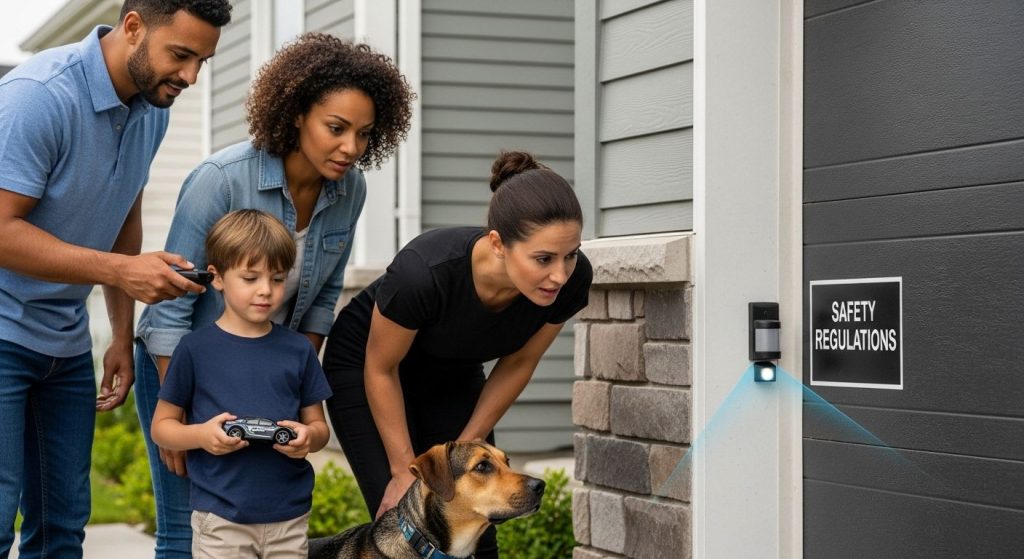
Garage door safety regulations might sound routine, but they impact millions of homes across the country. Mechanical failures and improper installations lead to thousands of injuries every year, especially among children and pets. Most people picture a garage door as a harmless part of daily life. Surprising as it is, the real threat comes from those split-second malfunctions that safety rules are designed to stop in their tracks.
Table of Contents
- What Are Garage Door Safety Regulations?
- Why Garage Door Safety Regulations Matter
- How Garage Door Safety Regulations Work
- Key Concepts in Garage Door Safety Standards
Quick Summary
| Takeaway | Explanation |
|---|---|
| Prioritize garage door safety regulations | Compliance with safety regulations minimizes risks of injuries and accidents. |
| Implement automatic reversal systems | These systems stop or reverse door movement when obstacles are detected, preventing crushing injuries. |
| Regularly test safety mechanisms | Routine checks of mechanical safety features ensure they function properly and meet safety standards. |
| Be aware of legal liabilities | Non-compliance with safety standards can lead to lawsuits and insurance complications for homeowners. |
| Stay updated on local regulations | Garage door safety standards evolve, so it’s crucial to keep abreast of regional compliance requirements. |
What Are Garage Door Safety Regulations?
Garage door safety regulations are comprehensive guidelines designed to prevent accidents, injuries, and potential fatalities associated with residential and commercial garage door systems. These regulations establish critical standards for design, installation, maintenance, and operational protocols that protect users from potential hazards.
The Purpose of Safety Regulations
Safety regulations for garage doors serve multiple critical objectives. They are developed through extensive research and collaboration between engineering experts, safety professionals, and industry manufacturers. The primary goals include:
- Minimizing risk of personal injury during garage door operation
- Establishing minimum performance standards for mechanical components
- Ensuring predictable and controlled door movement
- Protecting users from potential crushing or entrapment scenarios
According to OSHA guidelines, safety regulations focus on preventing unexpected movements and creating fail-safe mechanisms that interrupt potentially dangerous operations.
Key Components of Safety Regulations
Garage door safety regulations typically cover several essential areas of compliance. These include automatic reversal mechanisms, sensor placement, force limitation, and emergency release systems. Manufacturers must design products that meet specific safety thresholds, ensuring that doors can detect obstacles and immediately stop or reverse direction to prevent potential harm.
For local homeowners seeking detailed insights, our comprehensive guide on local garage door requirements provides region-specific information about current safety standards and installation protocols.
While regulations may vary slightly between residential and commercial applications, the core principle remains consistent: protecting human life and preventing potential accidents through intelligent, proactively designed mechanical systems.
Why Garage Door Safety Regulations Matter
Garage door safety regulations are far more than bureaucratic paperwork. They represent a critical framework designed to protect human life, prevent potential injuries, and establish standardized safety protocols for residential and commercial garage door systems.
Human Life Protection
Statistics reveal the serious risks associated with unregulated garage door systems. Mechanical failures and improper installations can lead to devastating consequences. According to Title 16, Section 1211.7 of the Code of Federal Regulations, safety standards are mandated specifically because garage doors represent significant injury risks, particularly for vulnerable populations like children and pets.
The potential hazards include:
- Unexpected door movements causing crushing injuries
- Mechanical failures leading to sudden door drops
- Entrapment risks during door operation
- Potential electrical and mechanical malfunctions
Economic and Legal Implications
Beyond physical safety, garage door safety regulations carry substantial economic and legal ramifications. Homeowners, property managers, and businesses face potential liability for non-compliant systems. Improper garage door installations can result in significant financial risks, including:
- Potential personal injury lawsuits
- Insurance claim complications
- Costly equipment replacements
- Potential municipal code violation penalties
For detailed insights into local garage door compliance requirements, homeowners can review specific regional regulations that impact their specific installation and maintenance needs.
Ultimately, garage door safety regulations represent a proactive approach to preventing accidents, protecting human life, and ensuring mechanical systems operate with predictable, controlled movements. These standards are not just recommendations but essential guidelines that safeguard communities and individuals from potential harm.
For quick reference, the table below compares the major purposes and benefits of garage door safety regulations by focusing on safety, economic, and legal perspectives. This comparative overview helps summarize why regulations matter for all stakeholders.
| Regulation Focus | Description | Example Impacts |
|---|---|---|
| Human Life Protection | Reduces risk of injury or death during garage door operation | Fewer child and pet injuries |
| Economic Implications | Prevents financial losses from lawsuits, claims, and replacements | Avoids legal expenses |
| Legal Compliance | Ensures adherence to regional laws and standards | Fewer code violation fines |
How Garage Door Safety Regulations Work
Garage door safety regulations function through a comprehensive system of technical standards, inspection protocols, and mandatory design requirements that systematically minimize potential risks during garage door operation.
Mechanical Safety Mechanisms
Safety regulations mandate specific mechanical safeguards that ensure predictable and controlled door movements. These mechanisms focus on preventing unexpected actions and protecting users from potential harm. Key technical requirements include:
To help clarify the main mechanical and technological features that constitute garage door safety regulation compliance, the following table organizes the essential safety components and their functions as described in the content.
| Safety Feature | Purpose |
|---|---|
| Automatic reversal systems | Detect obstacles and stop or reverse the door to prevent injuries |
| Force limitation sensors | Limit pressure during operation to avoid crushing and trapping |
| Emergency release mechanisms | Allow for manual door operation in case of emergency or malfunction |
| Photoelectric sensors | Detect obstructions across the door’s path for added entrapment safety |
| Electronic performance monitoring | Continuously assess mechanical and sensor system health |
- Automatic reversal systems that detect obstacles
- Force limitation sensors preventing excessive pressure
- Emergency release mechanisms for manual intervention
- Photoelectric sensor placement to detect obstructions
Manufacturers must design products that meet these precise engineering specifications, which are developed through extensive research and collaborative safety standards development.
Compliance and Verification Processes
Regulatory compliance involves multiple verification stages. Garage door systems must undergo rigorous testing and certification processes to ensure they meet established safety thresholds. Our comprehensive local compliance guide provides detailed insights into the specific inspection and verification protocols required in the Seattle metropolitan area.
The verification process typically involves:
- Detailed mechanical performance assessments
- Electronic safety system evaluations
- Comprehensive stress testing of critical components
- Documentation and certification of safety standards compliance
Technological and Design Standards
Garage door safety regulations continuously evolve with technological advancements. Modern regulations incorporate sophisticated electronic monitoring systems, advanced sensor technologies, and intelligent design principles that proactively prevent potential accidents.
These standards are not static but represent a dynamic framework that adapts to emerging safety technologies, ensuring that garage door systems remain at the forefront of user protection and mechanical reliability.
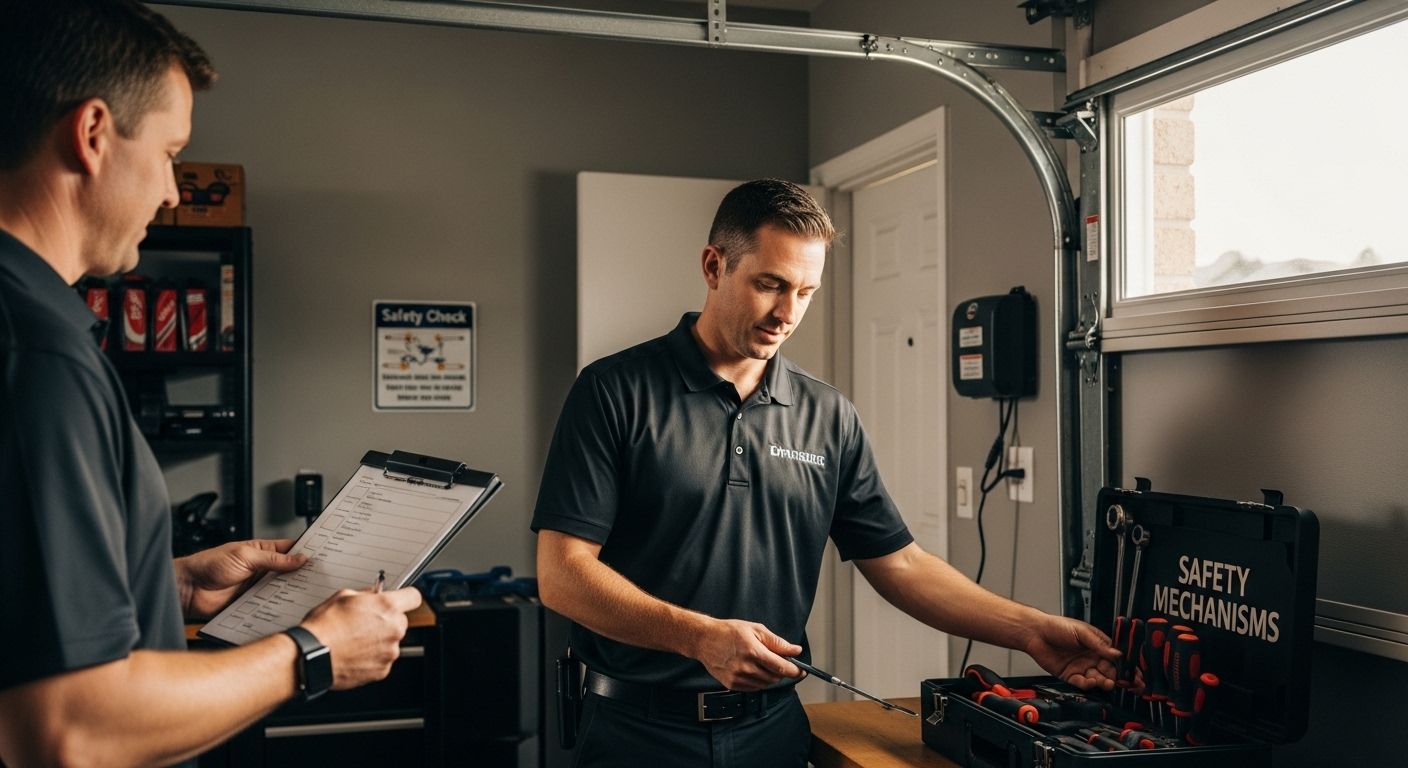
Key Concepts in Garage Door Safety Standards
Garage door safety standards represent a sophisticated framework of technical specifications and performance requirements designed to ensure mechanical reliability and human protection. These standards encompass comprehensive guidelines that address potential risks and establish minimum safety benchmarks for residential and commercial garage door systems.
Fundamental Safety Performance Requirements
Safety standards focus on preventing unintended door movements and potential injury scenarios. According to U.S. Consumer Product Safety Commission regulations, garage door systems must incorporate multiple protective mechanisms that systematically minimize accident risks.
Key performance requirements include:
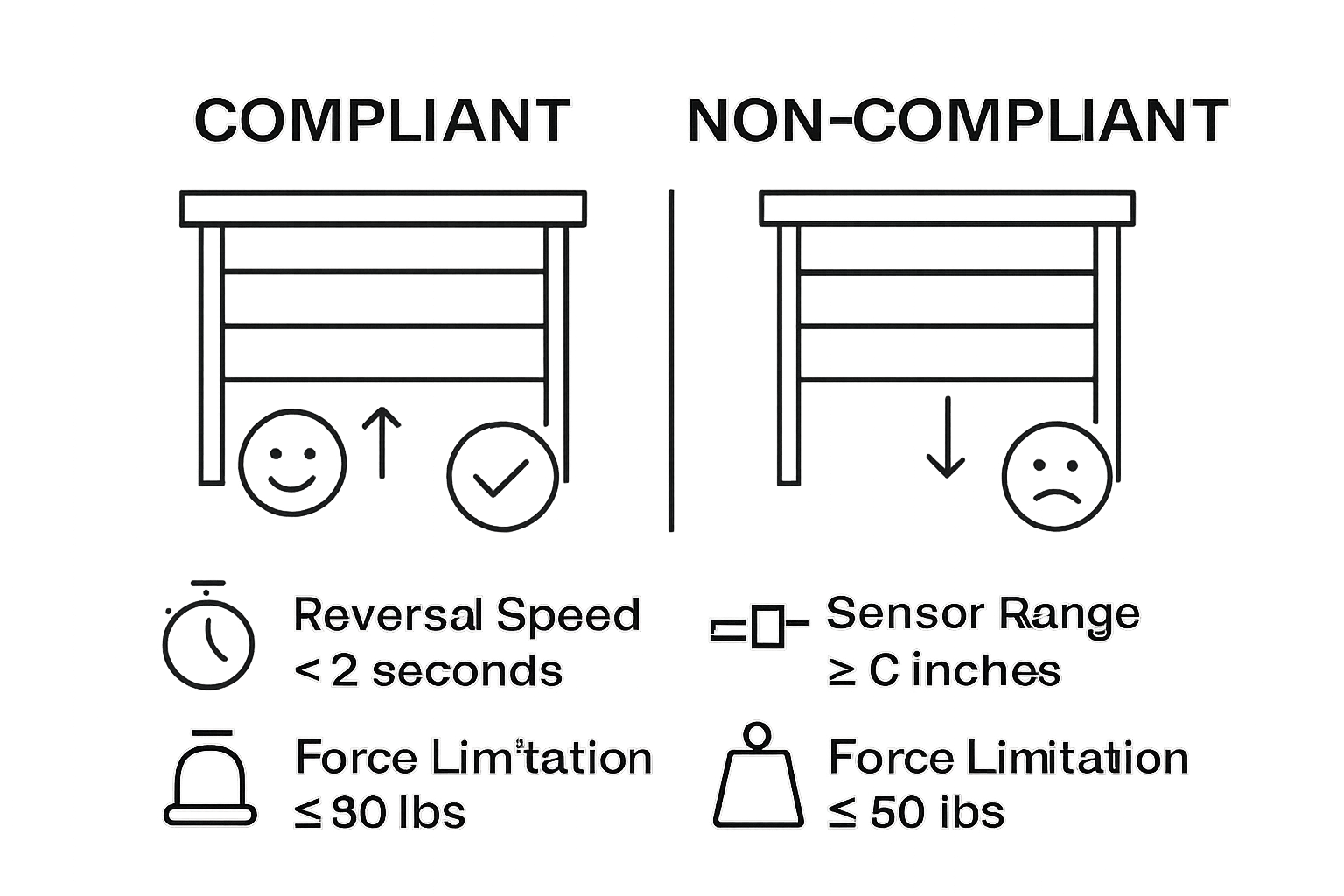
- Automatic reversal mechanisms within two seconds of obstacle detection
- Maximum force limitations during door operation
- Comprehensive entrapment prevention technologies
- Consistent mechanical and electronic safety monitoring
Technological Compliance Mechanisms
Modern garage door safety standards mandate sophisticated technological interventions. Electronic safety systems must demonstrate precise, predictable behavior under various operational conditions. This involves implementing multiple layers of protective technologies that work synchronously to prevent potential accidents.
Critical technological compliance elements involve:
- Photoelectric sensor integration
- Force detection and limitation systems
- Emergency stop and manual release functionalities
- Continuous electronic performance monitoring
Our comprehensive local safety standards guide provides detailed insights into region-specific implementation requirements.
Continuous Evolution of Safety Standards
Safety standards are not static documents but dynamic frameworks that continuously adapt to technological advancements and emerging risk assessment methodologies. Regulatory bodies consistently review and update guidelines to incorporate new research findings, technological innovations, and comprehensive safety research.
This proactive approach ensures that garage door safety standards remain responsive to changing technological landscapes, ultimately prioritizing user protection and mechanical reliability.
Stay Safe and Compliant With Professional Garage Door Solutions
Are you concerned about meeting strict garage door safety regulations and protecting your family or business from unexpected hazards? This article has shown how garage door safety standards are not just guidelines. They are essential for preventing injuries, complying with local rules, and avoiding expensive legal or insurance issues. If you worry about whether your current system meets the latest requirements for automatic reversal mechanisms, sensor placement, or emergency release systems, you are not alone.

Let the experts at Summit Garage Doors take the stress out of safety compliance. Our skilled technicians can inspect, repair, or replace your residential or commercial garage doors to match Seattle’s most up-to-date safety regulations. Visit our garage door safety compliance resources for local details or schedule your personalized safety assessment and upgrade now. Secure peace of mind today and protect what matters most with our trusted garage door experts.
Frequently Asked Questions
What are garage door safety regulations?
Garage door safety regulations are guidelines designed to prevent accidents and ensure the safe operation of garage doors. They establish standards for design, installation, and maintenance to protect users from hazards.
Why are garage door safety regulations important?
These regulations are essential for protecting human life, minimizing the risk of injuries from mechanical failures, and reducing potential liability for homeowners and commercial property managers.
What are the key components of garage door safety regulations?
Key components include automatic reversal mechanisms, sensor placement, force limitation systems, and emergency release systems that all work to prevent accidents and improve user safety.
How do garage door safety regulations evolve?
Garage door safety regulations continuously evolve to incorporate technological advancements and emerging safety research. Regulatory bodies regularly review and update these guidelines to enhance user protection and mechanical reliability.
Recommended
- Garage Door Code Requirements for Seattle and King County 2025 – Summit Garage Doors | Seattle’s #1 Garage Door Repair & Installation
- 2025 Commercial Garage Door Requirements for Seattle Area – Summit Garage Doors | Seattle’s #1 Garage Door Repair & Installation
- Garage Door Etiquette Seattle: Essential Tips for Homeowners 2025 – Summit Garage Doors | Seattle’s #1 Garage Door Repair & Installation
- DIY Garage Door Repairs: Seattle Homeowners’ 2025 Guide – Summit Garage Doors | Seattle’s #1 Garage Door Repair & Installation

