
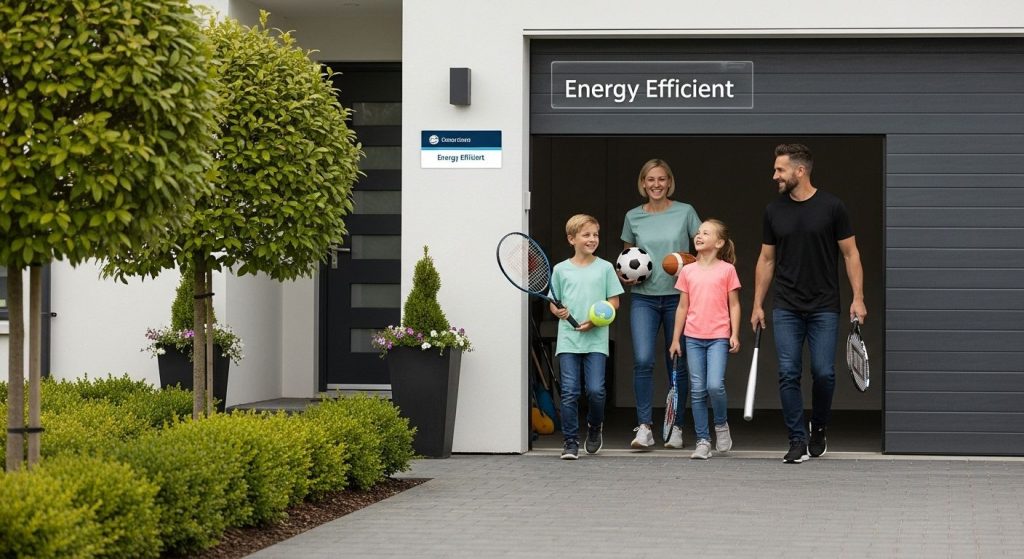
Most people think their biggest source of home energy loss comes from windows or old insulation, but garage doors are quietly stealing the spotlight. Experts say a properly insulated garage door can help save up to 15 percent on annual energy bills. That means the forgotten space where you park your car can actually hold the key to shrinking your home’s energy costs in a way most homeowners miss.
Table of Contents
- What Are Energy Efficient Garage Doors And Their Features?
- Why Energy Efficiency In Garage Doors Matters For Homeowners
- How Energy Efficient Garage Doors Work To Save Energy
- Key Concepts Behind Energy Efficiency Ratings And Materials
- Real-World Benefits Of Installing Energy Efficient Garage Doors
Quick Summary
| Takeaway | Explanation |
|---|---|
| Energy efficient garage doors minimize energy loss | These doors provide superior insulation, preventing heat loss in winter and heat gain in summer, enhancing home comfort. |
| U-factor and SHGC ratings are essential | Homeowners should choose garage doors with lower U-factor and SHGC ratings for better thermal performance and energy savings. |
| Investment leads to financial savings | Installing energy efficient doors can lower monthly utility costs and may increase home resale value due to improved energy performance. |
| Eco-friendly choice reduces carbon footprint | By using less energy, these doors contribute to lower greenhouse gas emissions, supporting environmental sustainability. |
| Modern materials enhance durability and efficiency | Advanced materials like polyurethane foam improve insulation and the overall longevity of garage doors, protecting your investment over time. |
What Are Energy Efficient Garage Doors and Their Features?
Energy efficient garage doors represent an innovative solution for homeowners seeking to reduce energy consumption and improve home thermal performance. These specialized doors go beyond traditional garage door designs by incorporating advanced materials and construction techniques that minimize heat transfer and provide superior insulation.
Core Components of Energy Efficient Design
Energy efficient garage doors are distinguished by their sophisticated construction. The primary goal is to create a barrier that prevents heat loss during winter and heat gain during summer. Key features typically include:
- High-density polyurethane foam insulation within door panels
- Multiple-layer construction with thermal breaks
- Advanced weatherstripping to prevent air infiltration
- Tight-fitting edges that minimize drafts
According to the U.S. Department of Energy, insulated steel and fiberglass doors provide significantly better thermal performance compared to traditional wood doors. These modern doors often feature a polyurethane foam core that dramatically enhances their insulating properties.
Performance and Efficiency Ratings
Homeowners can assess energy efficient garage doors through specific performance metrics. The National Fenestration Rating Council provides standardized ratings that help consumers understand a door’s thermal performance. Two critical measurements include:
- U-factor: Measures the door’s insulation capability (lower values indicate better insulation)
- Solar Heat Gain Coefficient (SHGC): Indicates how effectively the door blocks solar heat
By selecting a garage door with optimal ratings, homeowners can potentially reduce energy costs and improve overall home comfort. Explore our guide on residential garage door trends to understand how modern designs prioritize energy efficiency and performance.
Why Energy Efficiency in Garage Doors Matters for Homeowners
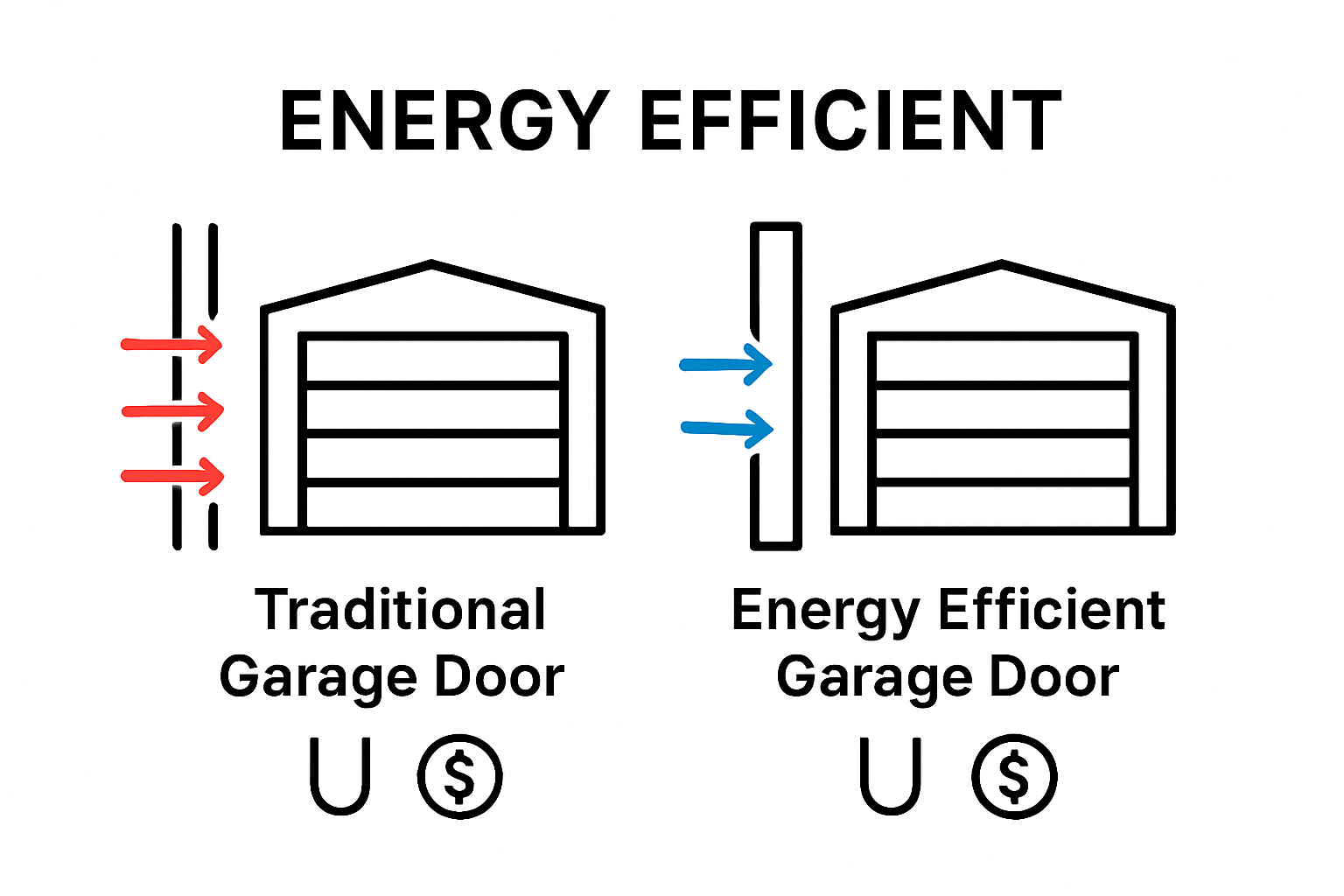
Garage doors are often overlooked when homeowners consider energy efficiency, yet they play a significant role in maintaining home comfort and reducing energy consumption. As a critical component of a home’s thermal envelope, energy efficient garage doors provide substantial benefits beyond simple door functionality.
Financial and Comfort Implications
Homeowners can experience profound advantages by investing in energy efficient garage doors. These doors act as a crucial barrier between interior living spaces and external temperature fluctuations. By minimizing heat transfer, they help stabilize indoor temperatures, reducing the workload on heating and cooling systems.
According to the U.S. Department of Energy, doors represent a substantial source of energy loss in residential structures. A well-insulated garage door can significantly cut utility expenses and improve overall home energy performance.
Environmental and Performance Benefits
Beyond personal financial savings, energy efficient garage doors contribute to broader environmental sustainability. The reduced energy consumption translates directly into lower carbon emissions. Homeowners who prioritize these doors demonstrate a commitment to responsible energy use.
Key environmental and performance advantages include:
- Reduced greenhouse gas emissions
- Lower monthly utility costs
- Enhanced home thermal regulation
- Decreased mechanical system strain
Thermal Performance Matters
Modern energy efficient garage doors are engineered with advanced materials and design principles that create superior thermal barriers. By selecting doors with high insulation ratings and proper sealing, homeowners can transform an often-neglected home component into a powerful energy conservation tool.
Read our comprehensive guide on garage door repair and replacement to understand how strategic upgrades can improve your home’s energy efficiency and long-term performance.
How Energy Efficient Garage Doors Work to Save Energy
Energy efficient garage doors function through a sophisticated system of design and material engineering that actively prevents unwanted heat transfer. By creating a comprehensive thermal barrier, these innovative doors transform what was once a simple entry point into a critical component of home energy management.
Thermal Barrier Construction
The core mechanism of energy efficient garage doors involves multiple layers of insulation and strategic material selection. Unlike traditional garage doors, these advanced designs incorporate specialized materials that dramatically reduce thermal conductivity. Polyurethane foam insulation serves as the primary thermal resistance mechanism, filling door panel cavities and creating a dense barrier against temperature fluctuations.
According to the U.S. Department of Energy, properly insulated doors can significantly minimize heat loss and gain, helping homeowners maintain consistent indoor temperatures with less mechanical intervention.
Key Energy Saving Mechanisms
Energy efficient garage doors employ several sophisticated strategies to prevent energy loss:
- Weatherstripping: Creates an airtight seal around door edges
- Thermal breaks: Interrupts heat transfer pathways within door materials
- Reflective surface coatings: Reduces solar heat absorption
- Multiple panel construction: Adds additional insulation layers
Preventing Thermal Bridging
Thermal bridging represents a critical challenge in maintaining energy efficiency. Modern garage doors address this issue through innovative design techniques that interrupt direct heat transfer paths. By using materials with low thermal conductivity and creating intentional separation between interior and exterior surfaces, these doors prevent energy from easily moving between different temperature zones.
Explore our garage door design tips to understand how strategic material choices and construction techniques contribute to superior energy performance.
Key Concepts Behind Energy Efficiency Ratings and Materials
Understanding energy efficiency ratings and materials is crucial for homeowners seeking to make informed decisions about their garage doors. These technical specifications provide valuable insights into how a door will perform in terms of thermal regulation and overall energy conservation.
Understanding Performance Metrics
Energy efficiency ratings serve as a standardized method for comparing different garage door products. The National Fenestration Rating Council establishes comprehensive metrics that help consumers evaluate a door’s thermal performance. Two primary measurements stand out in this assessment:
- U-Factor: Measures heat transfer rate through the door material
- Solar Heat Gain Coefficient (SHGC): Indicates how much solar radiation passes through the door
- R-Value: Represents the door’s insulation effectiveness
A lower U-factor signifies better insulation, while a lower SHGC suggests more effective solar heat blocking. These metrics provide a scientific approach to understanding a garage door’s energy efficiency potential.
To help clarify the core metrics used to evaluate garage door energy efficiency, here is a definition table summarizing the key terms discussed in the article.
| Term | Definition | Preferred Value for Efficiency |
|---|---|---|
| U-Factor | Measures heat transfer rate through the door material | Lower |
| SHGC | Indicates how much solar radiation passes through the door | Lower |
| R-Value | Represents the door’s insulation effectiveness | Higher |
Advanced Material Technologies
Modern energy efficient garage doors leverage cutting-edge materials designed to maximize thermal performance. Manufacturers have developed sophisticated construction techniques that go beyond traditional door manufacturing. Polyurethane foam insulation remains a standout technology, offering exceptional thermal resistance and structural integrity.
According to the U.S. Department of Energy, innovative materials can significantly reduce energy transfer, helping homeowners maintain more consistent indoor temperatures while reducing overall energy consumption.
Selecting the Right Materials
Homeowners should consider several factors when evaluating garage door materials for energy efficiency:
- Insulation density and type
- Material thermal conductivity
- Surface reflectivity
- Durability and long-term performance
Comparative Material Performance
Different materials offer varying levels of energy efficiency. Steel doors with polyurethane foam cores typically outperform traditional wood or aluminum options. Fiberglass and composite materials also present compelling alternatives, each with unique thermal management characteristics.
Below is a table comparing common garage door materials mentioned in the article and their energy efficiency characteristics.
| Material | Insulation Type | Thermal Efficiency | Durability | Relative Performance |
|---|---|---|---|---|
| Insulated Steel | Polyurethane Foam Core | Excellent | High | Outperforms wood/aluminum |
| Fiberglass | Polyurethane Foam Core | Very Good | Moderate to High | Comparable to steel |
| Wood | Typically None/Low | Poor | Moderate (with upkeep) | Lowest |
| Aluminum | Typically None/Low | Poor | High (but less efficient) | Lowest |
| Composite | Varies | Good | Varies | Better than wood/aluminum |
Learn more about our 2025 commercial garage door requirements to understand how professional standards are evolving to prioritize energy efficiency.
Real-World Benefits of Installing Energy Efficient Garage Doors
Energy efficient garage doors provide homeowners with a range of tangible advantages that extend far beyond simple temperature control. These advanced door systems deliver comprehensive benefits that impact financial, environmental, and comfort-related aspects of residential living.
Financial Advantages
The economic benefits of energy efficient garage doors are substantial and immediate. Homeowners can experience significant reductions in monthly utility expenses by minimizing heat transfer and reducing the workload on heating and cooling systems. Strategic investment in these doors translates to long-term financial savings.
Key financial benefits include:
- Reduced monthly energy bills
- Lower heating and cooling system maintenance costs
- Potential increase in home resale value
- Potential tax credits for energy-efficient home improvements
According to the U.S. Department of Energy, properly insulated doors can help homeowners save up to 15% on annual energy expenses, representing a meaningful financial impact.
Environmental and Comfort Improvements
Beyond monetary considerations, energy efficient garage doors contribute significantly to environmental sustainability and home comfort. These doors create a more stable indoor environment by minimizing temperature fluctuations and reducing air infiltration. The advanced insulation technology helps maintain consistent temperatures, creating a more comfortable living space.

Environmental benefits encompass:
- Reduced carbon footprint
- Decreased energy consumption
- Lower greenhouse gas emissions
- Minimized strain on local energy infrastructure
Long-Term Home Performance
Durability and performance represent critical considerations for homeowners. Energy efficient garage doors are constructed with advanced materials that offer superior structural integrity. These doors not only provide excellent thermal management but also demonstrate enhanced resistance to environmental wear and tear.
Explore our top residential garage door trends to understand how modern design innovations are revolutionizing home energy efficiency and comfort.
Transform Your Seattle Home with Energy Efficient Garage Doors
Tired of battling high energy bills and uncomfortable garage temperatures? The article clearly points out how heat loss through traditional garage doors is a key pain point for Seattle homeowners, making energy costs spike and indoor comfort drop. If you want to upgrade to garage doors designed with advanced insulation, superior weatherstripping, and industry-leading R-values, you need solutions built for the Pacific Northwest’s unique climate—solutions that Summit Garage Doors delivers every day.

Ready to start saving money and make your garage a true extension of your home? Our experts at Summit Garage Doors can help you select and install high-performance doors that provide the energy efficiency you’ve learned about. Take the first step toward improved comfort and lower bills. Schedule your consultation today and see why Seattle trusts us for every garage door need.
Frequently Asked Questions
What are energy efficient garage doors?
Energy efficient garage doors are designed to minimize heat transfer, providing superior insulation compared to traditional garage doors. They incorporate advanced materials like polyurethane foam insulation and multiple-layer construction.
How do energy efficient garage doors save energy?
These doors save energy by creating a thermal barrier that prevents heat loss in winter and heat gain in summer. Features such as weatherstripping, thermal breaks, and reflective surface coatings further enhance their efficiency.
What performance ratings should I consider when choosing a garage door?
Look for the U-factor, which measures a door’s insulation capability (lower values are better), and the Solar Heat Gain Coefficient (SHGC), which indicates how effectively the door blocks solar heat.
What materials are best for energy efficient garage doors?
Insulated steel and fiberglass with polyurethane foam cores are among the best materials. These options offer high thermal resistance and durability, outperforming traditional wood or aluminum doors.

