

Most people think a garage door is just a door that goes up and down. Turns out, the difference between a residential and a commercial garage door is massive. Some commercial garage doors are built to open and close dozens or even hundreds of times every single day, while most home garage doors barely get used. That means what works for your house could be totally wrong for your business—and it might even cost you more in the long run.
Table of Contents
- Defining Residential And Commercial Garage Doors
- Key Differences In Design And Functionality
- Material And Durability Considerations
- Usage Scenarios And Practical Applications
- Impact On Installation And Maintenance Requirements
Quick Summary
| Takeaway | Explanation |
|---|---|
| Understand material differences | Residential doors use lighter, more aesthetically appealing materials, while commercial doors are built from heavy-duty materials for durability. |
| Recognize usage demands | Residential doors are for infrequent use; commercial doors must withstand higher frequency and more stress. |
| Consider installation complexities | Residential installations are simpler, whereas commercial door setups require advanced expertise and specific equipment. |
| Evaluate maintenance needs | Residential doors need annual inspections, while commercial doors require more frequent, in-depth maintenance for reliability. |
| Focus on design integration | Residential doors should match home aesthetics, while commercial doors must prioritize functionality and durability in industrial settings. |
Defining Residential and Commercial Garage Doors
Garage doors are far more than simple mechanical barriers. They represent crucial functional and aesthetic elements that serve distinctly different purposes for residential and commercial spaces. Understanding the difference between residential and commercial garage doors requires examining their design, materials, functionality, and specific use cases.
Structural and Design Differences
Residential garage doors typically prioritize aesthetic appeal and integration with home architecture. These doors are usually lighter, constructed from materials like wood, steel, or fiberglass, and designed to complement a home’s exterior design. They come in various styles such as traditional panel designs, carriage house looks, and contemporary minimalist appearances.
Commercial garage doors, by contrast, are engineered for durability, security, and high-frequency usage. Our guide on commercial garage door services reveals they are predominantly manufactured from heavy-duty aluminum, steel, or reinforced materials capable of withstanding significant daily wear and repeated operational cycles. These doors must meet more stringent industrial performance standards.
Functional Performance Requirements
The functional disparities between residential and commercial garage doors are substantial. Residential doors are designed for occasional use, typically opening and closing a few times daily for personal vehicle access. They focus on insulation, noise reduction, and aesthetic harmony.
Commercial garage doors must endure dramatically different operational demands. According to industrial door performance research, commercial doors might open and close dozens or even hundreds of times per day, supporting heavy vehicle traffic, warehouse logistics, and industrial workflow requirements. They incorporate robust mechanisms like high-cycle springs, powerful motors, and advanced safety features to manage constant, high-stress usage.
Key distinctions between residential and commercial garage doors include:
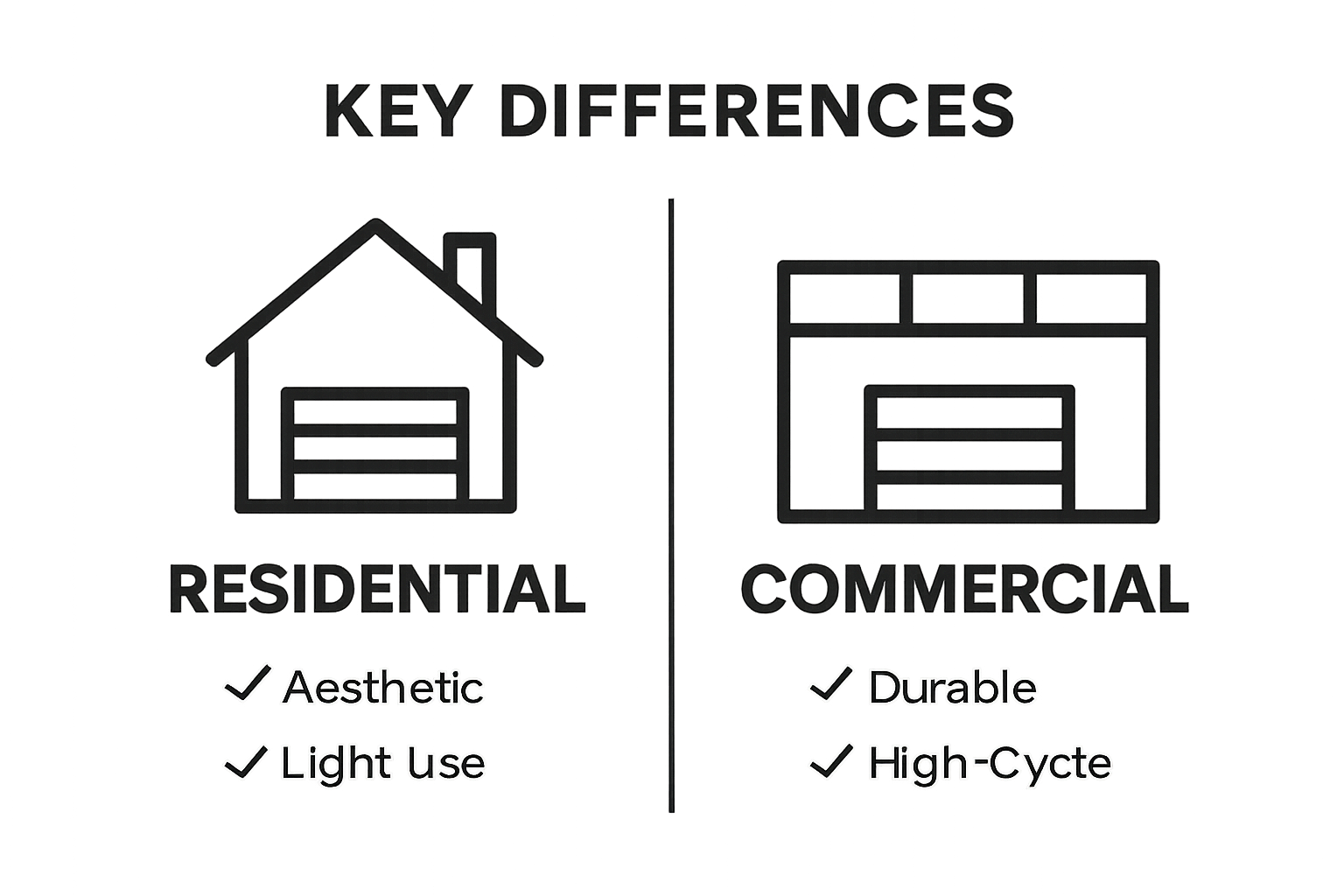
- Material composition and structural integrity
- Operational frequency and durability requirements
- Safety mechanism complexity
- Customization and aesthetic considerations
- Cost and long-term maintenance expectations
Recognizing these fundamental differences helps property owners and managers select the most appropriate garage door solution for their specific needs.
To help clarify the distinctions, the following table compares key features of residential and commercial garage doors side by side.
| Feature | Residential Garage Doors | Commercial Garage Doors |
|---|---|---|
| Primary Use | Personal vehicle storage, home entry | Warehousing, logistics, industrial access |
| Material Types | Wood, lightweight steel, fiberglass, aluminum | Heavy-gauge steel, reinforced aluminum, industrial metals |
| Operational Frequency | Low (few times per day) | High (dozens or hundreds of cycles per day) |
| Design Focus | Aesthetics, home integration | Durability, security, industrial standards |
| Installation Complexity | Simple, can often be DIY or light professional | Complex, requires specialized equipment and expertise |
| Maintenance Frequency | Annual inspections, basic part replacements | Quarterly inspections, advanced diagnostics |
| Customization/Appearance | Wide range of styles and finishes | Limited to functional designs, fewer aesthetic options |
Key Differences in Design and Functionality
The difference between residential and commercial garage doors extends far beyond their surface appearance, encompassing intricate design elements and performance specifications that directly impact their utility and longevity. Understanding these nuanced variations helps property owners make informed decisions tailored to their specific requirements.
Material Composition and Structural Integrity
Residential garage doors prioritize aesthetic versatility and lightweight construction. They are typically manufactured using materials that offer visual appeal and moderate durability. Learn more about our overhead door options to understand the range of residential materials available. Common residential door materials include:
- Wooden panels with decorative finishes
- Lightweight steel with aesthetic powder coating
- Fiberglass composites offering weather resistance
- Aluminum sections with insulation options
Commercial garage doors, conversely, demand extreme durability and strength. These doors are engineered using heavy-gauge materials capable of withstanding intense industrial environments. Manufacturers focus on creating robust solutions that can endure constant mechanical stress, heavy impacts, and extreme temperature variations.
Performance and Operational Characteristics
The operational requirements for residential and commercial garage doors differ dramatically. Residential doors are designed for infrequent use, typically opening and closing a few times daily. They emphasize smooth, quiet operation and energy efficiency. According to industrial engineering research, commercial garage doors must support entirely different performance metrics.
Commercial garage doors are engineered for high-cycle usage, potentially opening and closing dozens of times per day. Their mechanical systems incorporate advanced features like:
- Heavy-duty spring mechanisms
- Powerful motor configurations
- Advanced safety detection systems
- Rapid opening and closing speeds
- Enhanced security locking mechanisms
These specialized design elements ensure commercial garage doors can support continuous operational demands in warehouses, manufacturing facilities, logistics centers, and other high-traffic commercial environments.
Recognizing these fundamental design and functional differences allows businesses and homeowners to select garage door solutions precisely matched to their specific architectural and operational requirements.
Material and Durability Considerations
The difference between residential and commercial garage doors is most profoundly expressed through their material composition and durability engineering. These critical factors determine not just appearance, but long-term performance, maintenance requirements, and overall lifecycle value.
Material Selection Strategies
Residential garage doors emphasize aesthetic flexibility and moderate environmental resistance. Homeowners can select materials that complement architectural styles while providing reasonable protection. Explore our range of residential garage door materials to understand the nuanced options available.
Typical residential door materials are selected based on specific performance characteristics:
- Wood: Offers classic aesthetic appeal
- Steel: Provides excellent strength with minimal weight
- Fiberglass: Resists moisture and temperature variations
- Aluminum: Lightweight and corrosion-resistant
Commercial garage door materials, by contrast, are engineered for extreme performance. Manufacturers prioritize industrial-grade metals and composites that can withstand constant mechanical stress, heavy impacts, and challenging environmental conditions.
Durability and Performance Metrics
Durability represents more than material strength it encompasses comprehensive performance under sustained operational stress. According to industrial engineering research, commercial garage doors must endure significantly more rigorous conditions compared to residential installations.
Key durability considerations for commercial garage doors include:
- Resistance to repetitive mechanical cycling
- Ability to withstand significant temperature fluctuations
- Structural integrity under heavy mechanical loads
- Minimal maintenance requirements
- Long-term performance consistency
The selection process for commercial garage door materials involves sophisticated engineering assessments. Manufacturers conduct extensive stress testing to ensure doors can consistently perform under demanding industrial environments. Factors like thermal expansion, mechanical fatigue, and potential impact resistance are meticulously evaluated.
Understanding these material and durability nuances allows property owners to make informed decisions that balance initial investment with long-term performance expectations.
The table below summarizes the material choices and their performance focus for both residential and commercial garage doors.
| Material | Common Use in Residential | Common Use in Commercial | Key Performance Focus |
|---|---|---|---|
| Wood | Yes | No | Aesthetic appeal |
| Lightweight Steel | Yes | No | Moderate strength, light weight |
| Heavy-Gauge Steel | No | Yes | Exceptional strength, security |
| Aluminum | Yes | Yes | Lightweight, rust resistance |
| Fiberglass | Yes | No | Moisture/temperature resistance |
| Reinforced Metals | No | Yes | Industrial durability |
Usage Scenarios and Practical Applications
The difference between residential and commercial garage doors becomes most evident when examining their specific usage scenarios and practical applications. These distinct environments require tailored solutions that address unique operational challenges and functional requirements.
Residential Usage Contexts
Residential garage doors serve multifaceted purposes beyond simple vehicle storage. Explore our residential garage door installations to understand the comprehensive range of applications. Homeowners utilize garage doors for:
- Personal vehicle protection
- Additional home storage space
- Workshop or hobby area access
- Enhanced property aesthetic appeal
- Security barrier for home entry points
Typical residential scenarios demand doors that provide thermal insulation, noise reduction, and seamless architectural integration. These doors prioritize smooth operational mechanisms, energy efficiency, and visual harmony with existing home design.
Commercial and Industrial Application Scenarios
Commercial garage doors represent critical infrastructure components for numerous industrial and professional environments. According to industrial logistics research, these specialized doors play pivotal roles across multiple sectors.
Primary commercial usage scenarios include:
-
Warehouse logistics and material handling
-
Manufacturing facility equipment access
-
Distribution center shipping and receiving zones
-
Automotive service and repair facilities
-
Cold storage and temperature-controlled environments
These applications require garage doors engineered for extreme durability, rapid operational cycling, advanced security features, and precise environmental control. Commercial doors must consistently perform under challenging conditions, supporting continuous workflow and maintaining strict operational standards.
The functional requirements for commercial garage doors extend far beyond simple entry and exit mechanisms. They represent sophisticated engineering solutions designed to optimize logistical efficiency, ensure workplace safety, and provide robust infrastructure for complex industrial processes.
Impact on Installation and Maintenance Requirements
The difference between residential and commercial garage doors profoundly influences their installation complexity and ongoing maintenance strategies. These variations demand specialized approaches that ensure optimal performance, safety, and longevity across different operational environments.
Installation Complexity and Professional Expertise
Residential garage door installations typically require standard technical skills and can often be completed within a single day. Homeowners might select from pre-configured designs that integrate seamlessly with existing architectural frameworks. Our comprehensive residential installation guide provides insights into the typical residential installation process.
Key residential installation considerations include:
- Precise structural measurements
- Alignment of mounting hardware
- Balanced spring tension
- Aesthetic integration with home exterior
- Minimal structural modifications
Commercial garage door installations represent significantly more complex engineering challenges. These projects demand advanced technical expertise, specialized equipment, and comprehensive site assessments to ensure precise implementation.
Maintenance and Long-Term Performance
Maintenance requirements dramatically differ between residential and commercial garage door systems. According to industrial maintenance research, commercial installations demand more rigorous and frequent intervention to maintain operational integrity.
Critical maintenance distinctions include:
- Frequency of professional inspections
- Complexity of mechanical component replacement
- Required downtime during maintenance
- Specialized diagnostic equipment needs
- Comprehensive performance tracking
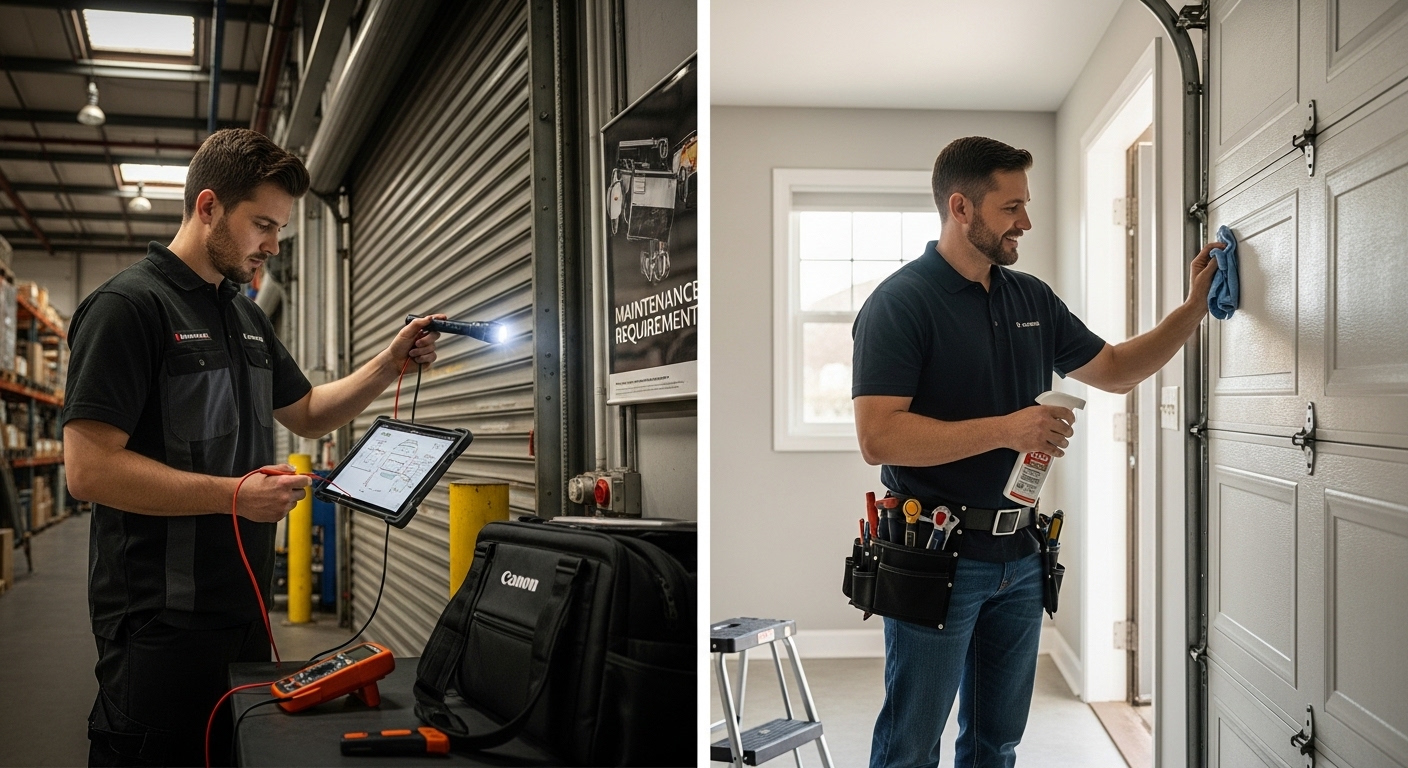
Residential garage doors typically require annual professional inspections and occasional component replacements. Commercial garage doors, conversely, necessitate quarterly professional evaluations, comprehensive diagnostic assessments, and potentially more frequent mechanical interventions to prevent operational disruptions.
Understanding these nuanced installation and maintenance differences enables property owners to develop proactive strategies that optimize garage door performance, minimize unexpected failures, and manage long-term maintenance costs effectively.
This table highlights the main considerations for installation and maintenance of residential versus commercial garage doors.
| Aspect | Residential Garage Doors | Commercial Garage Doors |
|---|---|---|
| Installation Time | Typically 1 day | May require multiple days |
| Required Expertise | Standard technical skills | Specialized industrial expertise |
| Site Assessment | Basic measurements | Comprehensive site and workflow assessment |
| Maintenance Frequency | Annual inspection recommended | Quarterly or more frequent professional checks |
| Typical Maintenance | Spring and opener replacement | Diagnostic assessments, advanced part repair |
| Downtime During Maintenance | Minimal | May be significant depending on operational needs |
Find the Right Garage Door for Your Home or Business
Are you struggling to choose the perfect garage door after learning how the difference between residential and commercial garage doors affects durability, functionality, and appearance? Many property owners feel overwhelmed by these decisions, worried their investment might not meet their practical needs or stand up to daily demands. Whether you need a garage door that enhances your home’s curb appeal or one that keeps your business secure and running smoothly, you deserve a solution tailored just for you.

Let the experts at Summit Garage Doors help you bridge the gap between understanding and action. With more than ten years serving the Greater Seattle area, our team is ready to guide you from selection to installation and ongoing support. Take the first step toward a garage door that fits your precise requirements by contacting us today. Invest in peace of mind, security, and long-term value for your property right now.
Frequently Asked Questions
What are the main differences between residential and commercial garage doors?
Residential garage doors focus on aesthetic appeal and are typically lighter, while commercial garage doors are designed for durability and high-frequency use, made from heavy-duty materials.
What materials are commonly used for residential garage doors?
Residential garage doors are usually made from wood, steel, fiberglass, or aluminum, prioritizing aesthetics and moderate durability.
How often do commercial garage doors need maintenance compared to residential ones?
Commercial garage doors require more frequent maintenance, often quarterly, while residential doors typically need annual inspections due to the higher operational demands placed on commercial doors.
Can residential garage doors be used in commercial settings?
While it’s technically possible to use residential garage doors in commercial settings, they are not recommended due to their design for lower usage and less rigorous performance standards compared to commercial doors.

