
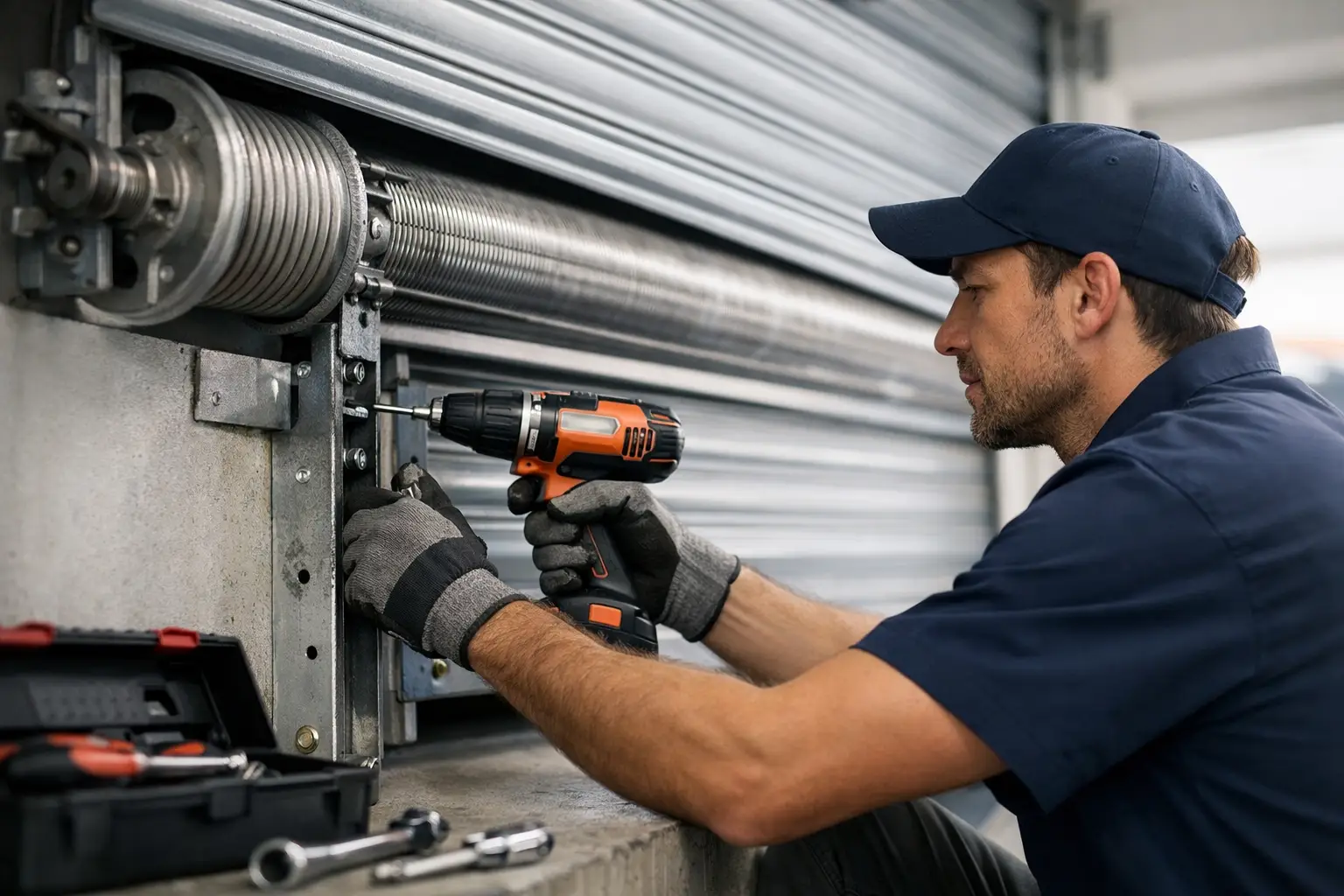
When a rolling steel door stops halfway, slams shut, or starts grinding every time it opens, the problem usually moves from annoyance to urgent repair fast. For warehouses, storefronts, loading bays, and secure service entrances, rolling steel door repair is about more than convenience – it protects access, security, workflow, and safety.
These doors are built for durability, but they take a beating. Daily cycles, weather exposure, accidental impacts, worn components, and skipped maintenance all add up. The good news is that many issues can be fixed efficiently when they are caught early. The harder truth is that waiting too long often turns a manageable repair into a larger service call, or even a full replacement.
What usually goes wrong with rolling steel doors
A rolling steel door has more moving parts than most people realize. The curtain, guides, barrel, springs, bottom bar, slats, chain hoist, operator, and safety devices all need to work together. If one part falls out of alignment or wears down, the whole system can become unreliable.
One common issue is door misalignment. If the curtain is not tracking properly in the guides, the door may bind, jerk, or stop unevenly. This can happen after an impact from equipment, a bent guide, loose mounting hardware, or normal wear over time. In a commercial setting, a small alignment issue rarely stays small for long because the door continues cycling under strain.
Spring problems are another frequent cause of failure. Counterbalance springs help offset the door’s weight, making it possible to open and close safely. When a spring weakens or breaks, the door may feel unusually heavy, stop responding properly, or close too hard. This is not a repair to put off. A door with a compromised spring system can become dangerous quickly.
Operators also fail in ways that look like door trouble at first. A motor that hums but does not move the door, intermittent response, limit setting problems, or safety sensor faults can all interrupt operation. Sometimes the fix is electrical. Sometimes the operator is fine and the door itself is binding. That is why accurate diagnosis matters.
Signs you need rolling steel door repair
Some doors fail without much warning, but many give clear signs first. The key is knowing which ones should not be ignored.
If the door makes grinding, scraping, or banging sounds, something is wearing incorrectly or moving out of place. If it opens slower than usual, hesitates, or stops before reaching the full open or closed position, the system is under strain. If the bottom bar is uneven when the door closes, the curtain may be off balance or the guides may be damaged.
You should also pay attention to physical changes. Bent slats, gaps in the curtain, frayed components, loose fasteners, and damaged weather seals may seem minor, but they often point to broader stress on the door. For automatic systems, inconsistent remote or wall control response may mean an operator issue, but it can also signal a mechanical problem making the motor work harder than it should.
In busy commercial properties, one of the biggest warning signs is simple – staff start compensating for the door. If people need to force it, reset it often, avoid using it, or work around a partial opening, the door needs service.
Why fast repair matters
With rolling steel doors, waiting usually costs more. A slightly bent guide can chew up the curtain. A weak spring can overwork the operator. A door that does not close fully can compromise security after hours. For businesses, that can mean lost time, inventory risk, and a safety concern for staff and customers.
There is also a liability piece to consider. A door that drops too quickly or reverses unpredictably is not just inconvenient. It can create a serious hazard. If a door is part of daily shipping, receiving, or public-facing access, dependable function is part of keeping operations safe.
This is where prompt, professional service has real value. A good technician is not just there to get the door moving again. They should identify what failed, what caused it, and whether other parts are close behind.
Repair or replace? It depends on the door
Not every damaged rolling steel door needs to be replaced. In many cases, targeted repair is the smarter and more affordable option. Replacing guides, adjusting spring tension, repairing the operator, correcting alignment, or swapping out damaged slats can extend the life of the existing system significantly.
That said, there are times when replacement makes more sense. If the curtain is extensively damaged, the barrel is compromised, parts are obsolete, or repeated repairs are stacking up, a new door may be the better long-term investment. Age matters too, but age alone is not the whole story. A well-maintained older door can outperform a newer one that has been neglected.
The right call depends on condition, frequency of use, repair history, and how critical the door is to your property. An honest recommendation should weigh immediate cost against reliability over the next several years.
What professional rolling steel door repair should include
A proper service visit should start with inspection, not guesswork. That means checking the curtain, guides, brackets, barrel assembly, springs, operator, safety features, and mounting points. The goal is to find both the visible problem and the underlying cause.
From there, repair may involve realigning the door, replacing damaged hardware, adjusting the spring system, repairing or replacing the operator, resetting limits, or fixing worn components that are causing drag. In some cases, emergency securing may be needed first, especially if the door cannot close safely.
For property owners, transparency matters. You should know what failed, whether the repair restores safe operation, and if any related parts are likely to need attention soon. That is especially important for commercial doors that cycle many times a day.
At Summit Garage Doors, the focus is on practical repair recommendations, fast response, and workmanship that holds up under daily use. For customers dealing with a stuck or unreliable door, that kind of clarity saves time and helps avoid repeat issues.
Can you fix it yourself?
Basic upkeep is one thing. Major repair is another. You can watch for debris in the guides, report unusual noise early, and make sure the area around the door stays clear. Beyond that, most rolling steel door repairs are not a safe DIY job.
These systems carry heavy loads and store significant spring tension. Trying to adjust tension, force a jammed door, or repair operator components without the right tools and training can make the damage worse or put someone at risk. Even something that looks simple, like a door sitting crooked in the opening, may trace back to a deeper counterbalance issue.
If the door is stuck, off track, closing unevenly, or showing signs of spring or operator trouble, professional service is the safer route.
How maintenance helps you avoid emergency repairs
The best repair call is the one you never have to make during business hours on a busy day. Preventive maintenance catches wear before it turns into failure. That includes checking alignment, tightening hardware, inspecting slats and guides, testing safety systems, and monitoring spring and operator performance.
For high-use doors, scheduled service is especially worthwhile. A door at a retail service bay or industrial facility sees a very different workload than one at a lightly used storage area. The maintenance plan should match that reality. Too little service leads to surprise downtime. Too much service is unnecessary cost.
In places with wet weather and seasonal temperature swings, routine inspection matters even more. Moisture, debris, and temperature-related expansion can all affect door performance over time. For many Seattle-area businesses and property owners, staying ahead of those conditions is simpler than dealing with a full shutdown later.
Choosing the right repair company
Not every garage door company handles rolling steel systems with the same level of experience. Commercial and industrial doors require accurate diagnosis, the right replacement parts, and technicians who understand the weight, balance, and safety requirements of these systems.
Fast response matters, but so does doing the work properly. Look for a company that explains the issue clearly, gives straightforward recommendations, and understands that downtime has a real cost. If the door protects inventory, secures a storefront, or supports daily operations, reliability after the repair matters more than a quick patch.
A rolling steel door does not need to fail completely before it earns attention. Strange noise, slow travel, impact damage, or uneven movement are all good reasons to get it looked at early. A timely repair usually gives you more options, lower cost, and less disruption – and that is a much better position to be in when the day is already busy enough.

