
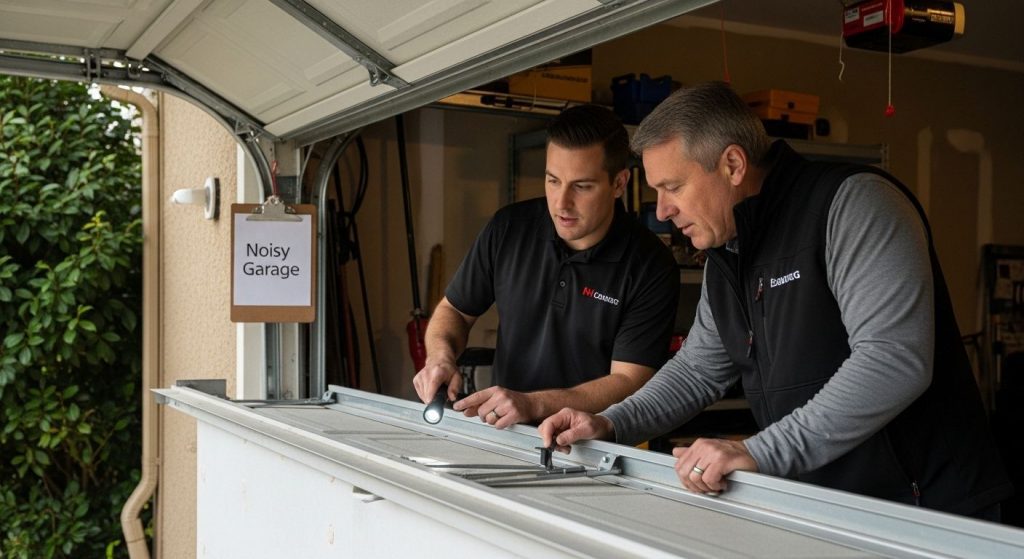
Garage doors across Seattle are rattling, squeaking, and groaning their way into 2025. Turns out, a noisy garage door is more than just an annoyance and it can warn you of bigger problems ahead. And you might be surprised to learn that monthly safety checks can actually help extend your garage door’s life by years. Most people reach for WD-40, but the real fix starts with a smart maintenance routine—and a few easy steps you would never expect.
Table of Contents
- Common Causes Of Noisy Garage Doors
- Step-By-Step Troubleshooting For Seattle Homeowners
- When To Call A Local Garage Door Expert
- Preventive Maintenance Tips For Quiet Operation
Quick Summary
| Takeaway | Explanation |
|---|---|
| Regularly inspect garage door hardware. | Monthly checks can identify loose bolts or misaligned tracks, preventing noise issues and extending door lifespan. |
| Lubricate components systematically. | Apply lubricant to rollers, hinges, and tracks to reduce friction and noise. Use specialized products for best results. |
| Address balance issues promptly. | An unbalanced door can strain components, making noise and leading to failure. Seek professional help if imbalance persists. |
| Call a professional for complex repairs. | Expert technicians can safely handle repairs on high-tension springs and door mechanisms, ensuring safety and precision. |
| Implement seasonal maintenance routines. | Adapt maintenance tasks based on Seattle’s climate to protect your garage door from wear and noise, ensuring effective operation year-round. |
Common Causes of Noisy Garage Doors
Garage doors are complex mechanical systems that can develop various noise issues over time. Understanding the root causes of these disruptive sounds is crucial for Seattle homeowners looking to maintain a quiet and efficient garage door. Learn more about garage door system components to better diagnose potential problems.
Worn and Damaged Rollers
Rollers play a critical role in the smooth operation of your garage door. Over time, these small but essential components can become worn, cracked, or damaged, creating significant noise during door movement. According to garage door experts, worn-out rollers typically produce harsh grinding or thumping sounds that indicate immediate attention is required.
Metal rollers without proper lubrication create additional friction, resulting in increasingly loud operational noises. Ceramic or nylon rollers with sealed bearings tend to operate more quietly and require less maintenance. Homeowners should inspect rollers regularly for signs of wear, including:
- Visible cracks or chips
- Uneven rolling or wobbling
- Squeaking or grinding sounds during movement
Loose Hardware and Structural Misalignment
Constant movement and vibration can cause garage door components to become loose over time. Research from professional garage door maintenance sources indicates that loose bolts, nuts, and hinges are primary contributors to rattling and shaking noises. These seemingly minor issues can escalate into more significant problems if left unaddressed.
The mechanical stress of daily operations gradually weakens connection points, leading to increased vibration and noise. Systematic checks and tightening of hardware can significantly reduce unwanted sounds and prevent potential mechanical failures. Key areas to examine include:
- Mounting brackets
- Hinge connections
- Track alignment
- Spring tension points
Unbalanced Door Mechanisms
An unbalanced garage door places uneven stress on its components, creating excessive friction and noise during operation. Garage door specialists emphasize that improper balance can lead to significant mechanical strain, potentially causing long-term damage to springs, rollers, and tracks.
Imbalance typically occurs due to several factors, including:
- Uneven spring tension
- Worn support cables
- Accumulated debris in track systems
- Gradual settling of door frame
Professional assessment and periodic maintenance can help identify and correct these balance issues, ensuring smooth and quiet garage door performance. Homeowners should pay attention to unusual sounds and seek expert evaluation when persistent noises emerge.
By understanding these common causes of garage door noise, Seattle residents can take proactive steps to maintain their garage door systems, ultimately extending their lifespan and ensuring quiet, efficient operation.
Here is a summary table that compares the three most common causes of noisy garage doors, their symptoms, and recommended actions:
| Cause | Common Symptoms | Recommended Action |
|---|---|---|
| Worn or Damaged Rollers | Grinding/thumping sounds; uneven rolling | Inspect and replace rollers |
| Loose Hardware/Misalignment | Rattling/shaking noises; visible loose bolts | Tighten hardware, realign |
| Unbalanced Door Mechanisms | Excessive noise; uneven movement; strain sounds | Professional rebalancing |
Step-by-Step Troubleshooting for Seattle Homeowners
Troubleshooting noisy garage doors requires a systematic approach that helps homeowners identify and resolve potential issues before they escalate. Explore our comprehensive DIY troubleshooting guide to help you navigate potential garage door problems effectively.
Visual and Auditory Inspection
The first step in troubleshooting a noisy garage door involves a careful visual and auditory examination. According to garage door maintenance experts, identifying the specific type of noise can provide critical insights into the underlying mechanical issue.
Homeowners should conduct a thorough inspection, paying attention to:
- Grinding noises: Often indicate metal-on-metal friction or worn rollers
- Squeaking sounds: Typically suggest insufficient lubrication
- Rattling or shaking: Usually point to loose hardware or misaligned components
During the inspection, use a flashlight to examine tracks, hinges, springs, and rollers for visible signs of wear, damage, or misalignment. Listen carefully during both opening and closing cycles to pinpoint the exact moment and location of unusual sounds.
Lubrication and Hardware Tightening
Proper lubrication is a critical maintenance step that can significantly reduce garage door noise. Maintenance research from professional sources recommends using a specialized garage door lubricant on moving parts to minimize friction and reduce operational sounds.
Follow these systematic lubrication steps:
- Clean all moving components: Remove dirt and old lubricant
- Apply lubricant to: Rollers, hinges, springs, and track bearings
- Use silicone-based or lithium-based lubricants: Avoid WD-40 or oil-based products
- Wipe away excess lubricant: Prevent accumulation of dust and debris
Simultaneously, carefully tighten all visible hardware, including bolts on mounting brackets, hinges, and track connections. Use a socket wrench to ensure proper tension without over-tightening, which could cause additional stress on components.
Here’s a process table summarizing the recommended troubleshooting steps and their main objectives:
| Step | Objective |
|---|---|
| Visual & Auditory Inspection | Identify type/location of noise |
| Clean Moving Components | Remove old grime and lubricant |
| Lubricate Moving Parts | Reduce friction and minimize noise |
| Tighten Hardware | Eliminate looseness causing vibration |
| Test Door Operation | Verify if problem is resolved |
| Call Professional (if needed) | For persistent or complex issues |
Professional Assessment and Advanced Troubleshooting
While many garage door noise issues can be addressed through basic maintenance, some problems require professional expertise. Homeowners should consider professional intervention when:
- Persistent noises continue after lubrication and hardware tightening
- Visible damage to springs, cables, or rollers is detected
- Door shows signs of significant misalignment
- Unusual grinding or scraping sounds persist
Professional technicians can perform comprehensive diagnostics, including:
- Detailed spring tension assessment
- Precise track alignment
- Comprehensive component replacement
- Advanced balance and tension adjustments
By following these systematic troubleshooting steps, Seattle homeowners can effectively address most garage door noise issues, potentially avoiding costly repairs and extending the lifespan of their garage door system. Remember that regular maintenance and prompt attention to unusual sounds are key to maintaining a quiet and functional garage door.
When to Call a Local Garage Door Expert
While many garage door issues can be addressed through DIY maintenance, certain situations require professional intervention. Check out our comprehensive service tips to understand when expert help becomes crucial.
Safety-Critical Mechanical Failures
Some garage door problems pose immediate safety risks that demand professional attention. According to home maintenance experts, certain scenarios constitute emergency repairs that should never be handled without professional expertise. These critical situations include:
- Completely detached door panels
- Doors that expose your home’s interior
- Mechanisms compromising child or pet safety
- Doors blocking emergency exits
Professional technicians possess the specialized tools and knowledge to address these complex mechanical failures safely. They can quickly diagnose underlying issues and implement comprehensive repairs that prevent potential accidents or further damage.
Complex Mechanical Component Replacements
Certain garage door components require specialized skills and tools for safe replacement. Garage door system experts emphasize that some repairs are too dangerous for untrained homeowners. Specifically, components like:
- High-tension springs
- Cable systems
- Advanced motor mechanisms
- Electronic control units
These components operate under significant mechanical stress and can cause serious injury if improperly handled. Professional technicians understand the precise techniques required for safe replacement and can ensure your garage door system functions correctly after maintenance.
Advanced Diagnostic and Precision Repairs
Modern garage door systems incorporate sophisticated technology that requires specialized diagnostic equipment and expertise. Professional technicians offer comprehensive services that go beyond simple repairs, including:
- Comprehensive system diagnostics
- Precision alignment measurements
- Electronic system calibration
- Predictive maintenance assessments
These advanced services help identify potential issues before they become significant problems, ultimately saving homeowners money and preventing unexpected breakdowns. Seattle homeowners benefit from professional expertise that combines technical knowledge with local understanding of environmental factors affecting garage door performance.
While cost might seem like a deterrent, professional garage door repairs often prove more economical in the long run. Attempting complex repairs without proper knowledge can lead to more extensive damage, potentially requiring complete system replacement. By recognizing the signs that indicate professional intervention is necessary, homeowners can maintain their garage door systems effectively and safely.
Preventive Maintenance Tips for Quiet Operation
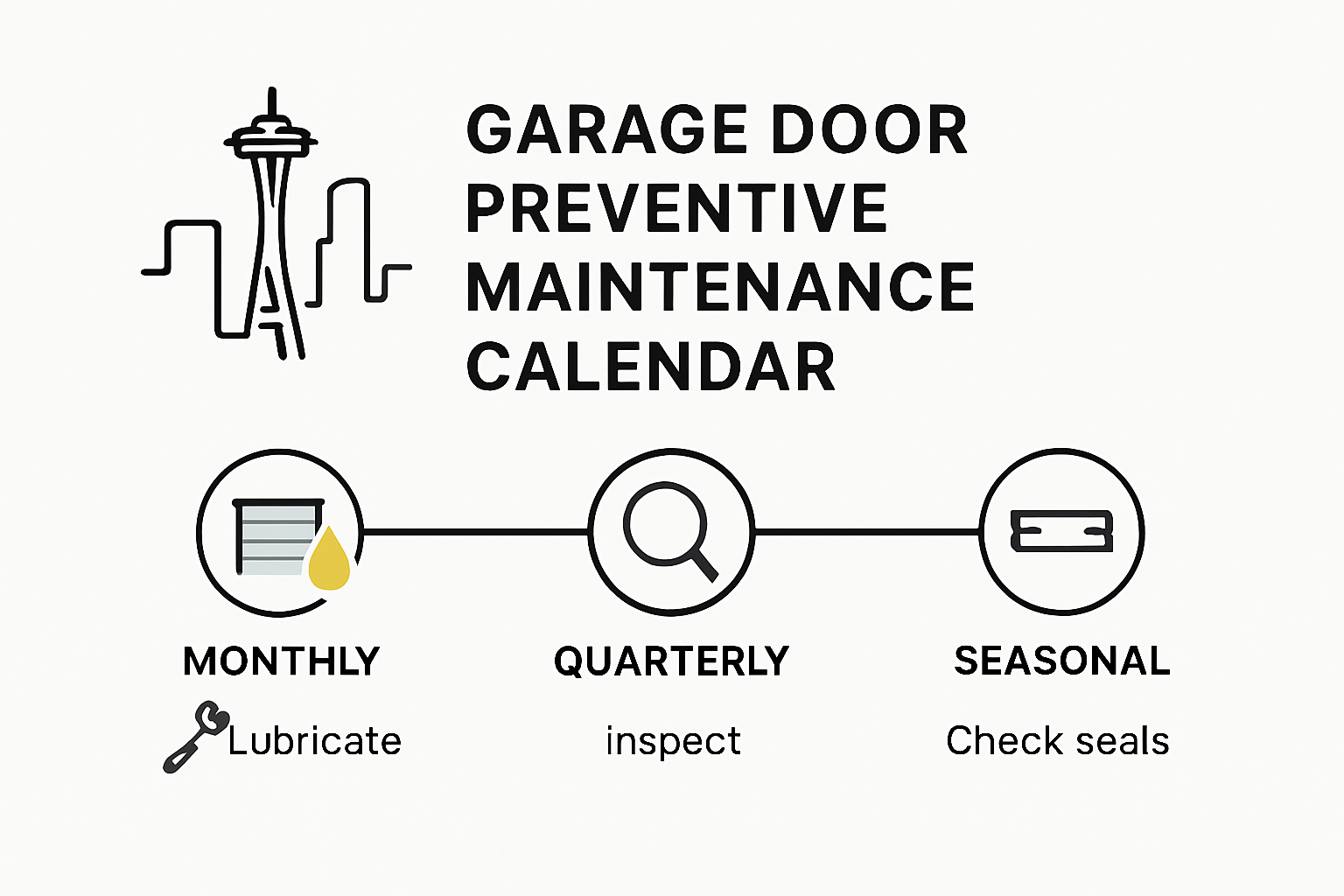
Maintaining a quiet garage door requires consistent and strategic maintenance approaches. Discover our expert maintenance recommendations to keep your garage door operating smoothly and silently.
Systematic Lubrication Techniques
According to mechanical noise reduction research, regular lubrication is critical in minimizing operational noise in mechanical systems. Proper lubrication reduces friction and prevents premature wear on critical garage door components.
Implement a comprehensive lubrication strategy that includes:
- Roller maintenance: Apply silicone-based lubricant to rollers quarterly
- Hinge lubrication: Use white lithium grease on metal hinges
- Track conditioning: Clean tracks before applying a thin lubricant layer
- Spring protection: Use specialized garage door spring lubricant
Avoid over-lubricating, which can attract dust and create additional friction. Wipe excess lubricant with a clean cloth to maintain a thin, even coating on moving parts.
Regular Inspection and Component Assessment
Routine inspections help identify potential noise sources before they become significant problems. Homeowners should conduct monthly comprehensive assessments of their garage door system, focusing on:
- Hardware tightness: Check and tighten all bolts and mounting brackets
- Roller condition: Inspect for signs of wear, cracks, or uneven rolling
- Track alignment: Ensure tracks remain straight and properly positioned
- Spring tension: Look for signs of uneven wear or potential failure
Pay special attention to subtle changes in door movement or emerging sounds. Early detection of minor issues can prevent more extensive and expensive repairs down the line.
Seasonal Maintenance Considerations
Seattle’s unique climate presents specific challenges for garage door maintenance. The region’s moisture and temperature variations can accelerate wear and increase operational noise. Develop a seasonal maintenance approach that addresses environmental factors:
- Winter preparation: Lubricate components before cold temperatures arrive
- Summer maintenance: Check for heat-related expansion and component stress
- Moisture protection: Apply rust-inhibiting lubricants during rainy seasons
- Seal inspections: Verify weatherstripping remains intact and flexible
Consider professional maintenance annually to ensure comprehensive system evaluation. Trained technicians can identify potential issues that might not be apparent during routine homeowner inspections.
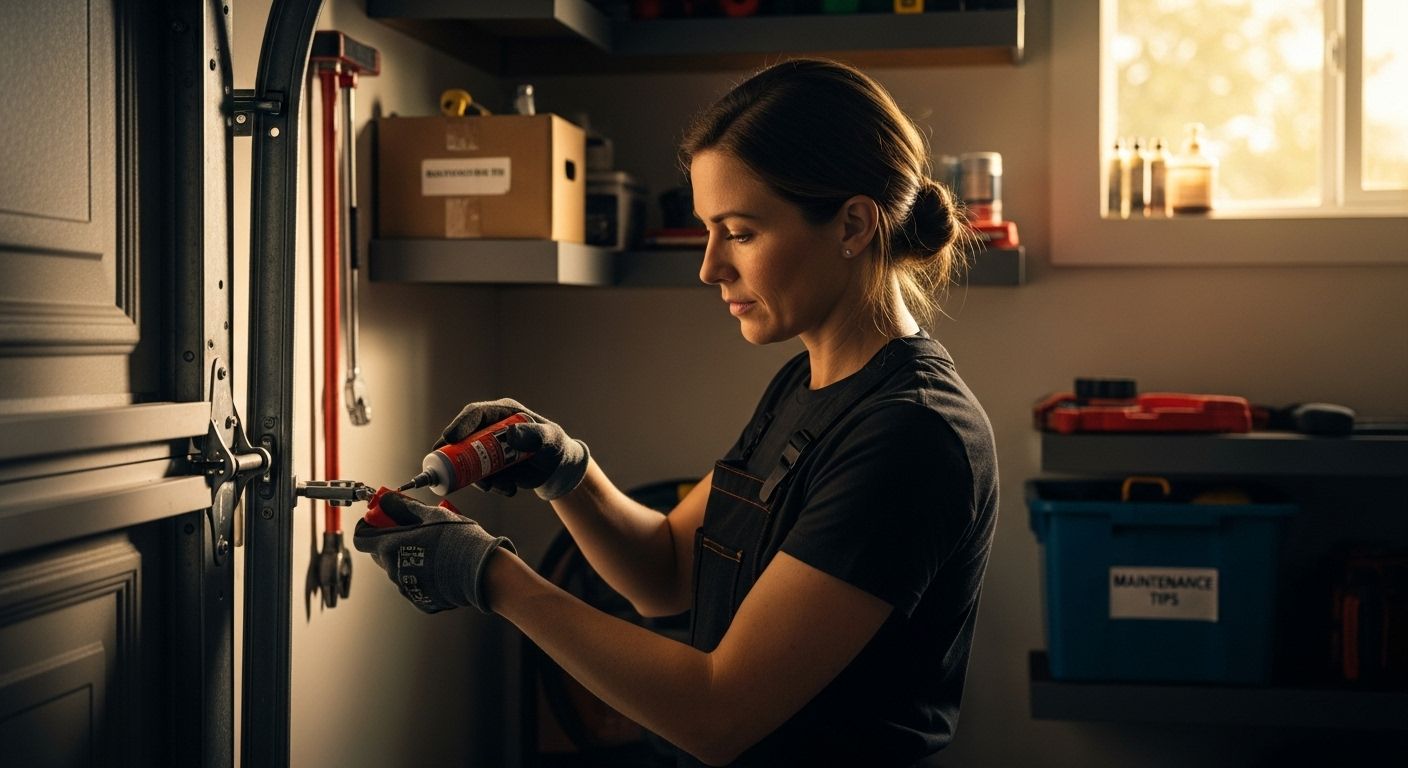
By implementing these preventive maintenance strategies, Seattle homeowners can significantly reduce garage door noise, extend the lifespan of their door system, and ensure smooth, quiet operation throughout the year. Remember that consistent, proactive maintenance is always more cost-effective than reactive repairs.
Frequently Asked Questions
What are the common causes of noisy garage doors?
Noisy garage doors can be caused by worn rollers, loose hardware leading to misalignment, and unbalanced door mechanisms. Identifying the specific issue is crucial for effective troubleshooting.
How can I troubleshoot my noisy garage door?
Start with a visual and auditory inspection to identify the type of noise. Then, lubricate moving parts systematically and tighten any loose hardware. If the noise persists, consider professional assessment.
When should I call a professional for garage door issues?
You should call a professional if you notice persistent noises after basic maintenance, visible damage to components, or if your door shows significant misalignment or unsafe operation.
What preventive maintenance can I perform to keep my garage door quiet?
Implement a routine that includes systematic lubrication of moving parts, regular inspections for wear and tightness, and seasonal maintenance to address issues related to Seattle’s unique climate.
Take the Stress Out of Noisy Garage Doors with Summit Garage Doors
Are you tired of the nightly grind, squeak, or rattle that interrupts your peace and raises doubts about the safety of your garage door? Many Seattle homeowners struggle with balancing routine maintenance and knowing when a professional is needed for worn rollers, loose hardware, or door alignment issues. If these sounds are making you worry about costly damage or sudden breakdowns, you are not alone. Common fixes like monthly checks and proper lubrication often solve the simple problems. But when persistent noises refuse to go away or safety is on the line, the solution requires expertise you can trust.

Let our team at Summit Garage Doors take the pressure off. Our experienced technicians serve the entire Greater Seattle area with one goal—restoring smooth, quiet, and secure operation to your garage door. Whether you need fast repairs or a long-term maintenance plan, you can rely on us for personalized solutions backed by years of local knowledge. Do not ignore that rattling or grinding sound. Contact us today to schedule your inspection or service. Protect your garage and reclaim your peace of mind while appointments are still available this season.
Recommended
- Garage Door Installation Guide for Seattle Homeowners 2025 – Summit Garage Doors | Seattle’s #1 Garage Door Repair & Installation
- Garage Door Etiquette Seattle: Essential Tips for Homeowners 2025 – Summit Garage Doors | Seattle’s #1 Garage Door Repair & Installation
- DIY Garage Door Troubleshooting for Seattle Homeowners 2025 – Summit Garage Doors | Seattle’s #1 Garage Door Repair & Installation
- Seattle Garage Door Service Tips for Homeowners 2025 – Summit Garage Doors | Seattle’s #1 Garage Door Repair & Installation

