
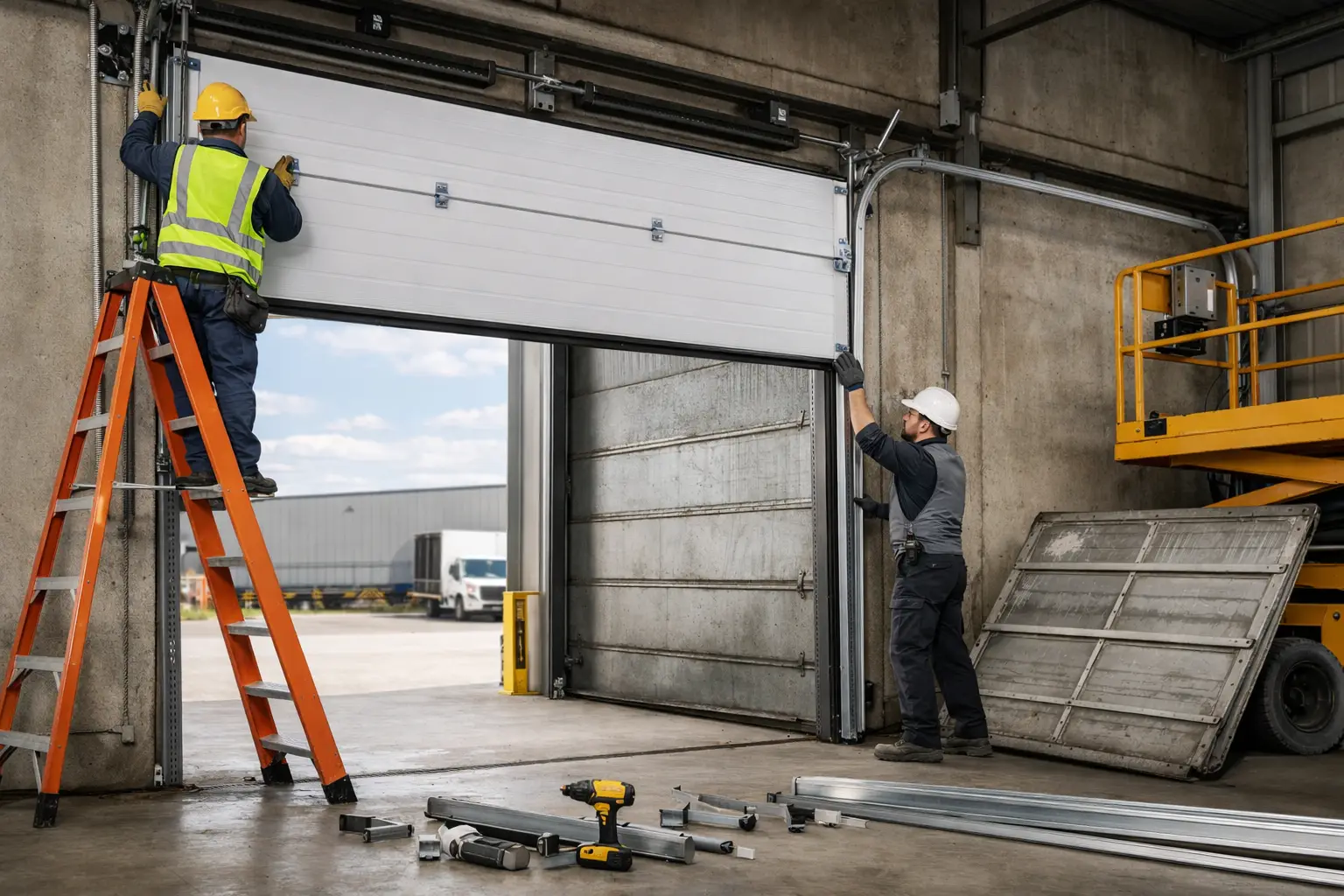
A loading bay door that sticks at 6:45 a.m. can throw off the entire day. Deliveries back up, staff lose time, and a problem that looked minor last week suddenly becomes an operational issue. That is usually when industrial garage door replacement moves from a future project to an immediate priority.
For industrial properties, the door is not just part of the building envelope. It affects security, workflow, energy use, equipment access, and safety. Replacing the wrong door too late can cost more in downtime than the new installation itself. Replacing it too early, or choosing the wrong specification, can leave you paying for features you do not need. The right decision starts with understanding when repair still makes sense and when replacement is the smarter long-term move.
When industrial garage door replacement makes sense
Some industrial doors can be repaired several times over their lifespan without creating major risk. A worn roller, bent track section, failing spring, or opener issue does not always mean the whole system needs to go. But there is a point where repeated service calls stop being efficient.
If the door is structurally compromised, replacement is often the safer route. Panels that are badly dented, frames that are out of square, severe corrosion, and chronic track misalignment can all signal a system that is no longer dependable. The same goes for doors that have been hit by forklifts or trucks more than once. Even if they still operate, hidden stress in the hardware can lead to sudden failure later.
Age matters too, but not on its own. An older industrial door that has been well maintained may still perform well. A newer one that was poorly installed or heavily used may already be near the end of its useful life. What matters most is the pattern. If your team is dealing with recurring breakdowns, inconsistent opening speeds, excess noise, or doors that need constant adjustment, replacement usually deserves a serious look.
Repair or replacement? It depends on the full picture
There is no single rule that fits every facility. A straightforward repair is often the right call when the issue is isolated and the rest of the system is in good condition. If one spring breaks, one sensor fails, or one panel is damaged but the door still meets your operational needs, repair can be cost-effective.
Replacement becomes more practical when the repairs start stacking up across different components. If you are dealing with springs, cables, rollers, weather seals, opener strain, and panel wear all within a short period, the money going into patchwork fixes can add up quickly. That is especially true in higher-cycle environments where doors open and close many times a day.
There is also the question of business interruption. A lower upfront repair bill is not always the cheaper option if the same door is likely to fail again during production hours or shipping windows. For many industrial customers, reliability is the deciding factor.
What to look for in a new industrial door
An industrial replacement door should match the building, the traffic level, and the type of work happening behind it. This is where many buyers either overspend or end up with a door that wears out too quickly.
Cycle rating is one of the first things to consider. A warehouse door that operates dozens of times each day needs a very different spring and hardware setup than a door used only a few times per shift. If the new system is not rated for actual use, parts wear faster and service intervals shorten.
Material selection matters as well. Steel remains a common choice because it is durable and secure, but insulation, gauge, finish, and corrosion resistance all affect performance. In some settings, insulated sectional doors help with temperature control and noise reduction. In others, speed or impact resistance may matter more than thermal performance.
Window placement, visibility, and ventilation can also play a role depending on the space. Some facilities need more natural light or sightlines for safer movement around loading areas. Others need a solid, secure barrier with minimal exposure.
The opener and control system should also be evaluated along with the door itself. A new door installed on an undersized or outdated operator can create avoidable problems from day one. In many cases, replacement works best when the full operating system is reviewed together.
Safety is not a side issue
Industrial doors carry weight, tension, and moving force. When parts wear down or safety systems stop working properly, the risk extends beyond inconvenience. A failing industrial door can damage equipment, interrupt operations, or cause injury.
That is one reason replacement is often recommended when a door no longer closes evenly, drops too quickly, reverses unpredictably, or shows signs of spring and cable stress. These are not cosmetic issues. They affect how safely the system performs under daily use.
A properly specified replacement can improve more than day-to-day operation. It can also bring the opening system up to current safety expectations with better sensors, more reliable controls, and hardware designed for the actual demands of the site.
What affects industrial garage door replacement cost
Most property owners want a quick number, but industrial garage door replacement is rarely one-size-fits-all. The final cost depends on the size of the opening, the type of door, insulation level, hardware grade, operator requirements, and the condition of the existing framing or track layout.
Installation complexity also matters. A clean replacement where the opening is square and access is easy will usually cost less than a project involving custom sizing, structural adjustments, or removal of heavily damaged components. If the current system has non-standard parts or outdated controls, the scope can shift further.
That said, the cheapest quote is not always the best value. Lower-cost setups can mean lighter-duty hardware, shorter service life, and more frequent repairs. For industrial properties, it often makes more sense to compare total operating cost over time rather than looking only at installation price.
The replacement process should not disrupt more than necessary
For busy sites, scheduling matters almost as much as the product itself. A good replacement plan accounts for access, safety, removal, installation, testing, and any operational limits during the work window.
In many cases, the best approach is to inspect the opening first, confirm measurements and usage demands, then recommend door options that fit the facility rather than pushing a standard model. That helps avoid delays caused by incorrect sizing or mismatched hardware.
Once the new door is selected, the installation should include proper balancing, track alignment, operator setup, safety checks, and full testing. A door that looks good but is not calibrated correctly will not deliver the performance you paid for.
For local businesses in Seattle and nearby service areas, working with a company that handles both urgent repairs and full replacements can be useful. Sometimes an emergency call reveals that temporary repair is possible, giving you enough time to plan the right replacement instead of making a rushed decision under pressure.
Common mistakes to avoid
One of the biggest mistakes is treating an industrial door like a basic building upgrade instead of an operational system. The wrong door can slow workflow, increase wear, and create avoidable service issues.
Another common misstep is replacing only the visible sections while leaving ageing springs, tracks, or operators in place. That can work in limited situations, but if the supporting components are already near the end of their lifespan, partial replacement may only delay the bigger expense.
It is also easy to underestimate how much environment affects performance. Moisture, temperature swings, heavy use, dust, and impact exposure all influence what kind of door will hold up best. What works well in one facility may be the wrong fit for another.
Choosing the right installer matters
Industrial garage door replacement is not just about product selection. Installation quality affects lifespan, safety, and day-to-day reliability. Even a high-quality door can perform poorly if the tracks are not aligned correctly, the spring system is not balanced properly, or the operator is not matched to the load.
Look for a company that can clearly explain what needs replacement, what can stay, and why. Honest recommendations matter, especially when you are weighing repair against full replacement. You want a contractor who can assess wear patterns, identify safety concerns, and recommend a solution based on actual site conditions, not guesswork.
Fast response also matters when the existing door is already affecting business operations. If the opening is a security risk or blocking access, delays can be expensive. A responsive service team with industrial experience can help you stabilise the immediate issue and move quickly toward a permanent fix.
A replacement door should make your facility easier to run, not harder to manage. If your current system is becoming unreliable, noisy, unsafe, or expensive to keep alive, it may be time to stop repairing around the problem and install something built for the way your business actually operates. The right door pays you back every day in safer access, fewer interruptions, and less second-guessing when the next workday starts.

