
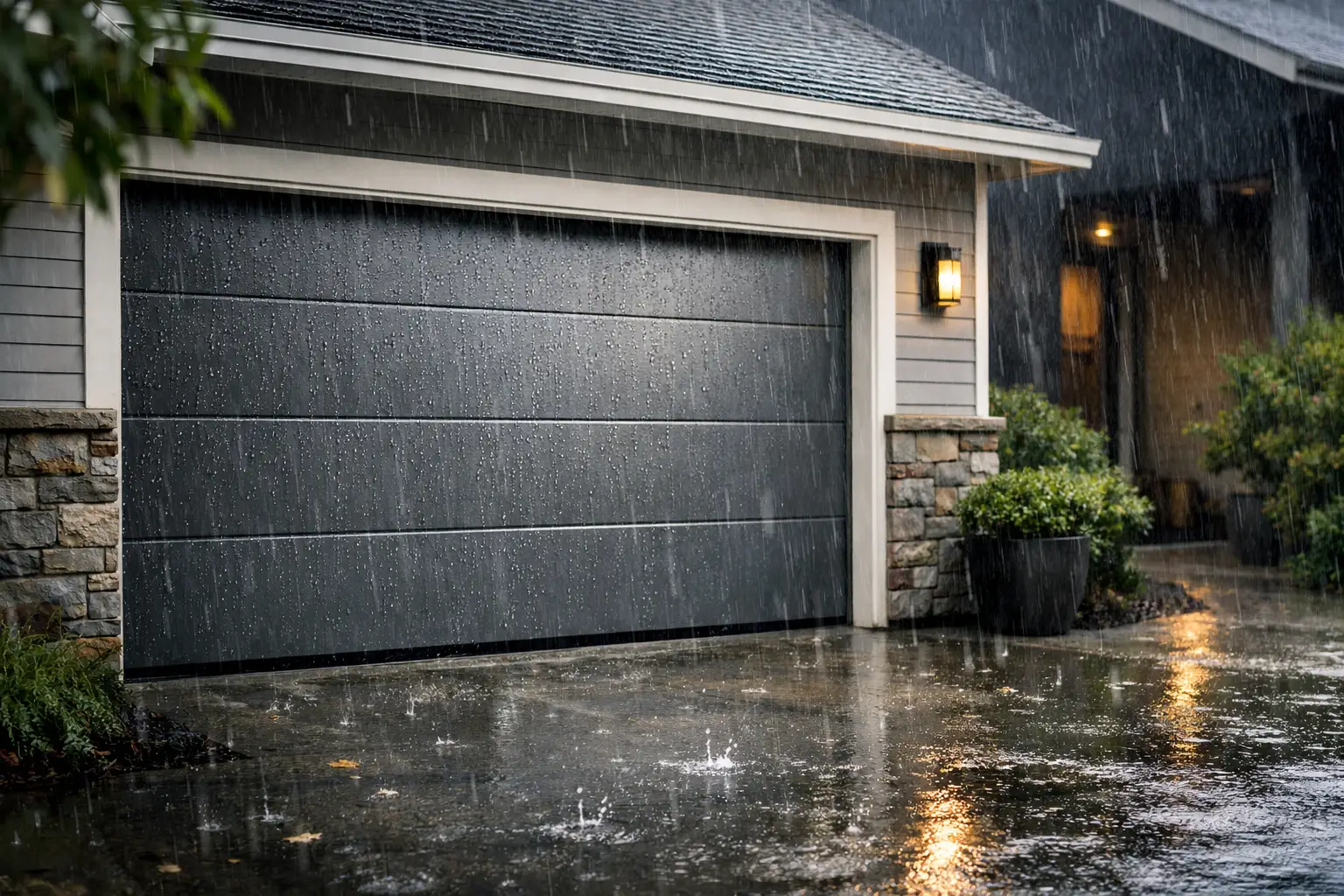
A garage door that looks great in a showroom can start showing its weaknesses fast once it faces months of rain, damp air, and constant temperature swings. If you are comparing the best garage doors for rainy climates, the right choice usually comes down to one thing: how well the door handles moisture over time without warping, rusting, sticking, or losing its seal.
For homeowners in wet coastal and Pacific Northwest conditions, that matters more than almost any trend or design feature. Rain does not just hit the outside of the door. Moisture lingers in the tracks, collects around the bottom seal, works into joints and panels, and speeds up wear on springs, rollers, hinges, and openers. A door that is built for a dry climate may still function here, but it often needs more repairs and more upkeep than people expect.
What makes a garage door work better in wet weather
The best garage doors for rainy climates are not always the most expensive ones. They are the ones built with the right material, protective finish, insulation level, and weather sealing for the conditions around your home.
A good rainy-climate door needs to resist water damage first. That sounds obvious, but many doors fail because the material itself absorbs moisture or because the surface coating breaks down early. Once that happens, you start seeing rust on steel, swelling on wood, or corrosion on hardware.
It also needs strong perimeter sealing. Even a high-quality door will underperform if the bottom seal is worn out or the side weatherstripping leaves gaps. In wet weather, a small gap can let in water, cold air, debris, and extra humidity that affects everything inside the garage.
Then there is insulation. In rainy climates, insulation is not only about warmth. It also helps reduce condensation. When warm interior air meets a cold door surface, moisture can build up inside the garage. That is especially common in attached garages or spaces used for storage, laundry, or workshop use.
Best garage doors for rainy climates by material
Steel garage doors
For many homes, steel is the most practical choice. It offers strong performance, a wide range of styles, and good value for the money. In rainy climates, though, the details matter.
A basic non-insulated steel door can work, but it is more vulnerable to dents and temperature-related condensation. A better option is a galvanized steel door with a durable baked-on finish and insulated construction. That extra layer helps with moisture control, daily comfort, and long-term durability.
The trade-off is rust risk if the finish gets damaged. Scratches, chips, and exposed edges should be addressed early. In a damp environment, neglected steel can corrode faster than people realize, especially near the bottom panel.
Aluminum garage doors
Aluminum performs well in wet environments because it resists rust better than steel. That makes it an appealing option for homes exposed to regular rain, salty air, or high humidity. Modern aluminum doors also have a clean, contemporary look that works well on updated exteriors.
The downside is strength. Aluminum is lighter and can dent more easily than steel. If your garage door gets a lot of hard use, or if impact resistance is a bigger priority, that is worth considering. For the right home, though, aluminum can be one of the smartest low-corrosion choices.
Fibreglass and composite garage doors
Fibreglass and composite materials can be excellent in rainy climates because they do not absorb moisture the way natural wood does. They are also less prone to rust than metal doors. If you want the look of wood without the same level of upkeep, composite can be a strong middle ground.
Quality varies a lot in this category. A well-made composite door can hold up very well. A lower-end product may fade, crack, or age unevenly. This is where installation quality and manufacturer grade make a real difference.
Wood garage doors
Wood has undeniable curb appeal, but in wet climates it is usually the highest-maintenance option. Rain, humidity, and seasonal moisture changes can lead to swelling, warping, rot, finish breakdown, and more frequent refinishing needs.
That does not mean wood is always a bad choice. If appearance is the top priority and the door is properly sealed, maintained, and protected, it can still perform well. But for most homeowners who want fewer service issues and lower upkeep, wood is not the first recommendation in a rainy region.
Insulated doors usually make more sense than non-insulated ones
In a rainy climate, insulated garage doors tend to earn their cost back in comfort and performance. They help keep the interior temperature more stable, which can reduce condensation and protect stored items. They also make the door feel sturdier and quieter during operation.
If your garage is attached to the house, insulation matters even more. It can help limit cold drafts and damp air transfer into nearby rooms. For detached garages, it still adds value if you use the space for storage, hobbies, or work.
A higher R-value is not always necessary, so this is one of those it-depends decisions. If the garage is mostly used for parking and has no finished space nearby, a mid-range insulated door may be enough. If the garage is part of your daily living space, stronger insulation is usually worth it.
Weather seals and hardware matter more than most buyers think
A quality door panel is only part of the system. In wet weather, the seals and hardware often decide how well that door performs after a few seasons.
Look for a durable bottom seal that stays flexible in colder temperatures and side and top seals that close tightly without dragging. If the concrete floor is uneven, the seal setup becomes even more important because small low spots can let water track inside.
Hardware should also be suited to damp conditions. Galvanized or corrosion-resistant tracks, hinges, brackets, and springs can extend the life of the whole system. This is especially relevant in areas where garages stay cool and damp for much of the year.
The style you choose can affect maintenance
Some decorative styles simply give water more places to collect. Deep panel profiles, trim-heavy overlays, and older wood carriage-house designs can look excellent, but they may need more frequent cleaning, sealing, or touch-up work.
Simpler panel designs are often easier to maintain. That does not mean you need to sacrifice curb appeal. It just means the best-looking option on day one is not always the easiest one to live with in year five.
If you are deciding between a statement door and a more practical finish, think about how much maintenance you actually want to take on. Honest planning now usually leads to fewer surprises later.
What we usually recommend for wet Pacific Northwest conditions
For many properties in the Seattle area, the safest all-around choice is an insulated steel garage door with a high-quality finish, strong perimeter seals, and corrosion-resistant hardware. It balances price, durability, appearance, and moisture resistance better than most alternatives.
If rust resistance is your top concern and you prefer a modern style, aluminum is also worth a close look. If you want a wood appearance without as much upkeep, composite may be the better fit. Real wood usually makes the most sense only when appearance clearly outweighs maintenance concerns.
This is where a site-specific recommendation matters. Exposure, garage orientation, drainage, overhang coverage, and how you use the space all affect what will perform best. A garage facing direct wind-driven rain has different needs than one protected under a deep roofline.
Installation quality is just as important as the door itself
Even the best garage doors for rainy climates can disappoint if they are installed poorly. Gaps around the frame, uneven track setup, weak bottom sealing, or incorrect opener adjustments can all lead to water intrusion and early wear.
Professional installation is not just about getting the door to open and close. It is about making sure the full system is aligned, sealed, and adjusted for smooth operation in real weather conditions. The same goes for replacement parts. A new door with old worn rollers or corroded hinges is not getting the full benefit of the upgrade.
If you are replacing an older door because of swelling, rust, or repeated sticking, it is also smart to check the surrounding framing and floor condition. Sometimes the door is only part of the problem.
When homeowners ask our team at Summit Garage Doors what lasts best in wet weather, the answer is usually a practical one: choose a moisture-resistant material, invest in insulation and good seals, and do not cut corners on installation. A garage door has to do more than look good on a dry afternoon. It has to keep working through the kind of weather you actually live with, day after day.

