
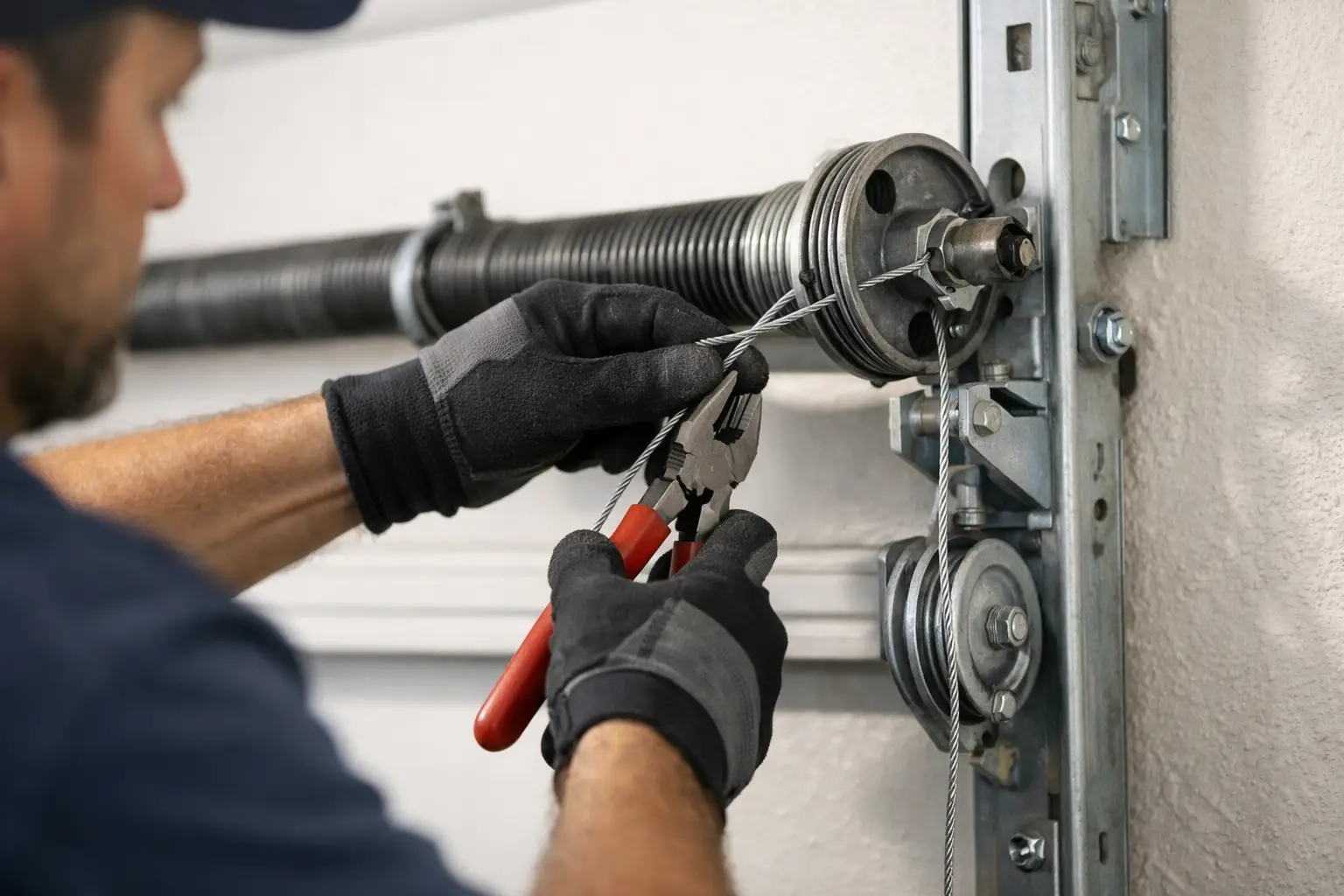
A garage door that hangs crooked, slams shut, or refuses to open smoothly often points to one part many people never think about until it fails – the cable. The garage door cable repair process matters because cables help carry the door’s weight, keep movement balanced, and work closely with the springs. When a cable comes off the drum, frays, or snaps, the door can quickly become unsafe to use.
For most property owners, the first question is simple: can this be fixed, and how urgent is it? In many cases, the answer is yes, but the urgency is real. A damaged cable is not the kind of issue to ignore for a few weeks. It can put extra strain on the spring system, opener, rollers, and tracks, and it can turn a repairable problem into a more expensive one.
What garage door cables actually do
Garage door cables are steel lifting cables connected to the bottom brackets of the door and wound around drums near the top. As the door opens and closes, the cables help manage tension and guide the door evenly. They work with either torsion springs or extension spring systems, depending on the setup.
That balance is the key point. A garage door is much heavier than it looks. Without properly functioning cables, that weight does not move in a controlled way. One side may lift while the other side drags. The door may jam in the tracks, tilt to one side, or drop suddenly.
Signs you may need the garage door cable repair process
Cable problems are usually visible before complete failure, but only if you know what to look for. Fraying is one of the earliest signs. If the cable strands look loose, fuzzy, or uneven, the cable is weakening. Rust, slack, or a cable that has slipped off the drum also signals trouble.
You may also notice symptoms in the door’s movement. The door might open a few inches and stop. It may look uneven when rising. In some cases, the opener strains, hums, or reverses because the door is no longer moving with proper balance. If the cable has already broken, the door may become stuck or appear lopsided.
A loud bang can confuse homeowners because it often sounds like the door itself has broken. Sometimes that noise is a spring failure rather than a cable issue, but the two problems are connected often enough that both should be inspected together.
Why cable repair is not a casual DIY job
This is where honesty matters. Some home repairs are fine to handle yourself. Garage door cable work usually is not. The reason is spring tension.
Cables do not operate alone. They are part of a loaded system designed to lift substantial weight under pressure. If a cable repair is attempted without releasing and managing that tension correctly, the result can be serious injury or damage to the door. Bottom brackets, torsion components, and drums can all become hazardous when handled the wrong way.
There is also a diagnosis issue. A cable may look like the only failed part, but that is not always true. In many service calls, the root cause is worn drums, a bent track, failing bearings, damaged bottom brackets, or a spring problem that caused uneven cable tension in the first place. Replacing the cable alone may not solve the actual issue.
The garage door cable repair process step by step
The garage door cable repair process starts with securing the door in place and disconnecting power to the opener if needed. Safety comes first because an unstable garage door should not be allowed to move unexpectedly during service.
Next comes a full inspection. A trained technician checks whether the cable is frayed, broken, slipped, or stretched. At the same time, the rest of the lift system is inspected, including springs, drums, rollers, tracks, brackets, and the opener connection. This step matters because cable damage is often a symptom, not just a standalone problem.
If the door uses a torsion spring system, the spring tension must be carefully released before the cable can be removed or reset. This is one of the most technical parts of the repair. Once tension is safely managed, the damaged cable is detached from the bottom bracket and drum.
The replacement cable must match the door’s size, weight, and configuration. Using the wrong cable can create balance issues right away, even if the door appears to work at first. After the correct cable is installed, it is routed properly, seated in the drum grooves, and aligned so both sides of the door carry tension evenly.
From there, the spring tension is reset to the correct level and the system is tested. The door should open and close smoothly, stay balanced, and move without jerking or pulling to one side. Final adjustments may include track alignment, drum positioning, or opener force settings if the failure affected other components.
A proper repair ends with more than a new cable. It ends with a balanced, safely operating door.
Repair or full replacement – what depends on the damage
Not every cable issue requires a major repair, but not every situation is minor either. If a cable simply slipped off the drum and the cable itself is still in good condition, a reset may be enough. That said, a cable usually slips for a reason, so the system still needs inspection.
If the cable is frayed, corroded, or broken, replacement is the better option. If one cable has failed from age and wear, the other is often close behind. Many technicians recommend replacing both cables at the same time to restore even performance and reduce the chance of another service call soon after.
There are also cases where cable replacement alone is not the most cost-effective move. If the springs are worn, the tracks are damaged, or the door has multiple failing parts, a broader repair may make more sense. For older doors with recurring issues, replacement can sometimes be the smarter long-term investment.
How long the repair usually takes
In a straightforward service call, cable repair or replacement can often be completed in one visit. The exact timing depends on the door type, whether the cable is simply off track or fully broken, and whether other components need attention.
A standard residential repair may be relatively quick when the right parts are available and no secondary damage is found. Commercial and heavier custom doors can take longer because of size, hardware differences, and added safety requirements. Speed matters, but safe and accurate work matters more.
What affects the cost
Property owners usually want a clear answer on price, and that is fair. The cost depends on the cable type, door size, labour involved, and whether additional repairs are needed. A simple cable reset is different from replacing both cables and correcting spring tension or drum wear.
The biggest cost mistake is delaying service. Running the opener with a bad cable can damage the motor, bend tracks, wear out rollers, or cause the door to come down unevenly. What starts as one part can turn into several.
When to stop using the door immediately
If the door is hanging unevenly, one cable is visibly loose or broken, or the opener is struggling to move the door, stop using it. Do not try to force it open for one more trip. Do not pull the emergency release unless you understand exactly how the door’s weight is being supported.
This is especially important for attached garages and commercial settings where security and access matter. A damaged cable creates both a safety issue and an operational problem. Fast service helps protect people, vehicles, and the door system itself.
Choosing the right repair support
A reliable garage door company should do more than swap a part and leave. The right team will explain what failed, what caused it, and whether anything else needs attention now or in the near future. Clear recommendations, proper parts, and careful testing are what separate a lasting repair from a temporary fix.
For homeowners and businesses in the Seattle area, quick response can make a real difference when a door is stuck or unsafe. Summit Garage Doors approaches cable repairs the way they should be handled – with urgency, honest assessment, and workmanship that restores safe, smooth operation.
If your garage door cable is frayed, off the drum, or already broken, treat it as a repair worth acting on now, not later. A fast fix done properly can save you from a much bigger problem next week.

