
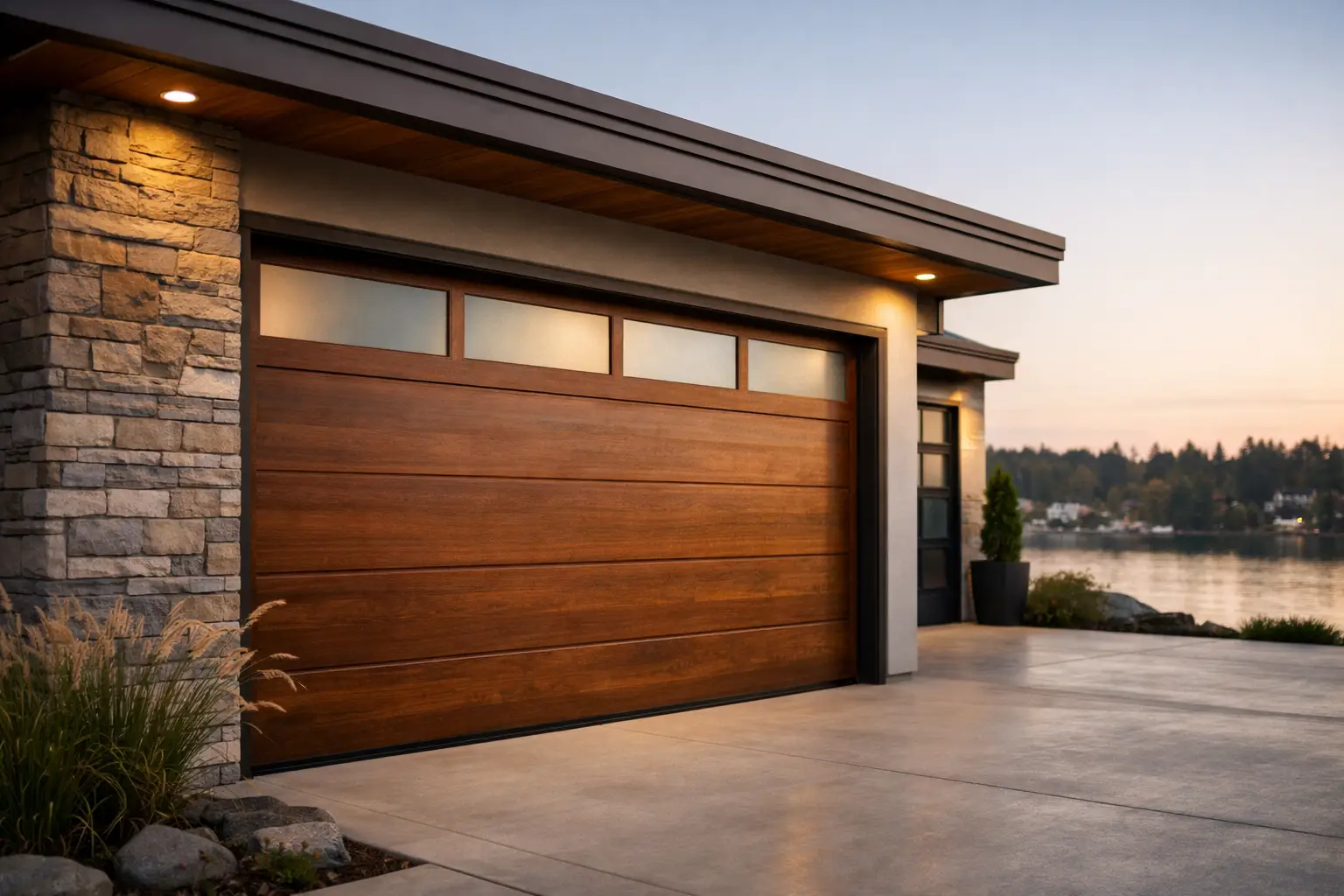
A garage door can take up a big share of your front elevation. On Mercer Island, where many homes balance strong architectural character with daily practicality, that matters more than most people expect. Mercer Island custom garage doors are not just about appearance – they also need to handle weather, improve reliability, and suit the way your household actually uses the space.
For some homeowners, custom means creating a clean modern look that updates an older exterior. For others, it means matching a traditional home with carriage-house details, better insulation, and quieter operation. The right choice depends on your home’s style, your priorities, and the condition of the garage system behind the door.
What makes Mercer Island custom garage doors different?
Custom garage doors are different from standard replacement doors because they are selected, sized, and finished with the property in mind rather than chosen from a narrow stock set. That can mean a specific panel layout, window pattern, colour, wood-look finish, or material combination. In some cases, it also means solving a practical issue, such as unusual opening dimensions, low headroom, or the need for better thermal performance.
On Mercer Island, custom work often starts with architecture. Many homes have a distinct style already, and a generic door can make the front of the home feel mismatched. A well-chosen custom door does the opposite. It ties the garage into the rest of the property so the door feels intentional instead of oversized and purely functional.
That said, custom does not always mean highly elaborate. In many cases, the best result is simple. Clean lines, the right colour, and proportional windows can do more for curb appeal than decorative hardware added just for effect.
Start with the home, not the catalogue
One of the most common mistakes in custom door selection is focusing on the door as a standalone product. A better approach is to look at the home first. Roofline, trim colour, siding texture, window shape, and driveway approach all affect what will look right.
A modern home may benefit from flush panels, full-view glass sections, or a dark finish with minimal detailing. A more traditional property may call for recessed panels, a warmer tone, or carriage-style design cues. If the garage sits prominently at the front of the house, the door choice carries even more visual weight.
This is also where restraint matters. A door can be high-end without trying too hard. The goal is not to make the garage door the loudest element on the property. The goal is to make it belong.
Material choice changes more than appearance
Material selection affects maintenance, insulation, longevity, and price. Steel remains a popular option because it offers durability, design flexibility, and solid value. It can work well for both contemporary and traditional looks, especially with upgraded finishes and insulated construction.
Wood has undeniable character, but it comes with more maintenance. For homeowners who love the natural look, that trade-off may be worth it. For others, a wood-look composite or steel option may deliver the same visual warmth with less upkeep.
Aluminum and glass can create a striking modern appearance, but privacy and thermal performance need careful thought. If your garage faces the street or the space is used for storage, workshop use, or direct home access, appearance alone should not drive the decision.
Performance matters as much as design
A custom garage door should not just look better on day one. It should also operate smoothly, seal properly, and hold up over time. That means the design conversation should include the full system: tracks, springs, opener compatibility, insulation, weather seals, and balance.
If an older opener struggles with a heavier replacement door, the result can be noisy operation, premature wear, and avoidable repair calls. If tracks are worn or misaligned, even a beautiful new door will not perform as it should. This is why a proper custom installation looks beyond the panel and addresses the working parts that support it.
Insulation is another point that deserves attention. Not every home needs the highest insulation rating available, but many homeowners benefit from more than a basic uninsulated door. If the garage is attached, sits below living space, or is used frequently, an insulated door can help with comfort, sound control, and overall day-to-day performance.
When custom sizing is necessary
Some openings are not ideal for standard door sizes. Older homes, remodels, and certain architectural layouts can create width, height, or clearance challenges that make off-the-shelf options a poor fit. In those cases, custom sizing is not a luxury – it is what allows the door to function properly and look right.
Low headroom is a common example. If space above the opening is limited, the hardware configuration may need to change. Similarly, oversized openings or unique framing details can require a more tailored solution. This is where experience matters. Good design means very little if the system is forced into an opening it was never meant to serve.
Budget, value, and where to spend wisely
Custom garage doors cover a wide price range. The final cost depends on material, insulation level, size, finish, hardware, windows, and installation complexity. A true custom wood door with premium detailing will cost more than a steel door with upgraded design options. That part is straightforward.
What is less obvious is where spending more actually improves the outcome. In many projects, better insulation, stronger hardware, quality rollers, and proper opener pairing deliver more long-term value than decorative upgrades alone. A door that looks excellent but operates poorly will not feel like a smart purchase for long.
There is also a practical middle ground that works well for many homes. You do not always need the most expensive build to get a custom look. A well-selected steel insulated door with the right finish, windows, and proportions can create a polished result without pushing the budget into premium wood-door territory.
Choosing features you will still like in five years
Trends move faster than garage doors. That is worth remembering when selecting colours, window styles, and decorative details. A bold choice may look fresh today, but if it does not relate to the rest of the home, it may date the property sooner than expected.
Neutral finishes, balanced window placement, and design choices that echo the home’s architecture tend to age better. That does not mean every door should play it safe. It means custom should feel considered, not impulsive.
Smart features can also add real value when chosen for daily use rather than novelty. Quiet openers, battery backup, app controls, keyless access, and improved lighting can make the garage more convenient and secure. For many homeowners, these upgrades improve the experience more than another decorative layer on the outside.
Why installation quality decides the result
A custom garage door project can go wrong even with a good product if installation is rushed or incomplete. Proper measurement, structural review, hardware setup, spring calibration, and opener adjustment all affect how the door performs. Small errors show up quickly as uneven movement, excess noise, poor sealing, or early wear.
That is why homeowners should look for a company that can handle both design guidance and technical execution. The visual side matters, but so does safe spring work, clean alignment, and reliable setup from the start. If the installer does not assess the full system, you may end up paying twice – once for the new door and again to fix avoidable issues.
For homeowners comparing options, it helps to ask practical questions. Is the recommended door suited to the opening and existing system? Will the opener support the weight and cycle demands? Are insulation, seal quality, and maintenance requirements being explained clearly? Honest answers usually signal a more dependable process.
When it makes sense to replace instead of repair
Sometimes homeowners start by looking for a repair and only later consider a custom replacement. If the current door is outdated, repeatedly failing, poorly insulated, or visibly damaged, replacement may be the better long-term choice. This is especially true when the door affects curb appeal and the rest of the home has already been upgraded.
Repair still makes sense in many cases. A spring issue, track adjustment, roller replacement, or opener problem does not automatically justify a full new door. But if the door no longer fits the home, struggles daily, and keeps requiring service, replacement often becomes the more cost-effective move.
A company such as Summit Garage Doors can help sort through that decision by looking at both the condition of the system and the result you want from the property. The right recommendation should feel practical, not pushed.
Custom garage doors work best when they solve more than one problem at once. They should improve the look of the home, yes, but they should also make the garage quieter, more dependable, and better suited to everyday life. If you start with that standard, the final choice is usually much easier to make.

