
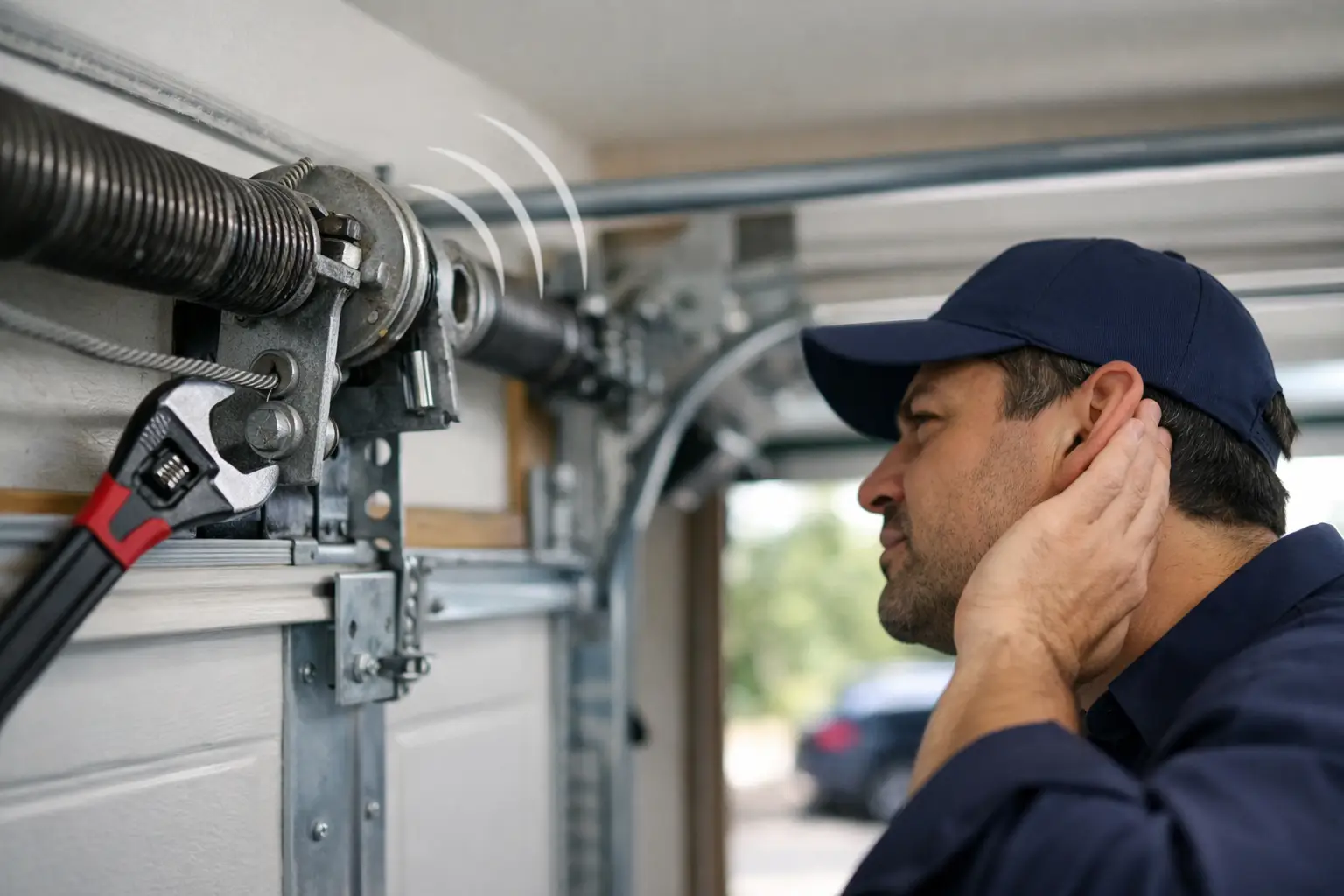
That sharp grinding sound at 6 a.m. is more than annoying. If your garage door making loud noise has suddenly become part of your daily routine, there is usually a mechanical reason behind it – and in many cases, it gets worse if you keep using the door.
A noisy garage door can point to anything from dry rollers to a failing opener or a spring system under too much strain. Some causes are minor and easy to address. Others affect safety, door balance, and the lifespan of the entire system. The key is knowing which noise you are hearing and what it tends to mean.
Why a garage door making loud noise should not be ignored
Garage doors are heavy moving systems with multiple parts working together at the same time. When one component starts wearing out, the noise often shows up before a full breakdown does. That early warning matters.
A rattling or squealing door may still open and close, but that does not mean the problem is harmless. Worn rollers can damage tracks. A strained opener can burn out faster if the door is no longer balanced. Loose hardware can shift the door out of alignment over time. If a spring or cable is involved, the issue moves from inconvenient to unsafe very quickly.
For homeowners, that can mean getting trapped in the garage or leaving the home less secure than it should be. For businesses, a loud commercial door can disrupt operations and create a bigger repair bill if left unchecked.
The most common noises and what they usually mean
Different sounds point to different trouble spots. While an exact diagnosis takes a close inspection, the type of noise can narrow things down.
Squeaking or screeching
This often comes from metal parts rubbing together without proper lubrication. Rollers, hinges, and bearing plates are common sources. In some cases, the issue is simply dry hardware. In others, the rollers are worn and no amount of lubricant will make them quiet for long.
Grinding
Grinding usually suggests that a part is wearing down or not tracking smoothly. You may have worn rollers, bent tracks, or opener gear issues. If the sound is coming from the motor unit, the opener itself may need repair rather than a quick adjustment.
Banging or popping
A loud bang can be a broken spring, which is one of the most urgent garage door problems. A popping sound can also happen when sections of the door flex under stress or when hardware is loose. This is not a sound to ignore, especially if the door starts feeling heavy or uneven.
Rattling or vibrating
This commonly points to loose nuts, bolts, brackets, or track supports. Over time, the regular motion of the door can shake hardware loose. The fix may be straightforward, but the longer it continues, the more wear spreads to nearby parts.
Humming with no movement
If the opener hums but the door does not move, the motor may be getting power while struggling against a jam, a disconnected trolley, or a failing internal component. It can also happen when the spring system is no longer helping lift the weight of the door.
What usually causes the noise
Most loud garage doors come down to wear, lack of maintenance, or a part that is starting to fail. The challenge is that one issue can trigger another.
Worn rollers are one of the most common causes. Older metal rollers tend to get louder as they age, especially if bearings are failing. Nylon rollers are often quieter, but they still wear out over time.
Dry moving parts also create noise quickly. Hinges, springs, bearings, and rollers all need appropriate lubrication. Not every product is suitable, though. Using the wrong spray can attract dirt or create buildup rather than solve the problem.
Loose hardware is another frequent culprit. Garage doors move up and down multiple times a day, and vibration gradually affects brackets, bolts, hinges, and track mounts.
Track problems matter as well. If the tracks are bent, misaligned, or obstructed, rollers cannot move smoothly. That creates grinding, rubbing, or jerky motion.
Then there is the opener. Chain-drive openers are naturally louder than belt-drive models, but excessive noise from either type can signal mounting issues, worn gears, or strain caused by an unbalanced door.
Finally, spring and cable problems can change the entire sound and feel of the system. When the springs are worn or broken, the opener has to work much harder. That often shows up as loud operation, slow travel, or sudden jerking.
What you can safely check before calling
There are a few things property owners can look at without putting themselves at risk. The goal is not to take apart the system. It is to spot obvious warning signs and avoid using the door if something looks serious.
Start by watching the door open and close from a safe distance. If it shakes, hesitates, moves unevenly, or sounds worse at one point in the track, that information helps narrow down the source.
Next, inspect the visible hardware. Loose brackets, missing bolts, worn rollers, and obvious track damage are all worth noting. If you see frayed cables, a gap in a torsion spring, or a crooked door, stop using it and arrange service right away.
You can also check whether the noise seems to come from the opener or the door itself. If the motor unit is the loudest point, the issue may be with the opener assembly. If the sound follows the rollers and hinges along the tracks, the door hardware is more likely the source.
Basic lubrication of accessible moving parts may help if the door is otherwise operating normally. That said, lubrication is maintenance, not a repair plan. If the sound returns quickly or the door still struggles, there is a deeper issue.
What not to do with a noisy garage door
This is where many small issues turn into expensive ones. If your garage door making loud noise is accompanied by jerking, slamming, imbalance, or visible spring damage, do not keep forcing it open and closed.
Do not loosen or adjust springs, cables, or bottom brackets yourself. Those parts are under high tension and can cause serious injury. The same goes for trying to bend tracks back into place without the right tools and training.
It is also wise not to assume lubricant will solve every sound. If a roller is cracked, a hinge is worn through, or the opener gear is failing, spray alone will only delay proper repair.
When it is time for professional repair
If the noise is getting worse, the door is moving unevenly, or you notice any issue with springs, cables, or opener strain, it is time to have it inspected. Fast service matters because garage door problems tend to compound. A roller issue can become a track issue. A balance problem can shorten opener life. A spring problem can stop the door completely.
A professional inspection should look at the full system, not just the loudest part. That includes rollers, hinges, tracks, springs, cables, drums, bearing plates, opener settings, and overall door balance. Honest service means fixing the actual cause, not just quieting the symptom for a week.
For homes and businesses in the Seattle area, quick response is especially helpful when the door is a daily access point or a security concern. Summit Garage Doors handles these issues with the kind of practical diagnosis that saves time and prevents repeat breakdowns.
Can a noisy garage door be replaced instead of repaired?
Sometimes yes, but it depends on the age of the door, the condition of the hardware, and the type of opener you have. If the noise comes from normal wear on a relatively modern system, repair is usually the better value. Replacing rollers, adjusting tracks, servicing the opener, or changing worn hardware can restore quieter operation without replacing the full door.
If the door is older, poorly insulated, damaged, or paired with an outdated opener, replacement may make more sense. Newer doors and belt-drive openers are typically much quieter, and they often improve curb appeal, efficiency, and reliability at the same time. The right answer depends on whether you are solving one repair issue or dealing with a system that has reached the end of its useful life.
A quieter door usually starts with maintenance
Many loud garage door problems start small. Routine inspection, proper lubrication, hardware tightening, and early part replacement can prevent the bigger failures people usually call about in a panic. That is true for residential doors and even more so for commercial systems that see frequent use.
If your garage door has started sounding rough, trust the change. Garage doors do not get quieter on their own, and they rarely fix themselves with more use. A quick check now can protect your safety, your schedule, and the life of the whole system.

