
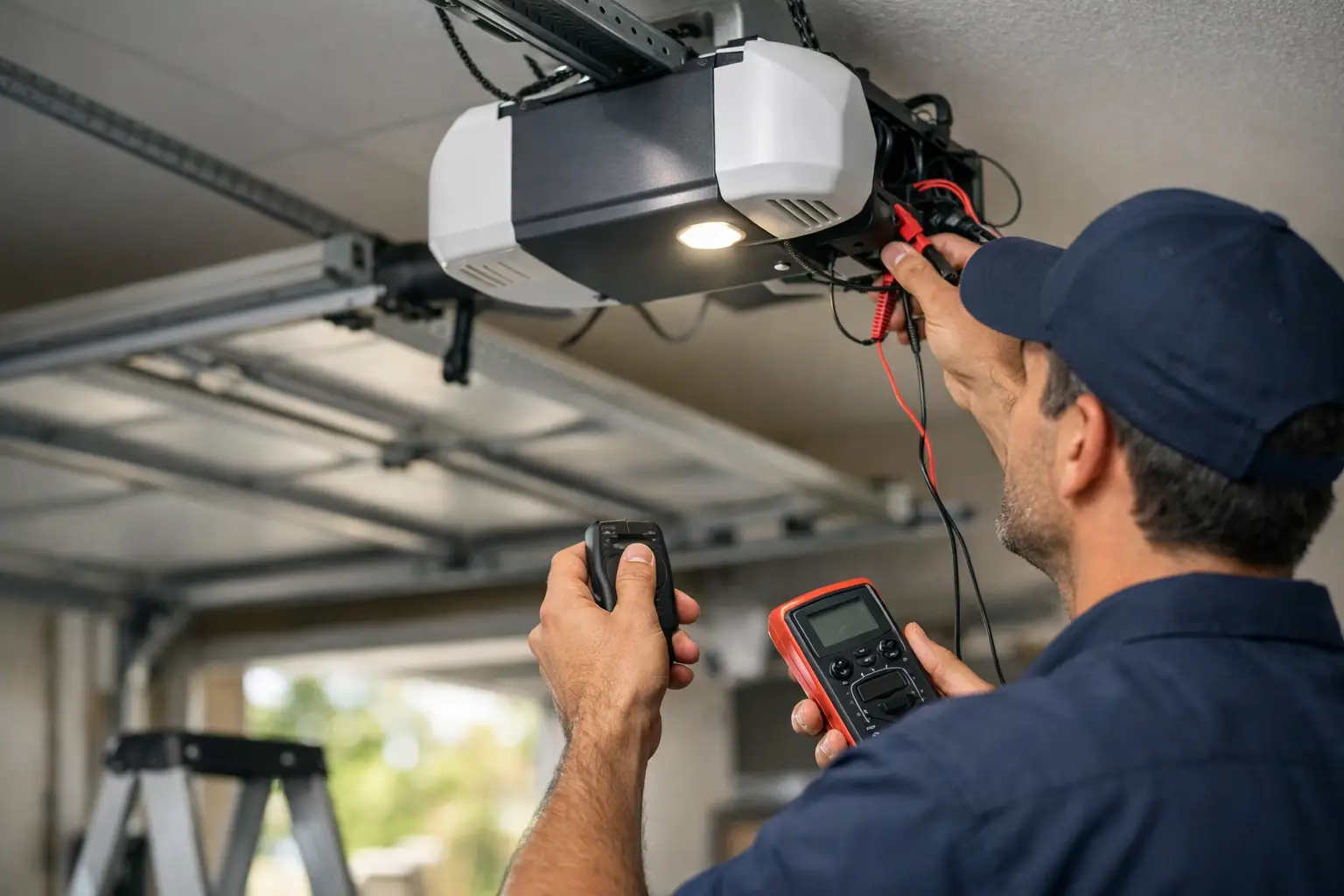
Your garage door opens halfway when you are already late, the remote suddenly stops working, or the motor hums without moving the door. These are frustrating problems, but a careful garage door opener troubleshooting guide can help you separate a simple reset from a repair that needs a trained technician.
The most useful first step is to watch what the system does. Does the opener make no sound at all? Does the door reverse immediately? Does it move only when you hold the wall button? Each symptom points to a different part of the system. Avoid forcing the door or repeatedly pressing the remote, especially if the door is heavy, crooked, or making grinding noises.
Garage Door Opener Troubleshooting Guide: Start Safely
Before checking the opener, make sure the garage door is fully closed if possible. Keep children, pets, vehicles, and hands away from the door, tracks, springs, and cables. A garage door can weigh hundreds of pounds, and the opener is only one part of a counterbalanced system under significant tension.
Do not adjust torsion springs, extension springs, lift cables, or bottom brackets. These components can cause serious injury when handled without the right tools and training. If a spring is broken, a cable is loose, or the door is hanging unevenly, stop troubleshooting and arrange professional service.
For safe basic checks, unplug the opener before touching the motor unit, changing a light bulb, or inspecting visible wiring. Reconnect power only when you are clear of the door’s moving path.
If the Opener Has No Power
When nothing happens after you press the wall control or remote, begin with the power source. Check whether the opener is plugged into its outlet and whether the outlet has power. A tripped circuit breaker or ground fault interrupter can cut power to the garage even when other rooms are working normally.
If the outlet works but the opener remains completely unresponsive, inspect the motor unit for indicator lights or an error display. A power surge, damaged circuit board, failed capacitor, or worn internal component may be the cause. These repairs are best left to a qualified garage door technician, particularly when the opener is older or shows signs of overheating.
A humming motor with no door movement is different from a dead opener. It may indicate a stripped gear, failed drive component, or a door that is too heavy for the opener to lift. Continuing to operate it can turn a smaller repair into motor damage.
When the Remote or Keypad Will Not Work
A remote issue is often easier to solve than an opener failure. Replace the remote battery first, even if its indicator light still comes on. Weak batteries can reduce signal strength and cause inconsistent operation.
Next, test the wall-mounted button. If the wall button works but the remote does not, the opener itself likely has power and the issue may be the remote, keypad battery, programming, or radio receiver. Reprogramming may help after a power outage, a battery replacement, or accidental changes to the opener settings.
If neither the keypad nor remote works but the wall control does, check whether the opener is in vacation or lock mode. Many wall controls can disable wireless remotes for added security. Refer to the control’s labelled buttons or manual before changing settings.
Interference is another possibility, especially when a remote works only at close range. LED bulbs, wireless devices, nearby electronics, and even a damaged antenna wire can interfere with the signal. Try removing or replacing an LED bulb in the opener with one rated for garage door openers, then test the remote again.
If the Door Reverses Before It Closes
An opener that starts to close and then reverses is usually responding to a safety issue. First, look at the photo-eye sensors near the bottom of both tracks. They should face one another, remain securely mounted, and show their normal indicator lights.
Wipe the sensor lenses with a soft, dry cloth. Dirt, spider webs, rain splash, and road salt residue can interrupt the invisible beam. Then check for boxes, tools, leaves, or other items in the door’s path. Even a small obstruction can trigger reversal.
If one sensor light is off, flickering, or a different colour than normal, the sensors may be misaligned or have damaged wiring. Gently check whether the brackets have been bumped out of position, but do not pull on the wires. A technician can realign, repair, or replace the safety sensor system quickly.
When sensors appear to work but the door still reverses, the opener’s closing force or travel limit may be incorrectly set. This can happen as the door ages, weather changes affect movement, or a previous adjustment was made without addressing the underlying problem. Force settings should not be increased simply to make a heavy or binding door close. The door itself needs inspection first.
If the Door Will Not Open All the Way
A door that opens partway and stops may have an opener travel-limit issue, but it can also be binding in the tracks or struggling against a weakened spring system. Disconnect the opener using the emergency release only when the door is fully closed. Then try lifting the door manually.
A properly balanced residential garage door should move smoothly and remain roughly in place when raised halfway. If it feels unusually heavy, falls quickly, sticks, or cannot be lifted safely, do not continue. A broken spring or cable problem is likely, and the opener should not be used until the door is repaired.
If the door moves smoothly by hand, check for visible obstructions along the tracks and rollers. Bent tracks, loose hardware, worn rollers, and lack of lubrication can all add resistance. Never hammer a track back into shape or loosen track brackets while the door is under load. Small alignment errors can create larger operational and safety problems.
Common Problems You Can Check Yourself
Some homeowner checks are practical and low-risk when the door appears balanced and undamaged:
- Replace weak batteries in remotes and wireless keypads.
- Confirm the opener has power and check the breaker or ground fault interrupter.
- Clear objects from the door’s path and clean the photo-eye lenses.
- Tighten loose mounting screws on the wall control or sensor brackets.
- Lubricate metal rollers, hinges, and springs with garage-door-specific lubricant, not heavy grease.
Do not lubricate the opener’s chain, belt, or screw drive unless the manufacturer specifically recommends it. The wrong product can collect dirt or damage components. If you hear squealing, popping, scraping, or loud banging, schedule an inspection rather than trying to quiet the noise with more lubricant.
Know When It Is Time for Professional Repair
Call for service promptly when the garage door has a broken spring, loose cable, bent track, damaged panel, or an opener that runs while the door does not move. These are not cosmetic issues. They can affect security, damage the opener, and create a risk of the door falling unexpectedly.
Professional help also makes sense when troubleshooting has not produced a clear answer. Modern openers may have logic boards, battery backup systems, Wi-Fi controls, integrated cameras, and coded error indicators. A technician can test the complete system, not just the motor, and recommend whether a targeted repair or replacement is the better value.
For older openers, replacement can be worthwhile when repairs become frequent, safety sensors are unreliable, or you want quieter operation and smart access features. For a newer unit with a failed remote, sensor, gear, or control board, repair is often the more affordable option. The right choice depends on the opener’s condition, the door’s balance, and how reliably the system serves your daily routine.
A garage door should open smoothly, close securely, and respond every time you need it. If a basic check does not solve the problem or anything about the door feels unsafe, Summit Garage Doors can provide the experienced repair support needed to get your system operating reliably again.

