
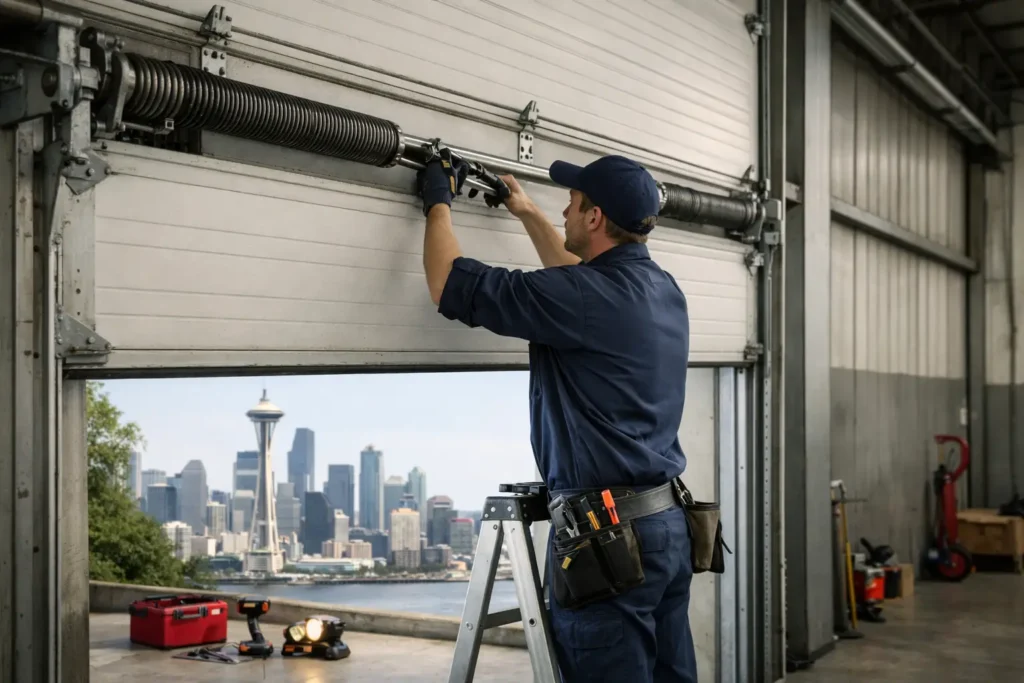
A loading bay door that will not open at 6:30 a.m. can stop far more than a delivery. It can delay crews, leave inventory exposed, create a safety concern, and put the entire day behind schedule. When you need industrial garage door repair Seattle businesses can rely on, the priority is not a quick patch alone. It is restoring safe, dependable operation with a repair that matches the demands of your facility.
Industrial doors carry heavier loads, cycle more often, and face tougher working conditions than most residential doors. A small alignment issue, worn roller, or opener fault can become a major disruption if it is ignored. Fast service matters, but careful diagnosis matters just as much.
When an Industrial Door Needs Immediate Repair
Some door problems can wait for a scheduled service visit. Others should be treated as urgent, particularly when they affect security, employee safety, or access to critical areas. A door that is stuck open leaves a warehouse, shop, or equipment bay vulnerable. A door that is jammed closed may prevent shipments, vehicles, or staff from moving where they need to go.
Call for professional help promptly if the door has come off its tracks, hangs unevenly, makes grinding or banging noises, or reverses unexpectedly. Damaged cables, broken springs, bent tracks, and faulty photo-eye sensors are not safe do-it-yourself repairs. Industrial doors store significant energy in their springs and lifting systems. Trying to force the door closed or reset a cable without the right tools can cause further damage or serious injury.
Water intrusion is another reason to act quickly. Seattle’s wet weather can expose worn bottom seals, corroded hardware, and drainage problems around loading areas. A compromised seal may seem minor, but it can allow water, debris, pests, and cold air into the building. Over time, that affects stored materials, energy costs, and working conditions.
Common Problems Behind Industrial Door Failures
Industrial garage door systems are built for demanding work, but every moving component has a service life. The most common failures are usually mechanical, electrical, or related to impact damage.
Broken Springs, Cables, and Rollers
Springs counterbalance the door’s weight so the opener and staff are not doing all the lifting. When a spring breaks, the door may become extremely heavy, stop partway, or fail to move at all. Cables can fray, slip from drums, or snap when a door is out of balance. Worn rollers may make the door loud, shaky, and difficult to operate.
These parts work together. Replacing only the visibly damaged component without checking the full system can lead to another failure soon after. A qualified technician should inspect spring tension, cable condition, drums, bearings, brackets, and door balance before completing the repair.
Bent Tracks and Vehicle Impact Damage
Loading bays and industrial facilities are active places. Forklifts, trucks, pallets, and equipment can strike a door or track even when operators are being careful. A minor bend may cause rubbing and noise. A larger impact can pull rollers out of the track, twist a section, or prevent the door from sealing correctly.
Whether a track can be repaired or needs replacement depends on the damage. Straightening a lightly bent section may be appropriate. Severely twisted tracks, cracked brackets, or damaged door panels often require new parts to restore safe operation. The right recommendation should be based on the door’s condition, not on selling more work than the job needs.
Opener, Control, and Safety Sensor Issues
Not every failure is mechanical. Industrial operators can develop problems with limit settings, drive components, wiring, remote controls, wall stations, or power supply. If the door runs but does not fully open or close, stops short, or reverses without an obstruction, the operator and safety system need attention.
Photo eyes and other entrapment protection devices are especially important. Dust, vibration, weather, or accidental contact can affect their alignment. Cleaning a sensor lens may help in some cases, but recurring problems should be inspected professionally. Bypassing a safety device to keep a door moving is never a safe solution.
What Professional Industrial Garage Door Repair in Seattle Should Include
A proper service call begins with more than identifying the obvious problem. The technician should assess how the door moves, whether it is balanced, how the tracks and hardware are holding up, and whether the operator is working within safe limits. This helps prevent a repair that solves today’s issue while missing the reason it happened.
For example, a broken cable may be the immediate concern, but the underlying cause could be a worn drum, a misaligned track, or an unbalanced door. A repeatedly failing opener may be struggling because the door is too heavy to lift efficiently. Correcting the root issue protects the new part and reduces repeat downtime.
You should also receive a clear explanation of the repair options. In some cases, replacing a worn part is the most affordable and sensible choice. In others, an older door or operator may be near the end of its useful life, making replacement a better long-term investment. The right answer depends on cycle frequency, door condition, security requirements, available parts, and how costly unexpected downtime is for your operation.
At Summit Garage Doors, the goal is to provide practical recommendations, skilled workmanship, and responsive service when a door problem interrupts business. That includes emergency help for urgent failures as well as scheduled repairs that keep facilities running safely.
Repair or Replacement: How to Make the Right Call
A repair is often the best option when the door structure is sound and the problem is isolated. Replacing springs, rollers, cables, seals, sensors, or an operator component can restore years of useful service. This is particularly true when the door has been maintained and replacement parts are readily available.
Replacement deserves consideration when panels are badly damaged, the door has repeated track failures, corrosion is widespread, or the system no longer meets operational needs. An older manual door may also be a candidate for an operator upgrade if staff regularly move equipment through the opening. Better controls, dependable safety features, and a properly matched commercial operator can improve access and reduce strain on the system.
There is a trade-off. Replacement costs more upfront, while repeated repairs can cost more over time through service calls, delays, and lost productivity. A trustworthy technician will help you compare both paths based on your actual use, rather than pushing a one-size-fits-all answer.
Preventive Maintenance Keeps Doors Working When You Need Them
The most disruptive door failure is often the one that had warning signs for weeks. Squealing rollers, slow travel, uneven movement, frayed cables, or a door that needs extra force to close should not be treated as normal wear. These symptoms are an opportunity to schedule maintenance before a busy day becomes an emergency.
A professional maintenance visit can include lubrication of appropriate moving parts, adjustment of spring tension, inspection of tracks and rollers, tightening of hardware, safety testing, operator checks, and review of weather seals. The recommended schedule depends on usage. A door that cycles a few times daily needs different attention than a high-use loading door operating throughout every shift.
Facility managers can also help by keeping the track area clear, reporting unusual noises early, and making sure staff do not pull or push an electrically operated door to force it through a problem. Small habits support longer equipment life and safer daily operation.
Choose a Repair Team That Understands Downtime
Industrial door repairs are not only about hardware. They are about protecting your people, property, workflow, and security. Look for a local service team that can respond quickly, diagnose the complete system, explain repairs in plain language, and work with the urgency your facility requires.
If your industrial door is noisy, damaged, slow, stuck, or no longer closing securely, do not wait for a full failure. A timely inspection can turn a developing issue into a manageable repair and help keep your operation moving.

