
A garage door that sticks halfway open on a wet Seattle morning is more than an inconvenience. It can leave your home exposed, delay your commute, and put strain on the opener each time you force it to move. If you are asking when should garage door be replaced, the answer usually comes down to safety, condition, repair history, and whether the door still protects and suits your property.
A repair is often the sensible, affordable choice. Broken springs, worn rollers, misaligned tracks, damaged panels, and opener issues can frequently be corrected without installing a new door. Replacement becomes the better value when the problems are widespread, the door is no longer safe, or repairs only provide a short-lived fix.
When Should a Garage Door Be Replaced Instead of Repaired?
The most practical question is not simply how old the door is. It is whether a professional repair will restore dependable performance at a reasonable cost. A well-maintained door can serve a property for many years, while a neglected or heavily damaged one may need replacement much earlier.
Start by considering the door as a complete system. The panels, tracks, springs, cables, rollers, weather seal, hinges, and opener all work together. Replacing a spring on an otherwise sound door makes sense. Repeatedly repairing a door with damaged sections, rusting hardware, poor insulation, and an outdated operating system often does not.
1. The Door Has Major Structural Damage
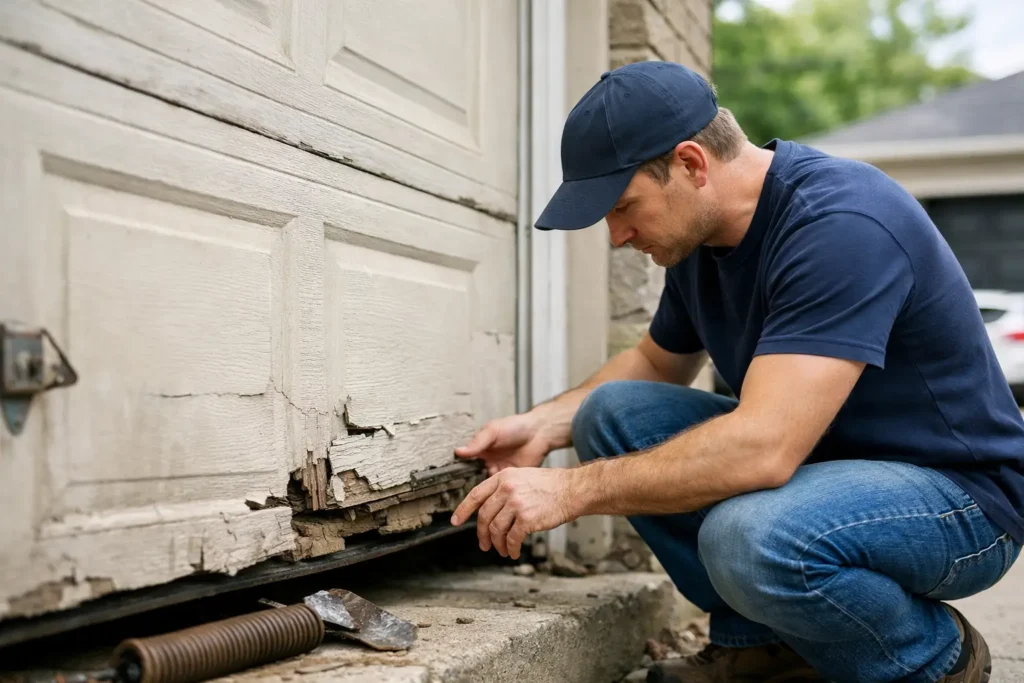
A small dent in one steel panel may be cosmetic and repairable. Deep creases, cracked wood, bent sections, or damage that prevents the door from sitting squarely in its opening are more serious. Structural damage can make the door bind in the tracks, place uneven pressure on the opener, and compromise security.
Replacement is often the safer option when multiple panels are damaged or a replacement section is unavailable. This is especially true after a vehicle impact. A door may still open after being hit, but hidden track damage or weakened hinges can create a sudden operating failure later.
2. Repairs Keep Adding Up
One repair does not mean you need a new garage door. Even a broken torsion spring is a normal service issue on an otherwise healthy system. The concern is a pattern of calls for different failures: a spring this season, rollers next season, track work after that, followed by panel or opener trouble.
If repair costs are approaching a meaningful portion of a new installation, ask for a clear comparison. A replacement can provide new hardware, fresh weather protection, updated safety features, and a warranty rather than another repair on ageing components. The right choice depends on the condition of the existing door, not a hard percentage alone.
3. The Door Is No Longer Safe to Operate
A garage door is one of the largest moving objects in a home or commercial building. Do not ignore loud bangs, loose cables, crooked movement, a door that falls quickly, or a door that will not stay open. These can point to spring, cable, track, or balance problems that require prompt professional attention.
Safety sensors that fail to reverse the door, cracked panels near hinges, and excessive shaking during operation are also warning signs. In some cases, a targeted repair will correct the issue. If the door is broadly worn, unstable, or has been modified repeatedly over the years, replacement may be the more dependable recommendation.
Never attempt to adjust garage door springs or cables yourself. These parts are under high tension and can cause serious injury when handled without the right tools and training.
4. Rust, Rot, or Moisture Damage Is Spreading
Seattle-area weather makes moisture management a real consideration. Surface rust on a steel door can sometimes be cleaned, treated, and repainted. But rust that has eaten through panels, weakened the bottom section, or spread into hinges and hardware affects more than appearance.
Wood doors need the same honest assessment. Peeling paint, soft spots, splitting, and rot near the bottom edge can allow water into the garage and reduce the door’s strength. When deterioration is limited, restoration may be worthwhile. When moisture damage is widespread, a new door with appropriate materials and weather sealing is usually a better long-term investment.
5. The Door Is Drafty, Noisy, and Costly to Live With
An older uninsulated garage door can make an attached garage noticeably colder in winter and hotter in summer. This matters even more if there is a bedroom, workspace, or living area beside or above the garage. Worn bottom seals and perimeter weatherstripping can also let in rain, leaves, pests, and cold air.
A replacement door can improve insulation, reduce outside noise, and create a tighter seal around the opening. It will not solve every home energy issue, but it can make a meaningful difference where the garage connects directly to conditioned space. Insulated steel doors are a popular practical choice because they combine durability, low maintenance, and improved thermal performance.
6. Security Features Are Outdated
A door that does not close fully or has a weak, damaged bottom panel can become an easy access point. Older openers may also lack modern rolling-code technology, battery backup, smartphone controls, and reliable photo-eye safety systems.
You do not always need to replace the door to improve security. An opener upgrade, new locks, or a repaired seal may be enough. However, if the door itself is warped, damaged, easy to force open, or no longer closes evenly, replacing it should be part of the discussion.
7. The Door No Longer Fits the Property
Garage doors occupy a large portion of a home’s front exterior. A dated, faded, or mismatched door can pull attention away from an otherwise well-kept property. For homeowners preparing to sell, improving curb appeal can be a practical reason to replace a door before listing.
Design is not only about appearance. Today’s options include windows for natural light, carriage-house profiles, contemporary flush panels, wood-look finishes, and colours that complement the rest of the exterior. The trade-off is that windows and custom finishes can add cost, while some design choices require more upkeep. A knowledgeable installer can help balance appearance, privacy, durability, and budget.
8. The Door Is Near the End of Its Useful Life
Age alone is not a verdict. A 20-year-old door that has been maintained, operates smoothly, and has solid panels may still have useful life left. But an older door with recurring issues, obsolete parts, poor weather resistance, and a tired opener is a strong candidate for replacement.
Commercial and industrial doors deserve an even closer review. High-cycle doors wear faster because they open and close many times each day. A door that interrupts deliveries, staff access, or security should be evaluated before a breakdown affects operations.
How to Make the Replacement Decision With Confidence
Before approving a new installation, have a technician inspect the full operating system. The assessment should cover door balance, springs, cables, tracks, rollers, hinges, panels, seals, and opener performance. This helps separate a repairable fault from a door that is no longer a sound investment.
Ask for options, not pressure. A trustworthy recommendation explains what can be repaired now, what may need attention later, and what a replacement would solve. For example, replacing one damaged panel can be reasonable if a matching section is available and the rest of the door is in good condition. If the panel is discontinued and the remaining sections are faded or worn, a full replacement may look and perform better.
For a new door, think beyond the purchase price. Consider material, insulation level, wind exposure, maintenance needs, design, and the opener that will power it. A quieter belt-drive opener may suit an attached garage, while a commercial setting may require a more heavy-duty operating system. Smart controls and battery backup can add convenience and peace of mind during power interruptions.
If your door is stuck, hanging unevenly, or has a broken spring or cable, treat it as a repair priority rather than waiting to see if it improves. Summit Garage Doors can assess the condition of the system, explain the honest repair-versus-replacement options, and help Seattle-area property owners choose a door that is safe, dependable, and built for the way they use their space.
A garage door should make daily life easier, not become another uncertainty every time you press the remote. When repairs no longer restore safe, reliable operation or the door no longer protects and complements your property, replacement is a practical step forward.

