
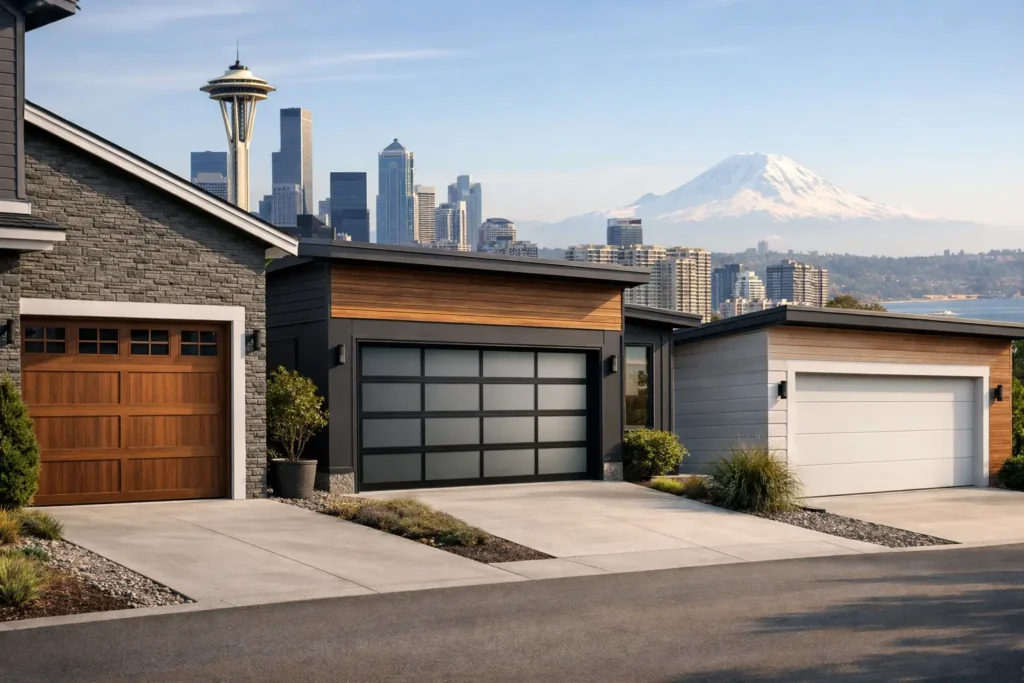
A garage door in Seattle has to do more than look good from the street. It needs to operate dependably through rainy months, protect the garage from damp air and wind-driven weather, and suit the way your household actually uses the space. The best garage door options Seattle homes need are rarely defined by one material or one price point. The right choice balances appearance, insulation, durability, maintenance needs, and a properly matched opener.
For some homeowners, that means a low-maintenance steel door that improves security without stretching the budget. For others, it means a custom wood-look design that gives the front of the home a more finished, architectural look. Knowing where the trade-offs are makes the decision far easier.
Start With How Your Garage Functions
Before choosing panels, windows, or colours, consider what sits behind the door. An attached garage affects comfort inside nearby rooms, especially if there is a bedroom or living area above it. A detached garage used only for parking and storage may not need the same level of insulation.
Daily use matters too. A family that opens the door several times a day benefits from a quiet, reliable door-and-opener combination. A homeowner who uses the garage as a workshop may care more about insulation, weather sealing, and natural light. If the garage faces a busy street, window placement and privacy deserve more attention.
This is also the time to assess the existing opening, tracks, headroom, and framing. A door style may look ideal in a showroom or online, but professional measurement confirms whether it will fit and operate safely at your home.
Best Garage Door Options for Seattle Homes
Insulated Steel: The Practical All-Rounder
Insulated steel is often the strongest starting point for Seattle-area homes. It is durable, comparatively affordable, available in many colours and panel designs, and requires far less upkeep than natural wood. Modern steel doors can suit traditional, contemporary, carriage-house, and craftsman-style homes without looking generic.
For attached garages, choose a door with polyurethane or polystyrene insulation rather than a single-layer model. Insulation helps moderate garage temperatures, reduces outside noise, and can make the door feel more solid during operation. Polyurethane insulation generally offers a higher R-value in a thinner profile and adds rigidity to the door.
Steel is not maintenance-free. Scratches should be touched up promptly to prevent rust, particularly where wet weather is common. Still, for homeowners seeking value, security, and long-term performance, insulated steel is difficult to beat.
Wood and Wood-Look Doors: Maximum Curb Appeal
A real wood garage door creates warmth and character that other materials cannot fully duplicate. It can be stained or painted to complement trim, siding, entry doors, and established architectural details. For heritage-inspired homes or properties where curb appeal is a major priority, wood can be the right investment.
The trade-off is maintenance. Seattle moisture, seasonal temperature changes, and direct exposure require regular inspection, refinishing, and careful attention to the bottom edge and window areas. Wood is also heavier, which means the springs, tracks, and opener must be sized correctly.
Wood-look steel doors offer a useful middle ground. High-quality finishes can provide the appearance of cedar, walnut, or painted timber while delivering the durability and lower maintenance of steel. They are an especially smart option for homeowners who want a premium look without committing to periodic staining or refinishing.
Contemporary Glass and Aluminum: Best for Modern Designs
Full-view aluminum and glass doors create a clean, modern appearance and bring daylight into garages used as studios, gyms, workshops, or flexible living spaces. Frames are naturally corrosion-resistant, and glass sections can make a compact garage feel brighter and more open.
Privacy and insulation require thoughtful choices. Clear glass is not ideal for every street-facing garage, but frosted, tinted, obscure, or mirrored options can let in light while limiting visibility. Insulated glass also improves comfort, though a full-glass door will generally not match the thermal performance of a well-insulated steel door.
This style works best when it supports the home’s architecture. On the right contemporary property, it can be a standout feature. On a more traditional home, a door with smaller glass sections may create a better visual balance.
Fibreglass and Composite: Useful in Specific Situations
Fibreglass and composite garage doors can replicate wood grain while resisting some moisture-related concerns. They are lighter than solid wood and can be a reasonable choice where homeowners want a textured, wood-inspired finish.
However, product quality varies widely. Some fibreglass doors may not offer the same impact resistance as steel, and lower-grade finishes can fade or look less convincing over time. Composite options may be worth considering for a specific design goal, but compare insulation, warranty coverage, and the door’s structural construction rather than choosing based on appearance alone.
Insulation Is More Than an R-Value
R-value measures resistance to heat flow, and it is a helpful comparison point. It is not the complete story. A garage door’s real-world performance also depends on weather stripping, bottom seals, panel construction, installation quality, and whether the opening has gaps around the frame.
For an attached Seattle garage, an insulated door with quality perimeter seals is usually a worthwhile upgrade. It can reduce drafts and help create a more stable space beside or beneath your home. If your garage is detached and unheated, a moderate insulation level may be enough unless you plan to use it as a work area.
Do not assume higher insulation is always the best use of your budget. A highly insulated door paired with worn weather seals, poor track alignment, or an aging opener will not deliver the dependable result you expect. The system should be evaluated as a whole.
Choose Windows With Purpose
Garage door windows can add character, daylight, and visual connection with the rest of the home. They also affect privacy, thermal performance, and the door’s appearance from both inside and outside.
Windows placed along the top panel are a common choice because they bring in natural light without exposing stored items or vehicles. For more privacy, obscure or frosted glass is often preferable to clear glass. If your garage receives strong afternoon sun, tinted glass may help reduce glare.
Match window shapes to the home rather than treating them as an afterthought. Rectangular panes suit many contemporary doors, while divided-light or arched designs may better suit craftsman and traditional architecture. A professional design consultation can help prevent a door from looking out of scale with the façade.
Do Not Separate the Door From the Opener
A new garage door deserves an opener that is quiet, properly sized, and equipped for the household’s routines. Belt-drive openers are a popular choice for attached garages because they operate more quietly than many chain-drive models. Battery backup can be valuable during a power outage, allowing access when you need it most.
Smart controls add practical convenience. Homeowners can check whether the door is open, receive activity alerts, and operate the door from a phone. These features are useful for busy households, but they should support good habits, not replace them. Keep remotes secure, use strong account credentials, and make sure the auto-reverse safety system is tested regularly.
The door’s weight and construction affect opener selection. A heavier wood door, for example, may need a different setup than a lightweight single steel door. Correct spring balance is equally critical. An opener should guide a balanced door, not force a heavy or damaged one to move.
Budget for the Entire Installation
The price of a garage door is not just the panel itself. Your estimate should account for removal and disposal of the old door, tracks and hardware where needed, springs, weather sealing, windows, insulation level, opener compatibility, and installation labour.
A lower initial price can become expensive if it means poor insulation, thin construction, limited design options, or hardware that wears out prematurely. At the same time, not every home needs a custom door. Honest recommendations should reflect the garage’s use, the home’s style, and your planned length of ownership.
Ask about warranty coverage, maintenance requirements, and expected lead times for custom finishes or specialty glass. You should also ask whether the existing tracks and springs can safely support the new door. Clear answers at the estimate stage help avoid unwanted surprises later.
A Reliable Choice Starts With a Site Visit
The best-looking garage door is only as good as its installation. Properly set tracks, balanced springs, aligned safety sensors, secure weather seals, and careful opener adjustment all affect how the door performs every day. A professional technician can identify concerns that are easy to miss, including worn rollers, damaged framing, inadequate headroom, or an opener nearing the end of its service life.
If you are comparing options for an upgrade, Summit Garage Doors can help you weigh practical performance against the design you want. Choose a door that suits your home, your weather exposure, and your daily routine, then have it installed and maintained with the care a major moving part of your home deserves.

