
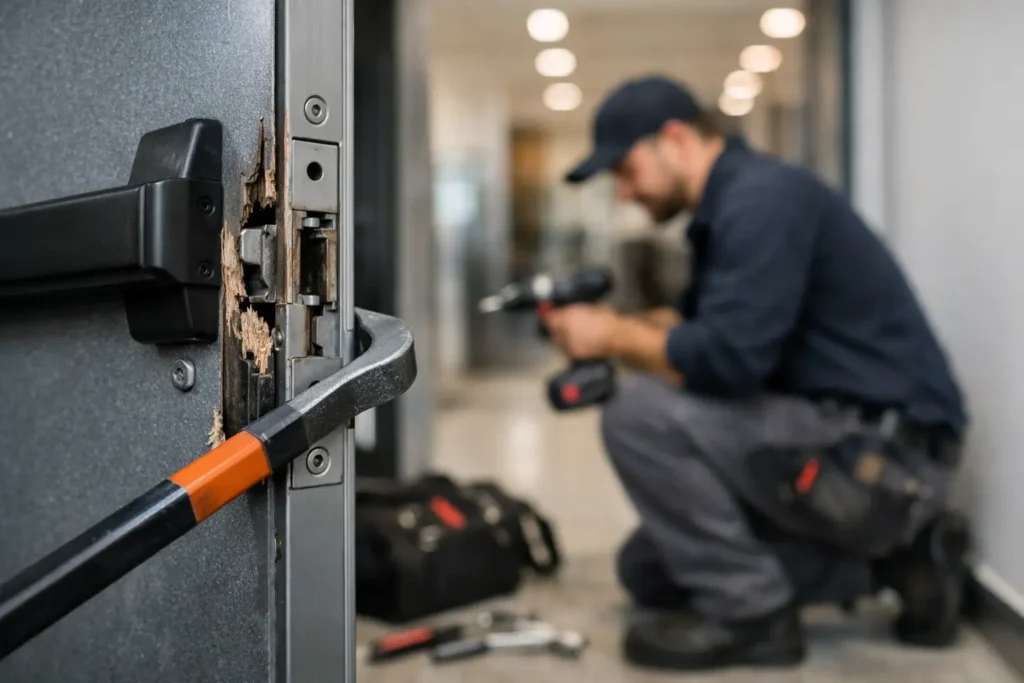
A garage door that will not close at bedtime, opens halfway before stopping, or hangs crooked over your vehicle is more than an inconvenience. The best emergency door repair signs are the ones that point to a safety, security, or access problem that should not wait for a convenient appointment. Knowing the difference can help you protect your family, property, and door system from further damage.
When a Garage Door Problem Is an Emergency
Not every noisy garage door needs a middle-of-the-night repair. A mild squeak, a remote with a weak battery, or a door that needs routine lubrication can usually be addressed during normal service hours. An emergency exists when the door is unsafe to operate, leaves your home or business unsecured, blocks a necessary vehicle, or could cause expensive damage if it moves again.
Garage doors are heavy, spring-loaded systems. A small issue can become serious when a spring breaks, a cable comes off, or the door is forced against a bent track. If something looks wrong, avoid repeated attempts to run the opener. Stop, keep people clear of the opening, and arrange professional service.
7 Best Emergency Door Repair Signs
1. The Door Will Not Open and Your Vehicle Is Trapped
A door that will not open can quickly disrupt work, school, appointments, deliveries, or emergency access. The cause may be a failed opener, broken spring, damaged cable, or obstruction in the track. If the opener hums but the door does not move, the system may be trying to lift a door that has lost spring support.
Do not pull hard on the emergency release or force the door upward without understanding why it stopped. A broken spring can make the door extremely heavy, while a damaged cable can allow it to shift suddenly. If your vehicle is trapped or the garage is your only practical entry point, prompt repair is the safest choice.
2. You Hear a Loud Bang From the Garage
A sharp bang that sounds like something hit the house is often a broken garage door spring. Torsion springs store a great deal of energy to counterbalance the door’s weight. When one breaks, the door may remain shut, open only a few inches, or feel far too heavy to lift manually.
You may also see a visible gap in the spring above the door. Do not touch the spring, winding cone, cables, or brackets. Spring replacement requires proper tools, training, and controlled tensioning. Trying to repair it yourself can lead to injury or damage to the door and opener.
3. A Cable Is Loose, Frayed, or Off the Drum
Garage door cables work with the springs to lift and lower the door evenly. When a cable comes off its drum, starts fraying, or hangs loose beside the track, the door can become unstable. One side may rise while the other stays low, causing the door to bind or twist.
This is an immediate stop-use situation. Running the opener can pull the door farther out of alignment and bend tracks, damage panels, or cause the door to come down unevenly. Keep the door in its current position if it is stable, keep the area clear, and call for repair rather than attempting to rewind the cable yourself.
4. The Door Is Crooked, Sagging, or Partly Off Its Track
A garage door should travel evenly. If one side is higher than the other, rollers have slipped out, or the door is visibly leaning, it may be partially off track. This can happen after a vehicle impact, a worn roller failure, a cable problem, or a track that has shifted over time.
A crooked door is especially risky when it is open or partly open. Its weight may no longer be properly supported, and trying to close it can make the situation worse. Do not stand under the door, park beneath it, or try to push it back into place. A technician can secure the door, inspect the track and hardware, then make the necessary alignment repairs.
5. The Door Will Not Close or Leaves Your Property Exposed
An open garage is an obvious security concern, particularly overnight or when a commercial space contains inventory, tools, or equipment. The issue may be as simple as a blocked safety sensor, but it can also involve a damaged track, faulty opener logic board, broken hardware, or a door that is binding before it reaches the floor.
First, check for a visible object in the doorway and make sure the photo-eye sensors near the floor are clean and facing each other. If the opening is clear and the door still reverses, stops, or will not respond, avoid bypassing safety features. A professional can determine whether the issue is electrical, mechanical, or sensor-related and help restore secure closure.
6. The Opener Runs but the Door Barely Moves
When the motor runs, the chain or belt moves, but the door does not lift properly, the opener is not always the real problem. A failed spring, stripped gear, disengaged trolley, broken cable, or seized roller can all produce similar symptoms. Continuing to press the remote may overwork the opener and turn a repairable issue into a replacement need.
Disconnecting the opener to test the door manually is sometimes useful, but only if the door is fully closed and appears level. If you suspect a broken spring or the door feels unusually heavy, leave it alone. The trade-off is simple: a delayed trip is frustrating, but an uncontrolled heavy door is a far greater risk.
7. The Door Has Been Hit, Damaged, or Cannot Secure a Business
A vehicle backing into a garage door can bend panels, knock rollers from tracks, damage the bottom seal, or compromise the opening itself. Even if the door still moves, impact damage can weaken hardware and affect how it seals and locks. Water, wind, pests, and unwanted entry become bigger concerns when the door cannot close tightly.
For businesses, a damaged overhead door can halt receiving, shipping, equipment access, and daily operations. If the opening cannot be secured or the door creates a hazard for staff and customers, urgent service is appropriate. Quick assessment can help determine whether the door can be safely repaired or whether temporary securing and replacement planning are needed.
What to Do While You Wait for Emergency Service
The goal is to prevent movement and keep everyone away from the risk area. Do not keep testing the remote, pull on loose cables, loosen brackets, or attempt spring repairs. If the door is open and appears unstable, stay clear of the opening and do not drive underneath it.
If it is safe to do so, unplug the opener to prevent accidental activation. Keep children, pets, employees, and visitors away from the garage. For a door that will not close, move valuable items away from the opening and use another secure entrance if available. Take a few clear photos of the problem for the technician, especially if there has been an impact or a cable has come loose.
Why Fast Repair Protects More Than the Door
Emergency service is not only about getting back on schedule. A properly functioning garage door protects a major access point to your property. It also prevents a damaged spring, cable, roller, or track from creating more extensive damage throughout the system.
For Seattle-area homeowners and business owners, wet weather can make a compromised garage even more troublesome. A door that does not seal properly may allow moisture and debris inside, while a door stuck open can create an immediate security issue. Summit Garage Doors provides prompt, professional help for urgent garage door problems, with technicians equipped to identify the actual cause before recommending repair options.
When your door is making an unfamiliar sound, moving unevenly, or failing at the moment you need it most, trust what you can see and hear. Stopping operation early and getting qualified help is often the simplest way to keep a repair smaller, safer, and more affordable.

