
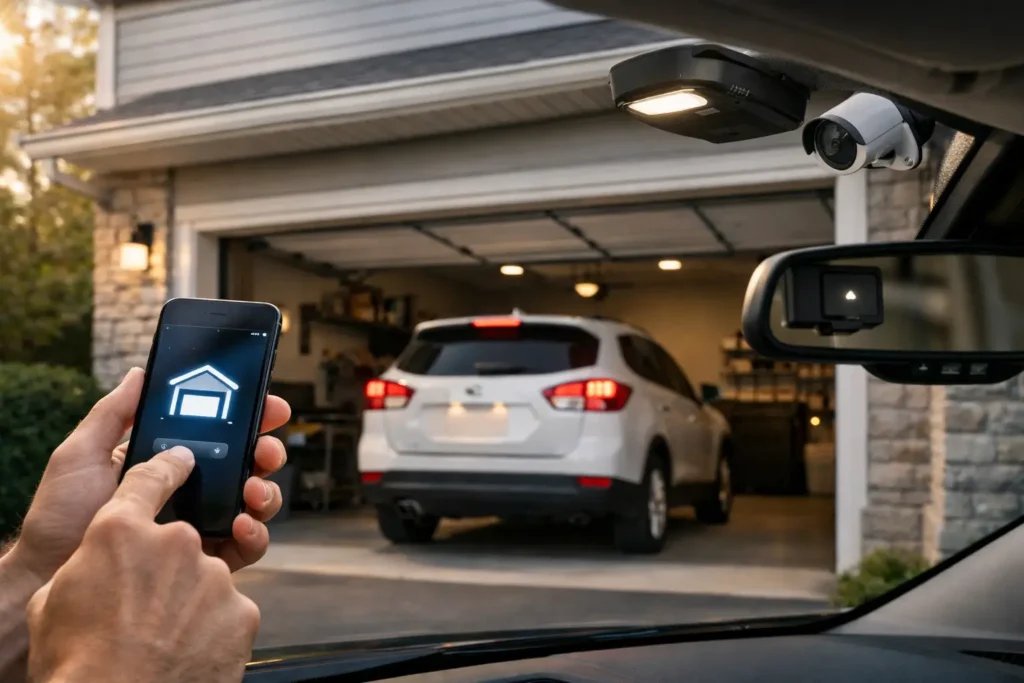
A garage door should not make you turn around halfway to work because you cannot remember whether you closed it. Garage automation gives homeowners and business owners more control over daily access, from checking door status remotely to receiving alerts when a door opens unexpectedly. The right upgrade can make a busy routine easier, but it must start with a door and opener that operate safely.
What garage automation actually includes
Garage automation is more than opening a door with a phone. It is a group of connected features that let an opener respond to authorised users, scheduled routines, safety sensors, and real-time information. Depending on the equipment, you may be able to open or close the door from an app, confirm its position, grant temporary access, receive activity alerts, or operate it by voice command.
For many homes, the most useful feature is simple confirmation. A quick app check can tell you whether the garage is closed after the morning rush or after a family member arrives home. For a business, activity notifications and controlled access can help managers keep track of a service entrance, loading area, or equipment storage space.
Not every automated setup needs every available feature. The goal is dependable access that fits the property, rather than a collection of gadgets that complicates a door’s operation.
The everyday benefits of a smart garage upgrade
A well-chosen system adds convenience, but security and awareness are often the stronger reasons to upgrade. Remote monitoring can alert an owner when the door is opened outside expected hours. Temporary digital access can also reduce the need to share a physical remote with a pet sitter, cleaner, delivery person, contractor, or employee.
Automation can be especially practical for households with multiple drivers. Instead of wondering who has the only spare remote, each authorised person can use their own app-based access. Some systems keep an activity history, which can be helpful when you need to confirm when the garage was used.
Battery backup is another feature worth considering in the Seattle area. A power outage can leave a standard automatic opener unavailable unless someone knows how to release and operate the door manually. A compatible battery backup allows the opener to keep working for a limited period, offering a safer and more convenient option during an outage.
There are limits. Remote control is not a replacement for good habits, secure locks where appropriate, or a properly maintained door. It also depends on a reliable home network and compatible equipment. If Wi-Fi is weak in the garage, the app may be less responsive even when the opener itself is working normally.
Choosing the right garage automation setup
The first question is whether the existing opener can support a smart controller or whether replacing the opener is the better long-term choice. Add-on controllers can be an economical option when an opener is in good condition and has the required safety sensors. They can provide app control and alerts without replacing the full unit.
An older, noisy, or unreliable opener may justify a complete replacement instead. Newer openers often offer built-in connectivity, quieter belt-drive operation, battery backup options, improved lighting, and integrated camera capability. If the motor is struggling, the door is jerking, or the opener reverses without cause, an accessory will not correct the underlying mechanical issue.
When comparing options, focus on the features your property will actually use:
- Remote opening, closing, and door-position alerts
- Individual user access and temporary guest permissions
- Battery backup for power interruptions
- Camera or motion notifications where visibility is useful
- Compatibility with your existing smart-home platform
For a detached garage, a camera and alerts may bring more value than voice control. For a family home with attached garage access, door-position notifications and user permissions may be the priority. A commercial site may need a more durable operator, keypad access, and a system designed around employee traffic rather than a residential smart opener.
Safety comes before smart features
A garage door is the largest moving object in many homes. Any automation project should begin with an inspection of the door’s balance, springs, tracks, rollers, cables, and safety sensors. A modern opener is designed to move a properly functioning door, not force a damaged or excessively heavy one through a cycle.
If the door is difficult to lift by hand, makes grinding noises, sits unevenly, or comes off track, stop using the opener until the issue is assessed. Trying to operate a damaged door remotely can make the problem worse and may create a safety risk.
Photo-eye sensors also need attention. They should be aligned, clean, and positioned so the door reverses when an object crosses the opening. Never bypass safety sensors to solve an intermittent closing problem. The correct repair may be as straightforward as sensor alignment, but it should be diagnosed rather than guessed at.
Spring work requires particular care. Garage door springs are under significant tension and should only be repaired or replaced by a trained technician. Smart controls are valuable, but they do not change the need for sound mechanical service.
Professional installation prevents frustrating problems
Some smart controllers are marketed as easy do-it-yourself upgrades. In certain cases, that is true. However, wiring, compatibility, sensor placement, Wi-Fi setup, and app permissions can become frustrating quickly, especially with older openers or commercial systems.
Professional installation is a sensible choice when replacing an opener, adding a battery backup, connecting a camera-equipped system, or troubleshooting a door that has already shown operational issues. A technician can confirm that the opener has the right lifting capacity, program remotes and keypads, test safety reversal, and make sure the door travels smoothly from fully open to fully closed.
It is also an opportunity to address small maintenance concerns before they become emergency calls. Worn rollers, loose hardware, misaligned tracks, and a door that is out of balance can all shorten an opener’s working life. A quieter smart opener will not stay quiet for long if it is pulling a door that needs service.
Automation for businesses and shared properties
For commercial and industrial properties, garage automation is often about managing access and protecting uptime. A service bay, warehouse entry, or gated storage area can lose valuable time when an operator fails. The right setup should match the door’s size, cycle frequency, security needs, and daily traffic.
Shared access needs more planning than a typical residence. Managers may need keypad codes, designated remotes, timed permissions, or activity records for multiple users. They also need a clear process for removing access when staff change. Convenience matters, but so does avoiding a door left open after closing time.
Commercial doors should be evaluated for the correct operator and safety equipment before adding connected controls. A residential-grade product is rarely the right answer for a high-cycle commercial door. Reliable operation starts with equipment designed for the job.
When to repair before you automate
If your garage door already opens and closes consistently, a smart upgrade may be a straightforward improvement. If it hesitates, reverses, shakes, or only works intermittently, arrange a repair first. Automation will make an existing problem more visible, but it will not resolve it.
Call for service promptly if you notice a broken spring, frayed cable, damaged panel, bent track, burning smell from the opener, or a door that will not close securely. For homes and businesses in Seattle, Bellevue, Mercer Island, Shoreline, and throughout King County, quick professional help can prevent a small issue from becoming a door that cannot be safely operated.
Summit Garage Doors can assess both the mechanical condition of the door and the practical upgrade options available for your property. The best automated garage is not the one with the most features. It is the one that opens reliably, closes safely, and gives you confidence every time you leave.

