
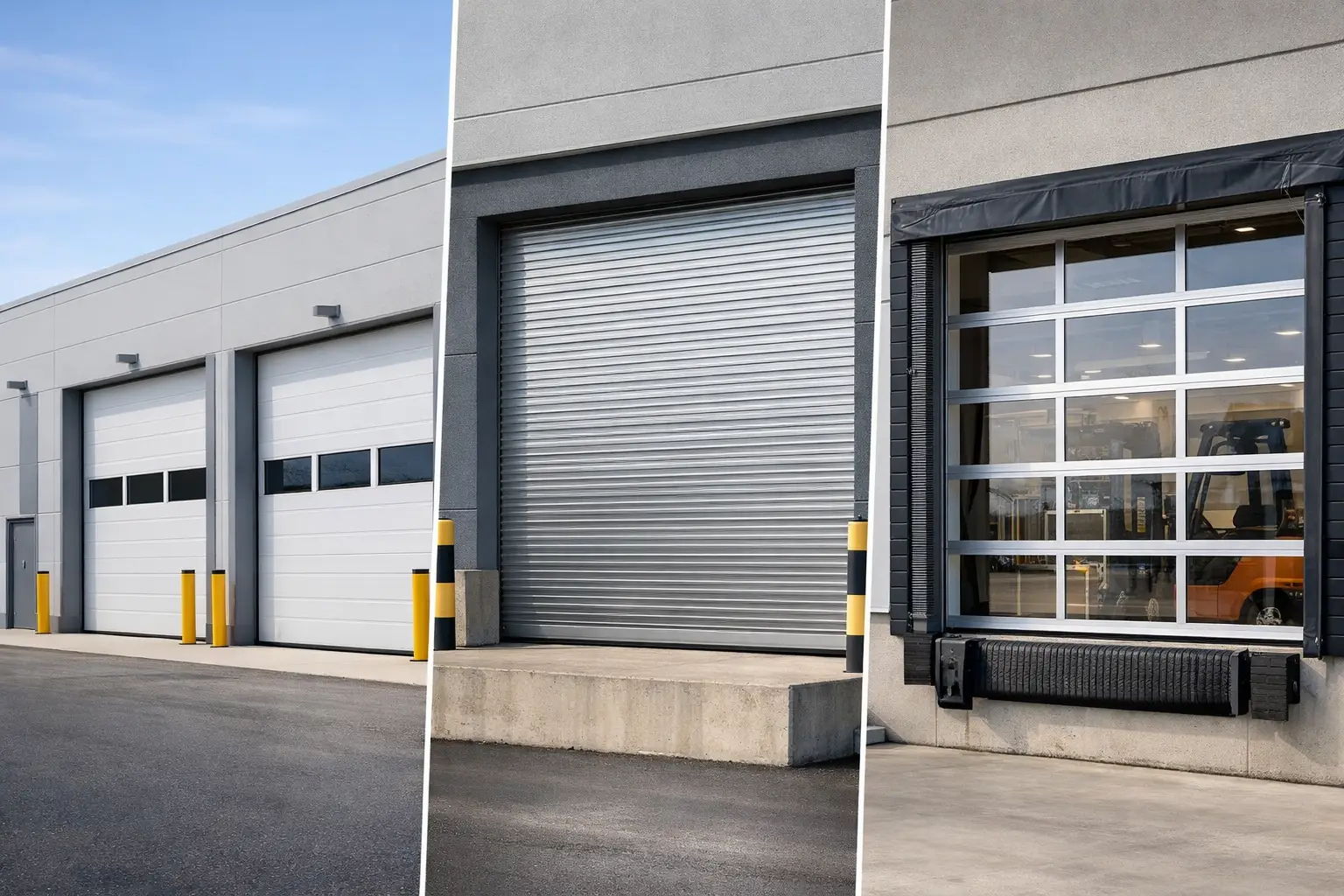
A warehouse door that sticks at 7:30 a.m. can throw off deliveries, frustrate staff, and create a security problem before the day even starts. That is why choosing the best commercial garage doors is not just about appearance. It is about uptime, safety, insulation, traffic flow, and how well the door holds up under real daily use.
For business owners and property managers, the right door depends on what the building actually needs. A busy loading area, an auto shop, a storage facility, and a retail service bay all use their doors differently. The best choice for one property can be the wrong investment for another.
What makes the best commercial garage doors?
The best commercial garage doors do four things well. They protect the property, operate reliably, match the pace of your business, and keep long-term service costs under control.
Durability matters first. Commercial doors take more cycles, more impact, and more wear than most residential systems. If a door opens and closes many times a day, lighter-duty hardware may save money upfront but cost more in breakdowns later.
Security is just as important. A commercial opening is often a major access point, which means the door should resist forced entry and close properly every time. For some buildings, that means heavy-gauge steel. For others, it means tighter seals, better locking options, or smart access controls.
Energy performance can also move from a nice feature to a real operating concern. If your facility is heated, cooled, or used for temperature-sensitive inventory, insulation and perimeter sealing start to matter a lot. In cooler, wet climates, that can make a noticeable difference in comfort and monthly costs.
Then there is serviceability. Even the best door will need maintenance. Springs wear out, rollers age, tracks shift, and openers can fail. A strong commercial door system is one that can be serviced quickly, with dependable parts and no guessing.
Best commercial garage doors by application
The most practical way to choose is to start with the job the door needs to do.
Sectional steel doors
For many properties, sectional steel doors are the safest all-around choice. They work well for warehouses, service buildings, commercial garages, and mixed-use properties because they balance strength, insulation options, and dependable operation.
These doors are built in panels that travel up and overhead on a track system. They can be insulated or non-insulated, and they come in different steel gauges depending on the level of use and security needed. If your business wants a versatile door that performs well without getting overly specialized, this is often where to start.
The trade-off is headroom and ceiling space. If the building has tight interior clearance or unusual framing, another door style may fit better.
Rolling steel doors
Rolling steel doors are a strong option for high-security openings and buildings where overhead space is limited. Instead of running back along ceiling tracks, the door coils above the opening. That makes them practical for compact spaces, loading docks, and industrial sites.
They are known for toughness and a smaller footprint, which is why many owners choose them for utility areas or openings that need extra protection. They also tend to hold up well in demanding environments.
The trade-off is that rolling steel doors can feel more industrial and may not offer the same appearance or window options as sectional doors. They can also be louder in operation depending on the setup and maintenance condition.
Aluminum full-view doors
If appearance matters as much as function, aluminum full-view doors deserve attention. You often see them at auto dealerships, fire stations, restaurants, modern service bays, and commercial spaces that want natural light and a cleaner architectural look.
These doors combine an aluminum frame with large glass panels, creating a more open, polished appearance. They are especially useful when customers or clients see the door regularly and curb appeal affects the overall impression of the business.
Still, they are not the best fit for every building. If maximum privacy, heavy impact resistance, or the lowest upfront cost is the main goal, steel usually makes more sense.
High-speed doors
High-speed doors are designed for operations where time, climate control, or workflow cannot afford delays. These are common in logistics, food distribution, manufacturing, and facilities with frequent traffic.
The main benefit is simple: they open and close fast. That helps reduce energy loss, improve efficiency, and limit the time an opening is exposed. In some settings, the speed alone justifies the investment.
The downside is price. High-speed systems cost more than standard commercial doors, so they make the most sense when the business has enough traffic or environmental demands to benefit from that performance.
How to choose the right door for your property
A good decision starts with daily use, not the brochure.
Think about cycle volume first. If the door opens a handful of times a day, a standard-duty commercial system may be enough. If it runs constantly, the hardware, spring system, and opener all need to be selected for higher cycles. This is where many owners underbuy and end up paying for repeat repairs.
Next, look at security needs. A back service entrance for expensive equipment is different from a customer-facing bay. The best commercial garage doors should match the risk level of the opening, including the material strength, visibility, and locking setup.
Insulation is another decision point. If the space is conditioned or staff work near the opening, insulated doors usually make sense. If the building is unheated storage and the door is used infrequently, non-insulated may be sufficient. It depends on how the space is used and whether comfort or energy loss is affecting operations.
You should also consider visibility and light. Windows can improve safety and appearance, but they may reduce privacy or slightly affect insulation. For some businesses, that is worth it. For others, a solid door is the smarter call.
Finally, pay attention to service support. A door is only as dependable as the team installing and maintaining it. Proper spring sizing, track alignment, opener pairing, and safety testing all affect long-term performance.
Common mistakes when buying commercial doors
One of the biggest mistakes is choosing based on upfront cost alone. A cheaper door may look like a good deal until it starts creating downtime, maintenance calls, or premature part failures.
Another common issue is selecting the wrong operator. Even a strong commercial door can perform poorly if the opener is undersized or not built for the door’s weight and cycle demands. The door and operator should be matched as a system.
Some buyers also overlook the importance of the opening itself. Worn framing, uneven floors, or poor clearance can affect installation and operation. A proper site assessment catches these issues before they turn into expensive adjustments.
And then there is maintenance. Commercial doors work hard. Ignoring tune-ups, spring wear, cable condition, or roller damage usually leads to bigger problems at the worst time.
Repairability matters more than most owners expect
When a commercial door fails, the problem is rarely just the door. It can interrupt receiving, lock in vehicles, delay crews, or leave the building exposed after hours. That is why repairability matters just as much as initial build quality.
The best commercial garage doors are not only strong. They are also built with components that can be serviced efficiently. Standard parts availability, clear access to key hardware, and professional installation all make future repairs less disruptive.
For businesses in Seattle and nearby service areas, weather can also play a role. Moisture, temperature swings, and constant use can wear down moving parts faster if the system is not maintained properly. A door that looks fine from the outside may still be developing issues with springs, bearings, hinges, or seals.
When to replace instead of repair
Not every problem means replacement. A broken spring, damaged roller, misaligned track, or faulty opener can often be repaired quickly if the door itself is still in good shape.
Replacement becomes more practical when the door has repeated breakdowns, major structural damage, outdated safety features, or poor insulation that affects the building every day. In some cases, owners spend years patching a door that should have been replaced earlier.
This is where honest guidance matters. A dependable service company should explain the trade-off clearly. If a repair makes sense, they should say so. If replacement will save time and money over the next several years, they should say that too.
Choosing the best commercial garage doors comes down to fit. The strongest option is not always the smartest one, and the cheapest option rarely stays cheap for long. If you focus on how the door will be used, what your building needs, and how quickly it can be serviced when something goes wrong, you will make a much better decision – one that supports your business every day, not just on install day.

