
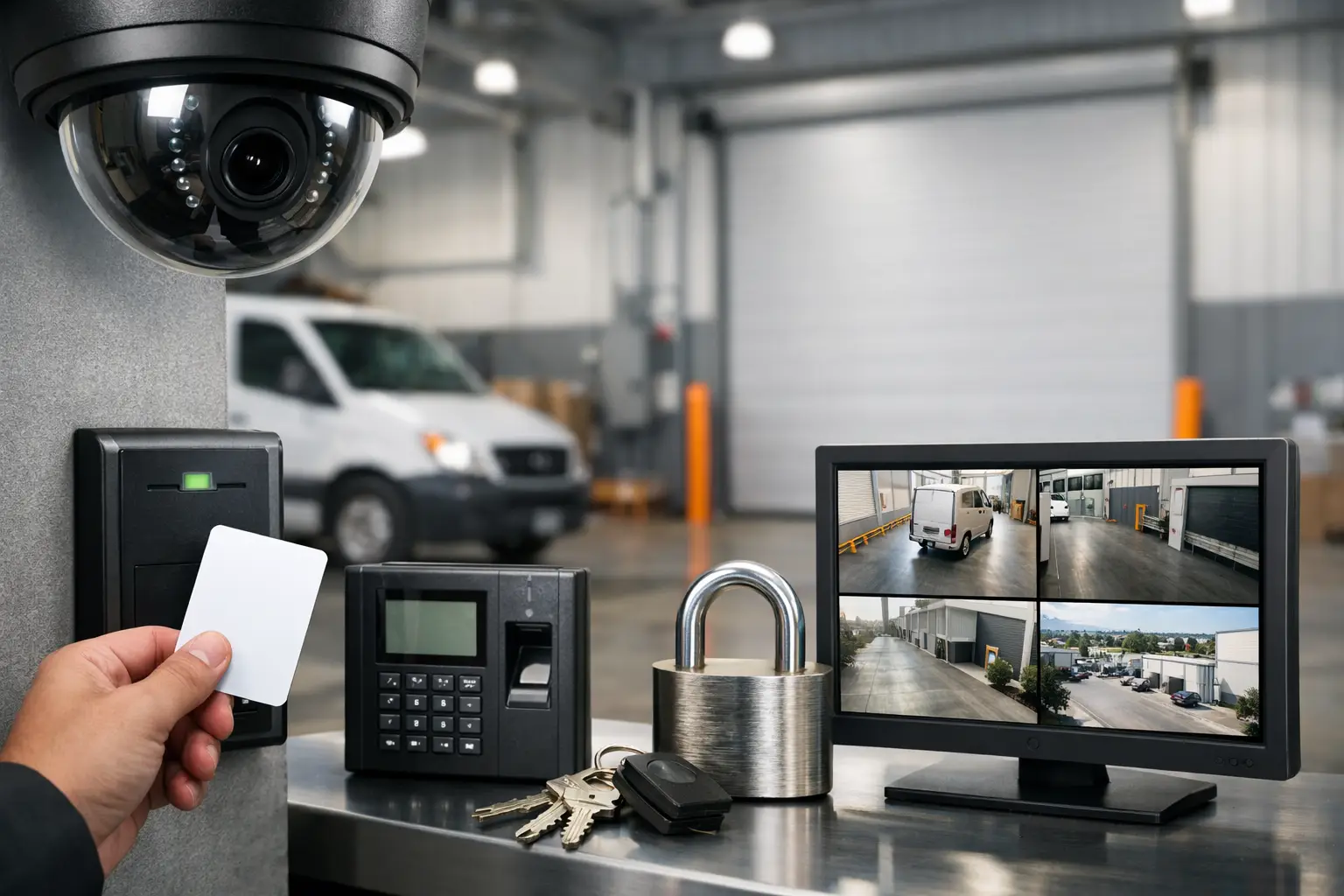
A commercial garage door is often the largest opening in a building and one of the easiest places for security gaps to develop. The best commercial garage security upgrades do more than make forced entry harder. They help control who enters, create a record of access, protect valuable equipment, and keep the door operating reliably during a busy workday.
For warehouses, auto shops, service bays, multifamily parking areas, and industrial facilities, security starts with the door itself but should not end there. The right mix of upgrades depends on what is stored inside, how often the door opens, whether staff require after-hours access, and how quickly a problem could interrupt operations.
Start With the Door’s Physical Condition
A strong security plan cannot compensate for a door with damaged sections, worn rollers, loose hardware, or misaligned tracks. Gaps at the sides or bottom of a commercial door can invite tampering, allow weather inside, and make a door more vulnerable to being pried open.
A professional inspection should check the panels, hinges, tracks, cable system, bottom seal, mounting points, and spring assembly. Roll-up doors may need particular attention at the curtain, guides, and barrel. Sectional doors should be checked for weakened panels, damaged reinforcement struts, and hardware that has loosened through repeated cycles.
If the door is nearing the end of its service life, replacement can be a better security investment than adding hardware to a failing system. Steel construction, reinforced sections, properly fitted tracks, and a secure bottom seal give every other upgrade a more dependable foundation.
1. Upgrade to a Commercial-Grade Door and Hardware
Not every commercial opening needs the same type of door. A retail stockroom with light daily use has different requirements than a loading dock or automotive facility with frequent vehicle traffic. The best choice balances security, cycle rating, insulation needs, clearance, and speed of operation.
For many facilities, a heavy-duty sectional steel door or a commercial rolling steel door offers better resistance to impact and forced entry than light-duty equipment. Reinforced tracks, tamper-resistant fasteners, and properly secured brackets matter just as much as the door material. A weak track or poorly anchored component can undermine an otherwise strong door.
Consider insulated door sections when the garage connects to conditioned work areas or stores temperature-sensitive inventory. Insulation is not a direct security feature, but it improves comfort, reduces energy loss, and can make a facility less dependent on leaving doors open for ventilation or access.
2. Add High-Security Locking That Matches Your Operation
A standard slide lock may be suitable for a low-risk storage area, but it is rarely enough for a business with tools, vehicles, inventory, or sensitive equipment inside. Manual locking systems should be selected based on the door type and the building’s access routine.
Commercial-grade deadlocks, interior slide bolts, cylinder locks, and hasps can provide meaningful protection when installed correctly. Exterior lock hardware should resist drilling, cutting, and tampering, while interior hardware should not create a safety concern for employees who need to exit quickly.
Automatic doors require a different approach. The opener may hold the door closed, but it should not be treated as the only line of defence. Many businesses benefit from a lock that can be engaged when the site is closed or when the door will remain unused for an extended period. The trade-off is convenience: staff must follow a clear procedure so the lock is removed before operating the door.
3. Use Access Control Instead of Shared Remotes
Shared remotes are easy to lose, copy, or pass along after an employee leaves. For a commercial property, access control gives managers more visibility and more control over who can operate the garage door.
Keypads with unique access codes are a practical starting point. Each employee, contractor, or delivery team can receive a separate code, allowing a manager to remove access without changing the entire system. Card readers, fobs, mobile credentials, and integrated building access systems offer more control for larger sites or locations with multiple entrances.
The right system depends on staffing and traffic. A small service business may only need a keypad with regularly updated codes. A larger warehouse, strata parking facility, or fleet operation may benefit from scheduled permissions and access logs that show when a door was opened and by whom.
Avoid placing keypads where they can be easily observed from the street or reached through a broken window. Codes should be changed promptly after staff turnover, and temporary codes should have a defined expiry date.
4. Install a Smart Commercial Opener With Activity Alerts
A modern commercial opener can improve both security and daily oversight. Smart controls can send alerts when a door opens or closes, allow authorized managers to check its status remotely, and help prevent a door from being left open at the end of the day.
This is especially useful for owners who oversee more than one location, managers who are away from the facility, or businesses where several employees use the same bay. Some systems can also create schedules, such as closing doors automatically after a set time if operations allow it.
Remote control must be handled carefully. Use strong account passwords, multi-factor authentication where available, and individual user accounts instead of one shared login. Smart features are valuable only when the system is maintained and access is removed when roles change.
5. Improve Lighting, Cameras, and Sightlines
Garage security is not only about stopping entry. It is also about making suspicious activity visible before damage occurs. Bright, well-positioned exterior lighting can discourage tampering around side doors, loading bays, and garage entrances. Motion-activated lighting is useful for quieter areas, while consistent lighting may be better for busy commercial properties where frequent activation would be distracting.
Security cameras should cover the approach to the garage, the door opening, and key interior areas without creating blind spots. A camera aimed only at the door face may miss someone working along the side of the track or attempting to access a keypad. Clear images depend on proper placement, adequate lighting, and a recording system that retains footage long enough to be useful.
Keep landscaping, signage, storage racks, and parked vehicles from blocking views of the door. Good sightlines help staff notice problems quickly and can make a facility feel better controlled after hours.
6. Protect Against Forced Entry and Lift Attacks
Some criminals target the bottom of an overhead door, attempting to pry it up just enough to enter or release the emergency mechanism. The risk varies by door design and location, but businesses with alley-facing doors, secluded loading zones, or valuable equipment should consider additional protection.
Security shields and properly configured emergency-release protection can reduce access to vulnerable components while preserving safe emergency operation. Bottom brackets, weather seals, and track areas should also be inspected for damage that could make prying easier.
Do not block or permanently disable emergency release systems. These components are essential during power failures and emergencies. A qualified commercial garage door technician can recommend options that improve security without compromising safe exit and authorized access.
7. Maintain the Door Before It Becomes a Security Failure
A door that will not close completely is a security issue, not just a repair inconvenience. Broken springs, worn cables, failing photo eyes, damaged tracks, and opener problems can leave a business exposed at exactly the wrong time.
Preventive maintenance helps identify worn components before they cause downtime or leave a door unsecured overnight. For high-cycle doors, scheduled service is particularly valuable because small issues can worsen quickly under daily use. Maintenance should include testing the balance of the door, checking safety systems, inspecting hardware, lubricating appropriate moving parts, and confirming that the operator closes and reverses correctly.
Staff should know who to call if a door is stuck open, makes unusual noises, or has been struck by a vehicle. Attempting to force a damaged commercial door closed can cause further damage and create a serious safety risk.
Choosing the Right Upgrades for Your Facility
The best commercial garage security upgrades are not always the most expensive ones. A small business may gain the most from a reliable commercial opener, unique keypad codes, improved lighting, and regular maintenance. A high-value warehouse or fleet facility may need reinforced doors, monitored cameras, controlled credentials, and a more detailed after-hours security process.
Start by reviewing where access is weakest: the physical door, the lock, remote controls, employee procedures, or visibility around the building. Then prioritize upgrades that reduce the most likely risk without slowing down legitimate work. For commercial property owners in Seattle and King County, Summit Garage Doors can assess the condition of the door and recommend practical repair, replacement, opener, and access upgrades based on how the facility actually operates.
A secure commercial garage should still be easy for authorized people to use. When the door closes smoothly, access is controlled, and service is handled before a failure becomes urgent, your business is better protected every day.

