
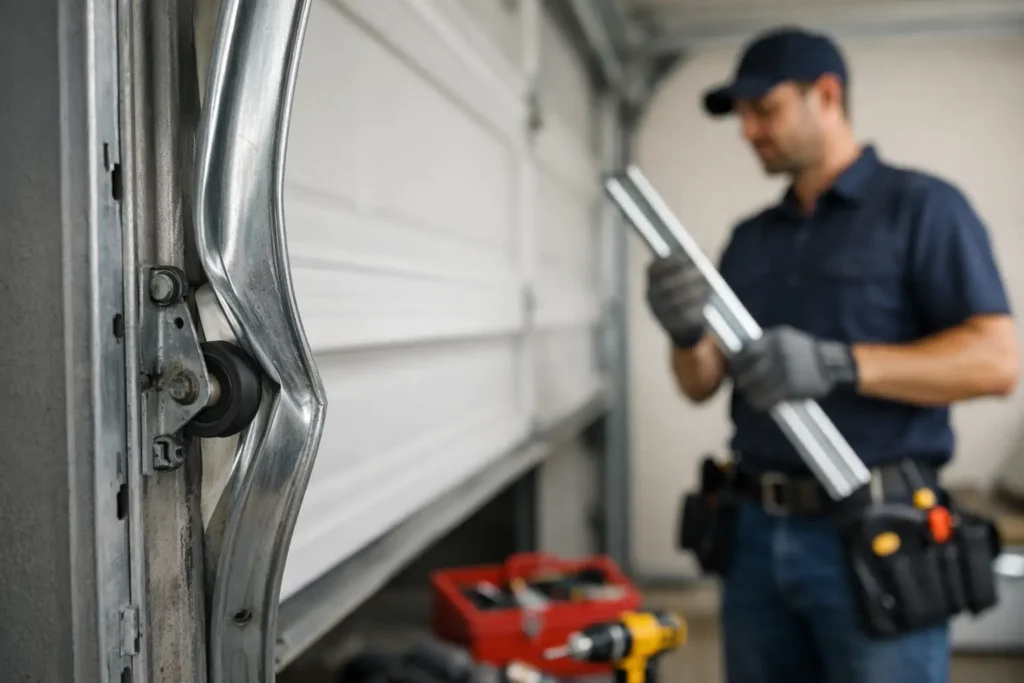
A garage door that shakes, scrapes, or stops halfway is not just inconvenient. It can leave your vehicle trapped, compromise security, and put extra strain on the opener. So, can bent garage tracks be fixed? Sometimes, but only when the damage is minor and the entire door system is still properly aligned. A track that is badly bent, crushed, split, or pulling away from the wall should usually be replaced by a trained technician.
Garage door tracks guide hundreds of pounds of moving door through every open and close cycle. Small alignment problems can often be corrected. Trying to force a seriously damaged track back into shape, however, can create a bigger and more expensive repair.
Can Bent Garage Tracks Be Fixed Safely?
The answer depends on where the bend is, how severe it is, and whether other parts were damaged at the same time. Vertical tracks run beside the door opening, while horizontal tracks extend across the ceiling. Both must remain straight, securely mounted, and correctly spaced for the rollers to move without binding.
A slight bow or minor misalignment may be repairable. For example, a technician may be able to loosen mounting brackets, realign the track, adjust the spacing, and retighten the hardware. In some cases, a small dent can be carefully corrected if the metal has not creased and rollers still travel smoothly.
Replacement is usually the safer option when the track has a sharp kink, flattened section, cracked metal, torn mounting holes, or visible separation at a joint. These conditions weaken the track. Even if the door seems to operate after a temporary adjustment, the roller can catch at the damaged point and cause the door to come off track.
The goal is not simply to make the door move again. It is to restore safe, balanced, dependable operation without creating a hidden failure point.
What Causes Garage Door Tracks to Bend?
Most bent tracks are the result of impact or a door operating while another component is already out of place. A vehicle bumping the lower section of a track is common, especially in a tight garage. A bicycle, bin, ladder, or stored item can also catch the door or roller path as the door moves.
Track damage can also develop after a roller wears out, a cable slips, or a spring breaks. When one side of the door is not supported correctly, the door can rack or twist. That uneven movement places pressure on the tracks and brackets. An opener may continue trying to move the door, making the bend worse.
In Seattle-area homes, moisture and age can add to the problem. Rust around track hardware or wall brackets can reduce holding strength. Settlement, vibration, and years of repeated use may slowly shift a track out of alignment. The door may begin rubbing or making a grinding sound before a more obvious bend appears.
Signs the Track Needs Professional Attention
A bent track is not always easy to spot from the floor. Watch for changes in how the door moves rather than relying only on a visual inspection. A healthy garage door should travel smoothly, stay level, and sit evenly when fully closed.
Call for service if the door jerks, vibrates heavily, makes scraping or popping noises, or pauses in one area of travel. Other warning signs include rollers that appear crooked, gaps between the rollers and track, a door that hangs lower on one side, or track brackets that have loosened from the wall or ceiling.
If the door has come out of its track, do not attempt to run the opener again. Stop using the door, keep people clear of the area, and disconnect the opener only if it can be done safely from the emergency release. A door that has derailed may be unstable, particularly if the springs or cables are under uneven tension.
Why Straightening a Track Yourself Can Be Risky
It is tempting to use pliers, a hammer, or a block of wood to push a bent track back into place. That approach can make a minor issue worse. Garage door tracks are designed to a specific shape and spacing. Striking the metal may create a new pinch point, weaken the track, or change its alignment enough to damage rollers.
The more serious concern is the weight and stored tension in the garage door system. Tracks work alongside cables, drums, springs, rollers, hinges, and the opener. A bend may be the visible symptom of another problem, such as a broken roller stem or an unbalanced door. Adjusting one part without identifying the cause can leave the door unsafe.
Do not loosen bottom brackets, remove cables, or handle torsion spring components as part of a track repair. Those areas can carry dangerous tension. Professional service is especially important when the door is stuck open, uneven, off track, or making loud metal-on-metal sounds.
Repair or Replacement: How the Decision Is Made
A proper assessment starts with the full system, not just the bent section. A technician checks the vertical and horizontal tracks, roller condition, hinges, brackets, flag brackets, cable routing, spring performance, and door balance. They also inspect whether the opener has been strained by the issue.
Minor track alignment work may be enough when the metal remains structurally sound and the bend has not created a roller obstruction. This is generally the more affordable repair because it may involve repositioning hardware and replacing only a damaged roller or bracket.
Track replacement makes more sense when the damage affects the track profile or structural integrity. Replacing a section can prevent recurring roller jams and reduce wear on the opener. If an impact damaged both the track and door panels, the technician should explain whether a targeted repair is practical or whether replacement offers better long-term value.
There is no benefit in replacing good parts unnecessarily. At the same time, saving a damaged track for a short-term cost reduction can lead to repeat service calls, damaged rollers, worn hinges, or an opener failure. Honest recommendations should account for safety, remaining life, and the condition of the entire door.
What to Do While You Wait for Service
If the door is closed and remains secure, leave it closed until it can be inspected. Avoid repeated opener attempts, even if the door moves a little. Each cycle can force rollers against the damaged area and turn a manageable repair into a derailment.
If the door is partially open or stuck open, keep children, pets, vehicles, and employees away from it. Do not place supports under the door or try to pull it down by hand. If the garage is attached to your home or secures business equipment, arrange prompt repair to restore security safely.
For commercial and industrial doors, act quickly when track damage affects access, loading activity, or employee safety. A door that does not close properly can interrupt operations and expose the property to weather or unauthorized entry. Emergency service is often the right choice when the opening cannot be secured.
Preventing Future Track Damage
Many track problems are preventable with routine maintenance and a clear roller path. Keep bins, tools, sports equipment, and vehicles away from the sides of the door opening. Check that wall brackets and ceiling supports remain tight, but do not adjust track spacing yourself unless you are qualified to do so.
A professional tune-up can catch worn rollers, loose hinges, frayed cables, and balance issues before they place stress on the tracks. Lubricating appropriate moving parts, testing door balance, and checking opener force settings can also reduce unnecessary strain. The tracks themselves should be kept clean rather than heavily lubricated, since excess lubricant can collect dirt and interfere with smooth roller travel.
For homeowners and business owners who need fast, straightforward help, Summit Garage Doors can inspect bent tracks, identify the underlying cause, and provide a repair recommendation based on safety and value. Whether the track needs alignment, a replacement section, new rollers, or a broader door repair, the right fix should leave the door operating smoothly and securely.
A bent track deserves prompt attention, but it does not always mean a full garage door replacement. Leave the door in its safest position, avoid forcing it through the damaged area, and have the system assessed before a small obstruction becomes a major repair.

