
If your garage opener rattles the whole house when it starts, you are probably not shopping for features first – you are shopping for relief. When homeowners compare a chain vs belt garage opener, the real question is usually simpler: which one will give you dependable daily use without overpaying for the wrong setup?
The answer depends on your garage, your budget, and how much noise you can tolerate. Both systems can be reliable. Both can lift standard residential doors well. But they behave differently over time, and that matters if your garage sits under a bedroom, gets heavy daily use, or already has wear in the door system.
Chain vs belt garage opener: the core difference
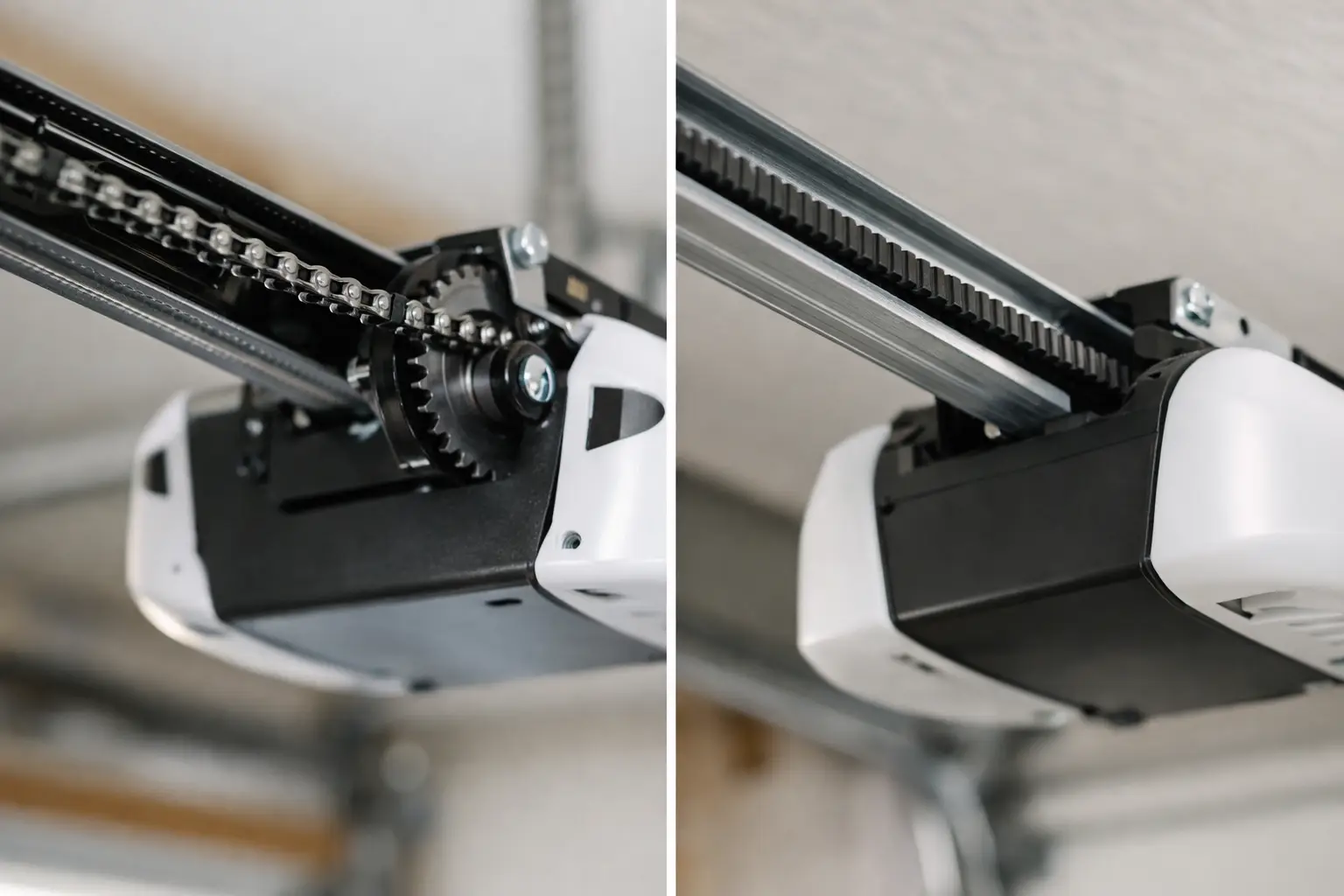
The biggest difference between these opener types is the drive mechanism. A chain-drive opener uses a metal chain, similar in appearance to a bicycle chain, to move the trolley and open or close the door. A belt-drive opener uses a reinforced rubber, fibreglass, or polyurethane belt for the same job.
That single design change affects noise, vibration, maintenance, and price. It does not automatically mean one is better in every home. It means each is better in certain conditions.
A chain-drive unit is usually the more budget-friendly choice. It has a long track record and is known for strength and durability. A belt-drive unit is usually quieter and smoother, which makes it popular in attached garages and newer homes where sound control matters.
Noise is often the deciding factor
For many households, noise settles the chain vs belt garage opener debate quickly. Chain-drive openers are louder. The metal-on-metal movement creates more vibration, and that vibration can travel through framing, especially in attached garages.
If your garage is detached, that extra sound may not be a big concern. If you have a bedroom above the garage, a nursery beside it, or early-morning departures that wake the house, it becomes much more noticeable.
Belt-drive openers are quieter because the belt absorbs more movement and produces less vibration. You still hear the motor and the door itself, but the overall operation is softer and less jarring. In many homes, the difference is obvious the first time the opener runs.
That said, opener noise is not only about the opener. A poorly balanced door, worn rollers, loose hardware, or bent track can make any system sound worse. Sometimes people blame the opener when the real issue is the door assembly.
Cost matters, but so does what you are paying for
Chain-drive models generally cost less up front. If budget is the main concern and you want a dependable opener for a standard door, chain drive remains a practical option.
Belt-drive models usually cost more, but the added cost is tied to comfort and smoother operation, not just branding. If your home layout makes garage noise a daily frustration, the extra investment can make sense.
It also helps to think beyond the purchase price. A cheaper opener that becomes annoying every single day is not always the better value. On the other hand, if your garage is detached and used a few times a day, paying more for ultra-quiet performance may not give you much real benefit.
Durability depends on more than the drive type
Chain-drive openers have a reputation for toughness, and that reputation is deserved. They have been used for years in homes where reliability matters more than quiet operation. They handle normal residential use well and are often seen as the workhorse option.
Belt-drive openers are also durable, especially modern models made with reinforced materials. Older assumptions that belts wear out too quickly are not always accurate anymore. In many homes, a quality belt-drive opener lasts a long time with proper installation and normal use.
Where durability gets more complicated is in the full system. A heavy wood door, an insulated oversized door, or a door with balance issues places extra strain on any opener. If the springs are not tuned properly, even a strong opener will wear faster. That is why choosing the right horsepower and confirming the door is operating smoothly matters just as much as choosing chain or belt.
Maintenance and day-to-day upkeep
Chain-drive openers tend to require a bit more attention. The chain may need adjustment over time, and some models need periodic lubrication. They can also develop more noticeable vibration as parts age.
Belt-drive openers are generally lower maintenance in that specific area. There is no metal chain moving along the rail, so the system usually runs cleaner and quieter with less ongoing adjustment.
That does not mean belt drive is maintenance-free. The opener still has moving parts, and the garage door itself still needs regular service. Rollers, hinges, springs, safety sensors, and track alignment all affect performance. If those components are neglected, neither opener type will perform the way it should.
For homeowners who want the least fussy daily experience, belt drive often has the edge. For homeowners comfortable with a little routine upkeep in exchange for lower upfront cost, chain drive still makes sense.
Which opener is better for heavier doors?
This is where blanket advice can get misleading. People often hear that chain drive is better for heavy doors, but that is not always because the chain itself is magically stronger in every case. The opener’s motor rating, the condition of the door, and the spring system all matter.
A properly matched belt-drive opener can lift many insulated and heavier residential doors without trouble. But if you have a very heavy custom door, a larger door, or a setup that sees frequent cycling, your technician may still recommend chain drive or another heavy-duty opener style based on the full load requirement.
The safer approach is not to assume based on drive type alone. Match the opener to the actual door weight, size, and usage level.
Smart features are available on both
If you want Wi-Fi control, phone access, battery backup, security lighting, or integration with smart home systems, you can find those features in both chain-drive and belt-drive models. The drive system does not determine whether the opener is modern.
This is useful because it keeps the decision focused where it belongs. You are not choosing between old-fashioned and advanced. You are choosing between a louder, usually less expensive mechanical style and a quieter, usually more premium one.
When chain drive is the better choice
A chain-drive opener is often the right fit when affordability is the top priority, the garage is detached, or the household does not mind a little extra noise. It is also a solid option for homeowners who want a proven, straightforward system without paying extra for quiet performance they may not need.
It can be especially practical in rental properties, workshops, or garages where function matters far more than sound. If installed correctly on a balanced door, a chain-drive opener can give years of reliable service.
When belt drive is worth the extra cost
A belt-drive opener is usually the better choice when the garage is attached to the home and sound matters. If family members sleep near the garage, if departures happen early, or if you simply want smoother and quieter operation, belt drive is easier to live with.
It also suits homeowners making a broader upgrade. If you are replacing an old noisy opener, adding smart features, or improving the overall feel of the home, belt drive often feels like the cleaner long-term choice.
In many Seattle-area homes, where attached garages are common and indoor noise carries more than people expect, this is often the upgrade homeowners appreciate most after installation.
The best choice depends on your door, not just your preference
A lot of opener problems start when people buy based on price or internet advice alone. The right opener has to match the door. If the springs are worn, the track is slightly off, or the rollers are failing, replacing the opener alone may not solve the problem.
That is why a proper assessment matters. A good technician looks at the full system: door weight, balance, cycle use, available headroom, desired features, and noise concerns. That is how you avoid installing an opener that works on paper but struggles in real use.
If you are deciding between the two, the most practical answer is this: choose chain drive when budget and basic performance lead the list. Choose belt drive when quiet, smooth operation matters enough to justify the higher price. Neither choice is wrong when it matches the door and the way you use your garage.
If you are still unsure, getting an honest recommendation from a local garage door professional is often the fastest way to avoid a costly mismatch. Summit Garage Doors sees this often – homeowners replace the opener when the real issue is a worn door system, or they buy a budget model for a space where noise quickly becomes a daily irritation.
The best opener is not the one with the most marketing around it. It is the one that fits your home, your routine, and your expectations from day one.

