
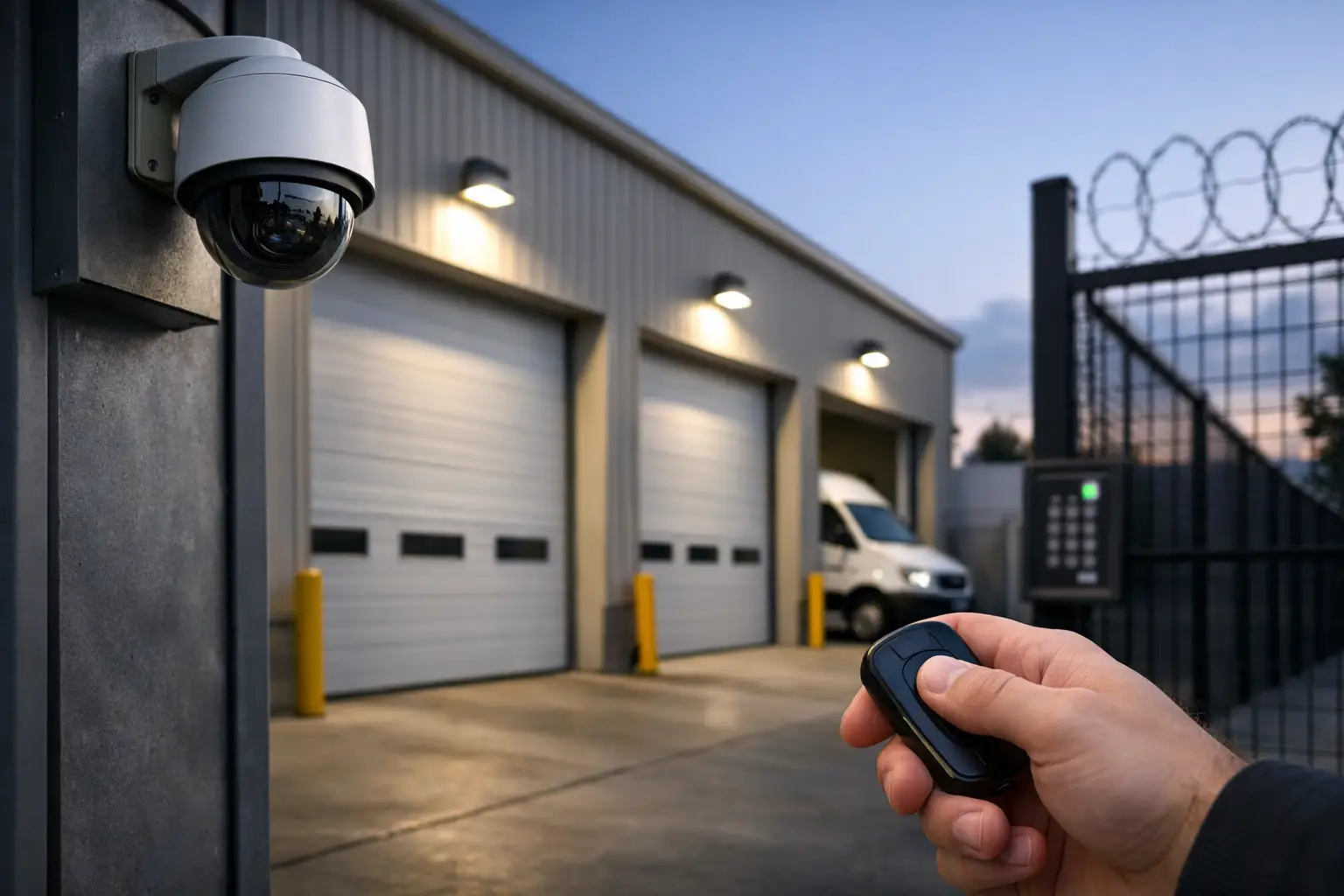
A forced garage door is rarely just a door problem. For a business, it can mean stolen inventory, damaged vehicles, interrupted operations, higher insurance costs, and a team that no longer feels safe on site. This commercial garage security guide is built for owners and facility managers who need practical ways to reduce risk without overcomplicating the job.
Security starts with a simple truth: most weak points are predictable. Ageing doors, unreliable openers, poor visibility, worn hardware, and loose access practices create easy opportunities. The goal is not to turn your property into a fortress. It is to make forced entry harder, detection faster, and recovery less disruptive.
What commercial garage security actually involves
A secure commercial garage depends on more than a strong panel. The full system includes the door itself, tracks, rollers, springs, locks, opener, controls, lighting, sightlines, and the habits of the people using it every day. If one part is neglected, the whole setup is easier to exploit.
That is why security planning works best when it follows the path an intruder would take. First, they look for weak construction. Then they test for poor access control. After that, they rely on darkness, blind spots, or delayed response. A good plan addresses all three.
Start with the door, not the camera
Many businesses invest in cameras first because they are visible and easy to understand. Cameras matter, but they do not stop a failing bottom panel, a bent track, or a door that does not fully close. If the door is compromised, surveillance is only recording the problem.
Material and construction make a real difference. Steel doors generally offer stronger resistance than lighter-duty options, especially in higher-use commercial settings. Reinforced sections, heavy-gauge hardware, tamper-resistant fasteners, and properly anchored tracks all help. If the door has windows, the placement and glazing matter. Windows can improve visibility inside the space, but they can also expose inventory or create a point of attack if the wrong glass is used.
Fit also matters more than many owners expect. A quality commercial door installed poorly can leave gaps, uneven pressure, and premature wear. Over time, that becomes both a reliability issue and a security issue.
Signs your current door may be a security risk
If the door shudders during travel, reverses unexpectedly, leaves a visible gap at the floor, or makes loud grinding sounds, do not treat it as normal wear. Those issues can point to track misalignment, opener strain, worn rollers, or failing components that weaken the system as a whole.
Damage from a forklift, delivery vehicle, or repeated impact is another common blind spot. A dented panel may look cosmetic, but if it affects alignment or locking pressure, it can reduce resistance where the door is already vulnerable.
Access control is where many businesses fall short
In a lot of facilities, the garage door is used as a convenience entrance, not just a secured service opening. That creates avoidable exposure. Shared remotes, outdated keypads, universal entry codes, and no record of who came and went are all common problems.
A stronger approach starts with limiting access by role. Staff who need regular entry should have assigned credentials rather than a shared remote passed between shifts. If a keypad is used, codes should be updated whenever staffing changes. For busier operations, smart access control can provide activity logs, scheduled permissions, and remote management. That does not mean every business needs the most advanced system on the market. It means access should match the level of risk, traffic, and turnover at the site.
For some properties, manual locks still play an important role, especially after hours. The right setup depends on how the garage is used. A warehouse with frequent daily movement has different needs than a service bay that closes securely each evening.
Openers matter more than people think
A commercial opener is part of your security system, not just a motor that lifts the door. If it is unreliable, underpowered, or missing modern safety and control features, it can leave the business exposed.
A quality commercial opener should close the door consistently, respond accurately to control inputs, and integrate properly with safety sensors and access devices. If the operator hesitates, stops mid-cycle, or needs frequent resets, it is not just inconvenient. It may be failing at the moment you need it most.
Backup power is worth considering if your operation cannot afford a door stuck open during an outage. This is especially relevant for facilities storing tools, fleet vehicles, or valuable stock. In some cases, battery backup is the difference between a minor disruption and an overnight security breach.
Lighting and visibility reduce opportunity
Poor exterior lighting gives cover to anyone testing a building after hours. Good lighting does not need to be excessive or expensive, but it should eliminate shadowed approaches, side access points, and blind spots near the garage opening.
Motion-activated lighting can help in lower-traffic areas, while consistent fixed lighting is often better around main loading zones and employee entrances. Inside the garage, clear visibility supports both safety and security. Staff are more likely to notice a door that failed to close or a side entry left open when the space is properly lit.
Sightlines matter too. Tall storage stacked near a garage opening may make operations more efficient, but it can also hide tampering or block the view of the door from inside the building.
This part of the commercial garage security guide is often ignored: maintenance
The most secure commercial setup will still fail if maintenance is treated as optional. Doors cycle thousands of times under weight and tension. Springs wear out. Rollers degrade. Tracks shift. Sensors get knocked out of position. Hardware loosens with vibration and use.
Routine service catches issues before they become failures. It also helps confirm that the door closes fully, locking components engage properly, safety devices work as intended, and the opener is not compensating for mechanical resistance elsewhere in the system.
There is also a financial angle. Emergency repairs tend to cost more than planned service, and they happen at the worst times. For many businesses, a maintenance schedule is as much about uptime as it is about security.
When repair is enough and when replacement makes more sense
Not every security concern calls for a new door. If the core structure is sound, targeted repairs and hardware upgrades may be enough. Replacing worn rollers, correcting track alignment, upgrading access controls, and addressing opener issues can significantly improve security without a full replacement.
But if the door is outdated, heavily damaged, frequently failing, or clearly undersized for the demands of the property, replacement is often the better long-term decision. The upfront cost is higher, but it can reduce service calls, improve daily reliability, and strengthen protection at the same time.
Match the solution to the property
A retail service garage, a fleet building, and an industrial loading area do not need identical security plans. The right solution depends on what is stored inside, how often the door cycles, who needs access, and what would happen if the building were inaccessible for a day.
If your garage contains high-value equipment or vehicles, invest more heavily in door strength and controlled access. If staff turnover is frequent, focus on credential management and code changes. If the site sits in a low-visibility area, prioritize lighting, visibility, and reliable after-hours locking. Security is always stronger when it reflects real use rather than a generic checklist.
Common mistakes that create avoidable risk
Businesses rarely ignore security on purpose. More often, they rely on workarounds that become normal. A door that stays partially open for ventilation. A keypad code everyone knows. A damaged panel that has not been repaired because the door still goes up and down. A service call postponed because the issue seems minor.
Those small decisions add up. The better standard is straightforward: if a garage door is part of your building envelope, it should be treated like any other critical access point. That means regular inspection, controlled entry, reliable hardware, and prompt repairs when something starts to slip.
For businesses in Seattle and nearby communities, weather adds another layer. Moisture, temperature shifts, and heavy use can speed up wear on tracks, springs, seals, and opener components. That makes proactive service even more valuable for properties that depend on consistent door performance year-round.
A secure commercial garage does not come from one product. It comes from a well-matched system, installed properly, maintained regularly, and used with clear access rules. If your current setup has weak spots, the best time to fix them is before they become an expensive problem after hours. A door that closes properly, locks reliably, and holds up under daily use is not just a convenience. It is part of how you protect the business you have built.

