
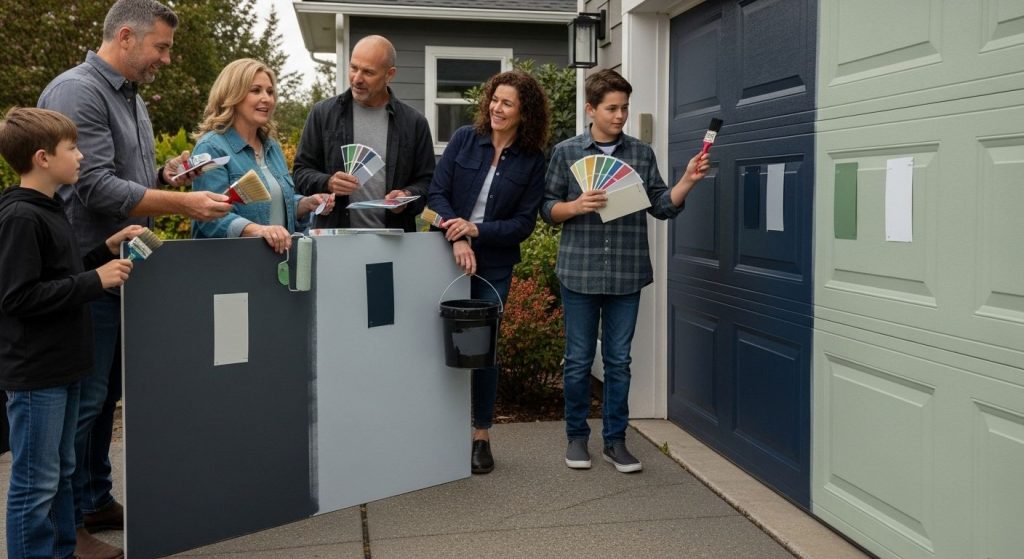
Picking the right paint for your garage door sounds easy, but the options are much more complicated than most people realize. Some paints only work with specific materials like wood, steel, aluminum, or fiberglass, and using the wrong one can cut the lifespan of your paint job in half. Most homeowners believe a fresh coat fixes everything. In reality, if you match the paint to the door’s exact material and environment, you’ll unlock durability and curb appeal that most homes never achieve.
Table of Contents
- Understanding Garage Door Materials And Paint Compatibility
- Choosing The Right Color For Your Garage Door
- Exploring Paint Types: Water-Based Vs. Oil-Based
- Selecting Finish Options: Matte, Satin, Or Glossy
- Considering Weather Resistance For Longer Lasting Paint
- Evaluating Eco-Friendly Garage Door Paint Options
- Step-By-Step Guide To Painting Your Garage Door
Quick Summary
| Takeaway | Explanation |
|---|---|
| Choose paint based on door material | Different materials like wood, steel, and aluminum require specific types of paint and primer for best results. |
| Consider color for visual harmony | The selected color should complement your home’s exterior and architectural style to enhance overall aesthetics. |
| Select between water-based and oil-based | Water-based paints offer easy cleanup and low VOCs; oil-based paints provide durability and better adhesion for harsh conditions. |
| Evaluate weather resistance features | Look for UV-resistant and moisture-proof paints to ensure longevity and protect against environmental factors. |
| Follow a detailed painting process | Proper preparation, application of multiple thin coats, and allowing drying time are crucial for achieving a professional finish. |
1: Understanding Garage Door Materials and Paint Compatibility
Choosing the right paint for your garage door involves more than aesthetic considerations. Understanding the specific materials and their unique paint compatibility requirements is crucial for achieving a long lasting and visually appealing finish.
Garage doors are typically constructed from several primary materials, each with distinct characteristics that impact paint selection. Wood, steel, aluminum, and fiberglass represent the most common garage door materials, and each demands a tailored painting approach.
According to the U.S. General Services Administration, proper surface preparation is fundamental to successful painting across different materials.
Key considerations for garage door paint compatibility include:
- Surface texture: Smooth versus rough surfaces require different primer and paint types
- Material porosity: Determines paint adhesion and longevity
- Environmental exposure: Sunlight, moisture, and temperature fluctuations impact paint performance
Steel doors, for instance, require rust-resistant primers and specialized exterior metal paints that can withstand temperature variations. Wooden doors need breathable, water-resistant paint that prevents moisture infiltration. Aluminum surfaces demand special etching primers to ensure proper paint adhesion.
Learn more about matching garage door styles to your home’s architecture.
Successful garage door painting begins with comprehensive material assessment. Homeowners should carefully evaluate their door’s specific composition, existing finish, and anticipated environmental challenges before selecting paint products.
2: Choosing the Right Color for Your Garage Door
Selecting the perfect color for your garage door transforms not just the door itself, but the entire exterior aesthetic of your home. Color selection goes far beyond personal preference – it requires strategic consideration of architectural style, neighborhood context, and visual harmony.
The color you choose communicates significant visual information about your property. Neutral tones like white, gray, and beige remain classic choices that complement most home exteriors, while bolder colors can create striking visual statements or blend seamlessly with specific architectural designs.
Key color selection factors include:
- Home exterior color palette: Complementary or contrasting color schemes
- Architectural style: Traditional versus modern design approaches
- Neighborhood aesthetic: Maintaining visual consistency
- Sunlight exposure: Color appearance under different lighting conditions
Professional color designers recommend observing your potential paint color in multiple lighting conditions – morning sunlight, afternoon brightness, and evening shadows can dramatically alter color perception. Purchasing sample paint swatches and testing them directly on your garage door helps prevent costly mistakes.
Explore contemporary garage door design trends that can inspire your color selection process.
Consider your home’s existing color scheme and architectural elements when making your selection. A well-chosen garage door color can increase curb appeal, potentially boosting property value and creating a cohesive visual narrative for your home’s exterior.
3: Exploring Paint Types: Water-Based vs. Oil-Based
Understanding the fundamental differences between water-based and oil-based paints is crucial for homeowners seeking optimal garage door protection and aesthetic appeal. Each paint type offers unique characteristics that significantly impact durability, application, and long-term performance.
Water-based paints, often called latex paints, have gained substantial popularity due to their environmentally friendly properties and easier application. These paints offer quick drying times, minimal odor, and straightforward cleanup with soap and water.
According to the Centers for Disease Control and Prevention, water-based paints typically present fewer health risks compared to their oil-based counterparts, primarily due to lower volatile organic compound (VOC) emissions.
Key comparative characteristics include:
- Water-based paints: Faster drying, easier cleanup, lower VOCs
- Oil-based paints: Superior durability, smoother finish, better adhesion
Oil-based paints, while traditional, provide exceptional durability and a smoother finish. They penetrate surfaces more deeply, creating a robust protective layer ideal for high-wear areas like garage doors exposed to harsh weather conditions.
Discover modern garage door design solutions that complement your paint selection.
The selection between water-based and oil-based paints depends on multiple factors: surface material, environmental exposure, desired finish, and maintenance preferences. Homeowners must carefully evaluate these aspects to make an informed decision that ensures long-lasting garage door protection and aesthetic appeal.
4: Selecting Finish Options: Matte, Satin, or Glossy
The finish of your garage door paint dramatically influences its visual appearance, maintenance requirements, and overall durability. Understanding the unique characteristics of matte, satin, and glossy finishes enables homeowners to make informed decisions that align with their aesthetic preferences and practical needs.
Matte finishes offer a sophisticated, non-reflective surface that effectively conceals surface imperfections. These finishes provide a subtle, understated look that works exceptionally well on older or slightly uneven garage doors. The soft appearance minimizes visual distractions and creates a smooth, uniform appearance.
Key considerations for finish selection include:
- Visual impact: How the finish reflects light and interacts with surrounding architectural elements
- Maintenance requirements: Cleaning difficulty and long-term durability
- Surface imperfection concealment: Ability to hide minor structural variations
Satin finishes represent an ideal middle ground, offering a subtle sheen that provides more depth than matte while avoiding the intense reflection of high-gloss options. They strike a balance between aesthetic appeal and practical functionality, making them a popular choice for homeowners seeking versatility.
Glossy finishes deliver maximum shine and reflectivity, creating a dramatic, eye-catching appearance. These finishes are extremely durable and easy to clean, making them ideal for newer garage doors with smooth, unblemished surfaces. However, they ruthlessly expose any underlying surface imperfections.
Explore contemporary garage door design trends that can inspire your finish selection.
Careful consideration of your home’s architectural style, existing color palette, and environmental conditions will guide you toward the most appropriate finish. Each option offers distinct advantages, and the right choice depends on your specific aesthetic and functional requirements.
5: Considering Weather Resistance for Longer Lasting Paint
Weather resistance is the cornerstone of a durable garage door paint job, protecting your investment against harsh environmental conditions. Homeowners must understand how different paint formulations respond to temperature fluctuations, UV exposure, humidity, and precipitation.
Ultraviolet radiation can rapidly degrade paint quality, causing color fading and surface degradation. Premium exterior paints incorporate specialized UV-resistant compounds that maintain color integrity and structural protection even under intense sunlight exposure.
Key weather resistance considerations include:
- Temperature range tolerance: Paint’s ability to expand and contract without cracking
- Moisture protection: Resistance to rain, snow, and humidity
- UV stability: Preventing color fading and surface breakdown
- Flexibility: Maintaining paint film integrity during thermal changes
Chemical composition plays a critical role in weather durability. Acrylic-based exterior paints offer superior performance, providing excellent adhesion, color retention, and resistance to environmental stressors. These paints create a protective barrier that shields your garage door from moisture infiltration and temperature-induced material stress.
Discover comprehensive garage door maintenance strategies that complement your paint selection.
Regional climate significantly impacts paint selection. Areas experiencing extreme temperature variations require paints with high thermal expansion properties. In regions with high humidity, mold and mildew-resistant formulations become essential. Selecting the right paint is not just about appearance, but creating a long-lasting protective layer that maintains your garage door’s structural and aesthetic integrity through changing seasons.
6: Evaluating Eco-Friendly Garage Door Paint Options
Sustainable painting solutions have revolutionized how homeowners approach garage door maintenance, offering environmentally conscious alternatives that minimize ecological impact while delivering exceptional performance. Modern eco-friendly paint options provide a responsible approach to home improvement that balances aesthetic appeal with environmental stewardship.
According to the U.S. Department of Energy, selecting lighter, highly reflective paints can contribute to energy efficiency by reducing heat absorption and lowering cooling costs.
Key characteristics of eco-friendly garage door paints include:
- Low volatile organic compound (VOC) formulations
- Sustainable manufacturing processes
- Minimal environmental toxicity
- Biodegradable ingredients
Water-based latex paints represent a significant advancement in environmentally responsible painting technologies. These paints dramatically reduce harmful chemical emissions compared to traditional oil-based alternatives, creating a safer environment for both homeowners and surrounding ecosystems.
Explore innovative residential garage door solutions that complement sustainable painting practices.
Recycled and plant-based paint ingredients are emerging as game-changing options in the eco-friendly paint market. Manufacturers now develop sophisticated formulations using renewable resources like soy, corn, and other plant derivatives, providing durable and environmentally responsible coating solutions.
Homeowners committed to sustainability should prioritize paints certified by recognized environmental standards. Look for third-party certifications that validate low environmental impact, ensuring your garage door paint selection meets rigorous ecological performance criteria.
7: Step-by-Step Guide to Painting Your Garage Door
Painting your garage door requires meticulous preparation and strategic execution to achieve professional-quality results. Homeowners can transform their exterior appearance by following a systematic approach that prioritizes surface preparation, proper material selection, and precise application techniques.
According to the General Services Administration, comprehensive surface preparation is fundamental to a successful painting project.
Essential preparation steps include:
- Clean the surface thoroughly using specialized cleaning solutions
- Sand and repair any existing surface imperfections
- Apply appropriate primer based on door material
- Mask surrounding areas to prevent unintended paint application
Temperature and weather conditions dramatically impact paint application. Select a day with moderate temperatures between 50-85 degrees Fahrenheit, avoiding direct sunlight and high humidity. These conditions ensure optimal paint adhesion and drying performance.
Learn about professional garage door maintenance techniques that complement your painting project.
Application techniques require patience and precision. Use high-quality rollers and brushes designed for exterior surfaces, applying thin, even coats. Allow sufficient drying time between coats, typically 2-4 hours depending on paint manufacturer recommendations. Multiple thin layers produce a more durable and attractive finish compared to a single thick application.
Post-painting care involves allowing complete curing time before normal operation. Most exterior paints require approximately 24-48 hours of undisturbed drying to achieve maximum durability and performance. Regular maintenance and periodic touch-ups will preserve your garage door’s fresh appearance and protective coating.
The following table provides a comprehensive summary of the key points, benefits, and expert recommendations covered throughout the article on garage door paint options for homeowners.
| Section/Topic | Key Points & Recommendations |
|---|---|
| Material Compatibility | Match paint to door material (wood, steel, aluminum, fiberglass) to maximize durability and finish. |
| Color Selection | Choose colors that complement your home’s architecture, neighborhood, and exterior palette; test in different lighting conditions. |
| Paint Type (Water-Based vs. Oil-Based) | Water-based: low VOC, easy cleanup, fast drying; Oil-based: more durable, better for harsh environments. |
| Finish Options (Matte, Satin, Glossy) | Matte conceals imperfections; Satin balances sheen and durability; Glossy offers shine and is easy to clean but exposes surface flaws. |
| Weather Resistance Considerations | Use paints formulated for UV, moisture, and temperature protection—especially acrylic-based—for long-lasting performance. |
| Eco-Friendly Paint Options | Choose low-VOC, water-based, or plant-based paints for sustainability; look for eco-certifications and lighter, reflective colors. |
| Painting Steps | Clean, sand, repair, prime, mask, apply thin coats, allow ample drying; follow professional techniques for best results. |
| Expert Maintenance Advice | Regularly inspect for wear, touch up as needed, and consider climate impacts for prolonged garage door beauty and protection. |
Transform Your Garage Door With Expert Support in Seattle
Ready to bring new life to your garage door but feeling uncertain about your paint choices, materials, or weather-resistant options? Your desire for a beautiful, long-lasting garage door finish is possible with the right help. Homeowners often struggle with material compatibility, choosing weatherproof colors, and achieving a professional result.

At Summit Garage Doors, our experienced team helps you achieve the perfect balance of design, durability, and curb appeal for your home. Don’t let common DIY paint challenges lead to disappointing results or costly mistakes. Instead, let our local specialists guide you through the process—from selecting the best materials and finishes to handling installation or repairs if needed. Explore our modern garage door design solutions for inspiration or learn about comprehensive maintenance strategies that preserve your investment. Visit Summit Garage Doors today and ensure your garage door upgrade is a success. Now is the best time to take the next step toward a stunning, resilient new look.
Frequently Asked Questions
What materials are commonly used for garage doors, and how do they affect paint selection?
Garage doors are typically made from wood, steel, aluminum, and fiberglass. Each material has unique characteristics that affect paint compatibility and selection. For instance, steel doors require rust-resistant primers, while wooden doors benefit from breathable, water-resistant paints.
What factors should I consider when choosing a color for my garage door?
When selecting a color, consider your home’s exterior color palette, architectural style, neighborhood aesthetics, and how different lighting conditions will affect the color’s appearance. Sample swatches should be tested on the door to ensure the desired look.
What is the difference between water-based and oil-based garage door paints?
Water-based paints, or latex paints, dry quickly and have lower VOC emissions, making them more environmentally friendly. Oil-based paints, while traditional, provide superior durability and finish. The choice depends on your surface material and personal preferences for maintenance.
How can I ensure my garage door paint is weather-resistant?
Choose exterior paints specifically formulated for weather resistance, focusing on UV stability, moisture protection, and temperature tolerance. Acrylic-based paints often provide excellent adhesion and durability against environmental stressors.

