
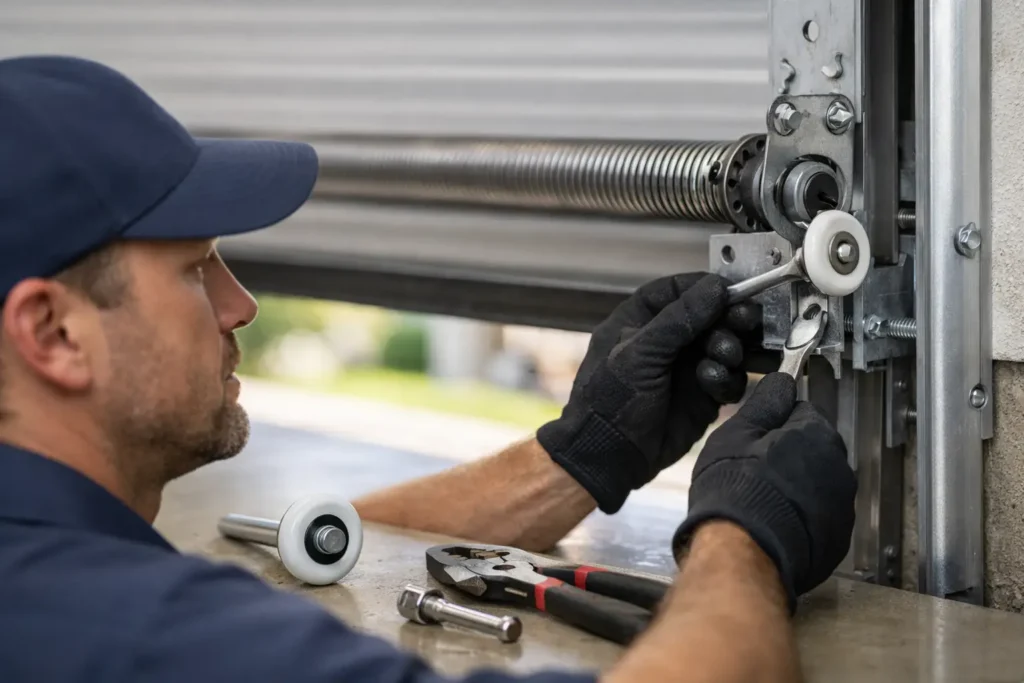
A garage door that shrieks across the driveway, shudders at the halfway point, or comes down unevenly is not simply being noisy. Worn rollers can force the door to drag along its tracks, strain the opener, and create a safety concern for everyone using the garage. A professional garage door roller replacement service addresses the source of that rough movement before a small part turns into a larger repair.
For homeowners and business owners, the goal is not just a quieter door. It is dependable daily operation, protection for the opener and tracks, and confidence that a heavy moving door is being handled safely.
What Garage Door Rollers Do
Rollers are the small wheels that sit inside the garage door tracks. As the door opens and closes, they guide each panel through the curve from the vertical track to the horizontal track overhead. Because they move every time the door operates, rollers take on steady friction, vibration, dust, moisture, and seasonal temperature changes.
Most residential doors have rollers along both sides of the door, while commercial doors may have more demanding hardware requirements. A single damaged roller can affect how the door travels. Several worn rollers can make the entire system sound harsh, move slowly, or bind in the tracks.
Rollers are often overlooked because they are small, but they work alongside the tracks, hinges, cables, springs, and opener. If one part is not moving correctly, the rest of the system has to work harder.
Signs You Need a Garage Door Roller Replacement Service
The clearest warning sign is noise. A loud grinding, squealing, popping, or rattling sound during operation commonly points to rollers that are worn, dry, cracked, or no longer turning freely. Lubrication may reduce noise in some cases, but it cannot repair a roller with a broken wheel, damaged stem, or worn bearings.
Watch the door as it moves as well. If it shakes, jerks, leans to one side, or seems to hesitate near the curved section of track, rollers may be binding. You may also notice the door stops short of fully opening, reverses unexpectedly, or requires more force from the opener than usual.
A visual inspection can reveal obvious issues. Rollers may look chipped, flattened, loose in the track, or rusty. Black plastic rollers can become brittle over time. Metal rollers may corrode or develop excessive play. Do not put hands near the rollers while the door is moving, and do not attempt to remove hardware connected to cables or springs.
For commercial properties, roller problems may show up as delays at loading bays, louder operation that disrupts staff or customers, or a door that will not maintain smooth, reliable cycles. In these settings, prompt service helps avoid operational downtime.
Why Professional Roller Replacement Is the Safer Choice
Replacing a roller sounds straightforward until the door hardware is involved. Some rollers can be changed with limited movement of the door, but rollers near the bottom brackets require special caution. Those brackets are connected to lift cables under significant spring tension. Removing the wrong fastener can cause a cable to release or the door to shift unexpectedly.
A trained technician knows how to identify which rollers are safe to replace using the appropriate method, how to secure the door, and when related parts need attention. They also check whether the problem is truly the roller. Bent tracks, loose hinges, worn bearings, an unbalanced door, or a failing opener can create similar symptoms.
Professional service is especially worthwhile when the door is heavy, insulated, unusually noisy, off-track, or failing to open and close consistently. The repair should improve the entire travel path, not simply replace the most visible worn wheel.
Choosing the Right Roller Material
There is no single roller that suits every garage door. The right choice depends on the door’s weight, how often it operates, the condition of the existing hardware, and the owner’s expectations for noise and service life.
Basic plastic rollers are common on older residential doors. They are economical, but they tend to wear faster and can become loud as they age. They may be suitable for a light door with limited use, though they are rarely the best long-term upgrade for a frequently used garage.
Steel rollers are durable and can handle demanding use, but unsealed versions may be louder and need more maintenance. They are often considered for certain heavier applications where strength is the main priority.
Nylon rollers with ball bearings are a popular upgrade for residential doors because they typically offer quieter, smoother movement. Quality nylon rollers can reduce vibration and put less stress on the opener. The number of bearings matters, but material quality, correct sizing, and proper installation matter just as much.
During a service visit, a technician can recommend an option that fits the door rather than selling an upgrade that does not match the system. A lightweight door that opens a few times a day has different needs than a busy commercial door or a garage used as a main household entrance.
What a Roller Replacement Appointment Should Include
A proper appointment begins with an inspection, not an assumption. The technician should operate the door, listen for unusual sounds, inspect the rollers and hinges, and examine the tracks for dents, spacing issues, or loose mounting hardware. They should also assess the door’s balance and opener performance where appropriate.
Once the cause is confirmed, the worn rollers are replaced with compatible parts. The tracks are cleaned where needed, moving components are lubricated with garage-door-appropriate products, and the door is tested through multiple open and close cycles. The technician should confirm that the rollers sit correctly in the tracks and that the door moves evenly.
This is also a good time to identify related wear. Loose hinges, frayed cables, damaged weatherstripping, weak springs, or an opener that is working too hard may not require immediate replacement in every case. Honest guidance means explaining what needs attention now, what can be monitored, and what may help prevent another service call later.
Do Not Wait When the Door Is Off-Track or Unsafe
Some roller issues can be scheduled at a convenient time. Others need faster attention. If a roller has come out of the track, the door is hanging unevenly, a cable appears loose, or the door will not stay in position, stop using it. Continuing to run the opener can bend tracks, damage panels, or create a more serious failure.
Disconnecting the opener does not automatically make the situation safe. A garage door is heavy, and its spring system stores substantial force. Keep people, vehicles, and stored items clear of the door until a qualified technician has assessed it.
For urgent roller, track, spring, or opener problems in Seattle and King County, responsive service can prevent a disrupted morning or a compromised business entrance from becoming a larger repair.
How to Help New Rollers Last Longer
Rollers are wear items, but regular care can extend their useful life. Keep the tracks free of built-up debris, but avoid applying heavy grease inside them. Grease can collect dirt and interfere with smooth roller travel. Instead, use the lubricant recommended for garage door moving parts on the appropriate components.
Pay attention to new noises rather than turning up the radio and hoping they disappear. A quick adjustment or maintenance visit is generally easier and more affordable than waiting until the door binds or comes off-track. It is also wise to have the door inspected periodically, especially if it is used several times each day.
If your garage door has become loud, shaky, or difficult to operate, Summit Garage Doors can assess the rollers and the full door system with straightforward recommendations. A smooth-running door starts with small components working exactly as they should, and acting early helps protect the larger parts you rely on every day.

