
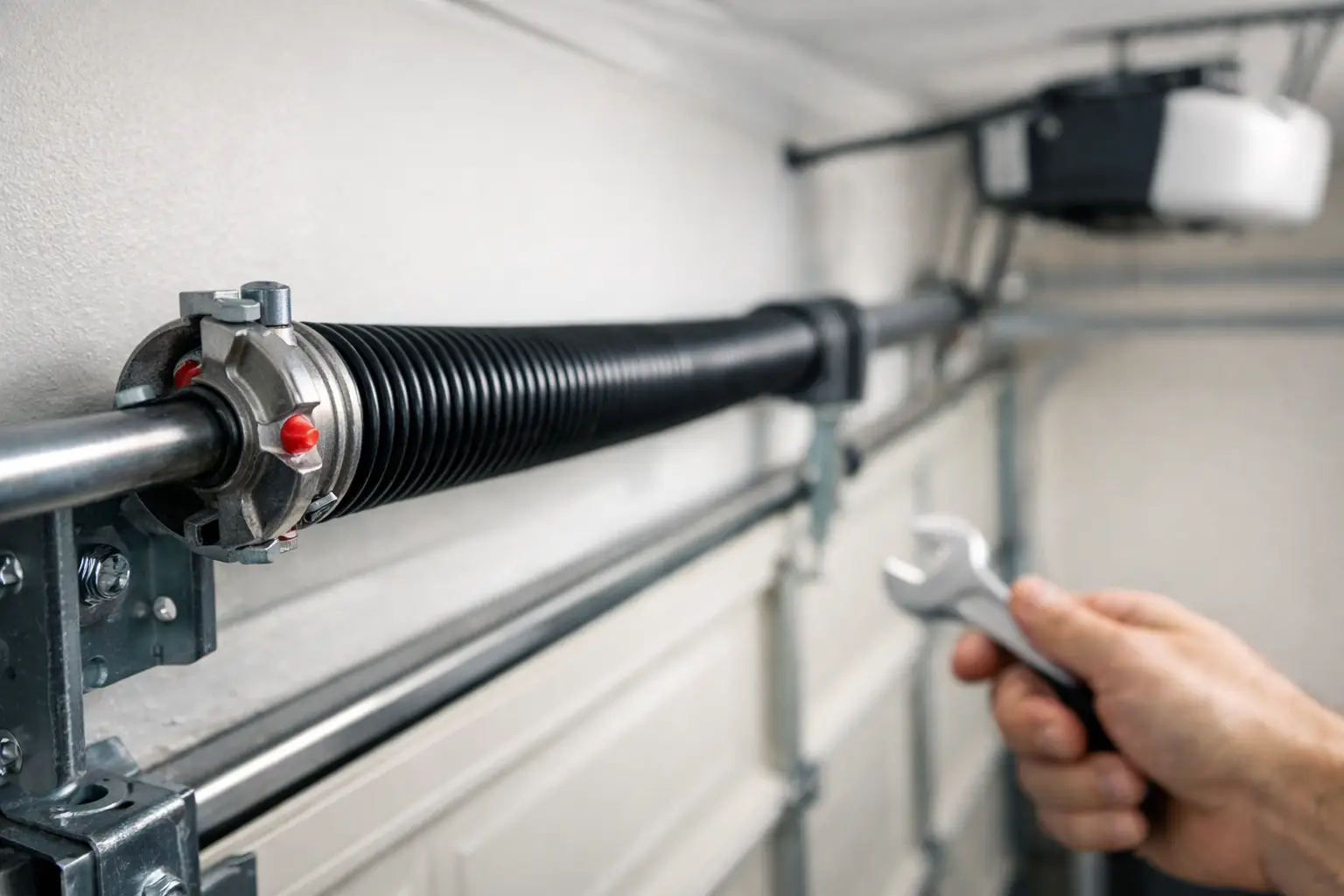
A garage door that suddenly will not open is often not an opener problem at all. It may be a broken spring. If you have a garage door spring lifespan question, the short answer is that most standard springs are built for a set number of door cycles, not a fixed number of calendar years. How often you use the door, the weight of the door, and the quality of its maintenance all affect when replacement becomes necessary.
For Seattle-area homeowners and businesses, that distinction matters. A spring can appear fine one day and fail during the next morning’s commute or just as a commercial door is needed for deliveries. Knowing what spring life looks like helps you plan ahead, avoid unsafe DIY repairs, and get service before a small issue creates a complete interruption.
How Long Do Garage Door Springs Usually Last?
Most standard torsion springs are rated for about 10,000 cycles. One cycle means the door goes fully up and fully down once. For a household that uses the garage door four times a day, a 10,000-cycle spring may last roughly seven years. A busy family using the door eight or more times daily may reach that limit in three to four years.
Extension springs, which run alongside the horizontal tracks on some doors, often have a similar expected cycle range. Their actual lifespan can vary more because their performance depends heavily on proper cables, pulleys, and track condition.
Higher-cycle torsion springs are also available. Depending on the door size and weight, they may be rated for 20,000, 30,000, or more cycles. They usually cost more up front, but they can be a sensible choice for a main entry garage, a large family, or a commercial setting where the door operates repeatedly throughout the day.
Calendar Age Is Only Part of the Picture
Two identical doors installed on the same street may need spring replacement years apart. The door used only for weekend storage will put far less strain on its springs than the door used as the household’s primary entrance. A detached garage, rental property, or business facility can also have very different usage patterns.
This is why an honest answer to the garage door spring lifespan question starts with usage, not simply the installation date. The rating gives a useful benchmark, but it is not a guarantee.
What Shortens the Life of a Garage Door Spring?
Normal metal fatigue is unavoidable. Each time a spring stretches or twists, it carries the weight of the door. Over thousands of cycles, the metal gradually weakens. However, several conditions can make that process happen sooner.
A door that is out of balance is one of the biggest concerns. Springs should counterbalance the door so it can move smoothly with minimal effort. When a door is too heavy on one side, binds in the tracks, or has damaged rollers, the spring system works harder than it should. The opener may still move the door for a while, but both the opener and springs are under extra strain.
Moisture and corrosion can also affect spring performance. Seattle’s wet climate does not automatically mean springs will fail early, but garages with persistent dampness or poor ventilation can encourage rust. Rust creates friction between the coils and weakens the metal over time.
Incorrect spring sizing is another issue. A spring that is not matched to the door’s actual weight may make the door difficult to lift, cause uneven movement, and wear out prematurely. This can happen after a door has been upgraded with insulation, windows, reinforcement hardware, or decorative materials without adjusting the counterbalance system.
Finally, frequent use simply adds up. There is no maintenance service that can erase cycle wear. Maintenance can reduce unnecessary stress and help identify concerns, but every spring eventually reaches the end of its safe service life.
Signs Your Spring May Be Near the End
A spring often breaks without much warning, but the door may show clues that the system needs attention. If the door feels unusually heavy when operated manually, opens only a few inches, or reverses unexpectedly, stop using it and arrange an inspection. A garage door opener is not designed to lift the full weight of the door without spring support.
You may also hear a loud bang from the garage when a torsion spring breaks. The sound can be startling, but it is usually the spring releasing stored tension rather than the door falling. Look above the closed door for a visible gap in the torsion spring. On extension spring systems, you may notice a loose or hanging spring near the tracks.
Other warning signs include jerky movement, uneven lifting, a door that hangs crooked, frayed lifting cables, or new grinding and straining noises. These symptoms do not always mean the spring itself is broken. They can point to worn rollers, track damage, cable problems, or an opener issue. Still, they should be checked promptly because all of these parts work together.
Do Not Keep Running the Opener
When a spring fails, repeatedly pressing the opener button can turn a straightforward spring replacement into a larger repair. The motor may strain, the gear system can be damaged, and the door can move unevenly. Disconnecting and lifting a heavy door yourself is not always safe either, especially if cables are loose or the door is not level.
The safest step is to leave the door closed if possible, keep people and vehicles clear, and call a qualified garage door technician. Springs are tightly wound or stretched under significant force. They require the right tools, correct sizing, and careful adjustment.
Is It Better to Replace Both Garage Door Springs?
If your door has two torsion springs and one breaks, replacing both is usually the practical recommendation. The second spring has carried the same workload and is often close to the same point of fatigue. Replacing only the broken one may save money that day, but it increases the chance of another service call soon after.
There are exceptions. If one spring was replaced recently and the other is still comparatively new, a technician may advise replacing only the failed part. The right choice depends on the springs’ age, cycle rating, condition, and whether they are correctly matched to the door.
For extension spring systems, both sides should also be assessed together. Mismatched springs can make the door lift unevenly and create added wear on cables, pulleys, and the opener.
How to Help Your Springs Last Longer
You cannot prevent eventual spring replacement, but regular care can help you get the intended life from the system. Have the door professionally inspected when it begins sounding different, moving roughly, or losing balance. A technician can check spring tension, rollers, cables, tracks, bearings, and opener settings as one connected system.
Between service visits, keep the tracks clear of debris and pay attention to changes in operation. Avoid adding weight to the door without having the spring system evaluated. If you are planning a new insulated door or a custom design upgrade, ensure the installation includes springs sized for that specific door.
Lubrication can help reduce coil friction and protect metal components, but use a garage-door-approved product and avoid spraying tracks heavily. Tracks need to remain clean so rollers can travel properly. If you are uncertain what product or amount is appropriate, it is better to ask during a maintenance visit than apply the wrong material.
When to Call for Spring Service
Call for prompt service if the door will not open, appears crooked, has a broken spring, or makes sudden loud noises. A door that is stuck open also deserves urgent attention because it can affect security and expose the garage to weather.
For homeowners and business owners who want a clear answer before a failure occurs, a professional inspection is the most reliable option. Summit Garage Doors can assess the complete door system, explain whether repair or replacement makes better value, and install properly matched springs for dependable operation.
A working garage door should feel quiet, balanced, and predictable. If yours feels heavier, louder, or less reliable than it used to, addressing it now is often the safest way to protect your door, opener, and daily routine.

