
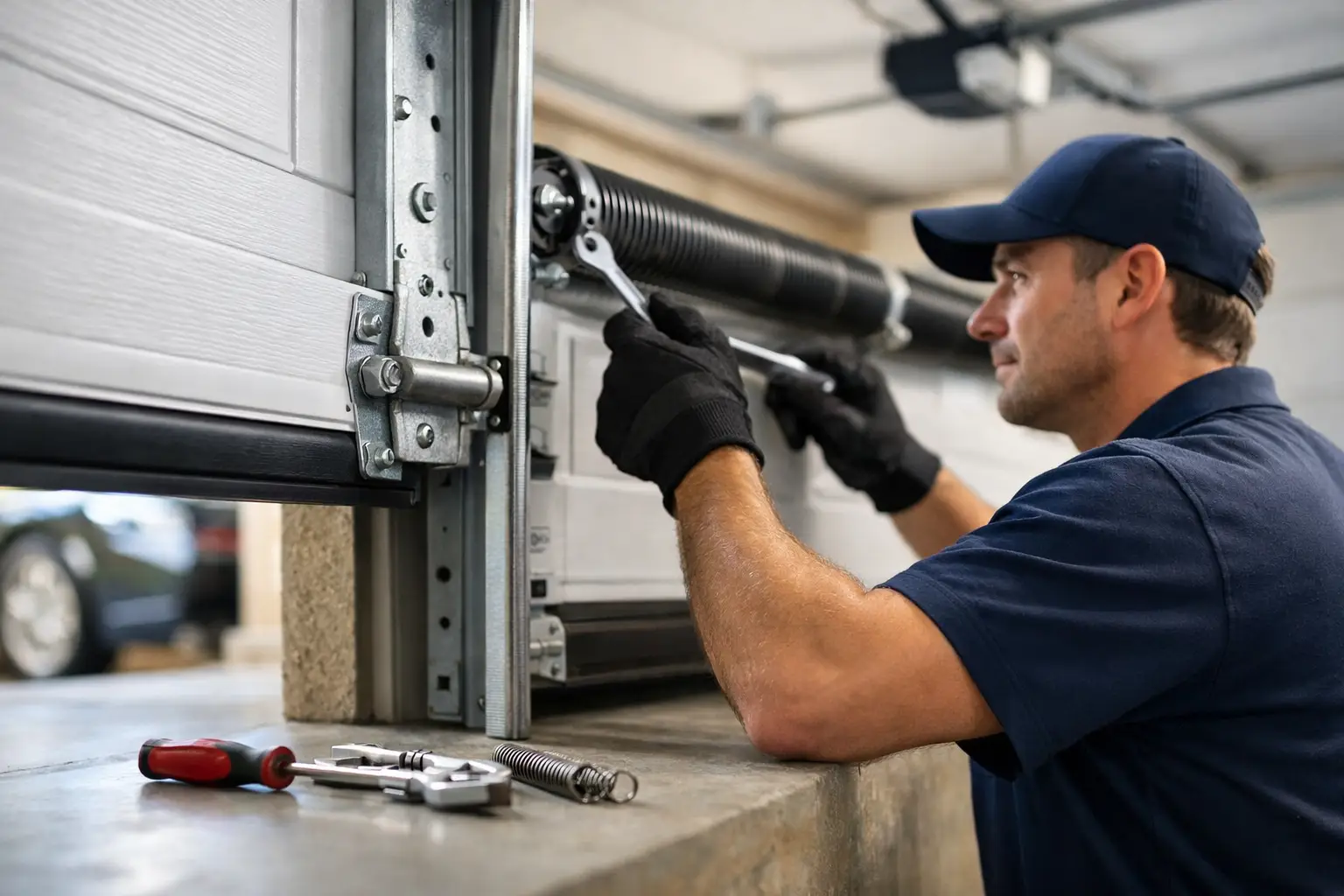
A garage door usually gives you a warning before it fails. It starts moving slower, sounds rough on the way up, or shakes more than it used to. Most property owners notice those changes and keep using the door anyway – until a spring snaps, the opener strains, or the door stops halfway on a busy morning. That is where garage door tune up benefits become easy to see. A proper tune-up catches small issues before they turn into expensive repairs, safety risks, or a full-day interruption.
For homeowners, that means fewer surprises and a door that works the way it should. For commercial properties, it means less downtime and less stress on equipment that gets used all day. A tune-up is not just basic maintenance. It is a practical way to protect the door, the opener, and the people using them.
Why garage door tune up benefits matter
Garage doors are heavy systems with moving parts that wear out at different rates. Springs lose tension, rollers wear down, tracks shift, cables fray, and hardware loosens over time. Even if the door still opens and closes, it may already be operating under strain.
That strain is what leads to bigger problems. A misaligned track can wear out rollers faster. An unbalanced door can overwork the opener. Loose hardware can create vibration that affects the whole system. When those issues are found early, the fix is usually smaller, faster, and more affordable.
That is one of the biggest garage door tune up benefits – it changes the timing of the repair. Instead of dealing with a failure after something breaks, you deal with wear before it becomes damage.
A tune-up improves safety first
The most important benefit is safety. A garage door is one of the largest moving parts on a home or building, and when something goes wrong, the risk is real. Worn springs, damaged cables, off-track rollers, and faulty sensors can all create dangerous conditions.
A tune-up gives a technician the chance to inspect those high-risk components and test how the system behaves under normal use. If the door is not balanced correctly, it may drop too quickly or force the opener to compensate. If the sensors are dirty, misaligned, or failing, the door may not reverse the way it should.
This matters even more for families with children, households that use the garage as the main entry point, and businesses where employees or customers move through the area regularly. Smooth operation is convenient, but safe operation is non-negotiable.
You can avoid many major repairs
Garage door failures often start as small maintenance issues. A roller that is wearing out can create extra drag. That extra drag affects the track, the hinge points, and the opener. A door that is slightly out of balance may still work, but the motor has to pull harder every cycle.
Over time, those small problems stack up. That is why tune-ups are often less about fixing what is broken today and more about preventing what will break next month.
In practical terms, a tune-up may reveal loose brackets, worn rollers, minor track alignment problems, early cable wear, or spring tension issues. Those are all easier to correct before they lead to a snapped part or a door that will not open at all. Property owners who stay ahead of maintenance usually spend less on emergency repair calls because they are not waiting for the system to fail at the worst possible moment.
A well-tuned door lasts longer
Garage doors and openers are long-term investments, but they do not last forever on neglect alone. Like any mechanical system, lifespan depends heavily on how much stress the components carry over time.
When the door is balanced, lubricated properly, and running on aligned tracks with secure hardware, each opening cycle puts less strain on the system. Springs do their share of the lifting. Rollers move cleanly. The opener is not forced to compensate for resistance it was never meant to handle.
That reduced strain can help extend the service life of several parts at once. The door itself, the opener, the rollers, and the hinges all benefit when the system is adjusted correctly. For customers trying to delay a costly replacement, this is often one of the most valuable results of routine service.
Better performance in Seattle-area conditions
Weather and moisture can speed up wear, especially in areas where damp conditions are common for much of the year. In places like Seattle and across King County, garage door systems deal with moisture, temperature changes, and regular daily use that can gradually affect metal parts, lubrication, and alignment.
A tune-up helps address the kind of wear that builds quietly in that environment. Rust starting on hardware, stiff rollers, swelling around door components, and weather seal deterioration are easier to manage when they are noticed early. This does not mean every door needs the same service at the same interval. A lightly used residential door and a busy commercial bay door will age differently. Still, climate and usage together make preventive service a smart move rather than an optional extra.
Garage door tune up benefits include quieter operation
A noisy garage door is not always a sign of imminent failure, but it is often a sign that something needs attention. Grinding, squeaking, rattling, or banging usually points to friction, loose hardware, worn rollers, or balance issues.
A tune-up can often reduce that noise noticeably. Tightening hardware, adjusting alignment, lubricating moving parts, and replacing worn components where needed can make operation much smoother. For homeowners with bedrooms above or beside the garage, that change is more than cosmetic. It affects daily comfort.
It is worth noting that not every noisy door becomes silent after service. Older chain-drive openers and aging metal doors naturally make more sound than newer insulated systems. But if a door suddenly gets louder, a tune-up is a smart place to start.
Energy efficiency and weather protection can improve too
People usually think of tune-ups as mechanical service, but they can also support better sealing and overall door performance. If the bottom seal is worn, the side weatherstripping is damaged, or the door is not sitting evenly when closed, outside air and moisture can get in.
That can matter if the garage is attached to the home, used for storage, or connected to a workspace. Drafts, water intrusion, and dirt buildup are not always caused by major damage. Sometimes the door simply needs adjustment, or the seals need attention before they fail completely.
This is one of those benefits that depends on the condition of the existing door. A tune-up will not turn an old non-insulated door into a high-efficiency system. But it can help the door close more properly and reduce preventable gaps that affect comfort and cleanliness.
It protects the opener from unnecessary strain
Many people assume the opener does all the heavy lifting. It does not. The springs are supposed to carry most of the door’s weight, while the opener controls the movement. When the door is out of balance, the opener ends up working much harder than designed.
That extra strain can shorten motor life, wear out drive components, and create performance issues like jerky movement or incomplete closing. A tune-up helps identify whether the opener is dealing with a door problem rather than an opener problem.
This distinction matters because replacing an opener without correcting the underlying balance or hardware issue often leads to the same trouble again. Honest service means looking at the full system, not just the symptom.
Routine service supports security and reliability
A garage door that does not close properly is not just inconvenient. It can affect security. If the door reverses unexpectedly, sticks open, or leaves uneven gaps at the bottom, it creates a vulnerability most owners do not notice right away.
A tune-up helps make sure the door closes fully, responds correctly, and operates consistently. That reliability matters whether you are storing vehicles, tools, inventory, or simply using the garage as a main access point to the property.
For businesses, reliable operation also affects scheduling and workflow. For homeowners, it affects the basic rhythm of the day. If the door works every time without hesitation, you stop thinking about it. That is usually the best sign the system is in good shape.
When a tune-up makes the most sense
If the door is making new noises, moving unevenly, slowing down, or feeling heavier than usual, it is a good time to book service. The same goes for doors that have not been inspected in years, especially if they are used several times a day.
There is also value in scheduling maintenance before problems appear. That is especially true ahead of colder, wetter seasons or after a period of heavy use. Summit Garage Doors often sees repair calls that could have been prevented with earlier adjustment or inspection. That does not mean every issue is avoidable, but many are.
A tune-up is not a cure-all. Severely worn parts may still need replacement, and some older doors are simply nearing the end of their service life. But even then, an inspection gives you a clear picture of what is worth repairing and what is better replaced.
The best time to think about garage door maintenance is before the door forces the issue. A tune-up gives you more control, fewer surprises, and a safer system that works the way it should when you need it most.

