
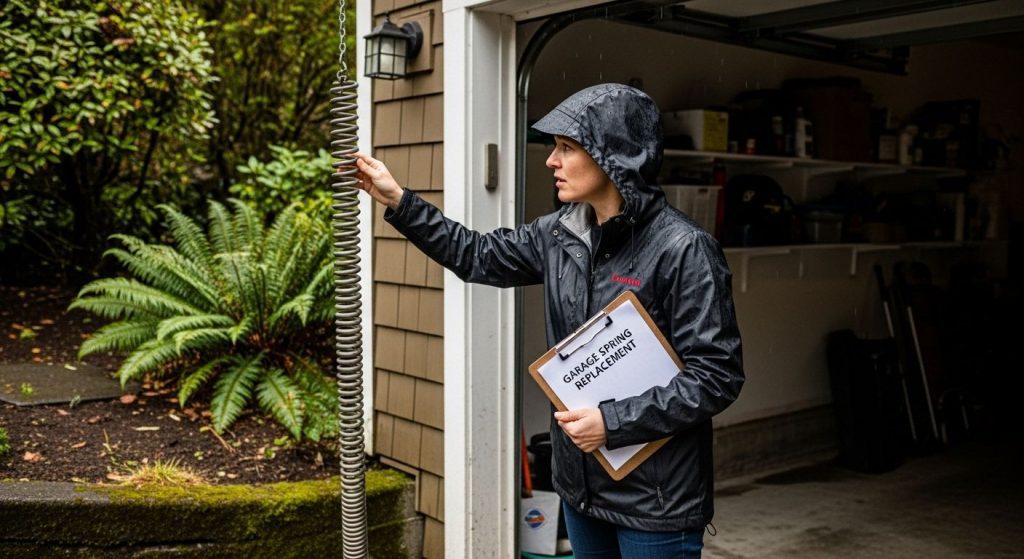
Garage doors might look sturdy, but the humble spring hidden inside does most of the heavy lifting and quietly takes a beating through Seattle’s unpredictable weather. Most homeowners are shocked to find out that garage door springs last only about 7 years on average when used four times daily. But what really surprises people is how a worn spring can put your whole home at risk for sudden breakdowns or safety hazards long before you hear a single snap. That simple coil is often the weakest link in your home’s security.
Table of Contents
- Signs Your Garage Door Needs Spring Replacement
- Costs And Factors For Garage Spring Replacement
- DIY Vs. Professional Garage Spring Replacement
- Finding Trusted Garage Door Services In Seattle Area
Quick Summary
| Takeaway | Explanation |
|---|---|
| Inspect springs for visible damage. | Regular inspections reveal rust, gaps, or cracks that indicate the need for replacement. |
| Know the cost factors involved. | Understand material costs, labor expenses, and potential extra repairs to budget effectively for spring replacement. |
| Prioritize professional installation. | Engaging a professional ensures safety and proper handling of high-tension springs, reducing personal and property risk. |
| Evaluate service providers carefully. | Check credentials, experience, and local expertise to select reliable garage door service providers in Seattle. |
| Monitor spring age and usage. | A spring’s lifespan averages 7 years; track its age and use frequency to anticipate replacement needs. |
Signs Your Garage Door Needs Spring Replacement
Garage door springs are critical components that bear immense weight and tension, enabling smooth operation of your garage door. Recognizing the warning signs of spring failure can prevent unexpected breakdowns and potentially dangerous situations for Seattle homeowners.
Visible Physical Damage and Wear
Inspecting your garage door springs regularly reveals critical indicators of potential replacement needs. Rust and corrosion are primary red flags that compromise spring integrity. Research from the Overhead Door Corporation indicates metal fatigue can significantly reduce spring lifespan, especially in high-humidity environments like the Pacific Northwest.
Visible signs of spring deterioration include:
- Gaps or stretching in the spring coils
- Visible rust or discoloration
- Cracking or obvious metal deformation
When springs show these symptoms, immediate garage door spring replacement becomes crucial to prevent complete system failure.
Performance Indicators of Spring Malfunction
Garage door performance provides clear signals about spring health. Consumer Reports research highlights several key performance indicators suggesting spring replacement:
- Uneven or jerky door movement during opening or closing
- Doors that feel significantly heavier than usual
- Visible sagging or imbalance when the door is partially open
- Loud grinding or popping noises during operation
These symptoms indicate internal spring stress and potential imminent failure. Homeowners noticing these signs should schedule professional inspection to assess spring condition and prevent potential safety risks.
Age and Usage Considerations
Spring replacement isn’t just about visible damage. Mechanical wear occurs gradually, with most residential garage door springs designed to last approximately 10,000 cycles. For an average household opening and closing the garage door 4 times daily, this translates to roughly 7 years of standard use.
Factors accelerating spring degradation include:
- Frequent door usage
- Extreme temperature variations
- High humidity environments
- Lack of regular maintenance
Seattle homeowners should proactively track their garage door spring age and performance, understanding that preventative replacement can avoid more costly emergency repairs and potential safety incidents.
Ultimately, recognizing these signs early and consulting professional technicians ensures your garage door remains safe, functional, and reliable through Seattle’s diverse weather conditions.
To help you quickly identify when replacement is needed, the following table summarizes the most common warning signs and their implications.
| Warning Sign | Description |
|---|---|
| Gaps or stretching in coil | Indicates metal fatigue or breakage |
| Visible rust or discoloration | Suggests corrosion and risk of failure |
| Cracking or metal deformation | Physical damage compromising integrity |
| Uneven/jerky door movement | Spring imbalance or malfunction |
| Door heavier than usual | Loss of spring tension |
| Sagging or imbalance when partially open | One spring may be failing |
| Loud grinding or popping noises | Spring under internal stress |
Costs and Factors for Garage Spring Replacement
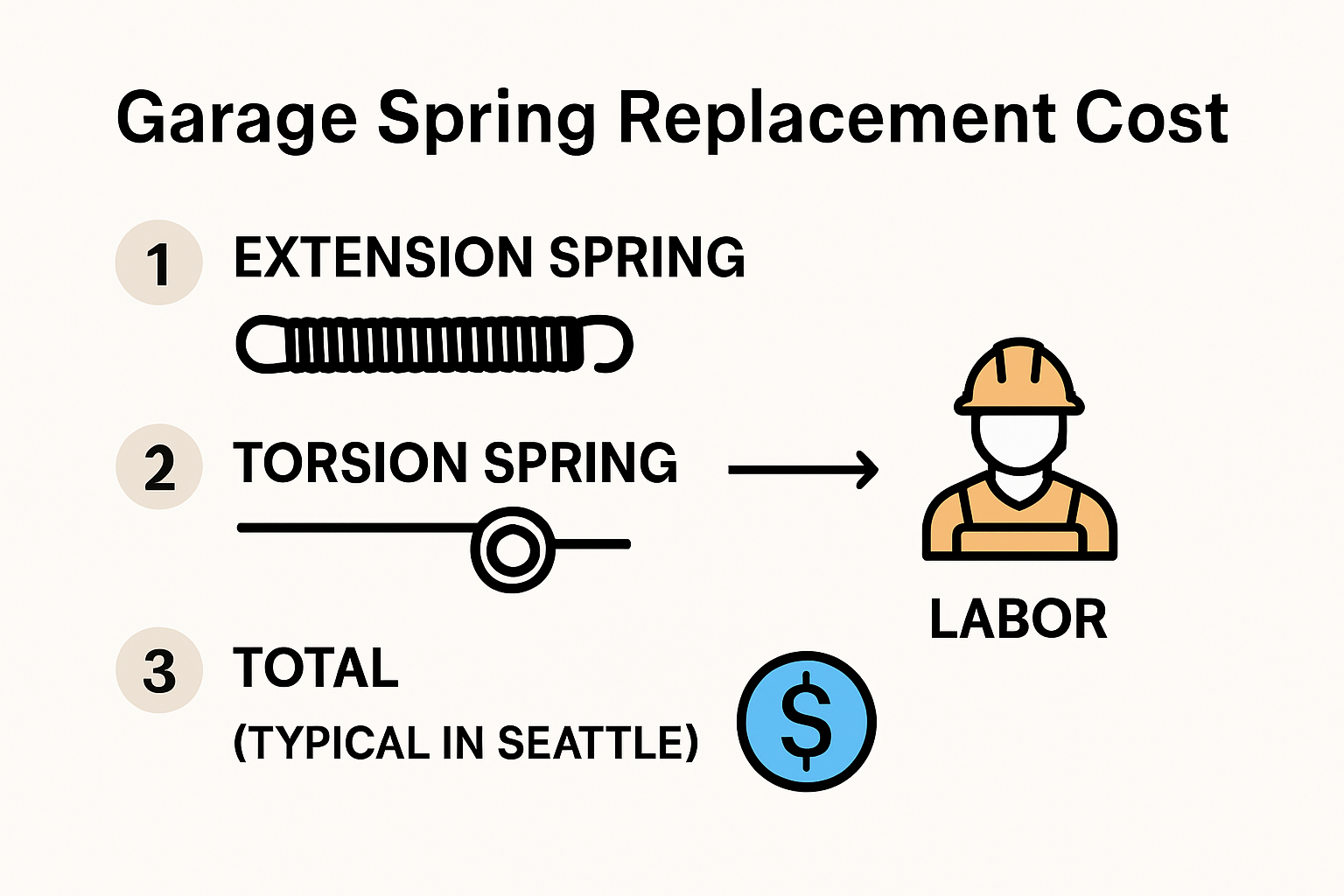
Garage door spring replacement involves multiple financial and technical considerations that Seattle homeowners must understand to make informed decisions about their home maintenance investments.
Spring Type and Material Costs
The type of garage door spring significantly impacts overall replacement expenses. According to Forbes, two primary spring types dominate residential garage door systems: extension and torsion springs. Extension springs typically cost between $10 and $60 each, making them the more budget-friendly option. Torsion springs, which offer greater durability and smoother operation, range from $30 to $250 per spring.
Key cost considerations include:
- Material quality
- Spring length and diameter
- Specific load-bearing requirements
- Local market pricing
To provide a clear overview of cost differences and contributing factors, see the table below comparing extension and torsion springs.
| Spring Type | Typical Cost Per Spring | Durability | Operation Quality |
|---|---|---|---|
| Extension Spring | $10 – $60 | Moderate | Basic |
| Torsion Spring | $30 – $250 | High | Smoother & quieter |
Labor and Installation Expenses
Angi research reveals that professional installation costs for garage door springs typically range from $75 to $150. These expenses can fluctuate based on several critical factors:
- Complexity of the garage door system
- Accessibility of existing spring mechanisms
- Required additional repairs or adjustments
- Local labor rates in the Seattle metropolitan area
Homeowners should recognize that while DIY replacement might seem cost-effective, professional garage door spring replacement ensures safety and proper installation.
Comprehensive Cost Breakdown and Considerations
This Old House research provides a comprehensive overview of potential expenses. Total garage door spring replacement costs can range from $98 to $371, depending on specific circumstances. Residential homeowners in Seattle should budget accordingly and consider the following factors:
- Material Costs: $12 to $250 per spring
- Labor Expenses: $75 to $150
- Additional Potential Costs:
- Hardware adjustments
- Lubrication
- Minor structural repairs
Factors influencing total replacement expenses include door type, spring mechanism, local market rates, and the specific requirements of your garage door system. Roll-up sectional doors typically incur higher replacement costs compared to single-panel tilt-up designs.
Prudent Seattle homeowners should obtain multiple professional quotes, understanding that investing in quality spring replacement prevents more expensive future repairs and ensures consistent, safe garage door operation through the region’s diverse weather conditions.
DIY vs. Professional Garage Spring Replacement
Garage door spring replacement represents a complex home maintenance task that demands careful consideration between attempting a do-it-yourself approach or engaging professional services. Understanding the nuanced risks and potential outcomes is crucial for Seattle homeowners seeking safe and effective garage door maintenance.
Safety Risks and Technical Complexity
OSHA safety guidelines emphasize the significant dangers associated with garage door spring replacement. Torsion and extension springs are under extreme tension, creating potential for catastrophic injury if mishandled. Professional technicians possess specialized knowledge and equipment to manage these high-risk components safely.
Key safety considerations for DIY attempts include:
- Precise spring tension calculations
- Specialized tools requirements
- Understanding complex mechanical systems
- Potential for serious personal injury
Amateur attempts can result in:
- Unexpected spring release
- Structural damage to garage door
- Personal injury risks
- Potential voiding of equipment warranties
For clarity, the following table compares DIY and professional garage spring replacement to highlight the major differences in risk, cost, and long-term value.
| Approach | Safety Risk | Cost Outlook | Skill/Tools Needed | Warranty/Protection |
|---|---|---|---|---|
| DIY | High | Lower initial, higher long-term | Advanced | Risk of voiding |
| Professional | Low | Higher upfront, better value | Handled by technician | Included |
Cost and Long-Term Considerations
While DIY approaches might seem financially attractive initially, the long-term implications often favor professional garage door spring replacement. Professional services provide comprehensive benefits beyond immediate repair:
- Guaranteed workmanship
- Professional-grade replacement parts
- Comprehensive system diagnostic
- Warranty protection
- Reduced risk of future mechanical failures
Professional Expertise and Technical Advantages
Professional garage door technicians bring specialized skills that extend beyond simple spring replacement. National Garage Door Institute research indicates that trained professionals can:
- Identify underlying mechanical issues
- Recommend appropriate spring types
- Ensure precise spring tension calibration
- Provide comprehensive system evaluation
The intricate nature of garage door mechanisms requires nuanced understanding of mechanical engineering principles. Professional technicians undergo extensive training to diagnose and resolve complex system interactions that amateur enthusiasts might overlook.
Seattle homeowners should recognize that while DIY tutorials proliferate online, garage door spring replacement represents a high-stakes home maintenance task where professional expertise significantly outweighs potential cost savings. The minimal investment in professional service prevents potential injury, property damage, and future mechanical complications.
Finding Trusted Garage Door Services in Seattle Area
Navigating the complex landscape of garage door service providers in the Seattle metropolitan area requires strategic research and careful evaluation. Homeowners must develop a comprehensive approach to identifying reliable, professional technicians who can deliver high-quality garage door spring replacement and maintenance services.
Credentials and Professional Verification
Better Business Bureau (BBB) guidelines recommend thorough background checks when selecting home service professionals. Reputable garage door service providers should demonstrate:
- Valid state licensing credentials
- Comprehensive insurance coverage
- Documented professional certifications
- Positive customer review history
- Transparent business registration
Seattle homeowners should verify these credentials through multiple channels, including state licensing boards, online review platforms, and professional trade associations. Professional credentials serve as fundamental indicators of a service provider’s reliability and commitment to industry standards.
Evaluation Criteria for Service Selection
Angie’s List professional recommendations suggest a multifaceted approach to selecting garage door service providers. Critical evaluation factors include:
- Years of local operational experience
- Specialized expertise in garage door spring replacement
- Response time and availability
- Transparent pricing structures
- Warranty and follow-up service offerings
Homeowners can leverage online platforms, local community recommendations, and garage door repair services directories to compile a comprehensive list of potential service providers.
Local Expertise and Regional Understanding
Seattle’s unique geographical and climate characteristics demand specialized garage door service knowledge. Local technicians must understand specific regional challenges such as:
- High humidity environments
- Temperature fluctuations
- Potential moisture-related mechanical stress
- Urban infrastructure considerations
Consumer Reports research emphasizes the importance of selecting service providers with demonstrable local expertise. Technicians familiar with Seattle’s specific environmental conditions can provide more nuanced, targeted maintenance and repair solutions.
Effective garage door service selection requires a holistic approach that balances technical expertise, professional credentials, local understanding, and transparent communication. Seattle homeowners should invest time in comprehensive research, prioritizing providers who demonstrate consistent professionalism, technical competence, and genuine commitment to customer satisfaction.
Remember that the cheapest option is not always the most cost-effective. Prioritize quality, reliability, and long-term performance when selecting a garage door service provider in the Seattle metropolitan area.
Frequently Asked Questions
What are the signs that my garage door springs need to be replaced?
Look for visible damage such as rust, gaps, or cracks in the springs. Additionally, watch for performance indicators like uneven door movement, increased heaviness, or loud noises during operation.
How often should garage door springs be replaced?
Garage door springs typically last about 7 years based on average usage of four times daily. It’s advisable to monitor both the age and condition of your springs to determine when replacement is necessary.
What are the different types of garage door springs and their costs?
The two primary types are extension springs and torsion springs. Extension springs typically cost between $10 and $60 each, while torsion springs can range from $30 to $250 each, depending on durability and performance quality.
Is it safe to replace garage door springs myself?
Replacing garage door springs can be dangerous due to the tension they are under. Professional installation is recommended to ensure safety and proper handling of these components, which require specialized skills and tools.
Restore Safety and Reliability with Summit Garage Doors
If you have noticed the warning signs of a failing garage door spring—like sudden heaviness, jerky movement, or visible damage—now is the time to act before a complete breakdown disrupts your day or risks your safety. Protect your home and loved ones from unexpected garage door failures in Seattle’s demanding climate by choosing proven professionals who know the region inside and out.

Trust the experts at Summit Garage Doors for your next garage door spring replacement. Our team combines local knowledge with years of technical experience to deliver prompt, safe, and lasting repairs. Do not wait until a minor issue becomes a major inconvenience. Book your service now and see why Seattle homeowners rely on us to keep their garages secure year-round. Visit our main website to schedule your appointment and reclaim peace of mind today.
Recommended
- Top-Rated Garage Door Spring Replacement in Seattle
- Garage Door Installation Guide for Seattle Homeowners 2025 – Summit Garage Doors | Seattle’s #1 Garage Door Repair & Installation
- Upgrading Old Garage Doors in Seattle: 2025 Guide for Homeowners – Summit Garage Doors | Seattle’s #1 Garage Door Repair & Installation
- Garage Door Replacement Process for Seattle Homeowners 2025 – Summit Garage Doors | Seattle’s #1 Garage Door Repair & Installation

