
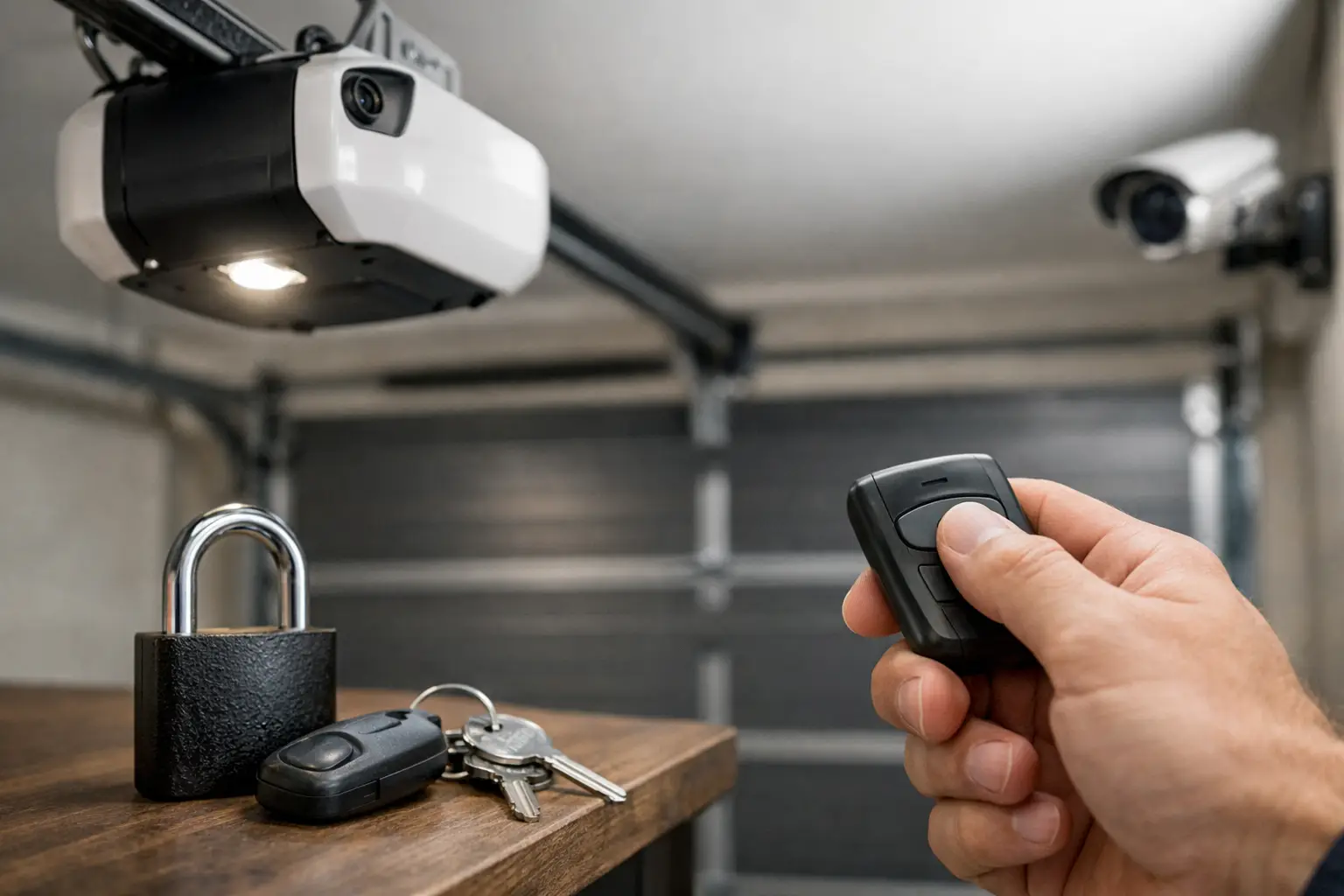
A garage door opener can be the weakest point in your home security without looking like one. Many break-ins do not start with forced entry at the front door. They start with an exposed remote, an outdated opener, or a side emergency release that is easier to reach than most homeowners realize. If you are wondering how to secure garage door opener systems properly, the right answer is usually a mix of better habits, a few smart upgrades, and a quick check of the opener you already have.
For most homes, the garage is not just where the car goes. It is a direct path to the house, a storage area for tools and bikes, and often the most-used entrance. That makes opener security worth taking seriously, especially if your current setup is more than a few years old.
How to secure garage door opener without overcomplicating it
The goal is simple. You want to make it harder for someone to gain access, easier for you to control who can enter, and more obvious when something is wrong. That does not always mean replacing everything. In many cases, a few targeted fixes improve security right away.
Start with the remote controls. If you leave a clipped remote in a visible vehicle, especially one parked outside, you are giving away access to the garage. A locked car helps, but it is not enough on its own. If someone gets into the vehicle and finds the remote, they may have a direct way in. Keeping the remote on a keychain, using a built-in vehicle system with better security, or removing the remote from the car overnight are all safer options.
Next, look at the wall control inside the garage. If your garage has an interior door leading into the home, that wall control matters more than people think. Many newer controls include a lock or vacation mode that disables remote signals when you are away. That feature is easy to overlook, but it can make a real difference during travel or extended absences.
Then check the opener model itself. Older openers may still rely on fixed-code technology, which is less secure than rolling-code systems. A fixed code sends the same signal every time. A rolling code changes with each use, which makes signal copying much more difficult. If your opener is old enough that you are not sure what it uses, that uncertainty alone is a good reason to have it checked.
The garage door opener security risks homeowners miss
One of the most common blind spots is the emergency release cord. This red handle is important for safety because it lets you disconnect the opener during a power outage or mechanical issue. The problem is that on some doors, a person can reach it from outside using a simple tool through the top of the door.
This does not mean you should disable the release. That would create a safety issue. What you can do is reduce how easy it is to access. In some cases, repositioning components, adding a shield, or adjusting the door and opener setup can make this method much less practical for an intruder. The right approach depends on your door type and how much gap exists at the top section.
Another overlooked issue is the keypad. Wireless keypads are convenient, especially for families, dog walkers, or service access, but weak codes defeat the purpose. If your keypad uses a simple pattern, an old house number, or a repeated digit code, change it. Also make sure the keypad is mounted securely and not in a spot where it is obvious from the street.
Smart garage systems can also create risk if they are installed but not managed properly. App control, alerts, and remote access are useful, but only if the account is protected with a strong password and two-factor authentication when available. The technology itself is not the problem. Poor setup usually is.
Best upgrades if your opener is older
If your opener is more than 10 to 15 years old, security is only one reason to consider an upgrade. Newer units often give you quieter operation, better lighting, battery backup options, and stronger control features. But from a security standpoint, the biggest improvements are rolling-code technology, smartphone monitoring, and better access management.
A modern opener lets you see whether the door is open or closed without walking to the garage. That sounds like a convenience feature, but it is really a security one too. A garage left open overnight is more common than people like to admit. If your system sends alerts or lets you close the door remotely, you remove that risk quickly.
Some smart openers also allow temporary or limited access for family members, deliveries, or trades. That is much safer than handing out remotes and hoping they come back. If you want more control without adding complexity to daily use, this is one of the best upgrades available.
There is a trade-off, though. Smart systems need reliable setup. If the Wi-Fi signal in the garage is weak or the app is poorly configured, the experience becomes frustrating. In those cases, a standard rolling-code opener with a quality keypad may be the better fit. The best security upgrade is the one you will actually use properly.
How to secure garage door opener access points
Think of your garage opener as one part of a larger system. The remote, keypad, wall console, emergency release, garage door itself, and side entry door all work together. If one point is weak, the whole setup is weaker.
The side door deserves attention. Many detached and attached garages have a basic exterior man door with an old lockset, poor frame reinforcement, or no automatic closer. Homeowners often focus on the overhead door and forget that the side entry may be easier to force. A secure garage opener does not help much if the side door can be kicked in.
The garage door itself should also close fully and seal properly. If the door is misaligned, damaged, or stopping short, it may leave enough space for tampering. Tracks that are bent, rollers that drag, or sensors that are out of line can all affect secure closure. This is where security and mechanical condition overlap. A door that does not operate correctly is not just inconvenient. It can be easier to defeat.
If you use a keypad, change the code any time a contractor, tenant, or former occupant no longer needs access. The same applies to smart access permissions. This is a simple step, but it gets missed often after moves, renovations, or home sales.
Simple habits that improve opener security right away
Most security improvements do not start with hardware. They start with routine. Close the door every time, even if you are stepping away for a few minutes. Do not leave the remote in plain sight. Test the lock or vacation function before going away. Review who has access, especially if multiple people use the garage regularly.
It also helps to listen to the opener. If it starts sounding strained, inconsistent, or slower than usual, do not ignore it. Mechanical wear can lead to incomplete closing or unreliable locking position at the rail. Security is stronger when the opener and door are maintained together.
Lighting matters too. Motion lights near the garage door and side access points do not replace physical security, but they do reduce cover for unwanted activity. Camera coverage can add another useful layer if it captures the garage approach clearly and alerts are set up properly.
When to call a garage door professional
Some fixes are easy for homeowners. Changing keypad codes, moving a remote, or enabling vacation mode takes minutes. But if you are dealing with an older opener, a vulnerable emergency release, poor door alignment, or a system that does not always close securely, it makes sense to have the full setup inspected.
A trained technician can tell you whether the issue is the opener, the door hardware, the track alignment, or a combination of all three. That matters because replacing the opener will not fully solve a security problem caused by a warped top panel or loose closing fit. A proper assessment saves time and helps you avoid spending money in the wrong place.
For homeowners in Seattle and nearby communities, weather exposure can also affect door performance over time. Moisture, temperature swings, and daily wear can change how tightly a door closes and how well the opener responds. That is one reason regular service is worth considering if your garage is a main entry point.
At Summit Garage Doors, we often see security concerns tied to mechanical issues that homeowners did not realize were connected. A door that sticks, closes unevenly, or leaves a gap is not just due for service. It may also be easier to access than it should be.
A secure garage opener is really about control. You should know who can get in, when the door is being used, and whether the system closes and locks the way it is supposed to. If any part of that feels uncertain, it is a good time to tighten things up before uncertainty turns into a problem.

