
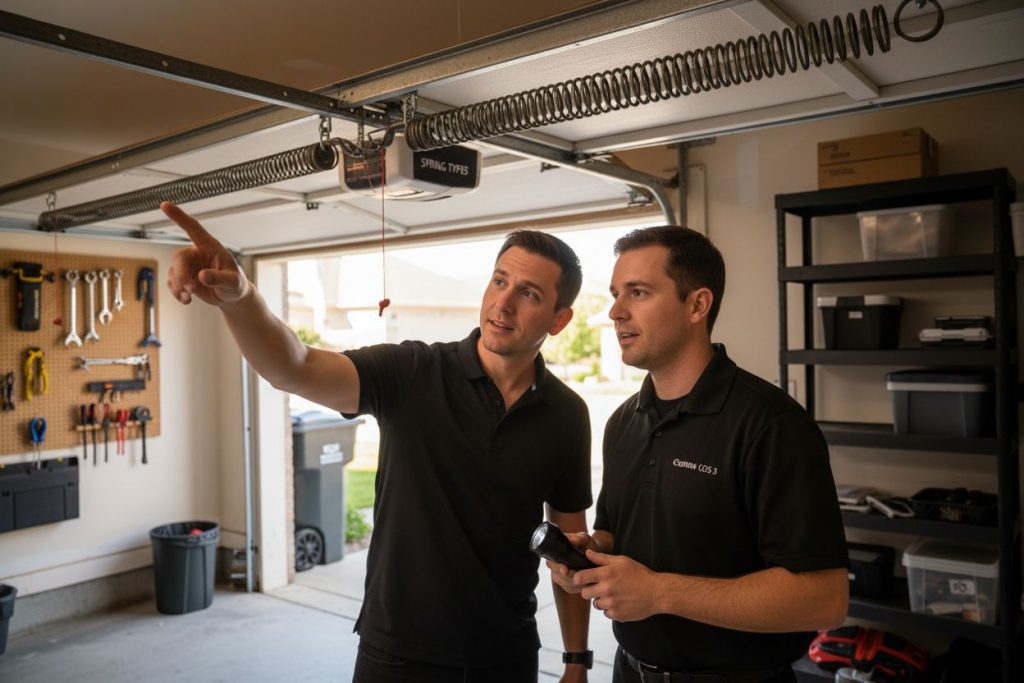
Garage doors can weigh as much as a small car and often rely on springs to make them feel light enough to lift with one hand. Some people are surprised to learn that over 30 percent of garage door accidents happen because of faulty or mismatched springs. But the hidden truth is the type of spring you choose could double the life of your garage door and save you from unnecessary repairs.
Table of Contents
- What Are Garage Door Springs And Their Types?
- The Importance Of Choosing The Right Spring Type
- How Garage Door Springs Work Together With Your Door
- Key Differences Between Extension And Torsion Springs
- Factors To Consider When Selecting Garage Door Spring Types
Quick Summary
| Takeaway | Explanation |
|---|---|
| Choose correct spring type | Selecting the right spring type enhances garage door safety and efficiency. |
| Match spring to door weight | Ensure springs are suited to your door’s specific weight to prevent operational failures. |
| Professional installation is critical | Misalignment or incorrect spring installation can lead to accidents or increased repair costs. |
| Consider door material and usage | Different materials and frequency of use require careful spring matching for longevity. |
| Regular maintenance extends lifespan | Routine checks can prevent wear, ensuring optimal functionality and reducing repair needs. |
What Are Garage Door Springs and Their Types?
Garage door springs are critical mechanical components that counterbalance the weight of your garage door, enabling smooth and controlled opening and closing movements. Without these robust metal coils, homeowners would struggle to manually lift their often heavy garage doors.
Understanding the Core Mechanics of Garage Door Springs
Garage door springs work through a fundamental principle of stored mechanical energy. When you close the garage door, these springs compress and store potential energy. When you open the door, they release this stored energy, helping to lift the heavy door panel with minimal physical effort from you or your automatic garage door opener.
Learn more about our garage door spring replacement services in Mercer Island, which can help maintain your garage door’s optimal performance.
Primary Garage Door Spring Types
Two primary garage door spring types dominate residential installations: torsion springs and extension springs. Each type serves a similar purpose but operates differently:
-
Torsion Springs: Mounted horizontally above the garage door opening, these springs twist and store energy when the door closes. They provide more consistent and balanced lifting power.
-
Extension Springs: Located on either side of the door tracks, these springs stretch and contract horizontally, expanding and compressing to counterbalance the door’s weight.
Both spring types are engineered to support specific door weights and sizes, making professional selection and installation crucial for safe and efficient garage door operation. Understanding these garage door spring types helps homeowners make informed decisions about maintenance and potential replacements.
According to International Door Association, proper spring selection and maintenance can extend your garage door’s lifespan by up to 50%, reducing long-term repair costs and ensuring smooth daily operation.
The Importance of Choosing the Right Spring Type
Selecting the appropriate garage door spring type is not just a technical decision, but a critical investment in your home’s safety, performance, and long-term functionality. The right spring ensures smooth operation, minimizes wear and tear, and prevents potential accidents that could result from improper spring selection.
Weight and Size Considerations
Every garage door has a unique weight profile determined by its materials, design, and dimensions. Choosing a spring that matches your door’s specific weight is paramount. An undersized spring will struggle to lift the door, causing strain on your garage door opener and potentially leading to premature system failure. Conversely, an oversized spring can create excessive tension, risking unexpected door movements or sudden spring breakage.
Top-rated garage door spring replacement services in Seattle can help you precisely match spring specifications to your door’s requirements.
Safety and Performance Implications
The consequences of mismatched or worn-out springs extend beyond mere inconvenience. Improperly selected springs can create significant safety risks:
-
Potential Door Dropping: Weak or misaligned springs might cause sudden door drops, risking injury to people or damage to vehicles.
-
Opener Stress: Springs that do not match door weight can cause excessive strain on the garage door opener, leading to accelerated mechanical wear.
-
Uneven Door Movement: Incorrect spring tension can result in jerky or unbalanced door operations, increasing the likelihood of track misalignment.
Research from the National Safety Council indicates that improper garage door spring installation accounts for approximately 30% of residential garage door related accidents, underscoring the critical importance of professional spring selection and installation.
Ultimately, investing time and resources in choosing the right garage door spring type is not an expense, but a preventative measure that protects your property, ensures smooth operation, and maintains the integrity of your garage door system.
How Garage Door Springs Work Together with Your Door
Garage door springs are the unsung heroes of your garage door system, working silently behind the scenes to balance weight, manage tension, and facilitate smooth door movements. Their intricate interaction with other door components creates a seamless mechanical symphony that enables effortless opening and closing.
Counterbalancing Mechanism
The primary function of garage door springs is to counterbalance the door’s total weight. When the door is closed, springs compress and store potential energy. As you initiate the opening sequence, these springs unwind and release stored energy, effectively reducing the actual lifting weight experienced by your garage door opener. This counterbalancing mechanism means your opener only needs to overcome a fraction of the door’s true weight, significantly reducing mechanical strain.
Learn more about our comprehensive garage door repairs in Seattle to understand how professional maintenance ensures optimal spring performance.
Synchronized Movement and Component Interaction
Garage door springs work in concert with several critical components to ensure smooth operation:
-
Lifting Cable System: Springs coordinate with lifting cables, which guide the door along tracks while distributing tension evenly.
-
Roller Mechanism: As springs release energy, they help rollers move smoothly along track channels, preventing jerky or uneven movements.
-
Garage Door Opener: Springs reduce the load on the opener, allowing it to operate more efficiently and extend its functional lifespan.
Research from the Overhead Door Corporation indicates that proper spring tension and alignment can reduce garage door opener motor strain by up to 40%, demonstrating the critical role springs play in overall system performance.
By understanding how springs interact with other door components, homeowners can better appreciate the complex engineering that enables their garage door to function seamlessly day after day.
Key Differences Between Extension and Torsion Springs
While both extension and torsion springs serve the critical purpose of counterbalancing garage door weight, they operate through distinctly different mechanical principles. Understanding their unique characteristics helps homeowners make informed decisions about spring selection and maintenance.
Mechanical Design and Operation
Extension springs and torsion springs differ fundamentally in their design and energy storage mechanisms. Extension springs stretch horizontally along the door tracks, expanding and contracting to provide lifting force. They function like large elastic bands, storing potential energy when compressed and releasing it during door movement. Torsion springs, in contrast, are mounted horizontally above the door opening and rotate around a central shaft, twisting to generate lifting power.
Explore our garage door spring replacement services in Mercer Island to understand which spring type best suits your specific garage door configuration.
Performance and Durability Characteristics
Each spring type presents distinct performance advantages and limitations:
-
Extension Springs
- Less expensive initial installation
- Typically used in lighter residential doors
- Higher potential for uneven lifting
- Shorter operational lifespan
-
Torsion Springs
- More consistent and balanced door movement
- Better suited for heavier doors
- Longer operational durability
- More predictable wear patterns
According to Door and Access Systems Manufacturers Association, torsion springs can withstand approximately 10,000 operating cycles compared to 5,000-7,000 cycles for standard extension springs, highlighting their superior long-term performance potential.
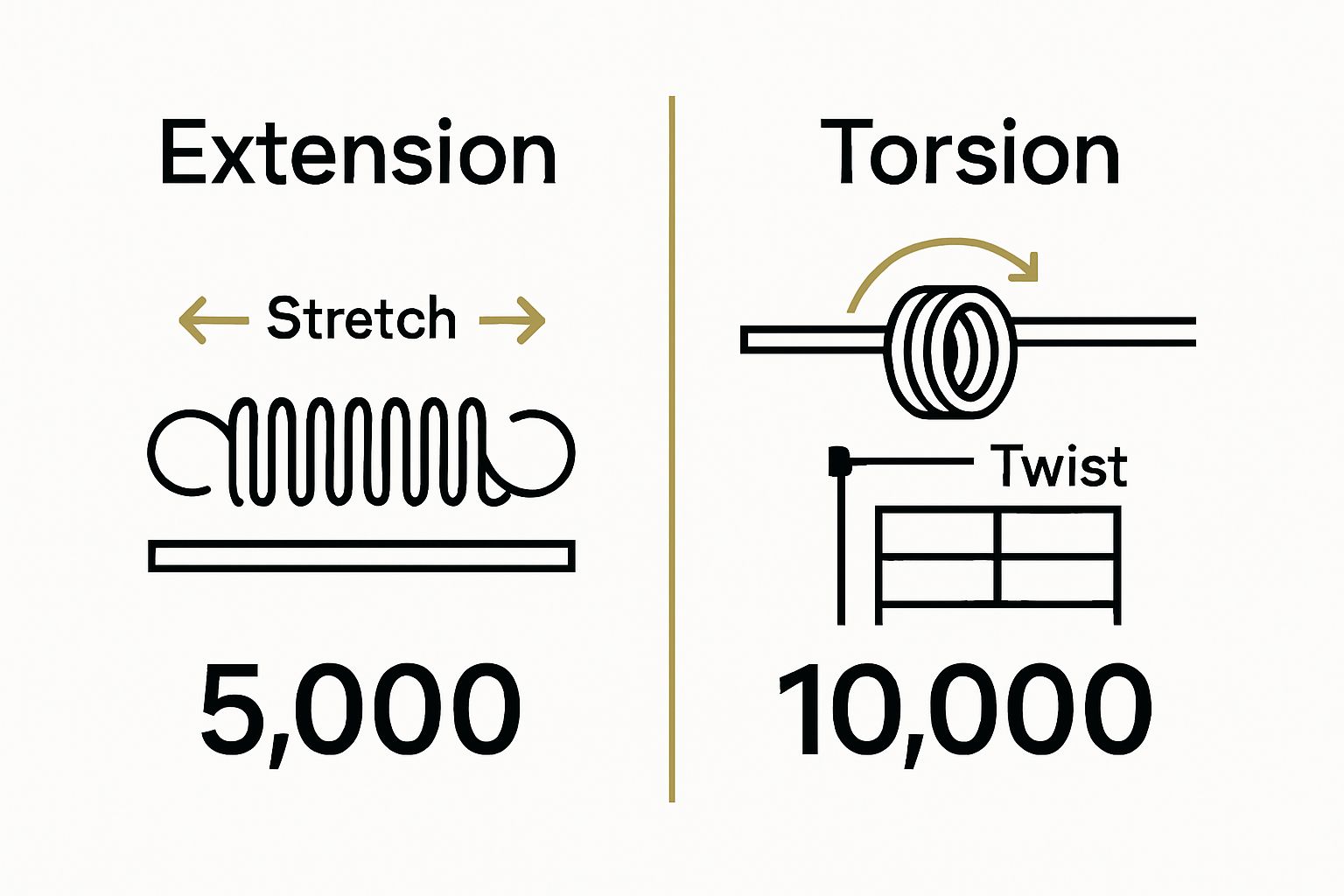
Ultimately, the choice between extension and torsion springs depends on your specific garage door’s weight, size, and frequency of use. Professional assessment remains crucial in determining the most appropriate spring system for optimal garage door functionality.
The following table compares the key differences between extension and torsion garage door springs, making it easy to understand their main characteristics and performance distinctions.
| Spring Type | Location & Design | Operational Lifespan | Typical Door Fit | Notable Advantages |
|---|---|---|---|---|
| Extension Springs | Sides of door tracks, stretches/contracts | 5,000-7,000 cycles | Lighter, residential doors | Lower initial installation cost |
| Torsion Springs | Above door opening, twists on shaft | Around 10,000 cycles | Heavier or high-use doors | More consistent, balanced lifting |
Factors to Consider When Selecting Garage Door Spring Types
Selecting the appropriate garage door spring involves more than a simple one-size-fits-all approach. Multiple critical factors interact to determine the most suitable spring type for your specific garage door system, requiring careful evaluation and professional insight.
Door Weight and Material Considerations
The total weight of your garage door is the foundational element in spring selection. Different door materials significantly impact overall weight and required spring tension. Wooden doors tend to be heavier and require more robust spring systems compared to lightweight aluminum or fiberglass doors. Professional measurement of door weight ensures precise spring matching, preventing potential mechanical failures or premature spring wear.
Discover our award-winning commercial garage door installation expertise in Seattle to understand comprehensive spring selection strategies.
Critical Selection Parameters
Several nuanced parameters influence spring type determination:
-
Door Dimensions
- Width of garage door opening
- Total door height
- Track configuration
-
Usage Frequency
- Number of daily door cycles
- Residential vs commercial application
- Expected operational intensity
Research from the Garage Door Manufacturers Association emphasizes that improper spring selection can reduce garage door system lifespan by up to 60%, underscoring the importance of meticulous component matching.
Beyond technical specifications, homeowners must also consider long-term maintenance requirements, potential replacement costs, and overall system compatibility.
This table summarizes the main factors to consider when selecting a garage door spring, organizing the critical elements mentioned in the article for an easier overview.
| Factor | Description |
|---|---|
| Door Weight | Heavier doors require stronger, more robust spring systems |
| Door Material | Wood is heavier than aluminum or fiberglass, impacting spring selection |
| Door Dimensions | Width, height, and track configuration affect spring specifications |
| Usage Frequency | More frequent use demands longer-lasting, durable springs |
| Application Type | Residential and commercial doors may require different spring capacities |
| Maintenance Requirements | Some springs require more regular maintenance for longevity |
| Professional consultation remains the most reliable approach to navigating these complex selection criteria, ensuring optimal garage door performance and safety. |
Get the Right Garage Door Springs and Enjoy Peace of Mind in Seattle
If you feel unsure about the type of garage door springs your home needs or worry about mismatched springs leading to sudden breakdowns, you’re not alone. Homeowners often face frustration and stress when springs fail unexpectedly or their garage door becomes difficult to lift. The article explained how crucial spring selection is for both safety and longevity. Let our trusted experts help you choose the right fit and ensure your door works smoothly every day.

Stop risking bigger repairs or unexpected hassles. Contact Summit Garage Doors now for professional spring assessment and installation made just for your home. Protect your family and your property with solutions tailored to your garage door’s specific needs. Get started with Summit Garage Doors today and take the first step toward a safer and more reliable garage door.
Frequently Asked Questions
What are garage door springs, and why are they important?
Garage door springs are essential components that counterbalance the weight of your garage door, enabling smooth and controlled opening and closing. They help reduce the strain on your garage door opener and facilitate safe operation.
What are the main types of garage door springs?
The two primary types of garage door springs are torsion springs and extension springs. Torsion springs are mounted horizontally above the garage door and twist to store energy, while extension springs are positioned on either side of the door tracks and stretch to provide lifting force.
How do I choose the right garage door spring for my home?
Selecting the appropriate spring type involves considering the weight and material of your garage door, its dimensions, and how often you use it. Consulting a professional can help determine the best match for your specific door and ensure optimal performance.
What happens if I use the wrong type of garage door spring?
Using the incorrect spring can lead to various issues, such as insufficient lifting power, excessive strain on the garage door opener, and safety risks like sudden door drops. It’s crucial to choose the right spring to prevent potential accidents and mechanical failures.

