
Garage doors are more than just big moving panels that shield your garage from the street. You might think about the convenience of a button or the click of a remote, but there is a lot happening behind the scenes. In fact, annual professional inspections can cut the risk of major mechanical failures by up to 70 percent, yet most homeowners have no idea what keeps their garage doors operating smoothly every day.
Table of Contents
- The Basics Of Garage Door Functionality
- Common Causes Of Garage Door Failures
- The Importance Of Regular Maintenance
- Understanding Garage Door Components And Their Roles
- Real-World Implications Of Garage Door Malfunctions
Quick Summary
| Takeaway | Explanation |
|---|---|
| Regular maintenance prevents costly failures | Routine inspections help catch issues before they escalate and save on expensive repairs. |
| Understand key components for troubleshooting | Familiarity with torsion springs and tracks aids in diagnosing operational problems effectively. |
| Safety features are essential for protection | Mechanisms like automatic reversals prevent accidents, safeguarding family members and pets. |
| Environmental factors impact garage doors | Moisture and temperature can weaken components, making regular checks crucial for longevity. |
| Invest in professional inspections annually | Professional assessments can significantly reduce the likelihood of major mechanical failures, ensuring safe operation. |
The Basics of Garage Door Functionality
Garage doors are complex mechanical systems that serve as critical entry points for homes and businesses, providing security, convenience, and protection from external elements. Understanding how these intricate systems function is essential for homeowners and property managers seeking to maintain and troubleshoot their garage door mechanisms.
Core Mechanical Components
At the heart of garage door functionality are several key mechanical components working in precise synchronization. The primary elements include:
- Torsion Springs: These powerful coiled springs store and release mechanical energy, counterbalancing the door’s weight during opening and closing
- Tracks and Rollers: Guiding the door’s vertical and horizontal movement, these components ensure smooth and controlled transition
- Opener Mechanism: An electric motor that provides the primary power source for automated lifting and lowering
According to InterNACHI, these components interact through a complex system of pulleys, cables, and counterweights that enable seamless door operation.
Movement and Weight Distribution
Garage doors rely on precise weight distribution and mechanical principles to function efficiently. The torsion springs play a crucial role in counterbalancing the door’s weight, reducing strain on the motor and ensuring smooth movement. When the door closes, springs wind tightly, storing potential energy. Upon opening, this stored energy is gradually released, assisting the motor in lifting the heavy door panel.
For homeowners looking to understand more about their garage door system, our comprehensive guide on garage door system components provides deeper insights into these fascinating mechanical interactions.
Safety and Operational Mechanics
Modern garage doors incorporate multiple safety features designed to prevent accidents and ensure reliable performance. Automatic reversal mechanisms detect obstructions, immediately stopping and reversing the door’s movement if an object interrupts its path. This critical safety function protects people, pets, and property from potential injury or damage during door operation.
By understanding these fundamental principles of garage door functionality, homeowners can better appreciate the sophisticated engineering behind these everyday mechanical systems and make informed decisions about maintenance and repair.
Common Causes of Garage Door Failures
Garage door failures can result from various mechanical, electrical, and environmental factors that compromise the system’s smooth operation. Understanding these potential issues helps homeowners proactively identify and address problems before they escalate into costly repairs or complete system breakdowns.
Mechanical Wear and Component Degradation
Over time, mechanical components experience significant stress and deterioration. Torsion springs, which bear the majority of the door’s weight, are particularly vulnerable to failure. These critical components have a finite lifecycle and can break due to:
- Frequent usage and repeated stress cycles
- Metal fatigue from constant tension and compression
- Corrosion and material weakening
- Improper initial installation or maintenance
According to the U.S. Consumer Product Safety Commission, regular inspection and professional maintenance can significantly reduce the risk of mechanical failures.
Electrical and Operational Malfunctions
Electrical systems and automated mechanisms represent another significant source of garage door failures. Opener motors, control boards, and electrical connections can experience issues stemming from power fluctuations, internal component degradation, or external environmental factors. Homeowners should be attentive to warning signs such as inconsistent door movement, unusual sounds, or complete operational failure.
Our DIY garage door troubleshooting guide provides comprehensive insights into identifying and addressing these electrical and mechanical challenges.
Environmental and External Damage Factors
External environmental conditions play a substantial role in garage door system deterioration. Extreme temperature variations, moisture exposure, and physical impacts can compromise door functionality. Aluminum and steel components are particularly susceptible to rust, warping, and structural weakening when exposed to persistent moisture or temperature fluctuations.
Additional environmental challenges include:
- Accumulated debris in track systems
- Misalignment caused by ground settling
- Weather seal degradation
- Physical damage from impact or external forces
By recognizing these common failure mechanisms, homeowners can implement proactive maintenance strategies, potentially extending their garage door system’s operational lifespan and preventing unexpected breakdowns.
To help clarify the different types of garage door failures described in this section, the table below compares their main causes, affected components, and potential visible symptoms.
| Type of Failure | Main Causes | Affected Components | Common Symptoms |
|---|---|---|---|
| Mechanical Wear/Degradation | Repeated stress, metal fatigue, corrosion | Torsion springs, cables | Broken springs, door uneven movement |
| Electrical/Operational Malfunction | Power fluctuations, worn electronics | Opener motor, control board | Inconsistent operation, odd noises |
| Environmental/External Damage | Moisture, temperature, physical impact | Tracks, seals, panels | Rust, warping, misalignment |
The Importance of Regular Maintenance
Regular maintenance is fundamental to preserving the functionality, safety, and longevity of garage door systems. Proactive care not only prevents unexpected failures but also ensures optimal performance, minimizes repair costs, and protects the significant investment homeowners have made in their property’s access infrastructure.
Preventative Inspection and Component Assessment
Routine maintenance involves comprehensive system evaluation that goes beyond superficial checks. Professional technicians systematically examine critical components to identify potential issues before they develop into significant problems. These detailed assessments typically focus on:
- Structural integrity of springs and cables
- Alignment and lubrication of moving parts
- Electrical system functionality
- Balance and tension of door mechanisms
- Wear patterns and potential material degradation
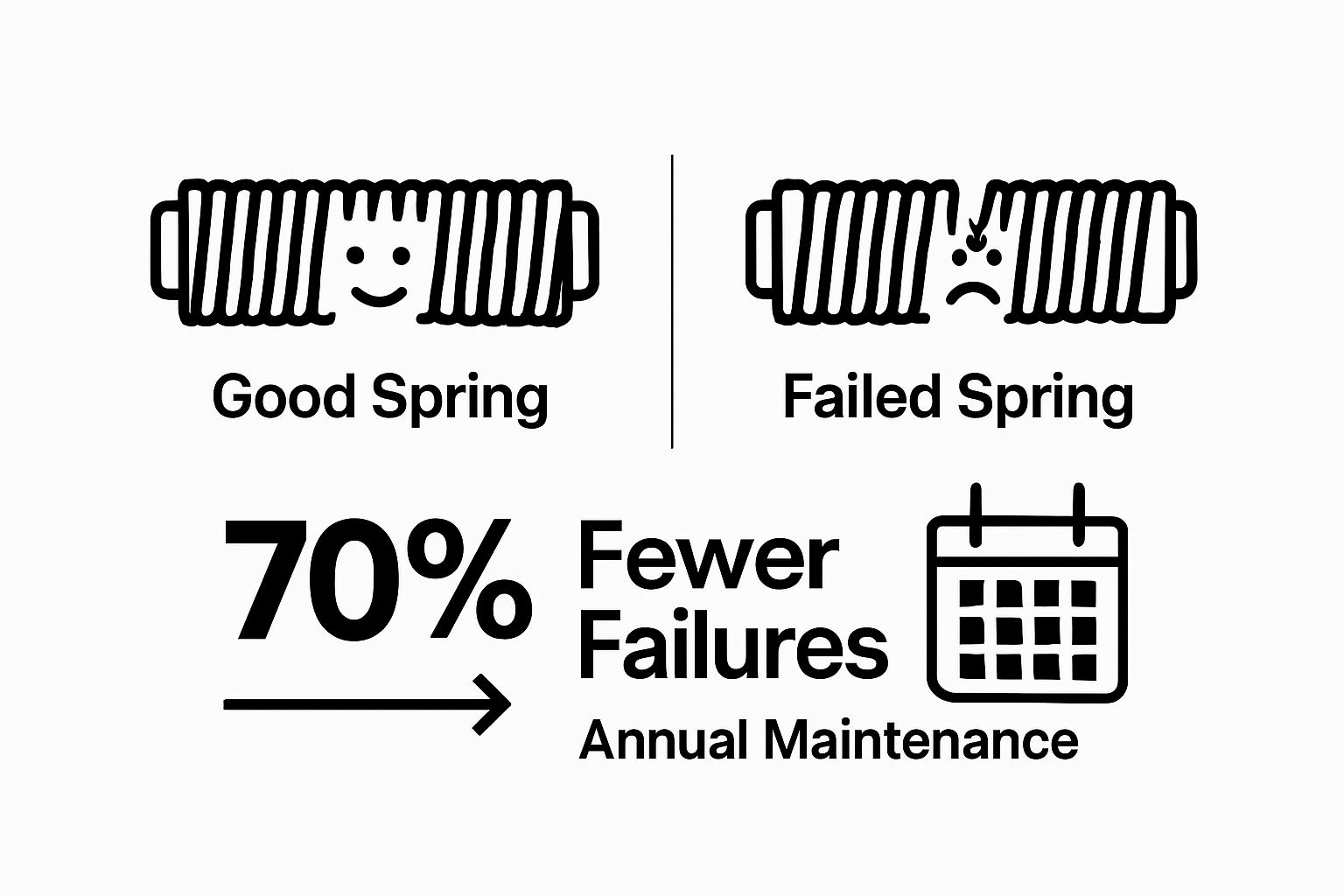
According to research from InterNACHI, annual professional inspections can reduce the likelihood of major mechanical failures by up to 70 percent.
Safety and Performance Optimization
Maintenance transcends mere mechanical preservation. Safety mechanisms require consistent verification to ensure they function correctly. Automatic reversal systems, photo-eye sensors, and emergency release features must be periodically tested to guarantee they respond appropriately during potential emergency scenarios.
Our timely maintenance guide for Seattle homeowners provides comprehensive insights into maintaining these critical safety components.
Economic and Long Term Benefits
The economic rationale for regular maintenance is compelling. Homeowners who invest in periodic professional inspections and minor repairs can potentially avoid costly full system replacements. Typical maintenance interventions are significantly less expensive than emergency repairs or complete system overhauls.
Key economic advantages include:
- Extending equipment lifecycle by 50 percent or more
- Reducing unexpected repair expenses
- Maintaining manufacturer warranty conditions
- Preserving property value and aesthetic appeal
By understanding maintenance as an investment rather than an expense, homeowners can ensure their garage door systems remain reliable, safe, and efficient for years to come.
Understanding Garage Door Components and Their Roles
Garage door systems represent complex mechanical assemblies with multiple interconnected components working in precise synchronization. Each element plays a critical role in ensuring smooth, safe, and reliable door operation, transforming what appears to be a simple up-and-down movement into an intricate engineering marvel.
Primary Structural Components
Door Panels form the primary visible structure, typically constructed from steel, aluminum, wood, or composite materials. These panels are engineered to withstand significant weight, environmental stress, and repeated mechanical movement. Their design incorporates:
- Interconnected sections with flexible hinges
- Insulation materials for temperature regulation
- Protective surface treatments against corrosion
- Structural reinforcement for stability
According to research from InterNACHI, modern door panels are designed with advanced materials that enhance durability and performance.
Mechanical Movement Mechanisms
The core of garage door functionality lies in its sophisticated movement mechanisms. Torsion and extension springs serve as the primary counterbalance systems, storing and releasing mechanical energy to facilitate smooth door movement. These springs work in conjunction with tracks, rollers, and cables to translate vertical and horizontal motion.
Our comprehensive guide on garage door system components offers deeper insights into these intricate mechanical interactions.
Control and Safety Systems
Modern garage doors integrate advanced control and safety mechanisms that transcend simple mechanical operation. Electrical components such as motor units, control boards, and sensor systems play crucial roles in ensuring safe and reliable functionality:
- Automatic reversal mechanisms
- Photo-eye safety sensors
- Manual and remote control interfaces
- Emergency release systems
These sophisticated systems work together to prevent accidents, detect obstructions, and provide seamless user interaction. By understanding each component’s specific role, homeowners can better appreciate the engineering complexity behind their garage door’s seemingly simple operation.
To provide a clear overview of garage door system elements, the following table summarizes the key components discussed and their specific roles within the garage door assembly.
| Component | Description | Function |
|---|---|---|
| Torsion Springs | Coiled metal springs mounted above the door | Store/release energy, counterbalance door weight |
| Tracks and Rollers | Metal rails and wheels along which the door moves | Guide smooth vertical/horizontal door motion |
| Door Panels | Main structural elements, often insulated | Create physical barrier; provide insulation |
| Opener Mechanism | Electric motor drive unit | Automate lifting and lowering of the door |
| Safety Sensors | Photo-eye sensors, auto-reversal systems | Detect obstructions, prevent accidents |
| Cables | Steel cables connected to springs | Help lift/lower door safely and evenly |
| Control Board/Remotes | Electronic control interfaces | Allow user control of door operation |
Real-World Implications of Garage Door Malfunctions
Garage door failures extend far beyond mechanical inconvenience, presenting significant safety, financial, and security risks for homeowners. Understanding these potential consequences underscores the critical importance of proactive maintenance and timely repairs.
Personal Safety Hazards
Mechanical failures can transform garage doors from protective barriers into dangerous mechanisms. Unexpected door movements, compromised safety sensors, or structural weaknesses potentially create life-threatening scenarios. Children and pets are particularly vulnerable to these risks, with sudden door closures or uncontrolled movements posing severe injury threats.
According to the U.S. Consumer Product Safety Commission, improper garage door mechanisms have historically resulted in multiple child fatalities, prompting stringent safety regulations to mitigate such risks.
Property Security and Financial Implications
A malfunctioning garage door represents a significant security vulnerability. Compromised locking mechanisms, misaligned tracks, or electrical system failures can create entry points for potential intruders. Structural vulnerabilities may also lead to:
- Increased home insurance premiums
- Potential property damage from environmental exposure
- Reduced property value
- Expensive emergency repair costs
Our DIY garage door troubleshooting guide offers insights into early detection and prevention strategies.
Broader Environmental and Structural Risks
Garage door malfunctions can trigger cascading structural problems beyond immediate safety concerns. Improper sealing, compromised insulation, and uncontrolled environmental exposure can lead to:
- Accelerated structural deterioration
- Energy efficiency reduction
- Moisture intrusion and potential mold growth
- Increased utility costs
- Potential foundation and wall damage
By recognizing these multifaceted implications, homeowners can transform garage door maintenance from a reactive chore into a proactive investment in home safety, security, and long-term structural integrity.
Keep Garage Door Failure Out of Your Future
Are you worried about garage door breakdowns putting your family’s safety or your property’s security at risk? After learning about the lifetime limits of torsion springs, the dangers of worn components, and the real security concerns from malfunctioning systems, you know that routine prevention makes all the difference. Just as highlighted in this article, ignoring regular maintenance or delaying repairs can turn small issues into expensive problems and unsafe situations.

Put your garage door in expert hands now. The specialists at Summit Garage Doors know every detail about door components, operational safety, and optimal installation—especially in the unpredictable Seattle climate. Whether you need a fast repair, new installation, or a professional safety assessment, our certified technicians are here for you. Do not wait for your garage door to fail at the worst possible time. Contact us today and get the protection, peace of mind, and trusted guidance you deserve.
Frequently Asked Questions
What are the common causes of garage door failures?
Garage door failures often arise from mechanical wear and component degradation, electrical malfunctions, and environmental damage. Key factors include broken torsion springs, worn-out opener motors, misaligned tracks, and external factors like temperature changes and moisture exposure.
How can I maintain my garage door to prevent failures?
Regular maintenance is essential for preventing garage door failures. This includes conducting routine inspections of springs, cables, and tracks, lubricating moving parts, testing safety features, and ensuring proper alignment of components. Professional maintenance every year is highly recommended.
What safety features do modern garage doors have?
Modern garage doors are equipped with several safety features, including automatic reversal mechanisms that stop the door from closing if an object is detected in its path, photo-eye sensors that prevent accidents, and emergency release systems that allow manual operation during power outages.
How does the weight distribution affect garage door operation?
Weight distribution is crucial for efficient garage door operation. Torsion springs counterbalance the door’s weight, reducing strain on the motor and ensuring smooth movement. Properly calibrated springs help the door open and close effortlessly, enhancing the overall functionality and longevity of the system.

