
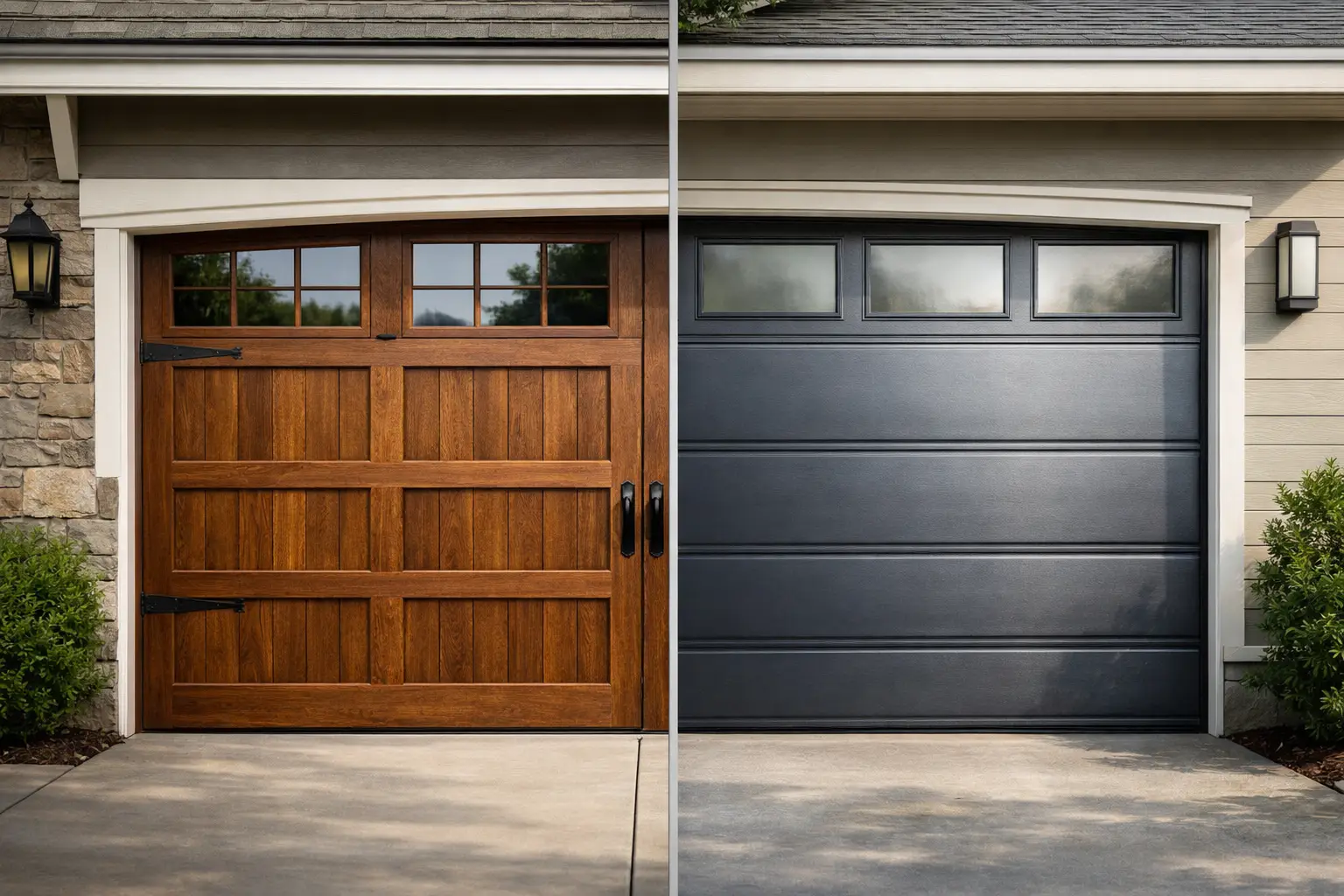
A garage door can change the whole look of your home, but it also has to handle daily use, wet weather, temperature swings, and the occasional bump from bikes, bins, or busy family life. When homeowners compare wood vs steel garage doors, they are usually balancing two big priorities at once: appearance and long-term practicality. The right choice depends on what you want the door to do every day, not just how it looks on installation day.
Wood vs steel garage doors at a glance
Wood doors are usually chosen for character. They bring warmth, texture, and a custom feel that is hard to copy perfectly. Steel doors are usually chosen for value, strength, and easier upkeep. Both can be excellent options, but they perform differently over time.
If you want a traditional or high-end architectural look, wood often stands out. If you want a dependable door with strong insulation options and less maintenance, steel is often the better fit. That sounds simple, but the details matter.
Curb appeal and design flexibility
Wood has a natural advantage if appearance is your top priority. Real wood grain gives the door depth and variation that many homeowners love, especially on craftsman, carriage-house, or custom homes. It can be painted or stained, and it works well when you want the garage door to feel like part of the home’s original design rather than an obvious replacement.
That said, steel has come a long way. Many modern steel doors are available with wood-look finishes, panel styles, window layouts, and decorative hardware that create a more upscale appearance than people expect. If you want a clean, polished look without the higher upkeep of natural material, steel offers more design range than it used to.
For many homes, the question is not whether steel can look good. It is whether you want authentic natural material or a lower-maintenance version of that style.
Durability in daily use
A garage door is one of the hardest-working parts of a property. It opens and closes constantly, protects stored items, and adds another layer of security to the building. In everyday performance, steel usually wins on consistency.
Steel doors are strong, stable, and less vulnerable to moisture-related movement. They do not crack, swell, or rot the way wood can if maintenance is missed. For homeowners in damp climates, that matters. A properly installed steel door can handle years of regular use with relatively little fuss.
Wood is durable in a different way. A well-built wood door can last a long time, but it needs care. Moisture is the real issue. Over time, wood can absorb water, expand, warp, or show finish failure if it is not sealed and maintained properly. In places where rain and humidity are a regular part of life, wood needs more attention to stay in good condition.
This does not mean wood is fragile. It means wood rewards owners who are willing to maintain it.
Maintenance and long-term care
This is often the deciding factor in the wood vs steel garage doors conversation. If you want a door that asks less of you year after year, steel is usually the practical choice.
Steel doors typically need basic cleaning, occasional inspection, and touch-up work if the finish gets scratched. The main concern is rust, especially if the protective coating is damaged, but that risk is manageable with prompt care. For most homeowners, steel is the easier material to live with.
Wood needs a more active maintenance routine. Depending on exposure, finish type, and local weather, it may need repainting or restaining on a regular cycle. Small finish problems can become larger issues if moisture gets into the material. If the home gets strong sun on one side and repeated rain on the other, wear may not happen evenly.
For some owners, that maintenance is worth it because the result looks exceptional. For others, it becomes a recurring project they did not fully expect.
Insulation and energy performance
Insulation matters more than many people think, especially if the garage is attached to the house, used as a workspace, or sits below living areas. Here, steel often has the advantage because insulated steel doors are widely available and built for thermal performance.
Many steel doors include insulated cores that improve temperature control, reduce outside noise, and add rigidity to the panels. If comfort and efficiency are major concerns, this gives steel a strong edge.
Wood has some natural insulating value because it is a dense material, but not all wood doors are built with the same thermal performance as modern insulated steel models. A thick wood door may still perform reasonably well, but if you are specifically aiming for better energy efficiency, it is important to compare actual construction details instead of assuming wood will be warmer just because it is natural.
For homes in cooler, wet conditions, this is worth reviewing closely before making a decision.
Cost now versus cost later
Upfront price is another major difference. In many cases, steel is the more budget-friendly option at the time of purchase and installation. There is a wide range of prices depending on insulation level, style, thickness, and finish, but steel usually offers more flexibility for homeowners who want good performance without stepping into premium custom pricing.
Wood doors generally cost more. That higher price reflects material, craftsmanship, and the more custom nature of many wood designs. Beyond the purchase price, maintenance costs should also be part of the decision. Repainting, refinishing, and repairs related to weather exposure can add up over the years.
Still, cost is not only about the invoice. If a wood door significantly improves the look of the property and matches the character of the home, some homeowners see that added value every day. On the other hand, if you want strong function, clean appearance, and lower ongoing expense, steel often gives better overall value.
Noise, dents, and wear
Both materials have their own weak points. Steel can dent. A basketball, a minor impact, or heavy contact with equipment may leave visible marks, especially on thinner doors. Some dents can be repaired, but not all disappear cleanly.
Wood is less likely to show a simple dent in the same way, but it can chip, crack, or suffer surface wear if the finish starts to fail. It may also become heavier depending on construction, which puts more demand on springs, openers, and hardware if the system is not properly matched.
Noise is not just about material. It also depends on insulation, rollers, opener quality, and overall installation. That said, well-built insulated steel doors often perform very well for quieter operation, especially when paired with updated hardware.
Which material fits your home?
If your priority is architectural beauty, custom detail, and a premium natural finish, wood may be the right call. It makes the most sense when you are prepared for the upkeep and want the garage door to be a design feature, not just a functional panel.
If your priority is durability, efficiency, lower maintenance, and strong value, steel is usually the safer choice. It fits a wide range of homes, performs well in demanding conditions, and offers many style options without the same maintenance burden.
There is also a middle ground. Some homeowners start out assuming they need real wood, then find that a high-quality steel carriage-house or wood-grain finish gives them the look they want with fewer long-term demands. Others see the samples in person and decide only real wood gives the character their home needs. Both decisions can be right.
A smart way to decide before you buy
The best choice often comes down to three questions. How much maintenance are you realistically willing to handle? How important is authentic natural appearance compared to a similar look in steel? And how much do insulation, weather resistance, and long-term value matter for the way you use the garage?
If you are replacing an older door, it also helps to think beyond the panel itself. Weight, opener capacity, spring setup, and installation quality all affect how well the new door performs. A good recommendation should consider the full system, not just the material. That is especially true if your current door has had ongoing issues with balance, hardware wear, or unreliable operation.
Homeowners in rainy climates tend to be happiest when they choose based on their real maintenance tolerance rather than ideal intentions. A beautiful door only stays beautiful if it gets the care it needs. A practical door only feels like a good value if it still suits the home.
If you are weighing options for a replacement, the most useful next step is not guessing from photos. It is comparing actual door samples, insulation levels, and construction quality with a technician who will give you a straight answer. Summit Garage Doors often sees customers narrow the choice quickly once they understand how the materials will perform on their specific home. The right garage door should look right, work smoothly, and still make sense years from now.

