
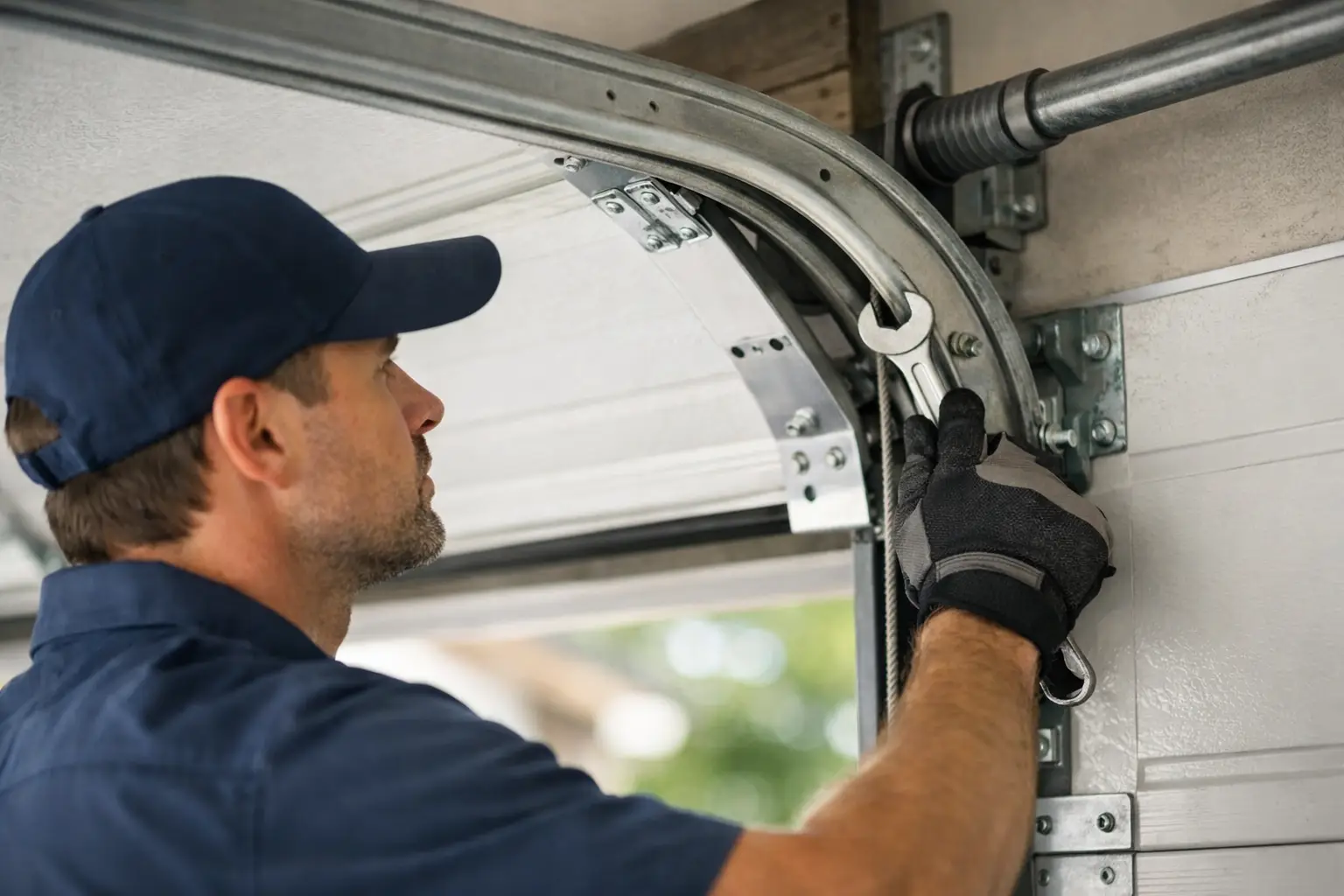
A garage door that suddenly jerks, scrapes, or stalls halfway is not just annoying – it is usually a warning. In many cases, garage door track alignment repair is the service that gets things moving safely again before a small issue turns into bent hardware, damaged rollers, or a door that will not open at all.
Tracks do more than guide the door up and down. They keep the rollers moving in a controlled path, help distribute weight evenly, and support smooth operation across the full cycle. When those tracks shift out of position, even slightly, the entire system starts working harder than it should.
What garage door track alignment repair actually fixes
Garage door track alignment repair addresses tracks that have moved, bent, loosened, or become uneven. That can happen after an impact, gradual hardware wear, vibration over time, or strain caused by other failing parts. The goal is not just to make the door quieter. It is to restore safe movement, prevent extra wear, and reduce the chance of a sudden breakdown.
Some alignment issues are easy to spot. The door may look crooked when opening, one side may lag behind the other, or the rollers may appear to rub against the track edge. In other cases, the signs are more subtle. You may hear grinding, notice gaps between the rollers and track, or find that the opener seems to strain more than usual.
Proper repair can involve resetting the track position, tightening brackets, checking spacing, replacing bent sections, and confirming the rest of the system has not been affected. It depends on what caused the misalignment in the first place.
Common signs your tracks are out of alignment
A noisy garage door does not always mean the tracks are the problem, but certain symptoms strongly point in that direction. If the door shakes as it moves or sounds rough in one section of travel, the track may no longer be level or plumb. If the door sticks near the floor or hesitates on the way up, one side could be binding.
Another common sign is uneven gaps. If the door does not sit evenly in the opening when closed, or if one roller looks tighter against the rail than the others, alignment should be checked. Homeowners sometimes also notice fresh marks on the track, loose mounting brackets, or rollers that seem to pop or click while moving.
For commercial and heavier residential doors, these symptoms can progress quickly. A door under more weight will stress the track system faster, which is why early service matters.
When the issue is not just the track
Track problems are often connected to other parts. A worn roller can ride poorly and make a track seem out of place. A broken spring can shift door weight unexpectedly. A cable issue can pull one side unevenly. An opener that keeps forcing a resistant door can also make alignment worse.
That is why a good repair visit should not stop at the visible problem. The track needs to be checked as part of the full operating system, not treated like an isolated piece of metal.
What causes garage door tracks to go out of alignment
The most obvious cause is impact. A vehicle bumping the door, a bike hitting the lower track, or stored items pressing against the rail can move hardware just enough to affect operation. Not every impact leaves dramatic damage. Sometimes a small shift is all it takes.
Age and vibration are another major factor. Garage doors move hundreds or even thousands of times a year. Over time, bolts can loosen, brackets can shift, and metal can fatigue. In a climate like the Pacific Northwest, moisture and temperature changes can also contribute to corrosion and wear, especially if maintenance has been delayed.
Poor previous repairs are also common. If track spacing was set incorrectly, if hardware was reused when it should have been replaced, or if the door was adjusted without balancing the rest of the system, alignment issues can return quickly.
Bent track versus loose track
These two problems are often confused, but they are not the same. A loose track may simply need to be repositioned and secured properly. A bent track, depending on severity, may need partial replacement. Trying to force a bent section back into shape is not always a lasting solution.
This is where experience matters. A technician needs to determine whether the metal can still guide the rollers safely or whether the damage will continue to cause binding and premature wear.
Why DIY garage door track alignment repair can go wrong
There are garage door tasks that can be handled safely by a careful homeowner, like basic visual inspection or clearing debris from around the track. Alignment repair is different. The track position affects how the entire door moves, and even a small adjustment done incorrectly can create a larger safety issue.
Tracks must be set to the correct spacing and angle while the door system remains stable. If the door is under tension or already off balance, loosening brackets without proper support can be risky. In some cases, what looks like a track problem is actually tied to spring tension, cable movement, or roller failure.
The biggest DIY mistake is continuing to run the opener while the door is binding. That can strip gears, bend more hardware, and leave you with a repair that is far more expensive than the original service call.
How professional garage door track alignment repair is done
A proper service starts with diagnosis. The technician will inspect the vertical and horizontal tracks, mounting brackets, rollers, hinges, cables, and opener response. The reason is simple: alignment problems rarely happen in isolation.
If the tracks are loose, they are reset to the correct position and secured. If sections are bent, damaged parts may need replacement. Roller movement is checked to make sure the door travels smoothly without pinching or rubbing. The technician should also confirm the door is balanced and that the opener is not fighting against a mechanical issue.
This kind of repair is partly technical and partly preventative. You are not only correcting current misalignment. You are also reducing the chance of recurring wear, roller damage, panel stress, and opener strain.
How long repair usually takes
For a straightforward alignment issue, service can often be completed in one visit. More severe damage takes longer, especially if the track is badly bent, the rollers are worn, or related parts need replacement. That is another reason to call early. Minor adjustments are usually faster and more affordable than rebuilding a system after a door has come off track.
When to stop using the door and call right away
If the door has jumped the track, looks uneven, or hangs lower on one side, stop using it. The same applies if you hear a loud bang followed by poor movement, if the rollers are no longer sitting properly in the track, or if the opener hums but the door does not move cleanly.
Forcing operation in these situations can make the door fall out of alignment completely or damage surrounding parts. For homes, that can leave your property unsecured. For businesses, it can interrupt access, deliveries, and daily operations.
Fast service matters most when the door is unsafe to use, not just inconvenient. That is where working with a local company that handles urgent repairs can save time and prevent bigger damage.
Preventing future track problems
Not every alignment issue is preventable, but routine maintenance makes a real difference. Tightening hardware, checking roller condition, watching for early signs of wear, and keeping tracks clear can help catch problems before they affect operation.
It also helps to treat changes in sound seriously. Garage doors usually give warning signs before full failure. A new scraping sound, extra vibration, or a door that starts moving less smoothly is worth checking early.
If your system is older, heavier, or used multiple times a day, periodic professional inspection is a smart step. Summit Garage Doors sees this often with both residential and commercial doors where daily use slowly masks developing wear until the problem becomes urgent.
Choosing the right repair approach
The right fix depends on the condition of the track, the age of the door, and whether other components are contributing to the problem. Sometimes a simple realignment is enough. Other times, replacing a damaged section and addressing worn rollers or brackets is the better long-term move.
The most cost-effective option is not always the cheapest immediate patch. A quick adjustment on damaged hardware can buy a little time, but if the track keeps shifting or the rollers are already wearing unevenly, the issue usually comes back.
A reliable repair should leave the door moving smoothly, closing evenly, and operating without unnecessary strain. If that is not happening, the problem has not really been solved.
When your garage door starts scraping, sticking, or moving unevenly, trust what it is telling you. Getting the track checked early can protect the rest of the system, restore safe operation, and save you from a more disruptive repair later.

