
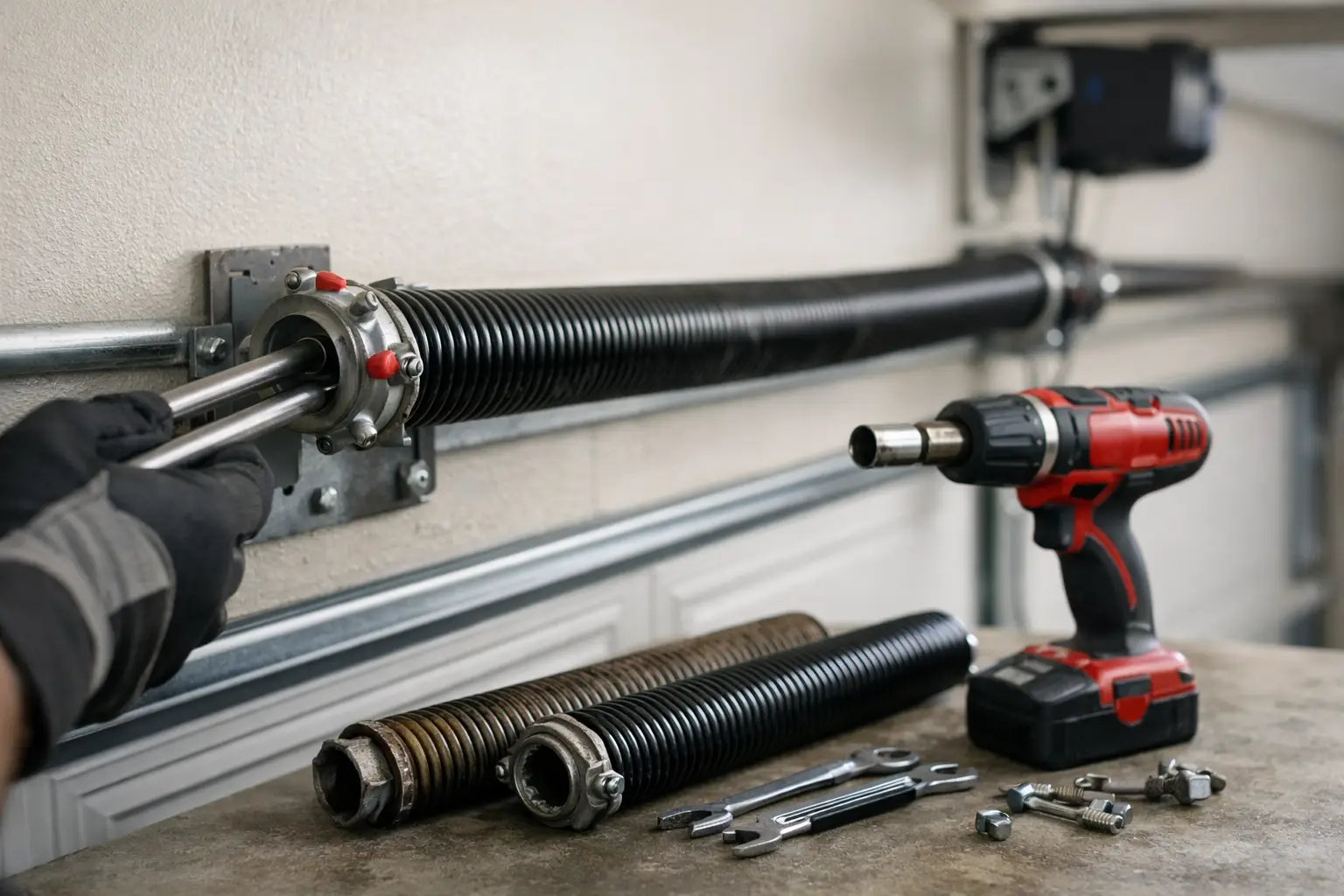
A garage door that suddenly feels too heavy, slams shut, or refuses to open usually points to one part – the spring system. This garage spring replacement guide is here to help you understand what is happening, what risks are involved, and when it makes sense to stop troubleshooting and call a trained technician.
Garage door springs do the hard work every time your door opens and closes. They carry the weight of the door so the opener does not have to do it alone. When a spring wears out or breaks, the door can become unsafe fast. For homeowners, that is less of a minor repair and more of a safety issue that needs the right response.
What garage door springs actually do
Most residential garage doors use either torsion springs or extension springs. Torsion springs are mounted above the door and use torque to lift and lower it in a controlled way. Extension springs are usually installed along the horizontal tracks and stretch as the door moves.
Torsion systems are more common on newer doors because they tend to operate more smoothly and offer better control. Extension systems still exist on many older setups, but they generally have more moving parts and can show wear in different ways. Either type can fail with age, rust, improper sizing, or simple cycle fatigue.
A spring is rated by cycles, which means one full opening and closing of the door. Many standard springs are built for about 10,000 cycles. If your household uses the garage as the main entrance, those cycles add up much faster than most people expect.
Signs you may need spring replacement
A broken spring is not always subtle. Sometimes homeowners hear a loud bang from the garage that sounds like something hit the wall. Other times the signs show up gradually.
The most common clues include a door that will not open more than a few inches, a door that feels unusually heavy when lifted manually, jerky movement, gaps in the spring, or an opener that strains but cannot lift the door. In some cases, the door may open unevenly or close too quickly.
If you have a torsion spring system, a visible gap in the coil is one of the clearest signs the spring has snapped. With extension springs, you may notice one side hanging differently or cables looking loose. Either way, continuing to run the opener can make the problem worse.
A garage spring replacement guide to the safety risks
This is the part many online tutorials gloss over. Springs are under extreme tension. Replacing them without the right tools and training can lead to serious injury, damaged property, or a door that fails again because it was installed incorrectly.
Torsion springs are especially dangerous for do-it-yourself work. They must be wound to a precise tension using proper winding bars, and even a small mistake can cause the bar or spring to release force suddenly. Extension springs have their own hazards, especially when safety cables are missing or worn.
There is also the issue of door weight. A double garage door can weigh hundreds of pounds. When the spring is compromised, that weight is no longer balanced. Trying to force the door open, brace it improperly, or disconnect parts without securing the system can put anyone nearby at risk.
For most homeowners, the safest version of a garage spring replacement guide is not a step-by-step repair manual. It is a decision-making guide that helps you know what is happening and when professional service is the right call.
Can you open the garage door with a broken spring?
Sometimes, but it depends on the door type, the number of springs, and whether the door is currently closed or partially open. If your system has two torsion springs and only one has broken, the opener may still move the door slightly. That does not mean it should.
Operating a door with a broken spring can burn out the opener, bend hardware, throw the door off balance, or cause the door to drop unexpectedly. If you must get a vehicle out in a true emergency, it should be done carefully and ideally with enough help to support the full weight of the door. Even then, it is not a routine fix.
In most cases, the better choice is to leave the door in place, unplug the opener, keep people clear, and arrange a repair as soon as possible.
Why spring matching matters
Not all garage door springs are interchangeable. The correct spring depends on the height and weight of the door, the drum size, the shaft setup, and the lift requirements. Using the wrong spring can cause poor balance, early wear, noisy operation, and added strain on the opener.
This is one reason quick online purchases can create more problems than they solve. A spring that is close enough in size is not always safe enough in practice. Proper matching also includes checking cables, bearings, brackets, and the overall condition of the lifting system.
A good technician does not just swap the broken part and leave. They confirm the door is balanced, the hardware is secure, and the opener is not compensating for a mechanical issue.
Should you replace one spring or both?
If your garage door uses two springs and one breaks, replacing both is often the smarter long-term decision. Springs on the same door usually wear at a similar rate. If one has failed, the second is often not far behind.
Replacing both at the same time helps restore even lifting force and can save you from another service call a few weeks or months later. The trade-off is a higher cost upfront, but for many homeowners it is the more practical and dependable fix.
There are exceptions. If one spring was replaced recently and the other is still in good shape, a technician may recommend replacing only the failed one. This is where honest inspection matters more than a one-size-fits-all answer.
What affects the cost of spring replacement?
Cost depends on the spring type, door size, weight, number of springs, parts quality, and whether other components need attention. A heavier insulated door or custom wood-look door may require a different spring setup than a standard single door.
Service timing can also matter. Emergency repair outside regular hours may cost more, but that added cost can be worth it if the garage is your only secure entry point or the door is stuck in an unsafe position. For business owners, downtime and security concerns often make fast service the more affordable option in the bigger picture.
The lowest quote is not always the best value. A proper repair should include the right spring size, safe installation, balance testing, and a check of related hardware. That is what helps the repair last.
How to make your new springs last longer
You cannot stop springs from wearing out forever, but you can help them last as long as possible. Regular maintenance makes a real difference.
Keep the door system inspected for rust, frayed cables, loose hardware, and poor balance. If the door becomes noisy or uneven, deal with it early rather than waiting for a full failure. Lubrication also helps, but only with garage-door-safe products and only on the right moving parts.
If your household uses the garage constantly, ask about high-cycle springs. They cost more than standard springs, but they are often worth it for families who use the garage as their main entrance or for properties with heavier daily traffic.
When to call for professional help
If the spring is visibly broken, the door is stuck, the opener is straining, or the door has gone crooked, this is the point to call. The same applies if you are not sure whether the issue is the spring, cable, track, or opener. These systems work together, and a symptom in one area can be caused by failure in another.
For property owners in Seattle and nearby communities, speed matters because a disabled garage door affects security, access, and daily routine right away. A responsive local company can diagnose the issue, replace the right parts, and get the door operating safely without guesswork.
Summit Garage Doors approaches spring replacement the way it should be handled – with clear recommendations, proper part matching, and a focus on safe, reliable operation rather than quick patchwork.
The real value of a good garage spring replacement guide
The best garage spring replacement guide does not push homeowners into risky repairs. It helps you spot the warning signs, understand the safety concerns, and make a smart call before a bad situation gets worse.
If your garage door has become heavy, loud, uneven, or completely stuck, trust what the door is telling you. Springs rarely fail at a convenient time, but dealing with the problem early can save your opener, protect your property, and get your day back on track with less stress.

