
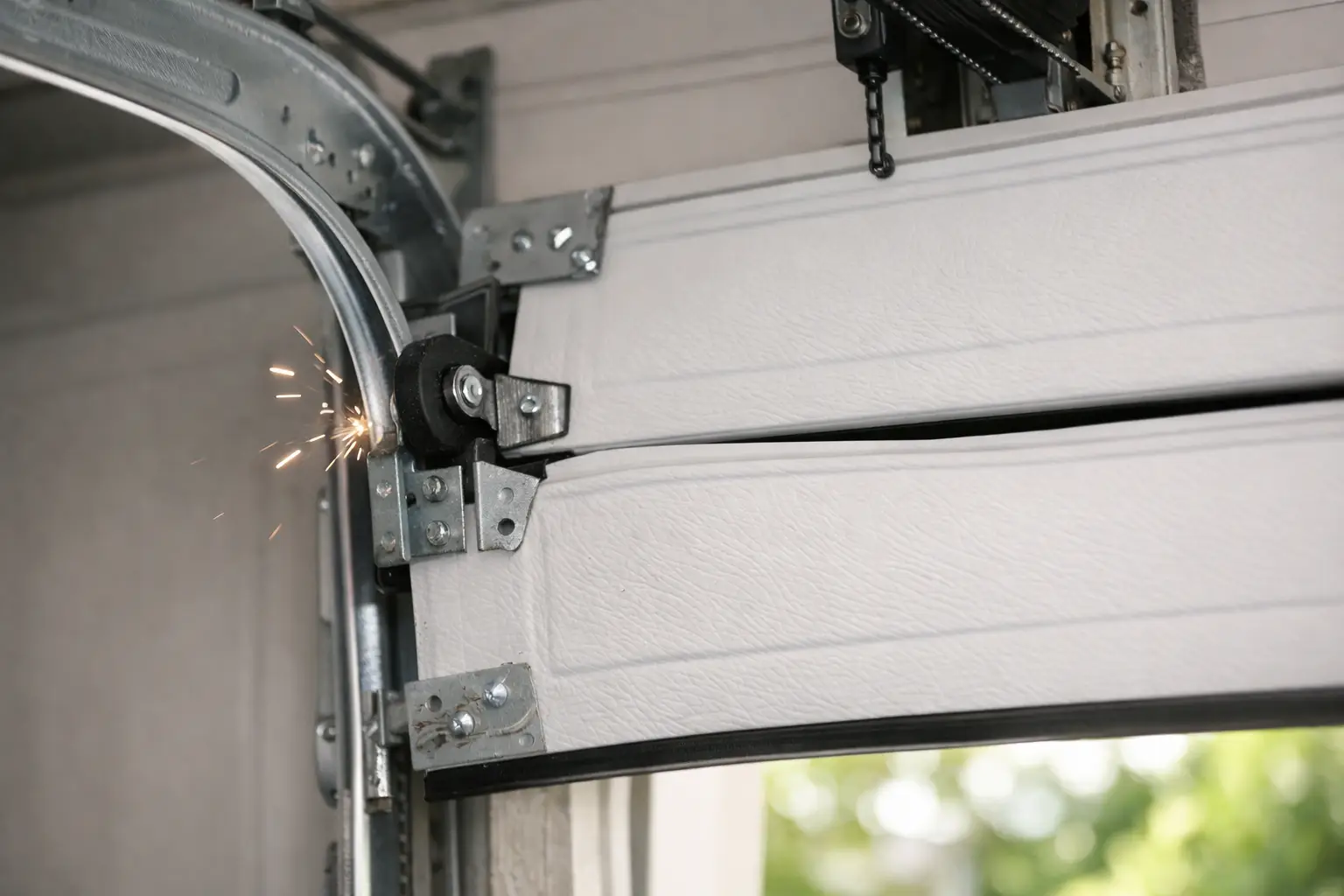
A garage door should travel in a controlled, even motion. When it shakes, stutters, lurches upward, or jerks on the way down, something is interfering with the door’s balance, alignment, or drive system. Understanding what causes garage door jerking can help you recognize a minor maintenance need before it turns into a stuck door, damaged opener, or safety concern.
The key is to pay attention to when the jerking happens. A door that jerks only near the floor may have a track or safety-sensor issue. A door that shudders throughout the full cycle may have worn rollers, poor lubrication, or a balance problem. If the movement is sudden, loud, or accompanied by a visible cable or spring issue, stop using the door and arrange professional service.
What causes garage door jerking during operation?
Jerking is not one single failure. Garage doors are heavy moving systems made up of panels, rollers, tracks, springs, cables, hinges, and an opener. When one component wears out or moves out of position, the door may no longer move smoothly through the system.
1. Dry, worn, or damaged rollers
Rollers guide the door through the tracks. Over time, steel rollers can become noisy, lose lubrication, or develop worn bearings. Nylon rollers are usually quieter, but they can also crack or wear down after years of use.
When a roller does not turn freely, it may drag or catch as it moves along the track. That resistance can make the door jump in short movements, especially at the curved section where the vertical and horizontal tracks meet. You may also hear grinding, squeaking, or a repetitive rattling sound.
Lubrication can help if the rollers are still in good condition. However, a roller with a cracked wheel, bent stem, or failing bearing should be replaced rather than repeatedly lubricated.
2. Bent, dirty, or misaligned tracks
Tracks need to be clean, straight, and properly spaced for the rollers to move freely. A small dent from a vehicle, lawn equipment, storage item, or impact can create enough obstruction to make the door jerk. Dirt, hardened grease, rust, and debris can cause similar problems.
Track alignment can also change as fasteners loosen or the garage structure shifts. Seattle-area homes experience moisture, seasonal temperature changes, and normal settling that can affect garage door hardware over time. A track that looks only slightly out of line can put substantial strain on the rollers and opener.
Do not try to force the door through a bent track. Forcing it can pull rollers out of place, damage the door sections, or overload the opener. A technician can assess whether the track can be adjusted or needs replacement.
3. A door that is out of balance
The springs are designed to offset most of the garage door’s weight. When the spring system is working correctly, the opener guides the door rather than carrying its full load. When spring tension is incorrect or a spring is weakening, the opener must work much harder, and the door may jerk or hesitate.
A common sign of an unbalanced door is uneven movement. The door may rise slowly, pause, slam shut, or appear heavier on one side. You may also notice the opener straining or the chain and belt moving in an inconsistent way.
Testing balance requires care. With the door closed, a trained technician can disengage the opener and check whether the door stays near the halfway point. Homeowners should not adjust torsion springs, extension springs, cables, or bottom brackets themselves. These parts are under extreme tension and can cause serious injury when handled incorrectly.
4. Broken or frayed cables
Lift cables work with the spring system to raise and lower the door evenly. If a cable begins to fray, slips off a drum, or loses tension, one side of the door may move differently from the other. The result can be a crooked, jerking door that binds in the tracks.
A loose cable is a stop-use issue. Do not run the opener to see if it will correct itself. Continuing to operate the door can bend the tracks, damage the panels, and create a more complicated repair. Keep people and vehicles clear of the opening until the system has been inspected.
5. Loose hinges, hardware, or door sections
Garage doors vibrate every time they open and close. Over hundreds of cycles, bolts, brackets, hinges, and roller carriers can loosen. A loose hinge may cause a panel to shift as the door rounds the track curve, creating a noticeable jolt.
You may see gaps between sections, hear metallic clanking, or notice that one panel flexes more than the others. Damaged hinges and loose hardware are often repairable when addressed early. Waiting can lead to cracked panels, stripped fasteners, or rollers that pop out of the track.
A visual inspection can reveal obvious loose parts, but avoid tightening or removing hardware connected to springs or cables. Those areas should be handled by a qualified garage door technician.
6. Opener problems or incorrect force settings
Not every jerking issue starts at the door itself. A worn opener gear, failing motor, stretched chain, damaged belt, or loose rail can produce uneven movement. The opener may pull, pause, then pull again as it struggles against resistance.
Incorrect force and travel settings can also cause trouble. If the opener is set to use too much force, it may keep pushing against a binding door instead of reversing when it should. If the settings are too low, it may stop and restart unnecessarily. Modern openers have safety features, but those features cannot compensate for a poorly balanced door or damaged tracks.
An opener adjustment may solve the issue, but only after the door’s mechanical condition has been checked. Adjusting the opener to overcome a heavy or binding door can shorten the opener’s life and conceal the real problem.
7. Poor lubrication and weather-related resistance
Garage door systems need the right lubricant in the right places. Hinges, rollers, bearings, and springs can become dry over time, causing friction that feels like jerking or shuddering. At the same time, heavy grease inside the tracks can collect dust and make roller movement worse.
Cold weather can thicken old lubricant, while damp conditions can contribute to rust on springs, rollers, and track hardware. A well-maintained door is less likely to develop these seasonal issues. In many cases, a professional tune-up that includes cleaning, lubrication, and hardware inspection restores smoother movement quickly.
8. Damaged panels or an obstruction at the bottom of the door
A dented panel can interfere with the way the door bends through the curved track. This is especially common after a low-speed vehicle impact or when a door has been forced manually. The door may look acceptable while closed but bind once it begins moving.
Also check for simple obstructions. A tool, leaf buildup, ice, a damaged weather seal, or an object near the track can make the door jerk near the bottom. If the door reverses while closing, clean the photo-eye lenses and make sure the sensors face each other. If the sensors appear clear but the problem continues, the door may be binding mechanically.
When is a jerking garage door an emergency?
Call for prompt repair if the door is hanging crooked, a cable is loose, a spring is broken, a roller has come out of the track, or the door will not stay open. These conditions can make the door unstable. Avoid walking or parking beneath a partially open door, and do not pull on cables or attempt to reset a spring.
A loud bang followed by a heavy, jerking door often points to a broken spring. The opener may still make noise or move the chain, but it should not be used to lift the full weight of the door. Disconnecting the opener is only appropriate if the door is fully closed and it is safe to do so.
How to prevent garage door jerking
Most jerking problems develop gradually. A quick monthly look at the rollers, tracks, hinges, cables, and weather seal can reveal damage before the door stops working. Listen for new noises, watch whether both sides rise evenly, and keep the tracks clear of debris.
Professional maintenance is worthwhile because it covers the parts homeowners should not adjust themselves. A technician can test the balance, inspect spring wear, check cable tension, align tracks, secure hardware, lubricate moving components, and confirm that the opener’s safety settings are working correctly.
If your garage door jerks, shakes, or sounds strained, treat it as an early warning rather than an inconvenience to work around. Prompt service can protect the door, the opener, and the people who rely on safe access to your home or business.

