
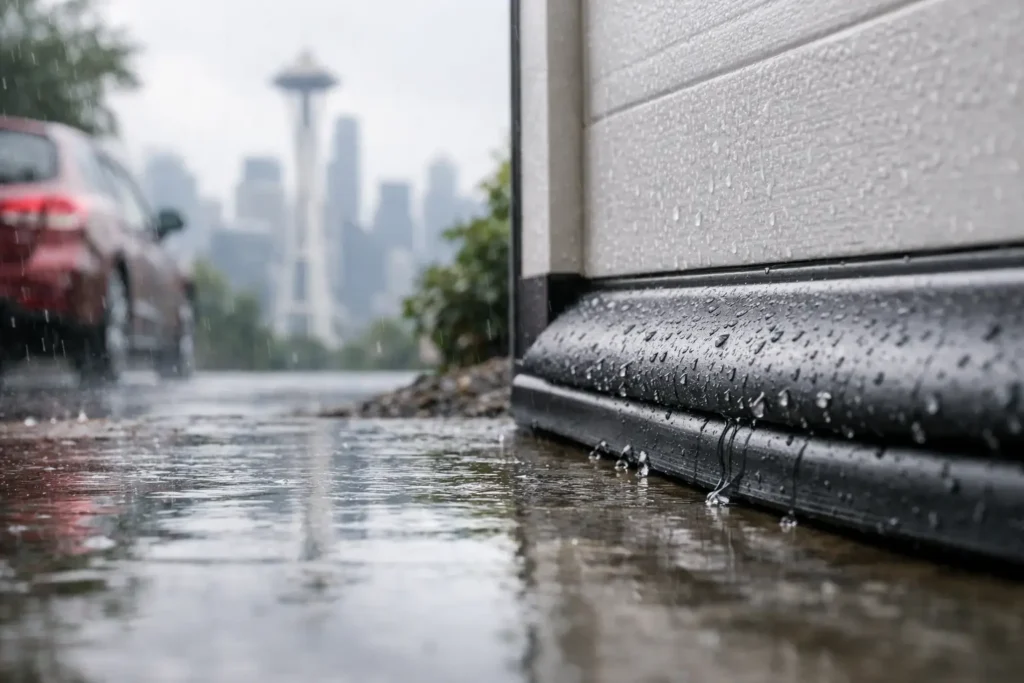
A thin line of daylight below a closed garage door can turn into wet cardboard, cold floors, pest activity and higher heating bills when Seattle rain arrives. The best garage door seals do more than make the opening look finished. They help control water, wind, leaves and debris without interfering with safe, smooth door operation.
Choosing a seal is not simply a matter of buying the thickest rubber strip available. The right material and profile depend on where the gap is, how level the concrete is, the type of door you own and how much weather exposure the opening receives. A seal that works well on a newer, level residential floor may not solve a larger gap at a commercial loading area or an older garage with settled concrete.
Start by finding where the air and water enter
Close the garage door during daylight and look from inside. Light along the bottom usually points to a worn bottom seal, an uneven floor, or both. Light at the sides or top indicates worn jamb weatherstripping, loose stop moulding, or a door that needs alignment.
Water leaves useful clues too. A puddle directly inside the door often means the bottom seal is flattened, torn or the floor slopes toward the garage. Water entering at one corner can be caused by a low section of concrete or a door that is not sitting evenly on the floor. Do not assume a new seal will correct a bent track, damaged roller, shifted door section or poor floor drainage.
Before purchasing anything, measure the full width of the door and note the height of the largest gap. Check the existing retainer on the bottom edge as well. Some doors use a slide-in channel, while others use a nailed or screwed-on seal. Buying the wrong profile is one of the most common reasons a replacement does not fit.
The best garage door seals by location
A complete weather barrier may involve two or three types of seals. Each has a different job, and adding material in the wrong place can make the door bind or prevent it from closing fully.
Bottom seals for the door itself
The bottom seal, sometimes called an astragal, attaches to the lower edge of the garage door. It compresses against the driveway or garage slab when the door closes. For most sectional residential doors, this is the first seal to inspect and the one most likely to need replacement.
Bulb-style bottom seals are a dependable choice for relatively level concrete. Their rounded rubber or vinyl profile compresses to close small gaps and holds up well with routine use. They are common because they provide a good balance of weather protection and easy movement.
Beaded or T-style seals slide into a compatible aluminium or PVC retainer. They are effective when the door already has the correct track and are often straightforward to replace. The key is matching the bead size and track design exactly. A seal that is slightly too large can be difficult to install, while one that is too small can pull out during operation.
U-shaped seals wrap around the bottom edge of some wood and metal doors. They can offer broad contact with the floor, but fit matters. If the seal is overly thick, the door may reverse or stop before reaching the floor, particularly on doors with correctly adjusted safety settings.
For Seattle-area homes, flexible EPDM rubber is often a strong choice. It remains pliable through wet, cool conditions and generally resists cracking better than lower-grade vinyl. Vinyl can still be a practical, affordable option, especially in protected garages, but it may stiffen and flatten sooner over time.
Threshold seals for uneven concrete
A garage door threshold is secured to the floor just inside or outside the door line, depending on the product and drainage needs. It creates a raised ridge for the bottom seal to compress against. This can be one of the best solutions where the slab has minor dips, hairline cracks or a shallow low spot that allows wind-driven rain inside.
Thresholds work best when the door itself is in good condition and closes evenly. They are not a cure for significant water flow from a driveway sloping into the garage. In that situation, drainage correction may be necessary before a threshold can make a meaningful difference.
Careful installation is essential. The concrete must be cleaned and dry, and the threshold must sit flat across the opening. It also needs to be low enough to avoid becoming a trip concern and positioned so the door contacts it properly. A poorly placed threshold can retain water, interfere with the door or create an awkward obstacle for vehicles.
Side and top weatherstripping
Vinyl stop moulding with an attached flexible flap is the standard choice for sealing the sides and top of many garage doors. It mounts to the exterior door jamb and lightly contacts the door face as it closes. This blocks drafts, leaves and blowing rain without adding excessive friction.
Look for weatherstripping with a flexible flap that has not become brittle or permanently curled away from the door. The rigid backing should also be secure. If it has loosened, split or pulled away from the frame, simply adding caulk behind it may not provide a lasting repair.
Side and top seals are especially useful for detached garages used as workshops, home gyms or storage areas. They will not turn an uninsulated garage into a heated room, but they can noticeably reduce cold air movement and keep dust and insects out.
Material, thickness and fit matter more than marketing
The best garage door seal is the one that matches your opening rather than the one with the most dramatic product claims. Focus on material durability, correct profile and consistent contact across the full width of the door.
Rubber seals, particularly EPDM, tend to be durable and flexible. They are well suited to frequent-use doors and damp climates. PVC or vinyl seals are widely available and cost-effective, but quality varies. Thin material may tear at the corners or become rigid after repeated cold-weather cycles.
A taller seal is not automatically better. If there is a 19 mm gap beneath one corner, a 25 mm seal may seem like an easy answer, but it can create excessive compression elsewhere. That added resistance affects the opener, rollers and door balance. The better solution may be a properly sized bottom seal combined with a threshold, floor repair or a professional alignment adjustment.
Colour is generally a secondary concern, though black rubber often hides dirt and road grime better than lighter materials. More important is checking that the replacement has enough length for the door, with a small amount left for final trimming. Never stretch a seal to make it fit. It will shrink back and leave gaps at the corners.
When a new seal will not solve the problem
Weatherstripping is a maintenance item, but garage door problems sometimes show up as seal problems first. A door that is crooked, shakes while moving, leaves an uneven gap or reverses when closing should be assessed before new sealing material is installed.
Broken or weakening springs can affect how evenly a door settles. Bent tracks, worn rollers, damaged bottom brackets and loose hinges can also prevent consistent contact with the floor. Bottom brackets and springs are under significant tension. They are not a safe do-it-yourself repair area.
Commercial doors need similar attention, often on a larger scale. A worn dock or warehouse door seal can allow water, debris and pests into a work area, but frequent forklift traffic, damaged concrete and high operating cycles may call for a more durable system than a standard residential product.
A practical replacement and maintenance plan
Inspect bottom, side and top seals twice a year, ideally before the wet season and again after winter. Clean away grit from the bottom retainer and door tracks, then check for tears, flattening, loose fasteners and hard or cracked material. Keep the floor edge reasonably clean so the seal can make full contact.
If the door is operating smoothly and the gaps are minor, replacing worn weatherstripping can be a cost-effective upgrade. If the gap is uneven, water continues entering after a replacement, or the door is noisy and off-track, arrange a professional inspection first. Summit Garage Doors can identify whether the issue is the seal, the floor, or the door system behind it.
A garage should not have to become a weather station every time the rain starts. The right seal, installed to match a properly operating door, keeps the space cleaner, drier and more comfortable without asking your opener or hardware to work harder than it should.

