
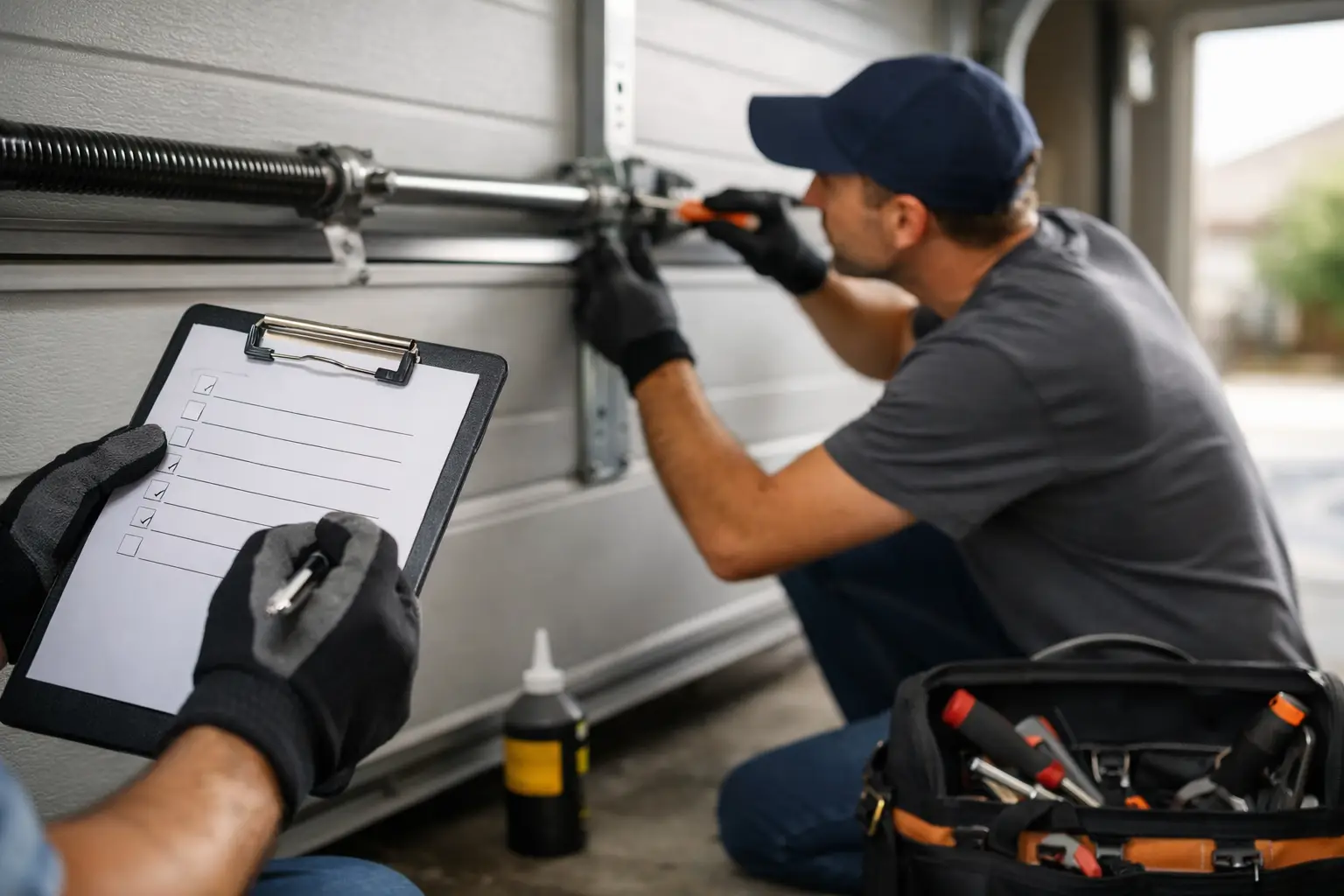
A garage door usually gives you a warning before it fails. It gets louder, moves unevenly, hesitates on the way up, or drops faster than it should. A solid garage door maintenance checklist helps you catch those signs early, before a minor adjustment turns into a broken spring, a stuck door, or a safety risk.
For most homeowners, the goal is not to become a garage door technician. It is to keep the system safe, reliable, and quiet enough that it does not interrupt your day. A few routine checks can extend the life of your door and opener, but some parts should always be left to a trained professional. That balance matters.
Why a garage door maintenance checklist matters
Your garage door is one of the largest moving parts in your home. It relies on springs under high tension, rollers that wear down over time, tracks that must stay aligned, and an opener that needs to respond consistently every time you use it. When one part starts to fail, other parts often take on extra strain.
That is why maintenance is not just about avoiding noise. It is also about safety, security, and cost control. A door that sticks or closes unevenly can damage panels, strain the opener, and create a serious hazard for people, pets, and vehicles. In a busy household, those issues can escalate quickly.
If you are in a damp climate like the Seattle area, regular checks matter even more. Moisture can speed up rust, swelling, and wear on metal parts and weather seals. You may not notice the damage day to day, but your garage door system does.
Garage door maintenance checklist: what to inspect
A good checklist starts with observation. Before touching anything, open and close the door a few times and pay attention to what you hear and see. A healthy door should move smoothly, stay reasonably level, and avoid jerking, grinding, or slamming.
Look at the springs, cables, rollers, and hinges
Check for visible signs of wear, rust, fraying, or bending. Extension and torsion springs are especially important, but they are also dangerous. If a spring looks stretched, cracked, or corroded, do not try to adjust it yourself.
Cables should look tight and clean, not loose or frayed. Rollers should move without wobbling, and hinges should not appear cracked or heavily worn. If a roller has chipped edges or the door rattles more than usual, replacement may be due.
Check the tracks for alignment and debris
Tracks should be clean and securely mounted. Dirt, leaves, and built-up grime can interfere with movement, especially near the lower sections. You can wipe tracks clean with a dry or slightly damp cloth, but avoid applying heavy grease inside them. That often attracts more debris and creates a bigger problem.
If the tracks appear bent or the door rubs against them during operation, stop there. Track alignment is not a casual adjustment. A professional should correct it before the issue worsens.
Test the door balance
Disconnect the opener using the emergency release cord, then lift the door manually to about halfway. A balanced door should stay mostly in place. If it drops quickly or shoots upward, the spring tension may be off.
This is one of the most useful checks on any garage door maintenance checklist because it tells you whether the opener is doing extra work. An unbalanced door can shorten the life of your opener and increase the risk of sudden failure.
Inspect the weather seal and bottom rubber
The seal at the bottom of the door helps keep out water, drafts, dirt, and pests. Side and top seals also matter, especially if your garage is attached to the home or used for storage.
If the rubber is cracked, flattened, brittle, or pulling away, it may be time to replace it. This is one of the simpler maintenance items, but it has a noticeable effect on comfort and cleanliness.
Test the auto-reverse safety features
Your opener should reverse when it contacts resistance and when the photo-eye sensors are blocked. Place a solid object like a piece of wood on the floor beneath the door and close it. When the door touches the object, it should reverse.
Then test the photo eyes by waving an object in front of the sensors while the door is closing. The door should reverse immediately. If either test fails, do not keep using the system until it has been inspected.
Listen to the opener
An opener will always make some noise, but a noticeable change usually means something is off. Buzzing, clicking, straining, or delayed response can point to electrical issues, worn gears, poor balance, or sensor problems.
Also check the wall control and remotes. If performance is inconsistent, it may be something simple like battery replacement, or it may signal a larger issue with the opener itself.
What homeowners can do safely
There is a practical side to garage door upkeep that most property owners can handle. The key is knowing where routine care ends and where repair work begins.
You can clean the tracks, wipe down the photo-eye lenses, inspect hardware for visible loosening, and lubricate moving metal parts that are designed for it. Use a garage-door-specific lubricant on rollers, hinges, and springs if recommended by the manufacturer. Do not overapply it. A light, targeted application is better than soaking everything.
You can also tighten accessible brackets and bolts if they have loosened from vibration, but only if you can do it safely and without disturbing critical tension components. If anything looks uncertain, stop and book service.
Wood doors may also need occasional surface upkeep depending on finish and exposure. Steel doors benefit from checking for chips or rust spots so minor damage does not spread.
What should always be left to a professional
Some garage door jobs are never worth the risk. Spring repair and replacement sit at the top of that list. Torsion springs are under significant tension and can cause severe injury if handled incorrectly.
Cable repairs, major track adjustments, bottom bracket work, and opener force setting corrections also belong with a trained technician. The same goes for doors that have come off track or panels that are visibly damaged after impact.
There is also the issue of diagnosis. A door that looks like it has an opener problem may actually have a balance problem, worn rollers, or failing springs. Guessing can waste time and money. A proper inspection gets to the real cause.
How often should you do garage door maintenance?
For most homes, a visual check every month and a more complete review every six months is a sensible schedule. If you use the garage door as your main entry point, more frequent checks are smart because the system sees more wear.
Commercial and industrial doors often need a tighter maintenance routine due to higher cycles and heavier use. The right schedule depends on door type, traffic, age, and exposure to weather.
You should also inspect the door any time you notice new noise, slower operation, uneven movement, or a recent bump from a vehicle. Waiting rarely makes a mechanical issue cheaper.
Signs your checklist has turned into a service call
A maintenance routine helps prevent surprises, but it is not a substitute for repair when a part is already failing. If the door is crooked, slams shut, struggles to open, reverses randomly, or stops halfway, that is beyond basic upkeep.
The same applies if you see a broken spring gap, hanging cables, bent track, or damaged rollers. These are not watch-and-wait issues. They are service issues.
For homeowners and businesses who need dependable support, Summit Garage Doors sees this every day – a door that gave subtle warnings for weeks before finally refusing to move. Acting early usually means a simpler fix, less downtime, and less stress.
A practical routine that protects your time and budget
The best garage door maintenance checklist is one you will actually use. It does not need to be complicated. Watch how the door moves, listen for changes, inspect the visible hardware, test the safety features, and stay honest about what is safe to handle on your own.
A garage door is easy to ignore when it works and impossible to ignore when it does not. A few careful checks through the year can keep it running smoothly, help you avoid emergency breakdowns, and give you a clearer sense of when it is time to bring in expert help. That small habit can save you a much bigger problem later.

