
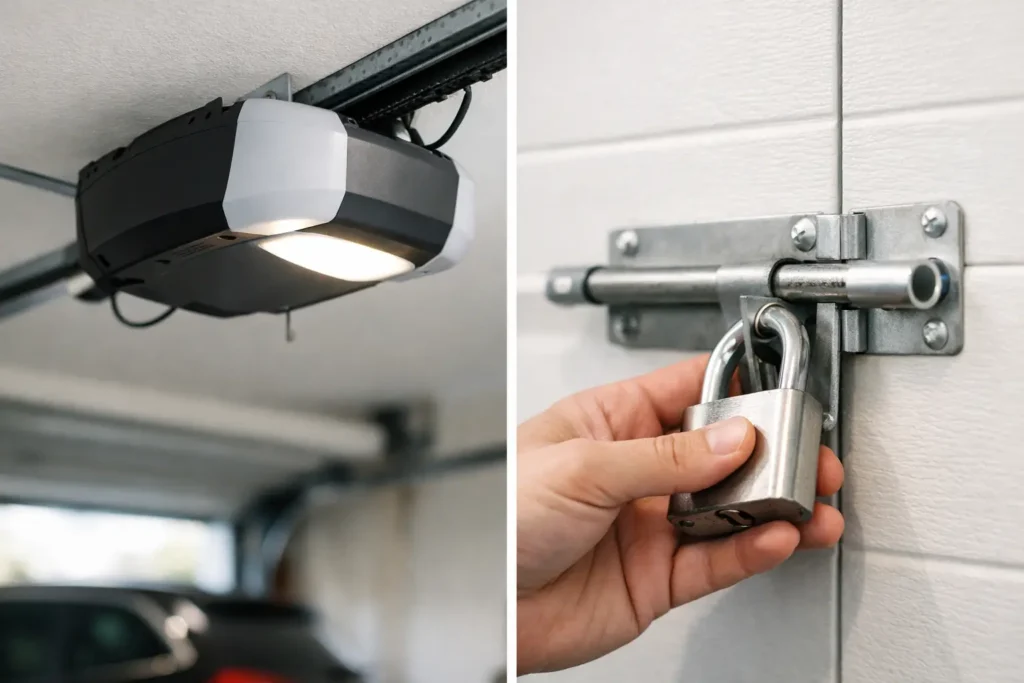
A garage door that will not open when you are late for work is frustrating. A door that can be forced open or accidentally damaged is worse. When homeowners compare a garage door opener vs manual lock, the real question is not which one is better in every situation. It is which setup gives your property the right balance of daily convenience, security, emergency access, and safe operation.
For most modern homes, an automatic opener is the practical choice for everyday use. A manual lock still has a place, especially as a backup or for doors without an opener. The mistake is treating them as interchangeable – or using both at the same time without understanding how they interact.
Garage Door Opener vs Manual Lock: The Core Difference
A garage door opener is a powered system that lifts and lowers the door using a motor, rail or belt, and an operator-controlled trolley. It is designed for frequent use. Depending on the model, you can operate it with a remote, wall button, keypad, vehicle system, or smartphone app.
A manual lock physically secures the door in the closed position. Common examples include an interior slide lock, a centre lock with bars that extend into the tracks, and an exterior keyed lock. It does not open or close the door. Its only job is to prevent movement when the door is shut.
That distinction matters. An opener provides convenience and a level of holding force when the door is closed. A manual lock provides a physical barrier. If your door has an automatic opener, the manual lock should normally remain disengaged during regular operation.
Why an Automatic Opener Is the Better Everyday Choice
For an attached garage, a busy household, or a commercial property with regular vehicle access, an opener saves time and reduces hassle. You can pull in during rain, darkness, or a busy morning without getting out of your vehicle. For families carrying groceries, managing children, or coming home late, that convenience quickly becomes a safety benefit as well.
Modern openers also offer features that older manual systems cannot provide. Battery backup can keep the door operating during a power outage. Motion-sensing lights improve visibility inside the garage. Keypads provide controlled access without handing out spare keys, while smart controls can alert you if the door has been left open.
An opener can also be safer for the door itself when it is properly installed and maintained. The motor applies controlled movement, and built-in safety sensors should reverse the door if something crosses its path. A well-balanced door with healthy springs, aligned tracks, and a correctly adjusted opener runs smoothly instead of being dragged or forced.
That said, an opener is not a substitute for maintenance. If the door is suddenly heavy, crooked, noisy, or stops partway, the cause may be a broken spring, damaged cable, worn roller, or track problem. Repeatedly pressing the remote will not solve a mechanical failure and may put extra strain on the opener.
Security with an opener
A closed garage door connected to a modern opener is generally secure for normal residential use. The opener trolley holds the door down, and many current models use rolling-code technology that changes the remote signal after each use.
However, security depends on the entire system. An old exterior emergency release, damaged door panels, weak side entry door hardware, or an opener with outdated controls can create vulnerabilities. Smart features are useful, but they should be protected with a strong account password and current app settings.
For homeowners who travel often, a smart opener offers a practical advantage: you can verify whether the door is closed from your phone. That can prevent a small oversight from becoming an easy access point.
Where a Manual Lock Still Makes Sense
Manual locks are simple, affordable, and independent of electricity. That makes them useful for detached garages, storage buildings, workshops, or older doors that are used only occasionally. They can also add physical security when a door will remain closed for an extended period, such as during a renovation, seasonal absence, or a vacancy.
A manual lock is also a reasonable option when there is no opener installed. It gives you a direct way to secure the door without relying on electrical components, remotes, or a battery.
For some commercial and industrial applications, manual locking hardware may be part of the required door setup. The right choice depends on the type of door, traffic level, access requirements, and whether employees need to enter or exit through the opening during the day.
The trade-off is convenience. Every arrival and departure requires you to unlock, lift, lower, and lock the door by hand. On a heavy door, that can be difficult or unsafe if the springs are not properly balanced. A manual lock also does not tell you whether the door was left open, and it cannot provide remote access for a family member, tenant, delivery, or service professional.
Never Engage a Manual Lock While the Opener Is Connected
This is one of the most common and costly garage door mistakes. If an interior slide lock or centre lock is engaged and someone presses the opener remote, the motor will try to pull the door open against a fixed lock.
The result can be a bent lock bar, damaged track, stripped opener gears, a broken trolley, or a door that comes out of alignment. In more serious cases, the force can damage multiple components at once.
If you need to manually lock a door that has an opener, first make sure the opener will not be used. Disconnecting the opener from the door using the emergency release is often necessary, but this should only be done when the door is fully closed and stable. Do not pull the emergency release while the door is open unless you understand the condition of the springs and door balance. A failing spring can allow a heavy door to fall quickly.
If you are unsure why your door has a lock, whether it should be used, or how it relates to the opener, a technician can inspect the hardware and explain the safest setup.
Power Outages Change the Decision
A manual lock has one clear advantage: it works even when the power is out. But a power outage does not mean an automatic garage door becomes unusable.
Most opener-equipped doors have an emergency release cord inside the garage. Pulling it disconnects the door from the motor so you can lift it manually. Once power returns, the door can usually be reconnected according to the opener manufacturer’s instructions.
The bigger issue is access from outside. If your only entrance is through the garage and the power is out, you may not be able to reach the emergency release. A battery backup opener, an exterior emergency-release kit where appropriate, or a separate keyed pedestrian door can prevent that problem. The best option depends on your property layout and security needs.
In areas that see storm-related outages, a battery backup is often more valuable than adding a manual lock to an otherwise automated door. It preserves daily operation without requiring anyone to lift a heavy door by hand.
Choose Based on How You Use the Garage
An opener is usually the best fit if you use the garage every day, park vehicles inside, want remote access, or need easier operation for family members. Belt-drive openers are a popular choice for attached garages because they are typically quieter. Chain-drive systems can be a dependable option for heavier doors, while wall-mount models can free ceiling space in garages with high lifts or storage needs.
A manual lock may be enough if the garage is rarely accessed, has no electrical service, or stores equipment rather than vehicles. It can also be used as a temporary security measure when an opener is being replaced or repaired, provided the door is correctly secured and the opener cannot be activated.
For many properties, the best answer is not opener or lock. It is a reliable opener for normal use, paired with good overall garage security: a solid side entry door, secure windows, proper lighting, maintained door hardware, and sensible access controls.
When to Call for Professional Help
Call for service if the opener hums but the door does not move, the door reverses for no clear reason, the manual lock is bent, or the door has been operated against a locked position. Do not attempt to adjust springs, cables, or bottom brackets yourself. These parts are under significant tension and can cause serious injury.
A professional inspection can determine whether you need a simple lock replacement, opener adjustment, battery backup upgrade, or repair to the door itself. Summit Garage Doors helps homeowners and businesses make that decision without pushing unnecessary work – especially when a small repair can restore safe, dependable operation.
Your garage door should never force you to choose between security and convenience. Select the system that matches how you use the space, keep the door balanced and maintained, and make sure everyone in your household knows one critical rule: never run the opener when a manual lock is engaged.

