
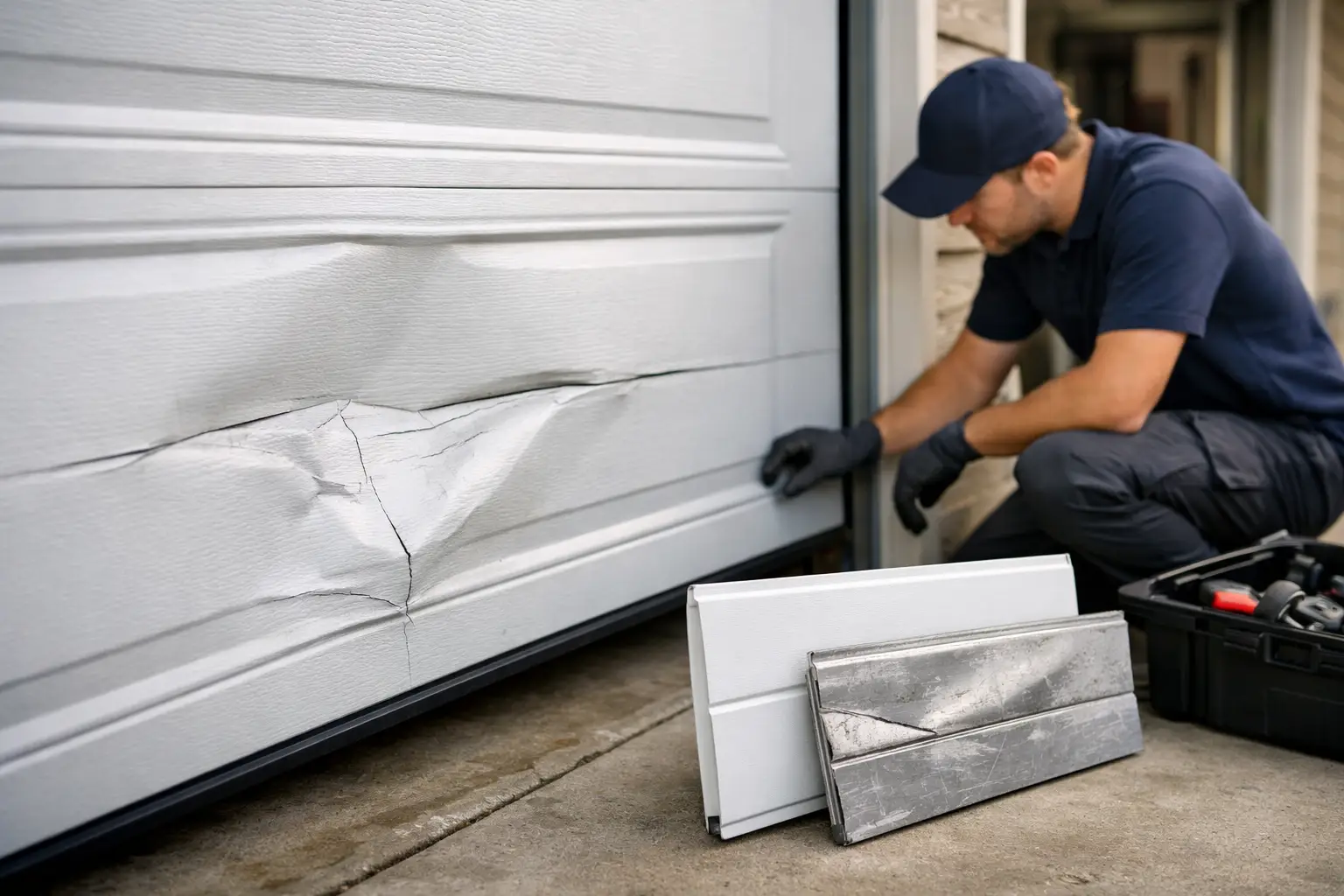
A dented section after a parking mistake looks minor until the door starts shuddering, rubbing the track, or refusing to close evenly. Garage door panel damage is not always just a cosmetic issue. In many cases, one damaged panel changes the balance, alignment, and overall performance of the entire system.
That is why the real question is rarely, “Can this panel be fixed?” The better question is, “What gives you the safest and most cost-effective result for this specific door?” Sometimes that means a targeted repair. Sometimes it means replacing one section. And sometimes the smartest move is replacing the full door before the problem spreads.
What garage door panel damage actually affects
Garage door panels do more than shape the look of the door. They help the door stay rigid as it travels up and down, and they support hinges, rollers, and reinforcement points. When a panel is bent, cracked, rusted through, or pulled out of shape, the rest of the system can start compensating.
You may notice uneven movement, extra noise, gaps along the bottom seal, or stress on the opener. In insulated doors, panel damage can also reduce energy efficiency and let in moisture. For homeowners, that can mean a colder garage and faster wear on stored items. For business owners, it can mean a door that no longer closes securely or operates reliably during the workday.
The extent of the damage matters. A shallow dent in an otherwise solid panel is a different situation from a panel that has split at the hinge points or twisted enough to affect door travel.
When garage door panel damage can be repaired
Repair is often the right choice when the damage is limited and the rest of the door is still in good condition. If a panel has a small dent, light surface corrosion, or minor cosmetic warping, a professional may be able to reinforce, reshape, or refinish the section without replacing the whole assembly.
This tends to make the most sense when the door is fairly new, the model is still supported by the manufacturer, and the tracks, springs, rollers, and opener are all working properly. In those cases, a focused repair can restore appearance and function without pushing you into a larger project.
There is a trade-off, though. Cosmetic repair can improve how the panel looks, but it does not always return it to like-new condition. If appearance is a major priority, especially on a front-facing garage, even a technically repairable panel may still leave an obvious mismatch or ripple.
When replacing one panel makes sense
Single-panel replacement works best when the damage is isolated and a matching section is still available. This is common after impact damage where one panel takes the hit but the rest of the door remains structurally sound.
A good candidate for panel replacement usually has no major track damage, no spring issues, and no signs that the door has been operating out of alignment for long. The technician also needs to confirm that the remaining panels have not been weakened around hinges or connection points.
The catch is availability. Not every manufacturer keeps older panel styles, colours, and embossing patterns in circulation. Even if the right size exists, an exact match may be difficult if the original finish has faded over time. A new panel on an older door can stand out more than many homeowners expect.
When full door replacement is the smarter call
There are times when repairing garage door panel damage is technically possible but financially unwise. If multiple panels are damaged, if the door is older, or if the system already has worn springs, bent tracks, and noisy rollers, putting money into one section may only delay a larger failure.
Full replacement often becomes the better investment when the cost of panel work starts approaching a significant portion of a new door. It also makes sense when safety is a concern. A door that has twisted under impact or lost structural integrity should not be treated as a patch-up job just to save money upfront.
For many property owners, replacement is also an upgrade opportunity. A new door can improve insulation, reduce noise, increase security, and lift curb appeal at the same time. That matters if your garage faces the street or if the building depends on reliable daily access.
Signs the damage is more serious than it looks
Some panel issues are obvious. Others hide the real problem until the door starts binding or dropping unevenly. If the door looks crooked when closed, shakes during operation, or leaves uneven gaps at the sides, the damage may extend beyond the panel itself.
Watch for loose hinges, cracked fastener points, scraped tracks, roller wear, or an opener that sounds strained. These signs suggest the impact or deterioration has affected more than the visible surface. In that case, replacing only the panel may not solve the root issue.
If the door was hit by a vehicle, avoid assuming it is safe because it still opens. A garage door can continue operating while carrying stress in the wrong places. That often leads to a bigger repair later, or a sudden failure when you least expect it.
Material matters
Steel, wood, aluminum, and composite doors each respond differently to damage. Steel panels often dent but remain structurally usable if the impact is light. Wood panels can crack, swell, or rot, especially in damp conditions. Aluminum is lighter and more corrosion-resistant, but it can crease more easily. Composite materials can hide internal damage that is not obvious from the outside.
This is one reason estimates can vary. The right solution depends not only on how bad the panel looks, but on what it is made of, how the door is built, and whether replacement parts are realistic to source.
In wetter coastal climates, moisture exposure adds another layer to the decision. Surface damage that breaks paint or protective coatings can speed up rust or rot. What starts as a cosmetic issue can become structural if it is ignored through another rainy season.
Why DIY panel fixes are risky
It is understandable to look at a damaged section and think of it as bodywork. The problem is that garage door panels are tied directly into a high-tension system. Hinges, brackets, cables, and spring-loaded components all work together under load.
A DIY patch may cover the damage without correcting alignment or reinforcement. Worse, removing hardware from the wrong area can create a safety hazard. Even if the panel itself seems simple, the surrounding system is not.
A proper inspection should check whether the impact affected the track, roller stems, hinge placement, opener arm, and door balance. That kind of assessment protects you from spending money on the wrong fix.
How to decide without overspending
The best decision usually comes down to five factors: the age of the door, the extent of the damage, part availability, visual match, and the condition of the rest of the system. If the door is newer and the damage is isolated, repair or single-panel replacement often delivers good value. If the door is ageing and showing wear in multiple areas, replacement is usually the more reliable long-term move.
An honest service company should walk you through both paths. You should be told not only what can be done, but what makes financial sense. That matters when you are trying to avoid repeat service calls a few months later.
For homes and commercial properties in places like Seattle and across King County, weather exposure and daily use can speed up wear faster than many people realize. A practical recommendation should account for that, not just the appearance of the panel on the day of the estimate.
At Summit Garage Doors, this is how we approach panel damage – start with safety, confirm the true scope of the issue, and recommend the option that gives you dependable operation without pushing unnecessary work.
If your garage door has been dented, cracked, or thrown out of line, do not wait for it to become a bigger repair. A quick professional assessment now can save you from a stuck door, a security issue, or a full system failure later.

