
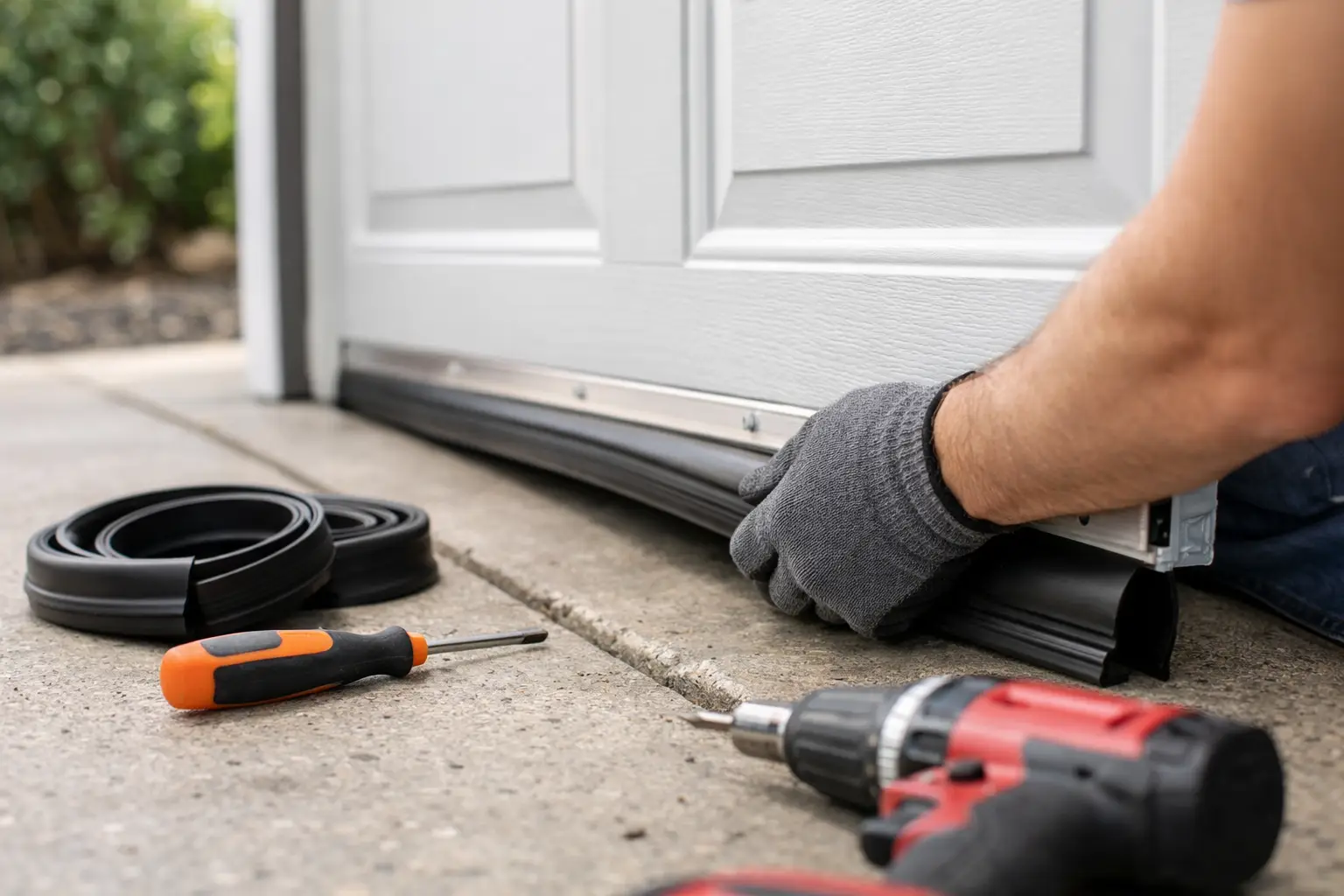
A garage door that looks fine from the street can still leak air, water, and debris around the edges. That is usually where garage door weather seal replacement comes in. If you have noticed damp concrete after rain, a colder garage in winter, or leaves and dirt blowing in under the door, the seal is often the first thing to check.
Weather seals do a simple job, but they protect more than most people realize. They help block moisture, reduce drafts, limit dust, discourage pests, and protect anything stored inside the garage. For attached garages, they can also help buffer the temperature shift between the garage and the rest of the home.
What a garage door weather seal actually does
Most homeowners think about the bottom seal first, and for good reason. That flexible strip along the bottom edge is the part that meets the floor and closes the biggest gap. But the side and top seals matter too. Those perimeter seals create a tighter barrier when the door is fully shut.
If one section fails, the whole system gets weaker. A cracked bottom seal may let water run in during heavy rain. Worn side vinyl can leave openings for wind and insects. A compressed or brittle top seal can allow drafts and grime to work their way into the garage over time.
In places where damp weather is common, that extra protection matters. Even a small gap can become a recurring problem when rain, grit, and cold air keep finding a way inside.
Signs you need garage door weather seal replacement
Some seal problems are obvious. Others show up slowly, and people only notice once the garage starts feeling colder or dirtier than usual.
A few common signs are easy to spot. The rubber may look cracked, flattened, torn, or stiff. You may see daylight at the bottom corners when the door is closed. Water lines near the threshold after a storm are another clue. If pests, leaves, or wind-blown debris keep getting in, worn weather stripping is often part of the problem.
There is also a performance side to it. If your garage door closes but does not sit evenly against the floor, the issue may be the seal, the floor, or the door alignment. That is where a quick visual check helps, but it is also where guessing can waste time. Sometimes the seal is the only problem. Sometimes it is covering up a larger issue with the tracks or door balance.
Not every seal problem is a DIY fix
Replacing a simple bottom seal can be manageable in some cases, especially if the door and retainer are in good shape. But not every door uses the same seal profile, and not every leak is caused by the seal itself.
This is where many people get stuck. They buy a replacement that looks close enough, only to find it does not slide into the track, does not compress properly, or leaves the same gap behind. Older doors, commercial doors, and doors with worn retainers can be more complicated than they appear.
There is also the question of floor condition. If the garage slab is uneven, a new seal may help, but it may not create a perfect seal across the full width of the opening. In that situation, the right fix depends on how uneven the floor is and whether the door is closing squarely.
Bottom seals, threshold seals, and perimeter seals
Garage doors can use a few different sealing components, and each one solves a slightly different problem.
The bottom seal attaches to the lower edge of the door and compresses against the floor when the door closes. This is the most common piece replaced. A threshold seal, on the other hand, mounts to the floor itself and creates a raised barrier where the door meets the slab. These can be useful when the floor is uneven or when water tends to run toward the garage.
Side and top seals are mounted around the frame and help close the small gaps around the perimeter. They are especially useful for reducing drafts and keeping out dust and insects. If your garage still feels exposed after a bottom seal replacement, the perimeter seal may be the missing piece.
How weather and wear break seals down
Garage door seals are built to flex, but they do not last forever. Temperature swings, moisture, UV exposure, and regular door movement all wear them down. Over time, rubber hardens, vinyl becomes brittle, and flexible edges lose their ability to press tightly against the floor or frame.
Usage matters too. A door that opens several times a day will naturally put more stress on its components than one that is rarely used. If the door is heavy, slightly misaligned, or closes unevenly, the seal may wear faster on one side.
For many property owners, the lesson is simple. If a seal has visibly aged, it is better to replace it before repeated moisture exposure leads to rust, swelling, mould concerns, or damage to stored items.
When replacement solves the problem – and when it does not
A proper garage door weather seal replacement can make a noticeable difference right away. The garage may feel less drafty, the floor may stay drier, and dirt and debris can stop collecting along the threshold. It is one of the more affordable ways to improve the performance of an existing garage door.
Still, it is not a cure-all. If the door is out of alignment, the bottom panel is bent, the tracks are loose, or the opener is forcing an uneven close, a new seal alone will not fix the root issue. In some cases, replacing the seal without correcting the mechanical problem just leads to faster wear on the new material.
That is why an honest assessment matters. The best result comes from matching the fix to the actual cause, not just the visible symptom.
What to expect during a professional replacement
A professional seal replacement is usually straightforward, but it should start with inspection, not installation. The technician should check the condition of the bottom retainer, look at the side and top weather stripping, and confirm that the door is closing evenly.
From there, the old material is removed, the channel or mounting area is cleaned, and the new seal is cut and fitted to suit the door. If the retainer is damaged or corroded, that may need replacement as well. On some doors, especially older ones, getting the right seal profile is the difference between a proper fix and a short-term patch.
If moisture entry is severe or recurring, the floor slope and threshold area should also be looked at. That extra step can save you from replacing the same seal again without solving the reason water keeps getting in.
Is it worth replacing weather seals before bigger problems show up?
Usually, yes. Compared with major garage door repairs, weather seal replacement is relatively minor. But the protection it provides can help prevent more expensive issues later. Water intrusion near the base of the door can lead to corrosion. Drafts can affect comfort in adjacent rooms. Gaps can invite pests into a space that may already hold tools, storage, or household items.
For business owners, it can also be a practical maintenance item. A garage or service bay that lets in water and debris becomes harder to keep clean and safe. That matters even more when foot traffic, deliveries, or equipment storage are part of daily operations.
In many cases, replacing worn seals is less about appearance and more about protecting how the space functions.
Choosing the right help
If you are dealing with a visible gap, repeated water entry, or a garage door that does not close tightly, it makes sense to have the full door checked instead of replacing parts by trial and error. A qualified technician can tell you whether the issue is limited to the seal or tied to alignment, hardware, or floor conditions.
For homeowners and businesses who want a fast, practical fix, that kind of clarity saves time. Summit Garage Doors handles weather seal issues as part of complete garage door service, so you are not left guessing whether the seal is the problem or just one part of it.
A dry, better-sealed garage is not a luxury upgrade. It is one of those small fixes that protects the door, the space behind it, and the things you count on every day.

