
A new garage door can improve daily convenience, security, insulation, and curb appeal in a single project. Knowing how to prepare for garage door installation helps the crew work safely, keeps your appointment on track, and reduces the chance of last-minute surprises such as blocked access or an incorrect opening measurement.
For most homeowners, preparation is straightforward. The key is to clear the work area, confirm the right door and opener choices before installation day, and make sure the installer can assess the full opening, ceiling, and electrical setup. A professional crew handles the heavy lifting, spring tension, track alignment, and safety testing. Your role is to give them a clean, accessible place to do that work properly.
Confirm the Door Details Before Installation Day
Before the new door arrives, review the estimate and make sure the product matches what you expected. Confirm the door size, colour, window layout, insulation level, hardware finish, and whether old-door removal is included. If you have chosen a smart opener, battery backup, keypad, or camera, verify that those accessories are part of the scheduled work.
This matters because garage doors are not one-size-fits-all. A standard sectional door may be the practical choice for a detached garage, while an insulated steel or custom carriage-style door can make more sense for an attached garage where comfort and exterior design matter more. In Seattle’s wet, cool seasons, insulation and weather sealing can be especially worthwhile for garages connected to living spaces or used as workshops.
If you are replacing an existing door, take a final look at the style in daylight. Colour samples and online images can look different from a full door installed against your home’s siding, brick, or trim. It is much easier to resolve a design concern before the door is installed than after the panels are hung.
Check Measurements and Headroom
Your installer should confirm the opening dimensions, but it helps to understand what will be measured. The rough opening width and height are only part of the equation. The technician also needs to inspect the side room beside the opening, the headroom above it, the backroom along the ceiling, and the condition of the framing.
Low headroom, exposed ductwork, shelving, or a sloped ceiling can affect the track configuration and opener selection. This does not automatically prevent installation. It simply means the crew may need a low-headroom track system or a different opener arrangement. Raising the issue early allows the right parts to be planned instead of improvising on installation day.
For commercial spaces, make sure the opening is measured with operational needs in mind. Vehicle clearance, delivery schedules, security requirements, and frequency of use may influence whether a sectional, rolling steel, or high-cycle system is the better fit.
Clear the Garage and Driveway
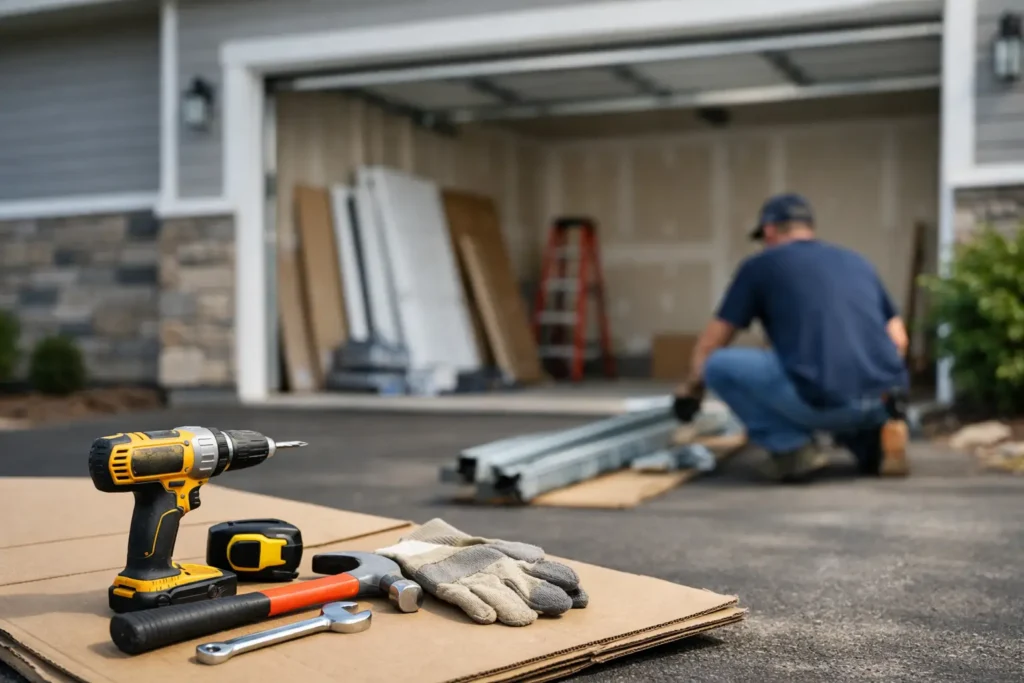
A garage door installation requires more working room than many people expect. Technicians need space to remove the old door, lay out new panels and tracks, position ladders, and test the completed system. Clear the driveway directly in front of the garage so the service vehicle can park close to the opening.
Inside, move vehicles out of the garage and relocate stored items away from the door opening and ceiling area. A clear zone extending several metres back from the door is ideal. Pay particular attention to bicycles, tools, storage racks, loose boxes, and anything mounted near the tracks or opener rail.
You do not need to empty the entire garage if it is well organized. However, the crew needs safe access to both sides of the opening and a clear path to the rear ceiling area. If large shelving units prevent access to the track area, ask about this in advance. In some cases, temporary removal or repositioning may be necessary.
Keep children and pets away from the work zone. Garage door panels and components are heavy, while springs, cables, and tracks require careful handling. A professional installation team follows safety procedures, but a quiet, controlled workspace makes the job safer for everyone.
Make Electrical Access Easy
Most modern garage door openers need a grounded electrical outlet near the ceiling. Check whether an outlet is available within reach of the planned opener location. Avoid relying on an extension cord as a permanent solution. It can create a safety concern and may not meet local electrical requirements.
If no suitable outlet is present, arrange for an electrician before the installation date or discuss options with the garage door company during the estimate. This is particularly relevant when upgrading an older garage, converting a carport, or adding a smart opener where reliable power and Wi-Fi access are part of the plan.
For smart features, verify your home Wi-Fi signal reaches the garage. Weak reception can affect remote monitoring, app controls, camera feeds, and alert notifications. A Wi-Fi extender may help in detached garages, but it is better to test coverage before the installer arrives rather than discovering the problem after setup.
Plan for Lighting and Controls
Think about how you enter and use the garage. If the existing wall button is inconveniently placed, mention it before work begins. You may want a keypad near the exterior entry, additional remote controls for household vehicles, or a smart control system for deliveries and guest access.
Good lighting also improves safety. If the garage is dark, ask whether the opener’s built-in light will be sufficient or whether additional lighting should be installed separately. The right setup depends on how you use the space. A garage used only for parking has different needs than one used for storage, hobbies, or a home gym.
Address Repairs and Structural Issues First
A new garage door performs best when it is installed on a sound opening. Damaged jambs, rotted wood trim, cracked concrete, loose framing, or water intrusion can interfere with proper track alignment and weather sealing. If you have noticed soft wood around the opening, gaps along the floor, or repeated water entry, point it out during the site assessment.
Some minor adjustments can be handled as part of the installation. More significant carpentry, framing, or electrical work may need to happen first. This is not an unnecessary delay. Installing a quality door against compromised framing can lead to poor operation, drafts, and avoidable service calls later.
Also, do not attempt to remove old springs, cables, or tracks yourself to save time. Garage door springs store significant force and can cause serious injury when handled incorrectly. Leave removal and disposal to trained technicians with the correct tools and procedures.
Prepare for the Installation Appointment
Plan to be available, or arrange for an authorized adult to provide access and approve any necessary decisions. The installer may need to confirm details such as control placement, opener features, exterior keypad location, or trim concerns before starting.
Installation time varies. A straightforward residential replacement may be completed in several hours, while custom doors, structural adjustments, commercial systems, or opener upgrades can take longer. Weather can also affect exterior work, especially during heavy rain or high winds. A dependable company will communicate if conditions or site issues require a revised plan.
Before the crew arrives, remove personal vehicles from the garage and driveway, unlock any side gates needed for access, and secure valuables. If your garage connects directly to the home, keep the interior passage clear as well. You may need access through that door while exterior work is underway.
If your old opener still works, have any remotes, keypads, and relevant manuals available. The technician can advise whether they are compatible with the new system, though older accessories often need replacement for proper reliability and security.
Know What to Review Before the Crew Leaves
A quality installation is more than a door that opens and closes. Before the job is finished, the technician should test the door balance, track movement, safety sensors, opener force settings, remote controls, wall button, and auto-reverse function. The door should move smoothly without excessive noise, scraping, or shaking.
Take a few minutes to watch the operation and ask questions. Learn how to use the emergency release, where the manual lock or lock controls are located, and what to do during a power outage. If you have a smart opener, make sure the app is connected and that you know how to manage access for family members.
You should also ask about maintenance. Most doors benefit from periodic visual inspections, light lubrication of approved moving parts, sensor cleaning, and prompt attention to unusual noise or uneven movement. Springs and cables should always be serviced by a professional.
A well-prepared garage gives your installation team the room to focus on the details that matter: accurate alignment, safe operation, dependable weather protection, and a finished look that suits your property. If anything about your opening, electrical setup, or door selection feels uncertain, asking before installation day is the simplest way to protect your investment and enjoy the new door with confidence.

