
When your remote suddenly stops working or the opener light blinks with no movement, most people search for how to reset garage opener systems before they do anything else. That makes sense. A reset can solve some common issues fast, but it only works if the opener itself is the problem and not the door, springs, sensors, or power supply.
If your garage door is stuck open, reversing for no clear reason, or refusing to respond after a power outage, the safest approach is to start simple. Resetting the opener is often a good first step. It is not a fix for every failure, and knowing the difference can save you time, money, and a lot of frustration.
How to reset garage opener systems step by step
Most modern garage door openers follow a similar reset process, even though the exact buttons and timing can vary by brand. Before touching anything, make sure the area around the door is clear. If the door looks crooked, feels unusually heavy, or has a broken spring, stop there. An opener reset will not solve that kind of problem.
Start by checking whether the opener has power. If the motor unit has no lights and no sound, inspect the outlet, breaker, and any GFCI reset nearby. A lot of opener calls turn out to be power-related, especially after storms or electrical interruptions.
If power is on, unplug the opener for about 30 to 60 seconds, then plug it back in. This basic power cycle can clear temporary glitches in the logic board. After reconnecting power, test the wall button first. If the wall control works but the remote does not, the issue is usually programming, battery failure, or signal interference rather than a full opener fault.
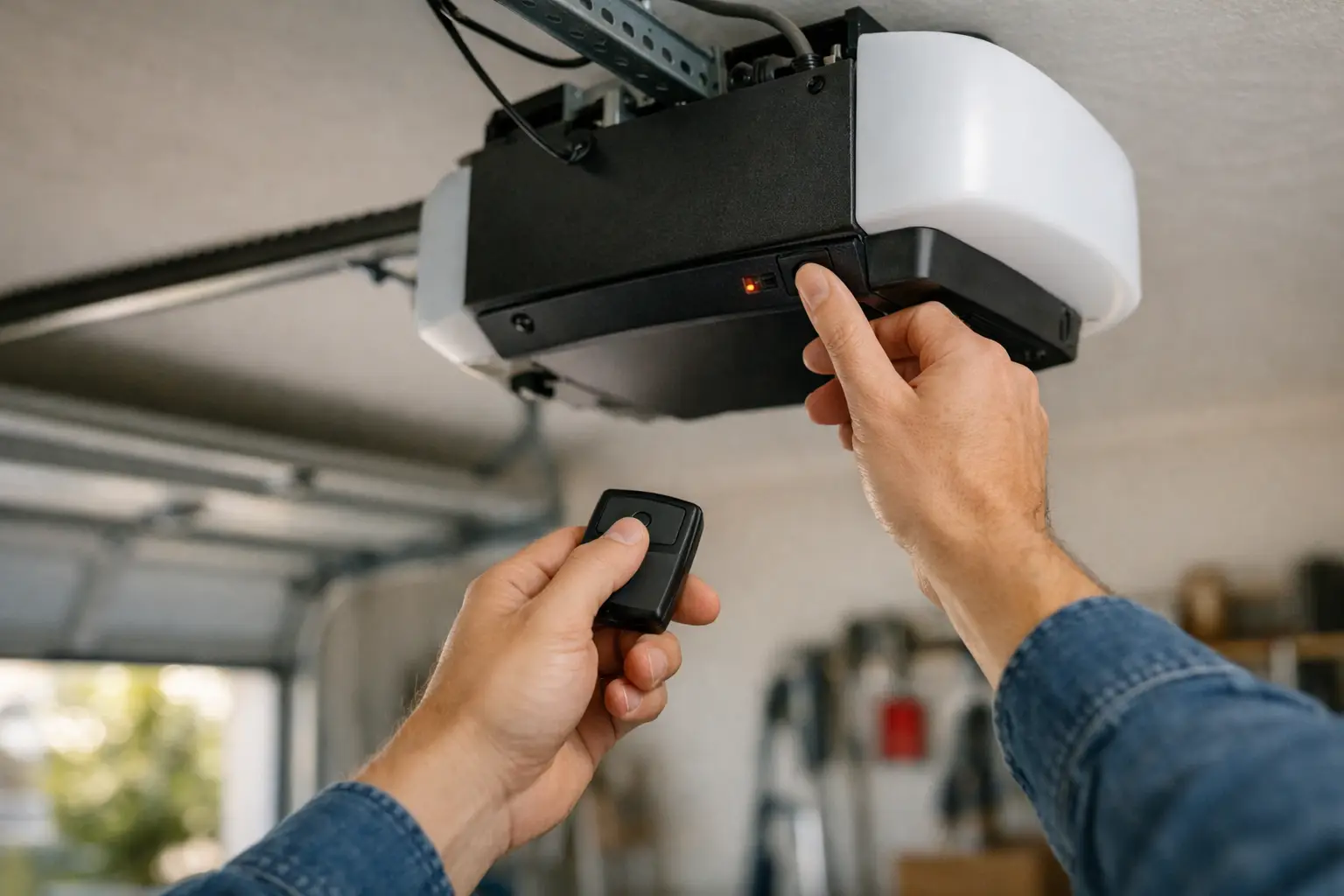
To fully reset many units, locate the Learn, Program, or Reset button on the motor housing. It is often near the antenna wire or light cover. Pressing and holding that button for several seconds typically erases stored remote controls and keypad codes. On many models, the indicator light will turn off or change its flash pattern to confirm the memory has been cleared.
After that, reprogram each remote and keypad one at a time. Usually this means pressing the Learn button briefly, then pressing the remote button within a short window. If the opener light flashes or clicks, the remote has been accepted. Repeat the process for all devices you want connected.
That is the basic answer to how to reset garage opener units in most homes. But the next question matters just as much: should you reset it at all?
When a reset actually helps
A reset is useful when the opener has lost connection to remotes, is acting strangely after a power surge, or stops responding without any visible mechanical damage. It can also help after replacing remote batteries, changing keypad settings, or upgrading to a smart garage system that needs a fresh pairing process.
If the opener motor runs but the door does not move properly, the issue may not be electronic. A disconnected trolley, damaged gear, worn travel limits, or door balance problem can all make it seem like the opener needs a reset when it really needs repair.
This is where homeowners often lose time. They keep reprogramming remotes while the real issue is a misaligned track or failing spring. Resetting the opener will not correct resistance in the door system. In some cases, it can make troubleshooting harder because the original symptoms get masked by new programming changes.
Signs the problem is not the opener
If the door only opens a few inches and stops, reverses immediately, or makes grinding noises, take a closer look before you keep resetting anything. Garage door systems rely on several parts working together, and the opener is only one of them.
Photo-eye sensors are one of the most common causes of trouble. If the door starts down and then reverses, dirty or misaligned sensors are often to blame. Clean the lenses and make sure both sensors face each other evenly. A blinking sensor light usually points to alignment or wiring issues.
A broken spring is a bigger concern. If the door feels very heavy, opens unevenly, or you hear a loud bang from the garage, the spring may have snapped. In that case, do not keep using the opener. The motor is not designed to lift the full weight of the door alone, and continued use can burn out the opener or create a serious safety risk.
Travel and force settings can also cause odd behaviour. If the opener thinks the door hit an obstacle when it did not, it may reverse early or refuse to close fully. Some homeowners adjust these settings too aggressively after a reset, which can create more problems than it solves. Small changes can help, but only if the door is already moving smoothly by hand.
How to reset garage opener remotes and keypads
Sometimes the opener itself is fine and only the accessories need attention. If your wall button works but the remote does not, start with the battery. It sounds obvious, but weak remote batteries are one of the top causes of service calls.
If a new battery does not help, erase the opener memory and reprogram the remote. For wireless keypads, you may also need to set a new PIN before syncing it again. Follow the opener’s sequence carefully, because timing matters. Pressing the wrong button too long can wipe all programmed devices when you only meant to add one.
For homes with multiple users, remember that a full reset removes every stored remote. That includes spares in vehicles, older keypads, and sometimes built-in car transmitters. If you reset the system, plan to reconnect everything in one session so no one gets locked out later.
Smart opener issues can look like reset issues
Newer openers with Wi-Fi or app controls add another layer. If the mobile app stops working, the problem may be with network connection rather than the opener memory. In that case, resetting the entire opener may be unnecessary.
Check whether the wall control and handheld remote still work. If they do, the door system is probably fine. You may only need to reconnect the opener to your home network, update the app, or re-enter account credentials. A factory reset can help in some smart-system cases, but it should be the last step, not the first.
This is especially true after router changes, internet outages, or password updates. Many smart garage complaints start there.
Safety matters more than convenience
A garage opener feels like a simple appliance until something goes wrong under load. The opener motor, springs, cables, and rollers all affect how the system operates. If the door is jammed, hanging unevenly, or straining hard during movement, stop troubleshooting at the opener level.
You can safely handle basic tasks like power cycling the motor, replacing remote batteries, cleaning sensors, and reprogramming remotes. You should not force the door, adjust torsion springs, or keep running the opener against resistance. That is where a quick reset turns into a larger repair bill.
For business owners, the stakes can be even higher. A malfunctioning commercial opener can interrupt deliveries, delay staff access, or leave inventory exposed. In those cases, fast diagnosis matters more than repeated trial and error.
When to call for professional garage opener service
If you have tried a reset and the opener still does not work, the next step depends on the symptom. No power may point to wiring or board failure. Motor noise without movement can mean a drive issue or disengaged trolley. Reversing doors often trace back to sensors, force settings, or door resistance. Intermittent operation may involve radio interference, damaged logic boards, or failing accessories.
A trained technician can separate opener problems from full door-system problems quickly. That matters because replacing an opener when the real issue is a spring or track wastes money, and continuing to run a damaged door can make the repair worse.
For homeowners in Seattle and nearby communities, weather, moisture, and heavy daily use can also affect opener performance over time. A professional inspection is often the fastest way to get a reliable answer, especially when the door is your main entry point.
At Summit Garage Doors, we see a lot of calls that begin with a simple question about resetting an opener and end with a safer, more complete fix. That could be a sensor adjustment, a new keypad, a travel-setting correction, or a full opener replacement if the unit is beyond repair.
A reset is a useful tool, but it is only one step in diagnosing a garage door problem. If the opener still acts up after a proper reset, trust what the system is telling you. A reliable garage door should open smoothly, close fully, and respond every time without guesswork.

