
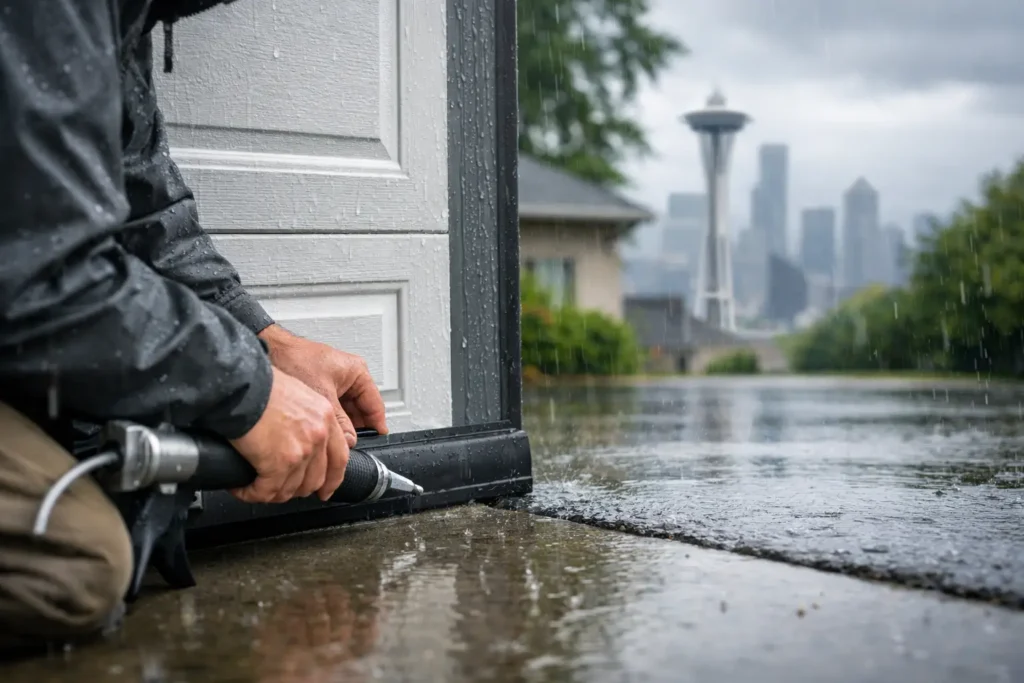
A garage door can look closed and still leave your garage exposed to rain, wind, cold air and pests. In Seattle, where wet weather can linger for months, learning how to weatherproof garage doors is less about one quick fix and more about sealing the entire opening properly. A dry, protected garage helps preserve stored belongings, improves comfort in rooms beside or above the garage, and reduces strain on your heating system.
The good news is that many weatherproofing improvements are straightforward. The key is knowing which gaps are normal, which parts are worn out, and when a door needs professional adjustment rather than another layer of sealant.
Start With a Close Inspection
Open the garage door during daylight, then close it and look for light around the sides, top and bottom. Light coming through usually means water and cold air have a path inside as well. Check from inside the garage if possible, since gaps can be easier to spot against daylight.
Pay close attention to the bottom corners. These are common entry points for wind-driven rain, leaves and insects. Also inspect the seam between each door panel, the area where the door meets the frame, and the condition of the threshold directly below the door.
A few signs your weatherproofing needs attention include damp spots near the door, debris blowing inside, a visible draft, a cracked rubber seal, or a door that does not sit evenly on the floor. If the door is sagging, binding in the tracks or stopping unevenly, weather stripping alone will not solve the issue. The door may need alignment, track repair or spring adjustment first.
How to Weatherproof Garage Doors at Every Edge
Effective protection comes from addressing all four sides of the garage door opening. Each seal has a different purpose, and overlooking one can leave the garage vulnerable during heavy rain.
Replace the bottom weather seal
The bottom seal is the flexible rubber or vinyl strip attached to the lower edge of the door. It compresses against the concrete when the door closes, creating the main barrier against water, dirt and outside air.
Over time, this material can flatten, crack, tear or pull away from its retaining track. In the Pacific Northwest, moisture and temperature changes can speed up that wear. If the seal feels brittle, has visible splits, or no longer touches the floor evenly, replacement is usually the right move.
Choose a seal that matches your door’s existing retainer system. Some doors use T-shaped channels, while others use a slide-in or nail-on design. Using the wrong profile can cause the seal to slip out or prevent the door from closing properly. For a floor that is slightly uneven, a wider bulb-style seal may provide better contact than a thin, flat strip.
Do not try to compensate for major gaps by installing an excessively thick bottom seal. A door that must forcefully compress the seal can reverse unexpectedly, strain the opener, or create uneven pressure on the bottom section.
Seal the sides and top of the frame
Vinyl garage-door stop moulding, often called perimeter weather stripping, seals the gap between the moving door and the exterior frame. It has a flexible flap that rests against the face of the closed door.
Inspect this material for hard, curled or torn edges. If the flap no longer contacts the door, rain can be pushed behind it during windy weather. Replacement stop moulding should sit snugly against the door without being crushed tightly. The door still needs room to move freely through its full travel.
This is one area where adjustment matters. If side weather stripping is installed too close, it can rub heavily against the panels and affect smooth operation. If it sits too far away, it will not block wind and water. A technician can set the seal and door position together when the fit is difficult to get right.
Check the panel joints
Sectional garage doors have joints between each horizontal panel. If your door has damaged or missing internal joint seals, outside air can move through these seams even when the perimeter is protected.
Not every door is designed for add-on joint weather stripping, and adding a product that interferes with hinges can create operational problems. If you feel a draft between panels or see moisture tracks on the inside of the door, have the door inspected before applying adhesive material. The issue may be a warped panel, loose hinge or improper door fit.
Improve Drainage Before Sealing Everything Tight
Weatherproofing works best when water is directed away from the garage, not merely blocked at the door. Look at the driveway slope and the area immediately in front of the threshold. Standing water against the door can eventually find its way beneath even a good bottom seal.
Keep leaves, gravel and moss clear from the door’s path. Small debris can create gaps under the seal and stop the door from closing evenly. During Seattle’s wetter months, this simple maintenance can make a noticeable difference.
A garage door threshold seal can help with minor surface irregularities and light water flow. It is a raised rubber strip bonded to the concrete just inside or outside the door line, depending on the product and drainage layout. It gives the bottom seal a more consistent surface to compress against.
Thresholds are useful for shallow gaps, but they are not the answer to significant drainage problems. If water regularly flows toward the garage, address the grade, drainage channel or downspout discharge. Trapping a large volume of water against the threshold may make the problem worse.
Add Insulation for Better Comfort and Efficiency
Weather seals stop drafts. Insulation slows heat transfer through the garage door itself. The two improvements work together, especially if the garage shares walls with living space, contains a workshop, or is used for storage that should not be exposed to extreme temperature swings.
Insulation kits can improve some existing steel doors, but they are not right for every model. Added weight can affect balance, springs and opener performance. Poorly fitted panels can also rattle, retain moisture or interfere with hinges.
For an uninsulated door in good condition, a compatible insulation kit may be a practical upgrade. For an older, damaged or single-layer door, replacing it with an insulated door can offer better long-term value, quieter operation and a cleaner appearance. The right choice depends on the condition of the current door, how the garage is used, and whether the door has adequate hardware to support additional weight.
Remember that insulating the door will not fully condition the garage. Air leaks around access doors, walls, windows and ceiling penetrations can still affect temperature and moisture levels. If the garage is finished or used as a workspace, a broader insulation and ventilation plan may be worthwhile.
Do Not Ignore Door Balance and Alignment
A weatherproof garage door still needs to operate safely. When a door is out of balance or its tracks are misaligned, it may close crookedly and leave a gap at one corner. It can also drag against new side seals, wear them prematurely, or reverse before reaching the floor.
You can perform a basic visual check, but do not adjust torsion springs, lift cables or track mounting hardware on your own. These components are under high tension and can cause serious injury when handled incorrectly.
Instead, watch for warning signs: the door closes unevenly, makes scraping sounds, shakes during travel, leaves a corner lifted, or requires repeated opener attempts to close. A professional repair can restore the door’s fit before new seals are installed, preventing you from spending money on materials that will fail quickly.
Keep Weatherproofing Working Through the Year
Most weather seals do not need constant attention, but they do need seasonal checks. Inspect the bottom seal and perimeter stripping before fall rain arrives, then check again after winter for tears, compression damage and debris.
Keep the tracks clean, but avoid applying heavy grease to them. Greasy tracks collect dirt and can affect roller movement. Use a garage-door-safe lubricant on appropriate moving parts as recommended for your door, and keep the photo-eye sensors clean so the opener can close the door reliably.
If you have an automatic opener, test the safety reversal system after any weatherproofing work. A thicker bottom seal or new threshold changes the contact point at the floor. The opener should reverse when it meets an obstruction and close normally when the doorway is clear.
For homeowners dealing with persistent leaks, uneven closing or worn hardware, Summit Garage Doors can inspect both the seals and the mechanical condition of the door. A properly fitted door is the foundation of lasting weather protection, especially when the next stretch of Seattle rain arrives.

