
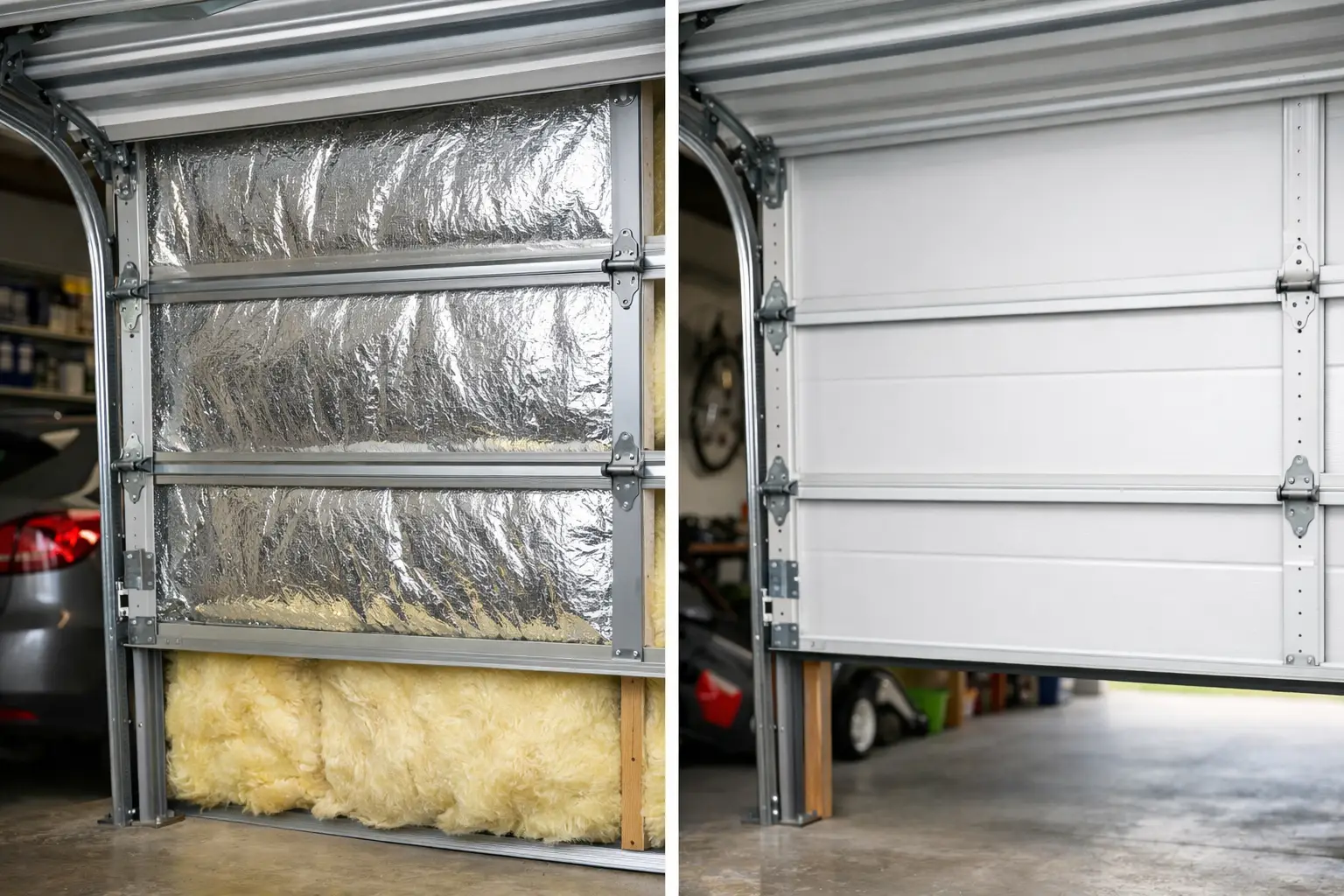
If your garage sits under a bedroom, shares a wall with your living space, or gets used as a workshop, the insulated garage door vs non insulated decision affects more than curb appeal. It changes how the space feels, how much noise carries into the house, and how well the door holds up over time.
For many property owners, the question starts with price. A non-insulated door usually costs less upfront, and for some garages, that is a perfectly reasonable choice. But if you want better temperature control, quieter operation, and a stronger door panel, insulation often pays off in comfort and long-term performance.
What changes between an insulated garage door vs non insulated door?
At a glance, the two can look almost identical. The real difference is inside the door construction.
A non-insulated garage door is typically made with a single layer of steel or another basic material. It does the job of opening, closing, and securing the space, but it offers very little resistance to outside temperatures. It also tends to flex more, vibrate more, and transmit more sound.
An insulated garage door is built with added layers. In many cases, that means steel on the outside, insulation in the middle, and sometimes a backing layer on the interior side. That extra structure gives the door more strength and helps reduce heat transfer, outside noise, and rattling during operation.
This does not mean every insulated door is automatically the best choice. It depends on how you use the garage, what your local weather is like, and whether comfort or lowest upfront cost matters more to you.
Why insulation matters more than many homeowners expect
A garage is not always just a place to park. Many households use it for storage, laundry, projects, home gyms, or entry access several times a day. When the door is thin and uninsulated, the space can become noticeably colder in winter and hotter in summer.
That matters even more when there is an attached garage. If your garage shares walls or ceilings with the main house, temperature swings in that space can affect adjacent rooms. You may notice cold floors, drafty walls, or a room above the garage that never feels quite right.
Insulation also helps with sound. If your current door bangs, shakes, or sounds loud every time it opens, the panel construction may be part of the problem. An insulated door generally feels more solid and runs with less vibration. That is a real benefit if family members are sleeping nearby or if you leave early and return late.
Cost: upfront savings vs long-term value
The biggest reason people choose a non-insulated garage door is simple – lower purchase cost. If you need a basic replacement and the garage is detached, rarely used, and not climate-sensitive, a non-insulated model can be the practical option.
But lower initial cost does not always mean better value. Insulated doors often last better because the added layers improve rigidity. A stronger panel is less likely to dent easily, bow as much, or feel flimsy after years of regular use. Depending on the door style and material, that can reduce wear and help the system stay looking better longer.
Energy savings are more situational. An insulated garage door will not magically turn a garage into conditioned indoor space, especially if the walls and ceiling are not insulated too. Still, it can reduce extreme temperature swings and help if the garage is attached to the home. The benefit is usually more about comfort and reduced transfer to nearby rooms than dramatic utility bill cuts.
Insulated garage door vs non insulated in Canadian weather
For Canadian readers, climate should carry real weight in this decision. If you deal with cold winters, damp conditions, and big seasonal changes, insulation becomes more valuable. A garage door is one of the largest moving parts of the home, and it covers a wide opening. That makes it a weak point for heat loss and outside air influence.
In a place with cool, wet winters like the Pacific Northwest, the garage may not face deep prairie cold for months on end, but it still feels the effects of moisture, wind, and chilly overnight temperatures. If the garage is attached, insulated door panels can help make the space less raw and more usable through the year.
That said, if you own a detached outbuilding used only for parking and basic storage, a non-insulated door may still be enough. The key is to match the product to the building use, not just the weather forecast.
Noise, strength, and everyday feel
One of the most overlooked differences in the insulated garage door vs non insulated comparison is how the door feels in daily use.
Non-insulated doors can be noisier because the single-layer construction tends to vibrate more. That does not always mean something is broken. Sometimes the door is simply light and thin. If paired with an older opener, the sound can be even more noticeable.
Insulated doors often operate with a more solid, controlled feel. They are not silent, but they usually produce less rattling and less panel shake. For homeowners replacing an old door, that difference is often one of the first things they notice.
There is also the issue of durability. A thicker, reinforced door usually resists minor impacts better than a thinner single-layer model. If basketballs, bikes, tools, or everyday bumps are part of garage life, that extra strength can matter.
When a non-insulated garage door makes sense
A non-insulated door is not the wrong choice. It is the right choice in some very specific situations.
If your garage is detached, not used as a workspace, and not connected to the home’s heating envelope, paying more for insulation may not bring enough practical benefit. The same applies if you are replacing a door on a strict budget and your main goal is safe, reliable operation.
It can also make sense for some commercial or utility structures where temperature control is not a priority and the focus is simply access and security. In those cases, the simpler construction may do exactly what is needed without adding cost for features that will not be noticed.
When an insulated door is worth the upgrade
If the garage is attached to the home, insulation is usually worth serious consideration. The same is true if there is a bedroom above the garage, if you spend time working in the space, or if you want a quieter and sturdier door.
Many homeowners also choose insulated models during a full exterior upgrade because they want the door to look premium and feel substantial. A garage door takes up a large portion of the front elevation on many homes. If you are investing in curb appeal, it helps when the door not only looks good but performs well too.
For households that use the garage as the main entry point, comfort and noise reduction become everyday quality-of-life issues, not small technical details.
What to ask before you decide
Before choosing between insulated and non-insulated, think about how the garage actually functions in your day-to-day life. Is it attached or detached? Do you store temperature-sensitive items there? Do you want less noise inside the house? Are you planning a budget replacement, or do you want longer-term performance from the upgrade?
It also helps to look beyond the panel itself. Good weatherstripping, proper installation, balanced springs, and a correctly adjusted opener all affect how well the door performs. Even the best insulated model will fall short if the installation is poor or the system is out of alignment.
That is why an honest recommendation matters. A good installer should not push insulation automatically. They should ask how you use the space, explain the trade-offs clearly, and help you choose the option that fits the property and budget.
The better choice depends on the garage, not just the price
If you want the shortest answer, here it is: non-insulated is often best for basic, budget-conscious applications, while insulated is usually the stronger choice for attached garages, comfort, noise control, and better overall door quality.
The right decision comes down to how much performance you need from the space behind the door. If your garage is part of how you live, work, and move through the house each day, insulation tends to earn its keep. If it is simply a detached shell for parking and storage, a non-insulated door may be all you need.
A garage door should fit the way you use your property, not just the lowest number on an estimate. When the choice matches the space, you feel the difference every time the door opens and closes.

