
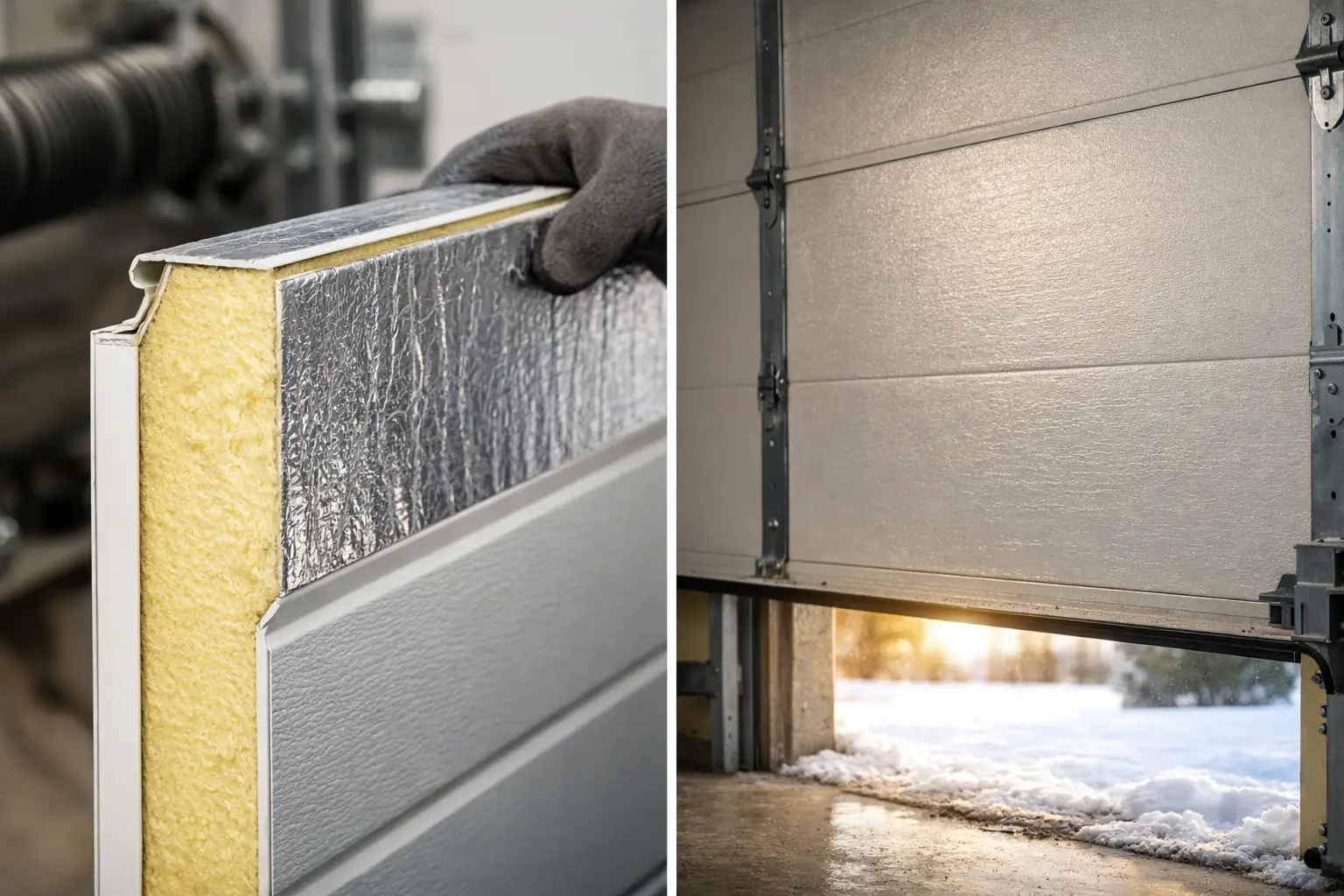
That cold draft you feel in the garage in January usually has less to do with the heater and more to do with the door. When homeowners compare insulated vs non insulated doors, the real question is not just price. It is how the door will perform through wet winters, temperature swings, daily use, and the way your garage connects to the rest of your home.
If you use your garage only to park a vehicle and you rarely spend time in it, a non-insulated door can be enough. But if the garage sits under a bedroom, shares a wall with the house, stores tools and gear, or doubles as a workspace, insulation starts to matter quickly. The better choice depends on how you use the space, what level of comfort you expect, and whether you are thinking short term or long term.
Insulated vs non insulated doors: what changes?
At a glance, these doors can look almost identical. The biggest difference is inside the panel.
A non-insulated garage door is typically built with a single layer of steel or another material with no thermal barrier inside. It does the basic job of opening, closing, and securing the garage. It is the simpler and less expensive option up front.
An insulated garage door has multiple layers, usually with insulation material such as polystyrene or polyurethane sandwiched between the outer and inner layers. That added core helps slow heat transfer, but it also changes how the door feels, sounds, and holds up over time.
For many property owners, insulation is not really about making the garage warm on its own. It is about reducing temperature extremes, cutting down noise, and creating a more stable, durable door system.
Why insulation matters more in some homes
Not every garage needs the same level of performance. A detached garage with no finished space nearby has different demands than an attached garage directly below a living room.
If your garage is attached to the house, the door becomes part of the home envelope in a practical sense, even if it is not technically treated the same as an exterior wall. When outside air pushes into the garage, that temperature shift can affect nearby rooms. You may notice colder floors, draftier entry areas, or a room over the garage that never feels quite right.
This is one reason insulated doors are often worth a closer look in places with damp, chilly weather for much of the year. In the Seattle area, for example, homeowners often care less about extreme snow and more about consistent cool temperatures, moisture, and comfort inside attached spaces.
Comfort and energy use
An insulated garage door helps reduce how fast the garage heats up or cools down. That does not mean the garage will hold the same temperature as your house, especially without additional insulation in the walls and ceiling. But it usually means fewer sharp temperature swings.
That can matter if you have a laundry area in the garage, keep stored items that do not handle cold well, or use the space for hobbies, workouts, or home projects. It can also help if there is a room above the garage or if the garage entry door opens directly into the kitchen or mudroom.
With a non-insulated door, outdoor temperatures pass through the door panels much more easily. The garage can feel hotter in summer and much colder in winter. In some homes, that puts more strain on nearby heated spaces, even if the garage itself is not heated.
Energy savings should be viewed realistically, though. If your garage is detached and unconditioned, insulation may not lead to a major utility difference. In that case, the value may come more from comfort and noise reduction than from lower bills.
Noise is a bigger factor than most people expect
One of the most noticeable differences between insulated and non-insulated doors is sound.
Insulated doors tend to operate more quietly. The multi-layer construction helps dampen vibration, and the door panels generally feel more solid during opening and closing. That can make a real difference if someone in the home leaves early, comes in late, or has a bedroom beside or above the garage.
Non-insulated doors are often louder and more prone to rattling, especially as they age. The thinner panels can vibrate more during operation, and outside noise may carry through more easily as well.
If your current garage door sounds thin, shaky, or harsh when it moves, insulation may be one of the reasons a replacement feels like a major upgrade even when the opener stays the same.
Durability and day-to-day performance
Insulated garage doors are usually built with stronger, thicker construction. That does not make them indestructible, but it often makes them more resistant to dents, warping, and general wear.
A basic single-layer steel door can be a practical choice, but it is also easier to damage. A bump from a garbage bin, a basketball, or regular use over time can show up faster on thinner panels. For households with frequent garage traffic, bikes, tools, storage, or busy family movement, that matters.
The more solid build of an insulated door can also improve how the door tracks and feels over time. When paired with proper installation and balanced hardware, it often results in smoother operation and less panel flex.
That said, the quality of installation still matters just as much as the insulation itself. A well-installed non-insulated door can perform better than a poorly installed insulated one.
Cost: upfront savings vs long-term value
The biggest reason people choose a non-insulated door is cost. It is the more budget-friendly option at the time of purchase, and for some garages that makes complete sense.
If the garage is detached, used mainly for parking, and not exposed to heavy daily use, a non-insulated door may meet your needs without overbuilding the project. Not every homeowner needs to pay for features they will barely notice.
An insulated door costs more up front, but it can offer better value over time through improved comfort, quieter operation, stronger construction, and better protection for stored items. It can also add to the overall feel of quality when you open and close the door every day.
For resale, buyers often respond well to garage upgrades that make the home feel more finished and practical. It is not always the headline feature, but a solid, quiet, insulated door can support curb appeal and perceived quality.
Which type is right for your garage?
The answer depends on how the garage functions in real life.
A non-insulated door may be the right fit if your garage is detached, you want the lowest upfront cost, and you do not need temperature control or sound reduction. It can also work for some commercial or utility spaces where appearance and basic function matter more than comfort.
An insulated door is usually the better choice if the garage is attached, there is living space nearby, you spend time in the garage, or you want a quieter and more durable door. It is also worth considering if your current door feels flimsy or if you are already investing in a larger home upgrade.
For many homeowners, this is less about luxury and more about avoiding regret. Saving money on the initial install can feel good, but not if the garage stays uncomfortably cold, the door is noisier than expected, or the panels show wear too quickly.
A note on R-value and what it actually means
When shopping for insulated garage doors, you will likely see R-values used in product information. In simple terms, a higher R-value means better resistance to heat flow. That is useful, but it should not be the only number driving your decision.
Different manufacturers calculate and present insulation ratings in different ways. The door’s overall build quality, weather sealing, panel design, and installation quality all affect real-world performance. A high advertised number does not automatically mean the best result in your garage.
This is where honest guidance matters. A door should be matched to the property, not just sold based on the highest specification sheet.
Making the smart choice for your property
If you are replacing an older garage door, this is a good time to think beyond appearance. The right door should fit the way you use the space, handle local weather well, and operate reliably for years.
For some homes, a non-insulated model is a sensible and cost-effective option. For many attached garages, though, an insulated door delivers benefits you notice every day – less noise, better comfort, stronger panels, and a more substantial feel.
If you are unsure which way to go, a professional assessment can save you from paying for features you do not need or skipping features you will wish you had. At Summit Garage Doors, that kind of practical guidance is part of helping customers make a choice that works not just on installation day, but through every season after it.

