
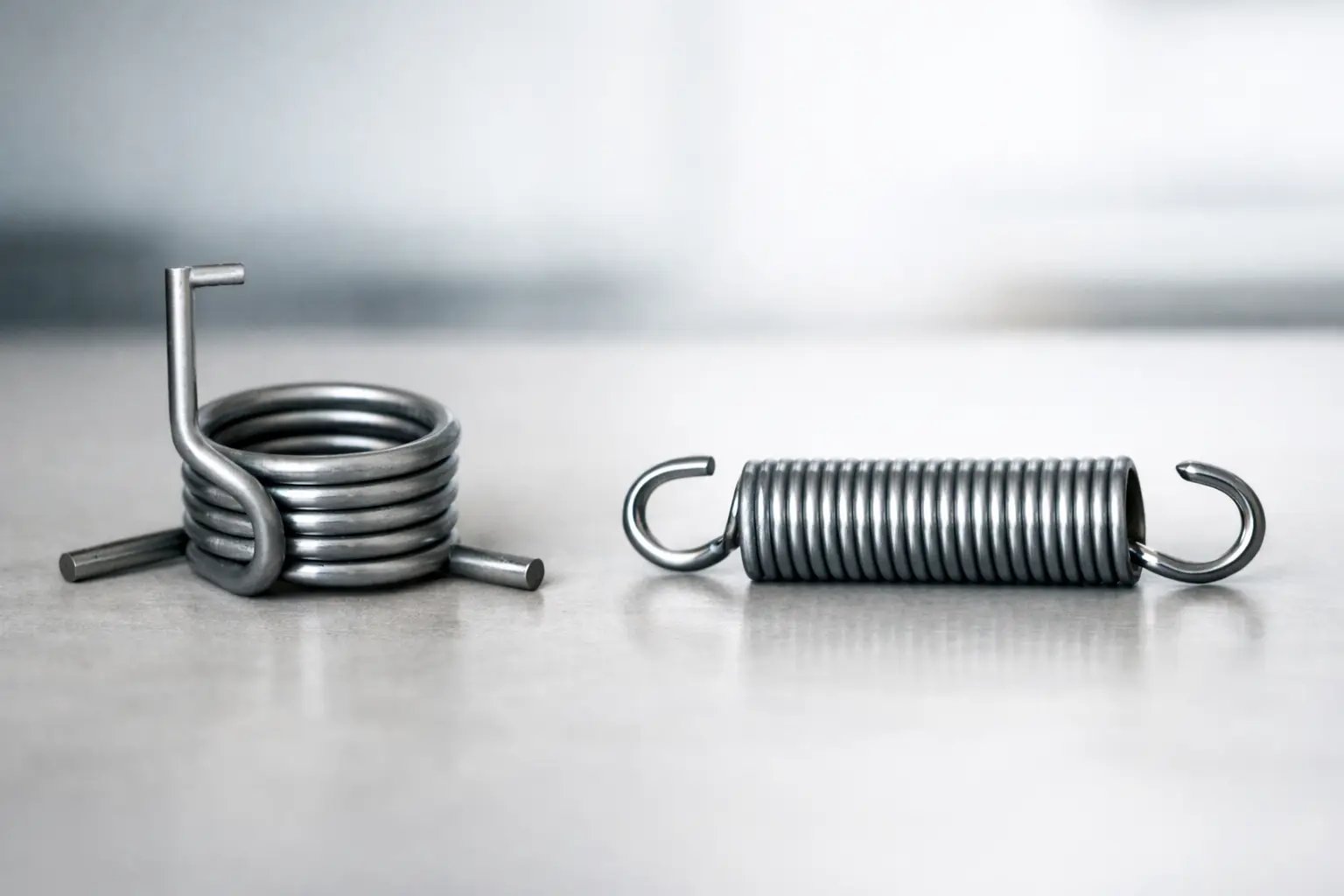
A garage door that jerks, slams, or suddenly feels too heavy usually has a spring problem, and that is where the torsion spring vs extension spring question matters. The right spring system affects how smoothly your door opens, how long parts last, how safe the system is, and what you can expect to pay for repairs over time.
Most property owners do not think about garage door springs until one breaks. That makes sense. Springs are out of sight, they do the hard lifting in the background, and when they fail, the problem becomes urgent fast. But if you are replacing springs, installing a new door, or trying to understand a repair quote, it helps to know what separates these two systems.
Torsion spring vs extension spring: what is the difference?
The main difference comes down to where the spring sits and how it does the work. A torsion spring mounts above the garage door opening on a metal shaft. As the door closes, the spring winds up and stores energy. When the door opens, that stored energy helps lift the door in a controlled way.
An extension spring works differently. It usually sits along the horizontal tracks on each side of the door. Instead of winding, it stretches and contracts. When the door closes, the springs extend. When the door opens, they pull back and help raise the door.
Both systems are designed to counterbalance the weight of the garage door. Both can work well when properly sized and installed. The difference is in performance, safety, longevity, and the type of door they are best suited for.
Why torsion springs are often the better system
For most modern residential garage doors, torsion springs are usually the preferred option. They provide more controlled movement, which means the door tends to open and close more smoothly. That matters more than many homeowners realize. A balanced, controlled door puts less strain on the opener, reduces wear on rollers and tracks, and generally feels more stable day to day.
Torsion systems also tend to last longer. While cycle life depends on the spring quality and how often the door is used, torsion springs often outperform standard extension springs in real-world use. If your household uses the garage as the main entry point, that extra durability can make a real difference.
Another advantage is safety. When a torsion spring breaks, it usually remains on the shaft. That does not make it harmless, but it does reduce the chance of loose metal flying across the garage. With extension springs, a break can be more dangerous if the system does not have proper safety cables in place.
For heavier doors, insulated doors, and many custom garage door setups, torsion springs are typically the more reliable choice. They handle weight more evenly and support better long-term performance.
Where extension springs still make sense
Extension springs are not outdated just because torsion springs are more common in newer systems. They still have a place, especially on older garages or lighter door setups. In some cases, they are less expensive upfront, which can matter if you are trying to keep a repair affordable.
They also work in garages where headroom is limited. A torsion system requires space above the door opening for the spring shaft. If that space is tight, extension springs may be the practical solution unless the whole setup is being redesigned.
That said, lower upfront cost does not always mean lower long-term cost. Extension systems can involve more moving parts, including pulleys and cables, and those parts can wear out over time. So while the initial price may look attractive, future maintenance may be less predictable.
Safety matters more than most people expect
Garage door springs are under extreme tension. That is true whether you are dealing with torsion or extension. The difference is how that tension is managed inside the system.
Torsion springs are generally considered safer because the energy is more contained. The spring is mounted on a shaft, and the motion is more controlled. Extension springs stretch along the track, and if one snaps without a safety cable, the broken spring can whip loose with force.
This is one reason professional installation matters so much. A properly installed extension spring system must include safety cables. A properly installed torsion system must be matched to the exact size and weight of the door. In either case, guessing or using the wrong parts can create a serious hazard.
If a spring breaks, the safest move is to stop using the door and have it inspected. Trying to force the opener to move a heavy, unbalanced door can burn out the motor or damage the track system on top of the spring issue.
Which spring lasts longer?
In the torsion spring vs extension spring comparison, torsion springs usually win on lifespan. A standard torsion spring may last around 10,000 cycles, and upgraded options can go much higher. Extension springs can also be rated for similar cycles, but in many everyday installations, they tend to wear faster because the system relies on more hardware and more movement across multiple parts.
Cycle count matters because one cycle is one full open and close. If your family opens the garage door several times a day, those cycles add up quickly. A spring rated for 10,000 cycles may sound like a lot, but in a busy household, it can be used up sooner than expected.
That is why a spring should not be chosen on price alone. The better question is how often the door is used and how long you want the repair or installation to hold up before needing attention again.
Cost: upfront price vs long-term value
If you are comparing quotes, extension springs are often cheaper to install or replace at the start. Torsion springs usually cost more because the hardware and setup are different. But the total value is not just about the day-one invoice.
A torsion system often delivers smoother operation, better balance, fewer secondary wear issues, and longer service life. Over time, that can offset the higher upfront cost. For homeowners planning to stay in the property, or for business owners who rely on dependable door performance, paying more now can be the less expensive choice later.
Still, there is no one-size-fits-all answer. If you have an older door with a functioning extension spring setup and the system is in otherwise good condition, replacing like for like may be completely reasonable. If you are upgrading the door, dealing with repeated spring failures, or replacing a heavier door, moving to torsion may be the smarter investment.
What type of garage door works best with each system?
Torsion springs are generally better for heavier residential doors, insulated steel doors, wood doors, and doors that see frequent use. They are also common in many commercial applications because they offer stronger lifting control and better durability.
Extension springs are often found on lighter one-piece or sectional doors, especially in older homes. They can still perform well when correctly installed and maintained, but they are usually less ideal for heavy modern doors or high-cycle use.
This is where an on-site inspection helps. The right spring is not only about preference. It depends on door weight, height, track design, available headroom, opener compatibility, and how the door is used every day.
Signs your spring system needs attention
Whether you have torsion or extension springs, the warning signs are similar. The door may open unevenly, feel unusually heavy, slam shut, make loud banging noises, or stop opening altogether. You may also notice a visible gap in a torsion spring or a stretched, loose appearance in an extension spring.
If the opener strains or the door only lifts a few inches before stopping, do not keep testing it. A spring issue can quickly lead to opener damage or a full door jam. Fast service matters because a garage door stuck closed can trap vehicles, and a door stuck open can leave the property exposed.
For homeowners in the Seattle area dealing with a sudden spring failure, getting a qualified technician out quickly is usually the safest and most cost-effective move. Summit Garage Doors handles these situations every day, and the key is diagnosing the full system, not just swapping one part and hoping for the best.
Should you convert from extension to torsion?
Sometimes yes, sometimes no. If your current extension spring system is old, missing safety cables, wearing unevenly, or supporting a heavier replacement door, conversion to torsion is often worth considering. It can improve safety, performance, and long-term reliability.
But if your garage has space limitations or the existing extension setup is appropriate for the door and still in good shape, conversion may not be necessary. This is one of those cases where the best answer depends on the door, the garage layout, and your budget.
A trustworthy technician should explain the trade-offs clearly. You should know what you are paying for, why one option fits better than another, and what kind of lifespan to expect from the recommended spring.
When you are weighing torsion spring vs extension spring, the better choice is usually the one that matches your door properly, operates safely, and saves you from repeat problems later. If you are unsure, focus less on the part name and more on getting a system that gives you smooth operation, dependable lifting power, and fewer surprises when you need your garage door to work.

